Some prayers arrive polished, like a candle set gently on a table. Psalm 51 is not that kind of prayer. It is breathless, raw, and painfully honest, the kind of prayer you whisper when you finally stop defending yourself.
Tradition (and the psalm’s own superscription in many Bibles) links Psalm 51 to David after the prophet Nathan confronts him about his sin with Bathsheba and the violence that followed (see the story in 2 Samuel 11 and 12). That context matters, because Psalm 51 is not a vague apology. It is a clear-eyed turning: a person with power and status stepping into the light and asking God for mercy, cleansing, and restoration.
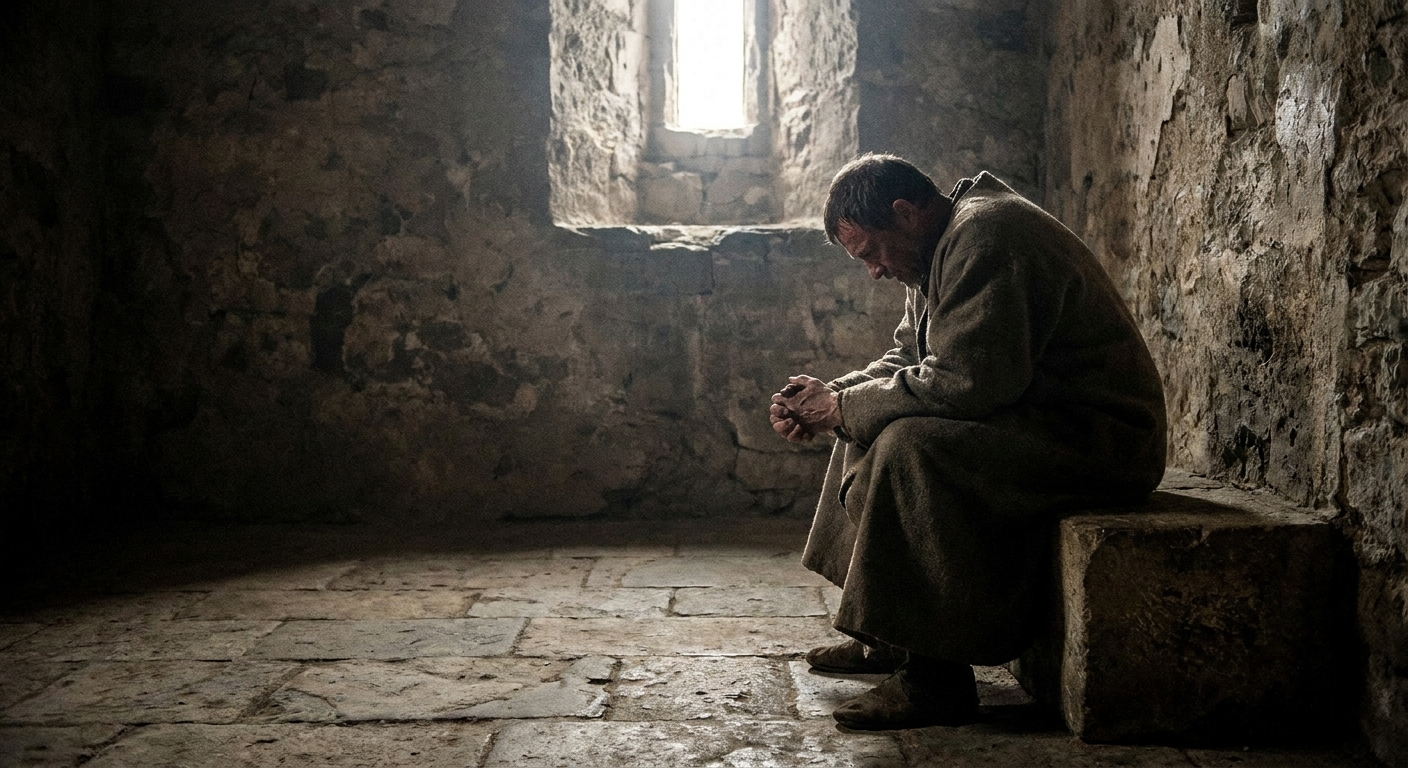
The setting: after Nathan
The brief heading that many Bibles place above Psalm 51 points to a specific moment: Nathan’s visit. Nathan tells David a story designed to slip past David’s defenses, and when David reacts with moral outrage, Nathan turns the mirror toward him: “You are the man.”
Psalm 51 reads like what comes after the room goes quiet. The excuses run out. The self-justifications stop working. What remains is a sinner speaking directly to God, not to manage an image, but to be healed.
That is one reason Psalm 51 has endured for centuries as a prayer for repentance. It is not interested in saving face. It is interested in honesty and transformation.
Psalm 51 in plain language
If I were to paraphrase Psalm 51 without flattening its reverence, it would sound something like this:
- God, be merciful to me, because you are merciful.
- I am not confused about what I have done. I own it.
- I need more than relief from consequences. I need cleansing from the inside out.
- Do not push me out of your presence. Stay close. Keep your Spirit with me.
- Restore joy, steady me, and let my life become a witness to your mercy.
- Teach me to speak truthfully. Teach me to praise again.
- You do not want a show of religion. You want a broken and honest heart.
Psalm 51 is both intimate and theological. It speaks like someone praying at 2 a.m., and it also makes profound claims about who God is and what real repentance looks like.
“Have mercy on me”
The psalm begins with an appeal grounded in God’s character: “Have mercy on me, O God, according to your steadfast love.” David does not bargain. He does not present a résumé of good deeds. He reaches for mercy because God is merciful.
Then comes the kind of confession many of us avoid. David names his wrongdoing and refuses to minimize it. The psalm uses multiple words to describe sin, which is one way Scripture captures its complexity: there is rebellion, there is crookedness, there is missing the mark. David is saying, in effect, “I took what was meant to be whole and bent it.”
One line can sound jarring at first: “Against you, you only, have I sinned.” This is not denial that others were harmed. David’s story involves very real victims. Rather, it is an acknowledgment that every sin is, at its deepest level, a rupture with God’s will and God’s heart. David is standing before the highest court, where excuses do not hold.

“Wash me”
Psalm 51 uses vivid cleansing imagery: wash me, cleanse me, purge me. In Israel’s worship life, the language of clean and unclean carried communal and spiritual weight. To be “clean” was not only about private feelings. It was about being restored, able to draw near again and rejoin the life of worship without hiding.
David asks for something deeper than being let off the hook. He asks to be changed at the root. He wants God to deal not only with the act, but with the inner bend that produced it.
This is where Psalm 51 gently corrects a common misunderstanding about repentance. Repentance is not primarily self-punishment. It is a turning toward healing. It is letting God name what is true so that what is broken can be repaired.
“Create in me a clean heart”
The line many people remember is also the turning point: “Create in me a clean heart, O God, and renew a right spirit within me.”
Notice the verb. David does not ask God to “improve” his heart, as if a few habits could solve what has gone wrong. He asks God to create. The Hebrew verb is bara, the same word used in Genesis 1, often associated with God’s creative act. David is admitting that willpower alone cannot undo what sin has done inside him.
When Psalm 51 speaks of a “right” or “steadfast” spirit, it is not talking about perfection. Some translations say “right spirit,” others “steadfast spirit,” but the longing is the same: inner steadiness, the kind of integrity that does not split into public and private selves.
And then David pleads, “Do not cast me away from your presence, and do not take your Holy Spirit from me.” In the Old Testament story, God’s empowering presence for leadership is described as something a person can lose. Saul’s story is the sobering backdrop here (see 1 Samuel 16:14). David is terrified of losing closeness to God, not merely losing a throne. Underneath the fear is a longing: “Let me remain with you.”
“Restore to me the joy”
Psalm 51 is sometimes read with such heaviness that we miss its hope. David asks for joy to return. Not a superficial happiness, but the deep gladness that comes from being reconciled, from being put back together.
He also asks to be upheld with a willing spirit, which implies that repentance is not a single moment. It becomes a new posture. A willing spirit is one that stops resisting grace.
Then David makes a promise: once restored, he will teach transgressors God’s ways, so that others can turn back. There is humility in that. David is not promising to become the hero of the story. He is promising that mercy will not end with him. A forgiven person becomes, in time, a guide for other wounded people.
“Open my lips”
Psalm 51 contains a surprisingly tender request: “O Lord, open my lips, and my mouth will declare your praise.” Anyone who has lived with shame knows why that matters. Shame seals the mouth. It makes prayer feel impossible. David is asking God to give him back a voice.
In the same breath, he asks to be delivered from “bloodguilt.” This is not abstract wrongdoing. In the narrative that surrounds the psalm’s superscription, blood has been shed. Psalm 51 does not romanticize repentance. It is brave enough to face the real cost of harm.
Still, the movement is not toward despair. It is toward truth-telling that leads back into praise.
What God wants
Near the end, Psalm 51 lands on a line that has guided generations: “You do not delight in sacrifice, or I would give it… The sacrifice acceptable to God is a broken spirit; a broken and contrite heart, O God, you will not despise.”
This is not an anti-ritual rant. In David’s world, sacrifice was a normal expression of devotion. The psalm’s point is that religious actions can be used as a substitute for repentance. David is saying, “If this could be fixed by giving something external, I would do it. But you want me. You want the truth in me.”
A “broken and contrite heart” is not a heart that hates itself. It is a heart that stops pretending. It is a heart that comes unclenched, surrendered, teachable. And Psalm 51 insists that such a heart will not be despised by God.
Some readers notice the final verses (vv. 18 to 19) widen the lens to Zion and the well-being of Jerusalem, and they mention sacrifices again. Many scholars read that turn as a communal or liturgical framing, reminding us that private sin never stays private, and that restoration is meant to ripple outward into the life of God’s people.

What Psalm 51 teaches
Psalm 51 is often called Miserere, from its opening word in Latin: “Have mercy.” But the mercy here is not sentimental. It is strong enough to tell the truth and gentle enough to cleanse.
In this psalm, mercy looks like:
- God’s steadfast love as the foundation for confession.
- Truth-telling that refuses denial and self-deception.
- Inner renewal, not just external behavior change.
- Restored joy, because repentance is meant to bring us back to life.
- A redefinition of sacrifice, where God desires sincerity over performance.
If you grew up thinking repentance meant groveling, Psalm 51 offers a different picture. It is the courageous movement toward wholeness in the presence of a merciful God.
Praying Psalm 51 today
Even if you have never related to David’s particular sins, you may recognize the human pattern: hiding, rationalizing, then finally being confronted with the truth. Psalm 51 gives language for that moment when you are ready to stop spinning and start returning.
A simple way to use it
- Read it slowly once, without analyzing.
- Read it again, and pause at the lines that feel sharp or tender.
- Name your truth in a sentence or two. Not excuses, just truth.
- Ask for the clean heart, the inner renewal you cannot manufacture.
- End with trust: “A broken and contrite heart, you will not despise.”
Sometimes I pray Psalm 51 when I am not even sure what I have done wrong, only that something in me is off-center. The psalm can hold that too. It is a prayer for re-alignment, for being made clear again.
FAQ
What is Psalm 51 about?
Psalm 51 is a prayer of repentance traditionally associated with David after Nathan confronts him. It centers on confession, asking God for mercy and cleansing, and pleading for a renewed heart and spirit.
What does “create in me a clean heart” mean?
It is a request for deep inner transformation, not surface-level improvement. David uses the verb bara, the same verb used in Genesis 1, asking God to remake his inner life and restore integrity and steadiness.
What does Psalm 51 say God really wants?
Psalm 51 teaches that God does not want religious performance used as a cover for unresolved sin. The “sacrifice” God desires is a broken and contrite heart, honest humility that is open to change.
Why does David talk about sacrifice if he says God does not want it?
Because the issue is not sacrifice itself, but empty sacrifice. David is acknowledging that rituals cannot replace repentance. The psalm’s final verses also widen the focus to the community, linking restoration of the heart with the rebuilding of worship and life in Jerusalem.