
When people talk about “proof” of God, what they usually mean is something gentler and more human: reasons. Not the kind that end every conversation, but the kind that invite one. In philosophy, these reasons often take the shape of arguments, carefully stated claims that try to make sense of reality, consciousness, morality, and the fact that anything exists at all.
What follows are four of the most enduring philosophical arguments for the existence of God: the ontological, cosmological, teleological, and moral arguments. I will explain each in plain language, share why it persuades some thinkers, and name the most common critiques. You do not need a philosophy degree to follow along, only a willingness to sit with big questions for a few minutes.

Before we begin: what these arguments can and cannot do
Philosophical arguments are not microscopes. They cannot put God in a petri dish. Instead, they try to reason from what we already experience: existence, order, value, and meaning. Even if you find an argument convincing, it may not tell you everything about God. Classical philosophy often aims for something like a “necessary being,” a “first cause,” or a “moral ground,” which many religious traditions identify with God, but the step from “a higher power exists” to “this is the God of my tradition” is usually a further journey.
It can also help to remember that disagreement is not failure here. These arguments have been debated for centuries precisely because they touch the nerve of what it means to be human.
1) The Ontological Argument
Core idea: God’s existence follows from the very concept of God.
The simple version
The ontological argument begins not with the universe, but with a definition. In its classic form (associated with Anselm of Canterbury), it goes roughly like this:
- God is “that than which nothing greater can be conceived,” meaning the greatest possible being.
- Existing in reality is often treated as “greater” (more perfect) than existing only as an idea.
- If God existed only in our minds, we could imagine something greater: the same God existing in reality.
- So, by this understanding of “greatness,” God must exist in reality.
If that feels like a word puzzle, you are not alone. The ontological argument is famously compact, and it can feel like it tries to “define” God into existence. Still, many philosophers have found it intriguing because it treats God not as one more object in the universe, but as a unique kind of being whose existence might be necessary, not optional. It also makes clear where the pressure point lies: what counts as “greatness” or “perfection,” and whether existence can play that role.
Why it persuades some people
- It aims at necessity. Instead of saying God happens to exist, it suggests God cannot fail to exist if God is possible.
- It treats God differently than ordinary things. God is not imagined as a large creature somewhere, but as the foundation of being itself.
Common critiques
- “You cannot define things into existence.” A classic objection (most famously associated with Immanuel Kant) argues that existence is not a property like color or height. Saying something exists does not add a feature to a concept, it says the concept is instantiated in reality. Kant’s critique is aimed at certain traditional forms of ontological reasoning, and it helps explain why later versions try to reframe the argument without treating existence as an ordinary predicate.
- Gaunilo’s parody. A contemporary of Anselm suggested you could use the same logic to “prove” a perfect island must exist, which seems absurd. Defenders respond that islands are contingent and limited, while God is supposed to be necessary and unlimited.
- Modal versions raise new debates. Modern forms (like Alvin Plantinga’s) use possible-world logic: if a maximally great being is possible, then it exists necessarily, and therefore exists in our world. Critics often focus on whether the key premise, “God is possible,” can be justified without quietly assuming the conclusion.
Quiet takeaway: The ontological argument is less about the sky and more about the mind. It asks whether the idea of God points beyond itself, the way the idea of “necessary truth” seems to.
2) The Cosmological Argument
Core idea: The existence of the universe (or change within it) implies a first cause or necessary foundation.
The simple version
Cosmological arguments come in several forms, but they tend to share one intuition: things do not explain themselves. If something exists, we look for a reason or cause. The argument then asks: what explains the whole chain?
One classic approach (associated with Thomas Aquinas) begins with change and causation:
- We observe change: seeds become trees, ice becomes liquid water, children become elders.
- Changes have explanations. Something actual brings about what is potential.
- If everything is explained only by something else in a chain with no ultimate source, we never arrive at a grounding explanation.
- So there must be a first cause or “unmoved mover” that is not dependent in the same way.
Another common form is the “contingency” version, often tied to an explanatory-demand principle (sometimes discussed under the umbrella of the Principle of Sufficient Reason):
- Many things in the universe are contingent. They exist, but they could have failed to exist.
- Even if contingent things explain one another in a network, the totality of contingent reality still seems to call for an explanation of why it exists at all.
- So there must be a necessary foundation, a reality that does not depend on anything else for its existence, and that can ground contingent things.
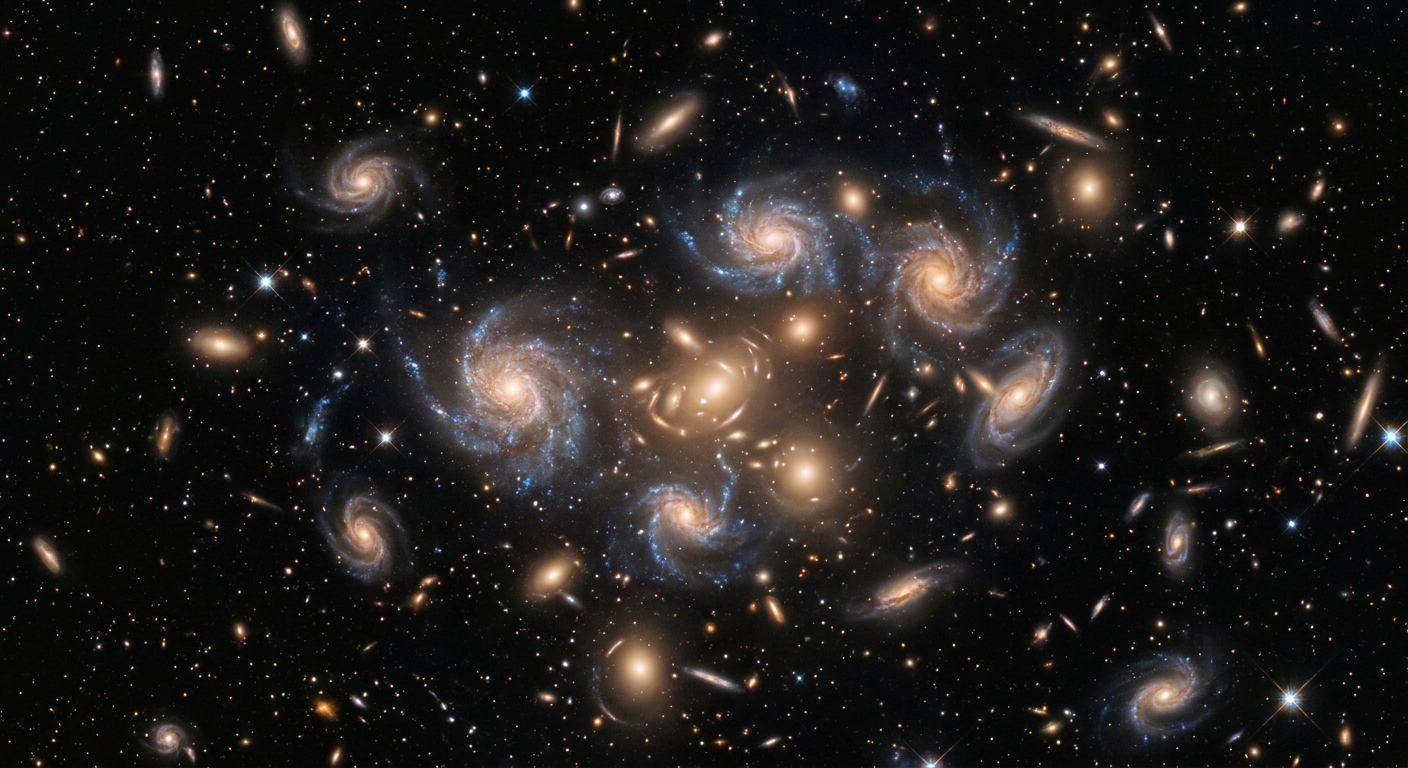
It also helps to note what many defenders emphasize: Aquinas’ “first mover” is not necessarily a first event long ago. It can be understood as a present source of dependence, the kind of explanation that would still be needed even if the universe had no beginning in time. (Other well-known variants exist too, such as the Kalam cosmological argument, which does focus more directly on a beginning.)
Why it persuades some people
- It matches our instinct for explanation. Most of us feel that “it just is” is not a satisfying final answer for why anything exists at all.
- It points to dependence. Even if the universe were eternal, the question can remain: why does it exist, and why does it have the character it has?
- It does not require a beginning in time. Some versions are compatible with an eternal universe. They focus on present dependence, not a historical start date.
Common critiques
- “Why can’t the chain be infinite?” Some philosophers argue an infinite regress of explanations might be possible. Defenders respond that even an infinite chain may still fail to provide an ultimate grounding explanation.
- “If everything needs a cause, what caused God?” Classical replies clarify that the argument does not say everything needs a cause, it says contingent or changing things need an explanation. God, in this framework, is necessary and uncaused.
- “Maybe the universe is the necessary thing.” Some propose the universe itself could be necessary. The debate then becomes whether the universe looks necessary (unable not to exist) or contingent (the kind of reality that could have been otherwise).
- Skepticism about broad explanatory principles. Some critics resist the move from “many things have explanations” to “reality as a whole must have one.” The discussion often turns on whether the demand for explanation is rationally required, or simply a powerful human impulse.
Quiet takeaway: Cosmological arguments are not trying to compete with science. They are asking a different kind of question: not “how did this unfold?” but “why is there something rather than nothing?”
3) The Teleological Argument
Core idea: The apparent order and “fit” of the universe suggests purpose or intelligence behind it.
The simple version
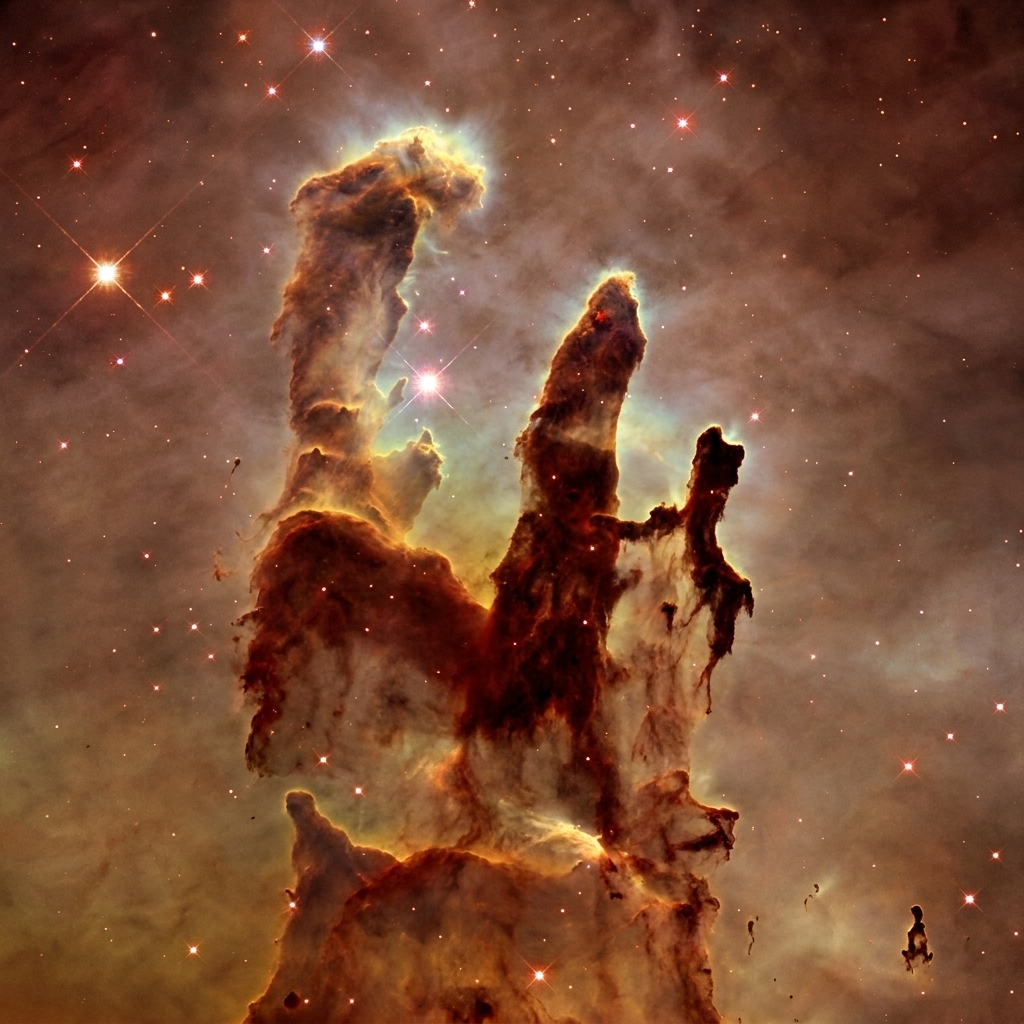
Teleological arguments notice that many aspects of reality seem coordinated in a way that supports complex life and intelligibility. Older forms focus on biological complexity. More recent versions focus on cosmic “fine-tuning,” the idea that certain physical constants and initial conditions fall within ranges that make stars, chemistry, and stable matter possible.
A classic everyday analogy (with many caveats) is:
- If you find a watch in a field, you infer a watchmaker because the parts are arranged toward a function.
- Likewise, the universe shows patterns, regularities, and life-permitting conditions.
- So it is reasonable to infer a designer or guiding intelligence.
Contemporary fine-tuning arguments often sound like this:
- The universe has life-permitting conditions that appear remarkably specific.
- Such specificity can seem unlikely to be due to chance alone (depending on assumptions).
- Therefore, an intelligent cause is one plausible explanation.
Why it persuades some people
- It resonates with awe. Many people experience the universe as not only lawful, but strangely hospitable to life and mind.
- It offers an explanatory frame. If the universe looks “set up” for complexity, design can feel like a coherent interpretation.
- It fits some religious intuitions. Many traditions speak of a world that is ordered, meaningful, and sustained by wisdom.
Common critiques
- Hume on weak analogies. David Hume famously pressed that the universe is not like a human artifact in the relevant ways, so the jump from “order” to “designer” may be a fragile analogy. Even if the inference worked, it might not yield one designer, an all-good designer, or anything like classical theism.
- Evolution and the appearance of design. Since Darwin, many design arguments about living organisms have been reframed. Natural selection can account for the appearance of purpose in biology by explaining adaptation and diversification over time. (This does not by itself settle questions about cosmic fine-tuning, which operate at a different level.)
- The multiverse hypothesis. Some propose that if many universes exist with varying constants, it is not surprising that at least one has life-permitting conditions, and we happen to be in it. Critics respond that multiverse proposals may shift the question upward: why is there a multiverse with life-permitting possibilities and stable laws?
- Anthropic reasoning. We can only observe a universe compatible with observers. This can undercut certain probability claims, though it does not necessarily remove the sense of “fit” that prompts the argument.
- Probability is disputed. Physicists and philosophers disagree about how to define the relevant “probability space” for constants and initial conditions. That makes strong numerical claims difficult to justify, even if the basic intuition of fine-tuning remains psychologically powerful.
- Design does not specify the designer. Even if you accept design, it does not automatically yield a particular religion’s understanding of God.
Quiet takeaway: Teleological arguments often begin in wonder. Their philosophical task is to ask whether wonder can be responsibly translated into an inference about mind, purpose, or intention.
4) The Moral Argument
Core idea: Objective moral truths and duties make the most sense if grounded in something beyond human preference.
The simple version
The moral argument starts from an experience many of us recognize: some things feel not merely disliked, but wrong. Not wrong like “I would not do that,” but wrong like “no one should do that.”
One common formulation goes like this:
- If objective moral values and duties exist, they need a foundation that is more than human opinion or social convention.
- Objective moral values and duties do seem to exist (for example, “torturing children for fun is wrong” feels true regardless of culture or era).
- Therefore, there is a moral ground beyond humanity, often identified with God.
Some versions emphasize morality as a signpost, not a law code dropped from the sky: the argument is that our sense of moral obligation points to a reality that is personal, authoritative, and good.

Why it persuades some people
- It takes moral experience seriously. It honors the intuition that goodness is not merely a preference, and that some actions violate something real.
- It connects ethics to meaning. If moral claims are objectively true, it is natural to ask what kind of universe could hold such truths.
- It frames God as good, not only powerful. The argument emphasizes moral character, which resonates with many spiritual traditions.
Common critiques
- The Euthyphro dilemma. Is something good because God commands it, or does God command it because it is good? If the first, goodness can seem arbitrary. If the second, goodness seems independent of God. Many theistic philosophers respond by rooting goodness in God’s nature, not mere commands.
- Alternative moral foundations. Some argue objective morality could be grounded in reason, human flourishing, or moral realism without God. The discussion then becomes which foundation best explains moral obligation and moral knowledge.
- Rejecting the starting point. Some philosophers deny that there are objective moral facts at all, or argue that our moral judgments can be explained by evolution, social formation, and psychology without pointing to anything beyond the human story. If that premise falls, the argument does too.
- Moral disagreement. People disagree morally across cultures. Does that suggest morality is invented? Not necessarily. Disagreement can reflect limited knowledge, competing goods, or social conditions, but critics see it as evidence against objectivity.
Quiet takeaway: The moral argument invites a simple question: when conscience speaks, is it merely the echo of society, or a whisper from something deeper than us?
How these arguments relate to faith
It is completely possible to find these arguments interesting and still feel spiritually uncertain. Many people come to faith through community, prayer, beauty, suffering, or sudden gratitude, not syllogisms. And many people live ethically and meaningfully without belief in God at all.
Still, philosophical arguments can serve as steady companions. They can clear away the sense that belief is irrational, or they can clarify why a person remains unconvinced. Either way, the goal is not to “win” but to understand what our minds and hearts are already reaching toward when we ask, What is ultimately real?
Some readers also find these arguments cumulative. A single strand may feel thin, but several together can form a stronger rope: an ultimate explanation, an intelligible order, a moral depth, a sense that reality is not self-contained. Others prefer to treat them as separate windows, each offering a distinct view.
FAQ
Are these arguments supposed to prove the God of a specific religion?
Usually, no. They typically aim at a foundational reality: necessary being, first cause, designer, or moral ground. Connecting that to a specific tradition involves additional theological and historical questions.
Which argument is the strongest?
It depends on what you already find compelling. If you are moved by logic and necessity, you might be drawn to the ontological argument. If you are moved by the need for ultimate explanation, the cosmological argument may feel stronger. If wonder at the universe grips you, teleological reasoning may resonate. If conscience is central in your life, the moral argument often lands with particular force.
Can someone accept one argument and reject the others?
Absolutely. Think of them as four different windows. You can appreciate one view without needing the others to be persuasive.
Do these arguments conflict with science?
Not inherently. Science explains mechanisms and patterns within the universe. These philosophical arguments ask about foundations, meaning, and why there is a universe with lawlike order at all. Tension arises only when one side is used to answer questions it was never designed to handle.
A closing reflection
In retreat settings, I sometimes invite people to hold a simple practice for a day: whenever you encounter something that feels unexplainably real, a moral conviction, a night sky, a sudden kindness, you pause and ask, “What does this point to?” Not as a test, but as a way of listening.
These four arguments are, in a way, that practice written down. They are humanity’s long attempt to honor the feeling that reality is not only there, but possibly given. If you find yourself persuaded, may it deepen your humility. If you find yourself unconvinced, may it deepen your honesty. Either can be a form of reverence.