On my shelf at home in coastal Oregon, there is a slim, well-worn booklet that has traveled with me through seasons of doubt, study, and prayer. It is not a Bible, and it is not meant to replace one. It is the Westminster Confession of Faith, a 17th-century summary of Christian doctrine that has shaped generations of Presbyterians and many other Reformed Christians. If you have ever heard someone mention “Westminster” with a kind of reverent shorthand, this is what they mean.
The Westminster Confession can feel intimidating at first. It was written in a different century, in a different political world, and its sentences can be dense. But at its heart, it is trying to answer very human questions: Who is God? How do we know what is true? Why do we need grace? What does salvation mean? And how do ordinary believers live faithfully in community?

What is the Westminster Confession of Faith?
The Westminster Confession of Faith is a doctrinal statement produced by a group of theologians and church leaders called the Westminster Assembly in the 1640s. It was written to articulate what they believed the Bible teaches about God, Scripture, humanity, salvation, the church, and Christian living.
Think of it as a carefully organized theological map. It does not claim to be inspired Scripture. Instead, it aims to be a faithful, public summary of Scripture’s teaching, meant to guide preaching, worship, church government, and discipleship.
How it is used today
In many Presbyterian and Reformed denominations, the Confession functions as a confessional standard. Ministers and elders may be asked to affirm it in some form, sometimes with stated exceptions, depending on the tradition. In other churches, it is used more informally as a teaching tool or a historical reference point.
The 1640s context
The Westminster Confession was not written in a quiet library moment. It emerged during an era of upheaval in the British Isles, including the English Civil Wars and fierce disputes about church authority, worship, and doctrine.
In 1643, England’s Parliament called the Westminster Assembly to advise on reforming the Church of England. Much of the Assembly’s work took place in the Jerusalem Chamber at Westminster Abbey, along with other nearby rooms in the Westminster complex. Over several years, the Assembly produced a cluster of influential documents, including:
- The Westminster Confession of Faith
- The Larger Catechism
- The Shorter Catechism
- The Directory for the Public Worship of God
- The Form of Presbyterial Church Government
In simple terms, the Confession was written to bring clarity and unity to doctrine and practice, particularly among Reformed-minded Christians in England and Scotland. The Church of Scotland adopted the Confession in 1647, and over time it became especially central to Scottish Presbyterian identity. Through migration and missionary movement, it also left a deep mark on Presbyterianism in North America and beyond.

Scripture is the final authority
If you read the Confession from the beginning, you notice how quickly it turns to Scripture. It opens by explaining what the Bible is, why it is necessary, and how it functions in the life of the church.
What it teaches about Scripture
- Scripture is necessary: because saving knowledge of God is not reliably found through nature and conscience alone.
- Scripture is authoritative: it is the “supreme judge” in matters of faith and life.
- Scripture is sufficient: not meaning the Bible answers every curiosity, but that it contains all things necessary for God’s glory and our salvation.
- Scripture is clear where it must be: not every passage is equally plain, but the Confession insists that “those things which are necessary to be known, believed, and observed for salvation” are set forth clearly enough to be understood through ordinary means (WCF 1.7).
If you have heard the Reformation-era slogan Sola Scriptura (Scripture alone), the Westminster Confession is one place where that instinct becomes a detailed theological claim. The Confession does not stop at the slogan. It tries to define what authority, sufficiency, and clarity actually mean in practice.
And if you want a single line that captures how it thinks about guidance for the Christian life, here is one of its most quoted sentences: “The whole counsel of God concerning all things necessary for His own glory, man’s salvation, faith, and life, is either expressly set down in Scripture, or by good and necessary consequence may be deduced from Scripture” (WCF 1.6).
Who God is
The Westminster Confession is unmistakably classical Christian in its teaching about God. It affirms one God, infinite and unchangeable, and it confesses the Trinity: the Father, the Son, and the Holy Spirit, one in essence, distinct in persons.
Key themes in its doctrine of God
- God’s holiness and freedom: God is not a larger version of us. God is “most holy” and acts with perfect wisdom.
- God’s providence: God sustains and governs creation. This includes the hard mystery of suffering and human choices, which the Confession treats carefully, trying to preserve both divine sovereignty and genuine creaturely responsibility.
- God’s covenantal nearness: the Confession does not portray God as distant. It repeatedly returns to the idea that God relates to humans through covenant.
For many readers, this is where Westminster can feel both comforting and challenging. Comforting, because nothing is outside God’s care. Challenging, because the Confession refuses to make God small enough to fit neatly inside our explanations.
Covenant holds it together
If there is a single concept that helps you read Westminster with more ease, it is covenant. The Confession uses covenant language to explain the unity of the Bible’s story and God’s relationship with humanity.
The covenant of works
The Confession teaches that God entered into a kind of covenant arrangement with humanity represented by Adam, sometimes called a covenant of works. The idea is that humans were created for life with God, with real moral responsibility, and that the fall was not merely a mistake but a rupture in relationship and obedience.
The covenant of grace
After the fall, the Confession emphasizes God’s merciful initiative through the covenant of grace, fulfilled in Jesus Christ. This covenant is presented as one saving plan unfolding through different administrations in redemptive history, including promises, law, prophets, and ultimately the gospel.
This is where the Five Solas can sit quietly in the background as helpful shorthand:
- Salvation is rooted in grace, not earned moral improvement.
- It is received through faith, not spiritual achievement.
- It is accomplished by Christ, not mediated by our merits.
- It is known through Scripture as God’s decisive witness.
- It is aimed toward the glory of God, not the glorification of the self.
But Westminster’s focus is not on repeating slogans. It is on tracing the Bible’s storyline as covenantal promise and fulfillment.
What it teaches about salvation
The Confession’s doctrine of salvation is robust, careful, and very “pastoral” in its own 17th-century way. It is trying to protect two truths at once: God truly saves, and human beings are truly called to respond, repent, and persevere.
Sin and the human condition
Westminster teaches that humanity is fallen in Adam. The language can be strong, describing sin as corruption that touches every part of the person. The point is not to cultivate shame for its own sake. It is to explain why we cannot heal ourselves simply through education, willpower, or religious effort.
Justification and imputed righteousness
At the center stands justification: God’s act of declaring sinners righteous by grace, through faith, because of Christ. The Confession emphasizes that believers are accepted not because they have become flawless, but because Christ’s righteousness is credited to them. If you have heard Sola Fide (faith alone) and Sola Gratia (grace alone), Westminster spells out what those claims mean doctrinally and biblically.
Sanctification and a changed life
The Confession also teaches sanctification: the lifelong work of God’s Spirit in making believers holy. It distinguishes justification from sanctification, yet insists they belong together. A living faith bears fruit.
Perseverance and assurance
One of the most tender sections, at least to me, is Westminster’s treatment of assurance. It allows for believers to struggle, to pass through seasons of darkness, and still to be held by God. It also warns against a shallow confidence that ignores repentance and growth.
Church and discipleship
The Confession is not only about personal salvation. It is also about how faith is lived in community.
The church
Westminster teaches that the church is both visible and invisible: visible in congregations with worship and discipline, and invisible in the sense of all true believers known fully to God. It sees the church as God’s ordinary context for preaching, discipleship, and care.
Sacraments
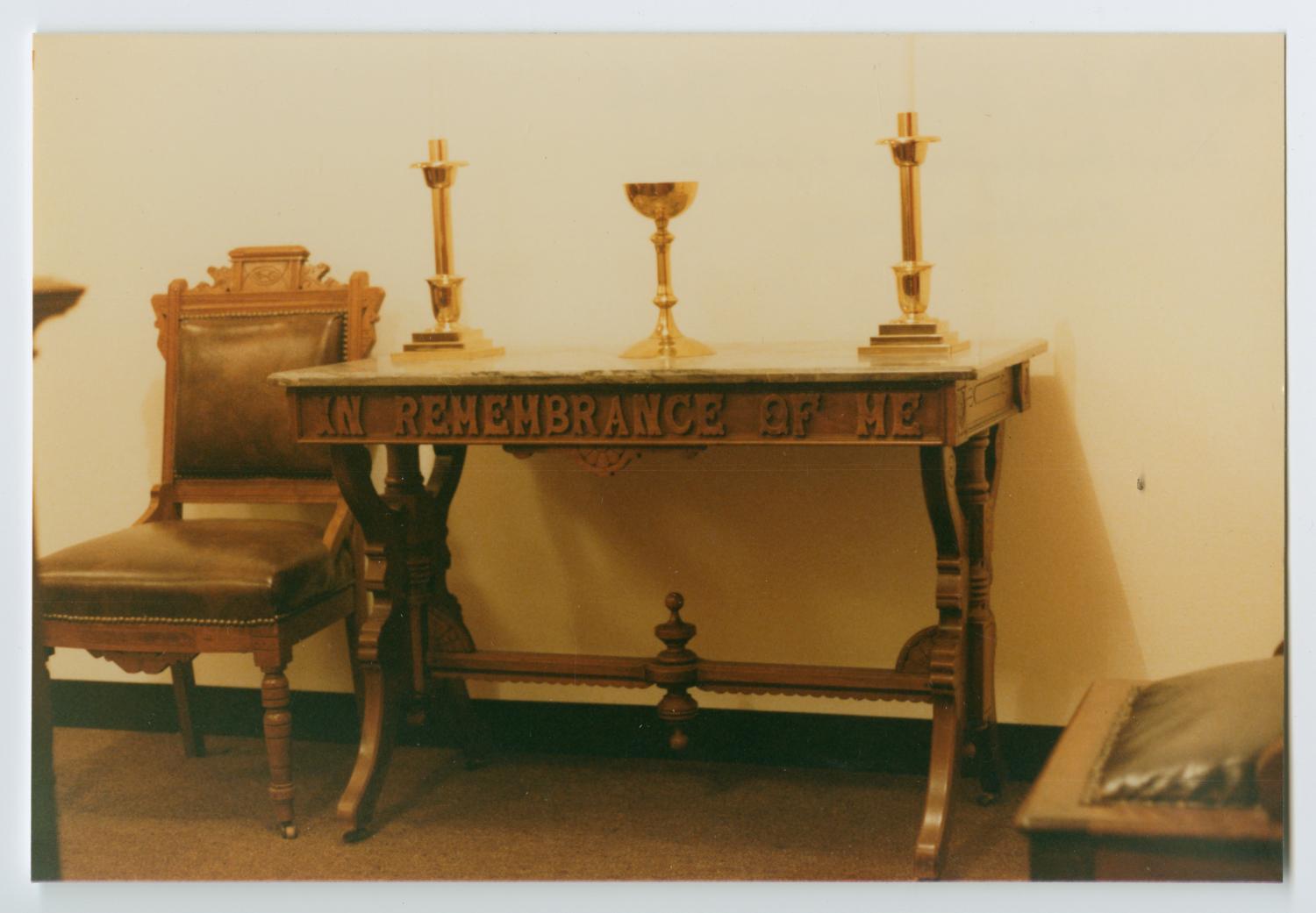
It affirms two sacraments instituted by Christ: baptism and the Lord’s Supper. Westminster presents them as true means of grace, not empty symbols, while also rejecting the idea that the elements change substance. In the Lord’s Supper, it emphasizes real spiritual communion with Christ by faith.
Law and conscience
Westminster includes important discussion of God’s moral law, Christian liberty, and the conscience. It tries to navigate the tension between legalism and license, arguing that God’s commands are for life and love, and that human authorities should not bind the conscience where God has not.
Why it resonates and why it is hard
In interfaith settings, I often say that sacred texts and confessions can function like mirrors. They show us what we already believe, and they also show us what we do not know how to hold.
Why it resonates
- It is coherent: it offers an integrated account of Scripture, God, salvation, and the church.
- It is serious about grace: it insists that salvation is God’s gift, not our accomplishment.
- It is honest about suffering and providence: it does not pretend life is easy or random.
Why it can be difficult
- Its phrasing is unfamiliar: long, carefully qualified sentences can feel far from modern speech.
- Some doctrines are disputed: especially around predestination, how the atonement is intended and applied, and questions of church government, even among Christians.
- It emerged from conflict: it carries the marks of a time when church and state were more entangled than many readers are comfortable with today.
Even if you do not fully agree with every line, it can still be spiritually fruitful to ask: What is this confession trying to protect? What vision of God and grace is it aiming to preserve?
What it is not
The Westminster Confession is easiest to read when you are clear about what you are holding in your hands.
- It is not Scripture: it is a summary that claims to be faithful to Scripture, not equal to it.
- It is not universally binding: many Christians respect it historically without adopting it as their church’s standard.
- It is not one fixed, untouched artifact: some traditions have revised or adapted parts of it over time. For example, American Presbyterianism historically adjusted sections related to the civil magistrate, reflecting a different relationship between church and state than 17th-century Britain assumed.
A gentle way to read it
If you are new to the Confession, you do not have to begin by trying to swallow it whole. Here is a slower, kinder approach.
- Start with the big chapters: Scripture, God, Christ the Mediator, justification, adoption, sanctification.
- Read with a Bible nearby: the Confession is packed with proof texts. Even when you disagree, you will learn what passages shaped its conclusions.
- Notice the pastoral notes: assurance, repentance, prayer, perseverance.
- Talk with someone: a pastor, an elder, or a trusted friend who knows the Reformed tradition can help translate what feels foreign.
Confessions are not meant to end your questions. At their best, they help you ask better ones.
FAQ
Is the Westminster Confession the same as the Five Solas?
No. The Five Solas are short Reformation-era slogans that summarize key convictions about salvation and authority. The Westminster Confession is a full doctrinal document written in the 1640s that explains those and many other topics in detail.
Do all Presbyterians follow the Westminster Confession?
Many Presbyterian denominations historically affirm it, but the way it is subscribed to varies. Some hold it as their primary confessional standard; others treat it as an important historical document, sometimes with revisions or stated exceptions.
Is the Westminster Confession Catholic or Protestant?
It is a Protestant document, specifically within the Reformed tradition.
What is the difference between the Westminster Confession and the catechisms?
The Confession is a comprehensive doctrinal statement. The Westminster Shorter and Larger Catechisms teach the same theology in a question-and-answer format, often used for instruction and memorization.
Where does “What is the chief end of man?” come from?
That famous line comes from the Westminster Shorter Catechism, not the Confession itself, though they share the same theological family. Its answer is: to glorify God and enjoy him forever.