Some Christmas carols feel like they have always existed, as if they drifted down with the snow and settled into our memory. “Hark! The Herald Angels Sing” is one of those. But it has a surprisingly traceable story, one with a preacher-poet at the center, an editor-revivalist who could not resist improving an opening line, and a composer whose melody was not originally intended as a hymn tune at all.
This is the journey of the words and the tune we sing today, and how they learned to belong to each other.
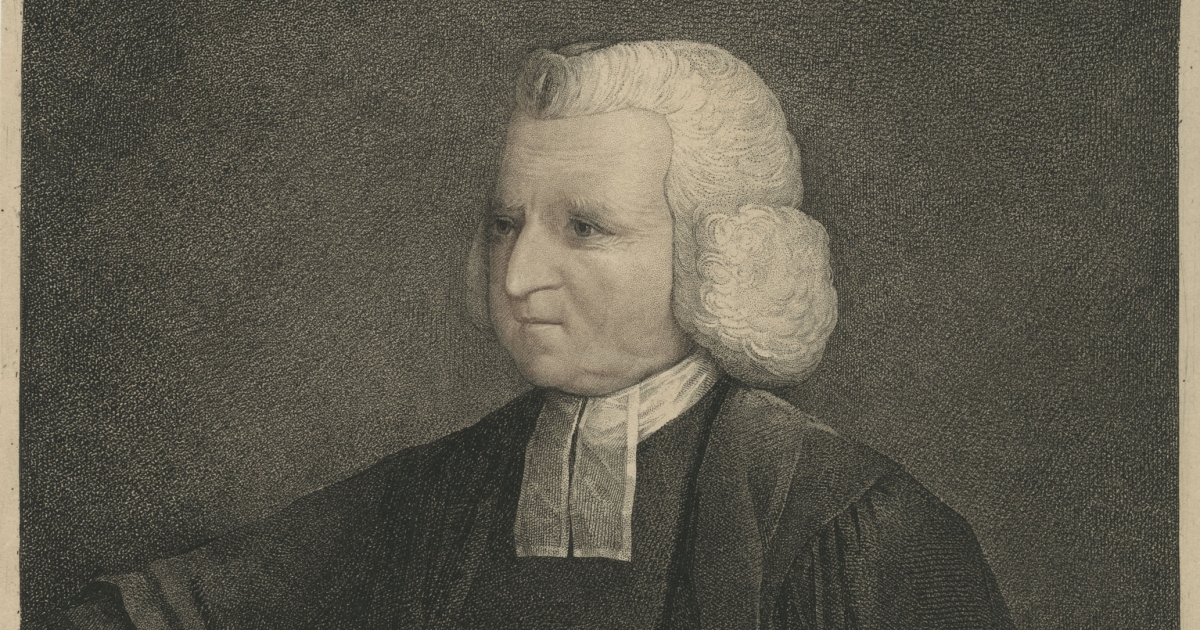
Wesley’s 1739 text
“Hark! The Herald Angels Sing” began as a hymn text written by Charles Wesley in 1739. Wesley, the younger brother of John Wesley, helped shape early Methodism not only through preaching, but through an astonishing outpouring of hymns. If John organized the movement’s theology and discipline, Charles gave it a singing voice.
Wesley’s original hymn was published under the title “Hymn for Christmas-Day”. In other words, it was written as a specific meditation on the Nativity, not as a generic winter song. The text carries Wesley’s distinctive fingerprints: dense biblical allusion, theological confidence, and a strong sense that Christmas is not merely sentimental but cosmic.
What Wesley was saying
Wesley’s hymn does not linger long at the manger. It moves quickly into what Christian theology claims is happening through the Incarnation: God drawing near, humanity being healed, creation being remade. When we sing lines like:
“Veiled in flesh the Godhead see; hail the incarnate Deity”
we are singing a compact statement of doctrine, yes, but also a kind of awe. Wesley is inviting the singer to look at the vulnerability of the Christ child and see, beneath it, the mystery of divine closeness.
Other lines widen the frame even more:
“Peace on earth, and mercy mild, God and sinners reconciled”
The angels’ announcement becomes more than a message. It becomes a doorway into reconciliation, into the possibility that estrangement and fear do not get the final word.
The first line change
Most of us begin this carol with the words:
“Hark! the herald angels sing”
But that opening line is not what Charles Wesley wrote.
Wesley’s original opening
Wesley’s 1739 text began:
“Hark how all the welkin rings”
Welkin is an old poetic word for the sky or the heavens. It is beautiful, but it is also archaic. Even in Wesley’s own century, it was the kind of word that could make a congregation pause and wonder if they had missed a vocabulary lesson on the way into church.
Whitefield’s revision
The opening line that stuck is often credited to George Whitefield, the famed Anglican evangelist and a contemporary of the Wesleys. Whitefield and the Wesleys shared a revivalist fire, even when they differed sharply on theology and church practice. Whitefield also had a keen instinct for what would land clearly with ordinary worshipers.
In later printings and popular use, the first line appears in the form we recognize:
“Hark! the herald angels sing”
It is a small change with a big effect. Wesley’s “welkin rings” emphasizes the heavens reverberating, the cosmos resounding. The revised line emphasizes the messengers themselves. It puts the angels in the foreground, turns the opening into a direct command, and makes the scene instantly vivid.
If you have ever loved a hymn but stumbled on a phrase that felt like a locked door, you already understand why that change endured. It did not dilute the message. It simply opened it.

Mendelssohn and the tune
The words were written in the 1730s, but the melody many of us hear the moment we read the title arrived much later.
Not a hymn tune at first
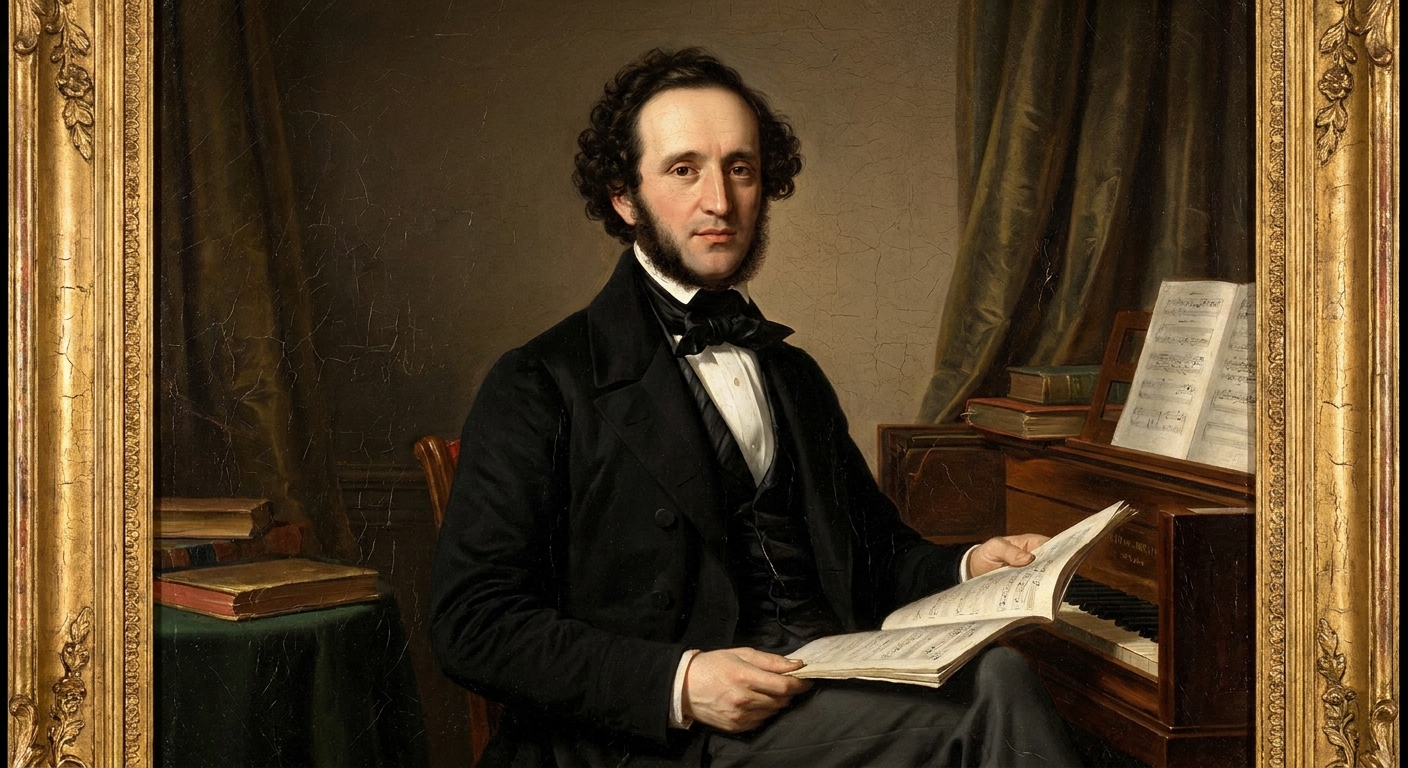
The music most associated with “Hark! The Herald Angels Sing” comes from Felix Mendelssohn. In 1840, Mendelssohn wrote a festive melody for a secular civic celebration, part of his Festgesang, composed for the 400th anniversary of Gutenberg’s invention of printing with movable type. It was made for a public celebration, not for congregational worship.
And yet, if you hum the tune, you can feel why it eventually migrated into Christmas. It has lift. It moves forward with the kind of bright insistence that matches the hymn’s proclamation.
Cummings pairs words and music
In the mid-19th century, the tune was adapted and matched with Wesley’s text through the work of William H. Cummings, an English musician who helped popularize the pairing. The result is a fusion that feels, to modern ears, almost inevitable.
Once joined, the marriage of words and melody made the carol easy to carry and powerful to sing together. Hymns are not just read. They are learned by repetition, held in breath, and remembered in the body.
Why it endures
Every generation inherits “Hark! The Herald Angels Sing” with its own joys and griefs. Some of us sing it after a year of abundance. Others sing it with a throat tight from loss. Part of what makes this hymn so resilient is that it does not depend on our mood. It declares something bigger.
It also helps to know what we are actually holding when we hold this carol. The hymn itself is Wesley’s, from 1739, even if the version most of us sing carries that later, more familiar first line. And the tune, so often assumed to be church music from the start, began as part of Mendelssohn’s 1840 civic celebration before it was carried into congregational life through Cummings’s adaptation and pairing.
Wesley wrote with a theologian’s precision, but also with a pastor’s hope: that the Christmas story is not only that a child was born, but that reality itself has been touched by mercy.
When I sing it now, I hear two movements at once. First, the outward movement of proclamation: joy announced, peace offered, reconciliation named. Second, the inward movement of longing: a quiet prayer that what the angels sing might become true in me, in my relationships, in our communities.
That, perhaps, is why the carol keeps returning. Not because it is quaint, but because it is brave enough to say peace on earth out loud.