I used to think the “fruit of the Spirit” was a kind of spiritual personality test. If I was naturally upbeat, I must be “joy.” If I liked quiet mornings, maybe I was “peace.” But when I finally sat with Paul’s words in Galatians 5, I realized he is not handing out labels. He is describing what grows in a human life when that life is rooted in the Spirit of God.
Fruit is not earned like a badge. It ripens. It takes time. And it is meant to nourish others, not just make us feel accomplished.

The fruit of the Spirit in Galatians 5:22-23
Paul writes that “the fruit of the Spirit is” and then offers one “fruit” with multiple qualities, a single harvest you can recognize by what it produces in a person:
- Love
- Joy
- Peace
- Patience
- Kindness
- Goodness
- Faithfulness
- Gentleness
- Self-control
Notice the shape of the list. It is not about public status or spiritual excitement. It is character. It is relational. It is the slow re-formation of a person into someone who reflects Christ.
Paul adds, “against such things there is no law.” In other words, no commandment needs to forbid love, peace, or self-control. A life shaped by the Spirit fulfills the heart of God’s intent.
Why Paul talks about fruit here
Galatians is not a letter about trying harder. It is a letter about freedom in Christ. Paul is pleading with the Galatian churches not to rebuild their life with God on the foundation of law-keeping as a way to be made right.
Instead, he calls them to a different center: the Spirit. In that light, the fruit of the Spirit is not a new set of rules. It is what freedom looks like when it becomes flesh-and-blood life.
Fruit means growth, not performance
Paul’s metaphor is tender if we let it be. Fruit grows from a living source. It is produced because a tree is healthy and well-rooted, not because it strains hard enough.
Fruit shows connection to the Spirit
The fruit of the Spirit is not a checklist for spiritual overachievers. It is evidence of a new center of gravity. When the Spirit is leading, certain qualities begin to appear in how we respond, how we repair, how we speak, and how we treat those who cannot repay us.
Fruit is meant to belong together
Paul uses the singular “fruit,” which many readers take to suggest an integrated kind of maturity rather than disconnected traits we collect. In real life, these qualities intertwine. Patience makes room for kindness. Self-control protects love. Gentleness carries peace into conflict.
The contrast: Spirit vs. flesh
Paul sets the fruit list inside a sharp contrast. Before he names the fruit of the Spirit, he names what he calls the “works of the flesh” in Galatians 5:19-21.
“Flesh” here does not mean bodies are bad. Paul is talking about human life run by the ego, by appetite, by fear, by rivalry, life curved inward on itself. His list includes things like sexual immorality, idolatry, jealousy, fits of anger, selfish ambition, dissensions, factions, envy, drunkenness, and more. Paul’s own list is longer than any quick summary, but the direction is clear.
Works get manufactured, fruit gets cultivated
The language matters. Paul calls them works of the flesh and fruit of the Spirit. “Works” suggests something we churn out when we are driven by impulse or power. “Fruit” suggests something that grows when we live from another source.
Two different kinds of community
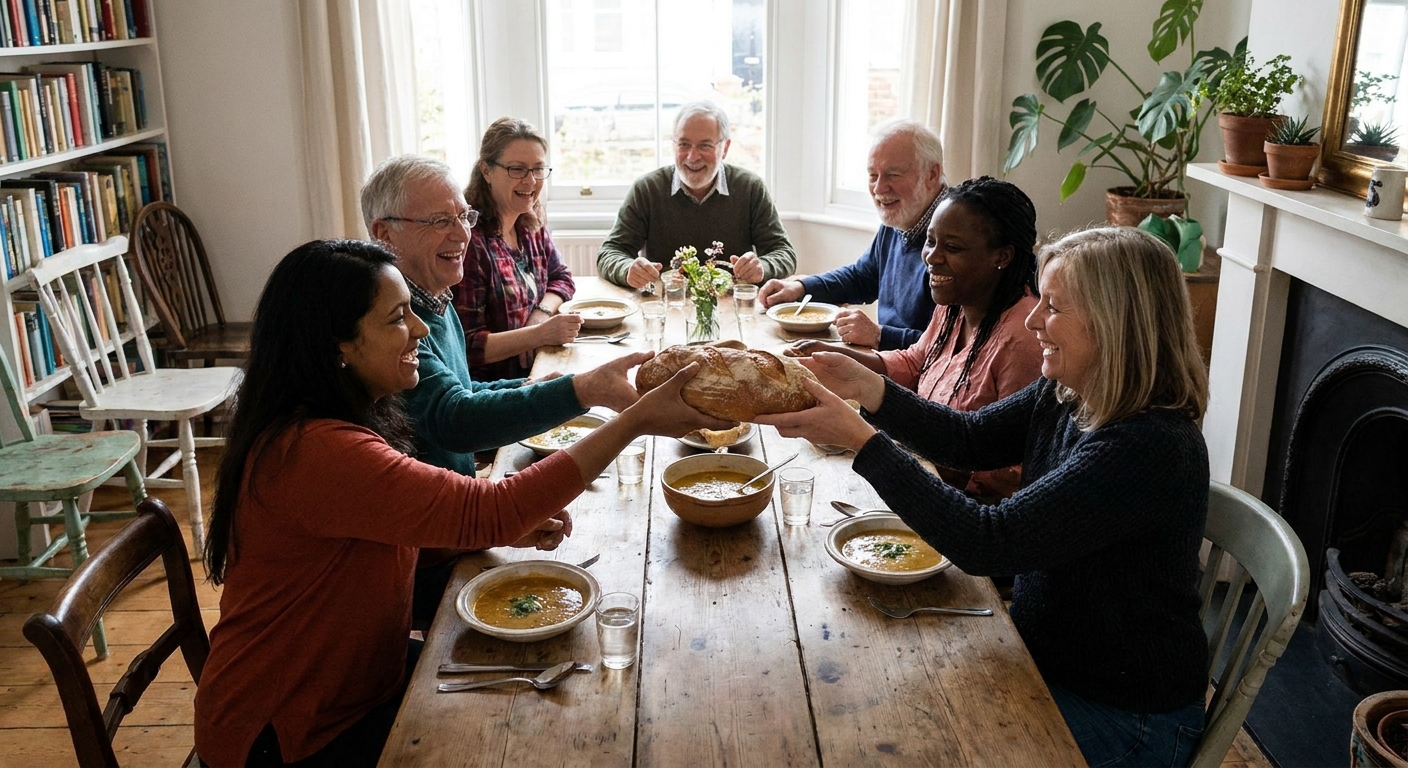
Many of the “works of the flesh” fracture relationships and communities: rivalry, factions, envy, outbursts of anger. By contrast, the fruit of the Spirit builds a different kind of community, one that can hold difference without devouring each other.
What it means to walk by the Spirit
Paul’s aim is not to get us to admire a beautiful list. He wants a different way of living. In Galatians 5:16 he writes, “Walk by the Spirit, and you will not gratify the desires of the flesh.” Later he adds, “If we live by the Spirit, let us also keep in step with the Spirit” (Galatians 5:25).
Walking is ordinary and repeated
“Walk” is not a dramatic spiritual sprint. It is Monday morning. It is the tone we use in the car. It is how we handle being misunderstood. It is the decision to apologize without defending ourselves.
Keeping in step takes attention and surrender
To keep in step with the Spirit is to ask, again and again, “What is the loving thing here? What is the faithful thing? What would gentleness look like in this moment?”
This is where grace becomes practical. The Spirit does not just forgive us. The Spirit reshapes us.
Each fruit, briefly
There are many beautiful word studies one could do here, but sometimes we need simple clarity first. Here is a grounded way to understand each quality as spiritual formation, not mere temperament.
Love
Not sentiment, but committed goodwill. Love seeks the true good of another, even when it costs something.
Joy
Not constant cheerfulness, but a deep gladness rooted in God’s presence and promises, even in seasons of grief.
Peace
More than the absence of conflict. Peace is wholeness, a steadiness that can face tension without becoming violent inside.
Patience
The capacity to endure delay, irritation, and suffering without lashing out or giving up on people. Some Bible translations use words like “forbearance” or “longsuffering,” which can help widen the picture.
Kindness
A posture of generosity and warmth. Kindness is love with open hands.
Goodness
Moral beauty and integrity. Goodness chooses what is right, not just what is easy.
Faithfulness
Reliability, loyalty, trustworthiness. Faithfulness keeps showing up, especially when no one is applauding.
Gentleness
Strength under control. Gentleness is not weakness. It is power that refuses to harm.
Self-control
Spirit-enabled restraint. Self-control is freedom from being ruled by urges, cravings, or reactive emotions.
Fruit vs. spiritual gifts
It is easy to mix categories here, especially in churches where the word “spiritual” tends to mean “supernatural.” But in the New Testament, fruit and gifts are not the same.
Fruit is character, gifts are capacity
The fruit of the Spirit describes who we are becoming. Spiritual gifts, discussed in passages like 1 Corinthians 12 and Romans 12, describe capacities for serving others.
A person can be gifted and still be immature. That is part of Paul’s burden in 1 Corinthians. Fruit, on the other hand, is the Spirit shaping maturity itself.
Fruit is for everyone
Not every Christian will teach, lead, or speak in tongues, for example. But every Christian is called toward love, gentleness, and self-control. Fruit is not specialized. It is the shared calling of a Spirit-led life.
How the fruit grows in real life
Paul’s list can feel inspiring until we remember how unfruitful we sometimes feel. If that is you, you are not disqualified. You are human.
Start with roots, not outcomes
Fruit grows from connection. In Christian language, that connection looks like prayer, scripture, worship, honest repentance, and life in community. Not as points to score, but as ways we stay near the source.
Notice pressure points
If you want to see what is forming you, notice what comes out under stress. Traffic, conflict, rejection, fatigue, and disappointment often reveal whether we are keeping in step with the Spirit or being dragged by the flesh.
Practice small obediences
Growth often looks like tiny, almost invisible choices: the decision to speak gently, to wait before replying, to tell the truth without cruelty, to bless someone who irritates you.
Over time, those choices become a way of being.

Common misunderstandings
If I struggle, I must not have the Spirit
Struggle can be a sign of life. Dead things do not wrestle. Paul describes an inner conflict in Galatians 5:17, the Spirit and the flesh in opposition. The question is not whether you ever feel temptation, but what you are choosing to follow and who you return to when you fall.
Fruit means I should never feel anger or sadness
Peace and self-control do not erase emotion. They transform how we carry it. Even Jesus expressed grief and anger. The fruit is not emotional numbness. It is Spirit-led wholeness.
Fruit is just being nice
Kindness is part of the list, but goodness, faithfulness, and self-control require courage. Gentleness can confront. Love can set boundaries. Fruit is not thin politeness. It is sturdy holiness expressed with compassion.
A simple weekly reflection
If you want a gentle practice that stays true to Paul’s intent, try this for a few days:
- Choose one fruit that feels especially needed, like patience or self-control.
- Name one situation where you tend to lose your footing.
- Ask one honest question: “Spirit of God, what would it look like to keep in step with you here?”
- Take one small action that aligns with that fruit, even if it feels awkward.
We often want transformation to arrive like lightning. More often, it arrives like sunrise. Slowly, steadily, and unmistakably, if we keep turning our face toward the light.
FAQ
Where is the fruit of the Spirit found in the Bible?
The fruit of the Spirit is listed in Galatians 5:22-23, in Paul’s letter to the Galatian churches.
Why does Paul call it “fruit” and not “fruits”?
Paul uses the singular “fruit” in Galatians 5:22. Many readers take that to point toward a unified, integrated maturity shaped by the Spirit, rather than a set of unrelated traits.
Is the fruit of the Spirit the same as the gifts of the Spirit?
No. Fruit is character formed in every Spirit-led believer. Gifts are abilities for service given in diverse ways. Fruit is about who you are becoming. Gifts are about how you serve.
Can a person have some fruit and not others?
In real life, growth is uneven. You might notice gentleness growing while patience still feels tender. But the Spirit’s aim is a whole harvest over time, not a few isolated successes.