I remember the first time I heard someone say, “That was all law, no gospel.” It was after a sermon in a small Lutheran church, said quietly, not as a slam but as a careful diagnosis. At the time, I had no idea what they meant. I only knew the feeling: I had walked out with a tight chest, motivated, convicted, and somehow still unsure whether God was for me or merely evaluating me.
The Lutheran distinction between law and gospel is meant to clear that fog. It is not a way to divide the Bible into “bad parts” and “good parts.” It is a way of listening for two different kinds of divine speech, each doing its own work in the human heart: God’s command that exposes what is true about us, and God’s promise that gives what is true about Christ for us.

What Lutherans mean by law
In Lutheran theology, “law” is not limited to the Old Testament, the Ten Commandments, or the Torah. Law is any word from God that commands and demands, exposes and accuses, and reveals what God’s holiness requires.
In other words, the law tells the truth about what love requires and what sin distorts. It is God saying, in a thousand forms, “This is what is good,” and therefore also, “This is what you have not done,” or “This is what you have done that harms.”
What the law does
- It reveals God’s will. The law shows what life looks like in alignment with God’s character: love of God and love of neighbor.
- It exposes sin. The law functions like a light turned on in a cluttered room. It does not create the mess, but it makes it visible.
- It stops our self-justifying stories. Many of us are skilled at spiritual bargaining. The law interrupts the illusion that we can climb our way into righteousness.
Lutherans often point to passages like Romans 3:20: “Through the law comes knowledge of sin.” The law is truthful, and that truth can sting. But it is not cruelty. It is clarity.
What Lutherans mean by gospel
If the law is God’s command, the gospel is God’s promise. Gospel is not “good advice,” “helpful principles,” or “try harder but with Jesus.” In Lutheran usage, the gospel is a specific announcement: God forgives sinners for Christ’s sake.
The gospel tells you what God has done for you in Jesus Christ. It does not primarily ask something of you. It gives something to you.
What the gospel does
- It delivers forgiveness. Not as a vague sentiment, but as a concrete verdict: “In Christ, you are forgiven.”
- It creates faith. Faith, in Lutheran thought, is not a heroic inner achievement. It is trust awakened by a promise, worked by the Holy Spirit through God’s Word.
- It comforts the conscience. The gospel speaks to the place in us that fears being rejected, abandoned, or finally exposed.
A classic summary is Ephesians 2:8–9: “By grace you have been saved through faith… not a result of works.” Lutherans hear that as gospel speech, pure gift.
And because Lutheran piety tends to be very concrete, it also helps to say it plainly: the gospel is not only an idea. It is delivered in the means of grace, through preaching, absolution, Baptism, and the Lord’s Supper.

Law and gospel are not two gods
It can sound, at first, as if law and gospel describe two different sides of God: stern judge versus gentle savior. Lutheran theology insists this is not the point. God is one. But God’s word comes to us in two distinct ways because we are conflicted creatures: simultaneously needy, defensive, fearful, and longing for mercy.
Another common misunderstanding is that law equals “Old Testament” and gospel equals “New Testament.” Lutherans find law and gospel in both Testaments.
- Law in the New Testament: Jesus’ “Be perfect” (Matthew 5:48), or his sharp exposure of heart-level sin.
- Gospel in the Old Testament: God’s forgiving mercy to Israel, the promise of redemption, the psalms of refuge.
The distinction is less about where a verse sits in the Bible and more about what the verse is doing when it is preached or heard.
How to tell the difference
Here is a practical lens I use when I am reading Scripture or listening to a sermon.
Questions that usually identify law
- Is this telling me what I must do or be?
- Is this exposing my sin or diagnosing my heart?
- Is this showing consequences, warnings, or judgment?
Questions that usually identify gospel
- Is this telling me what God has done in Christ?
- Is this giving a promise, not a demand?
- Is this forgiving, rescuing, adopting, or declaring me righteous?
Sometimes a passage has both, and the art is to avoid turning gospel into a new law. For example, “Jesus died for you” can be twisted into “So you had better be grateful enough,” which subtly shifts gift into test.
How it helps you read
When Lutherans talk about distinguishing law and gospel, they are describing a way of reading that pays attention to spiritual impact. The phrase “rightly dividing” often shows up in Lutheran conversation as shorthand for this, echoing the language of 2 Timothy 2:15.
In lived terms, the distinction helps answer two questions:
- What does this text reveal about my need? (law)
- What does this text reveal about God’s provision in Christ? (gospel)
Law texts without despair
Some biblical passages land like a mirror held too close. The law strips away our favorite hiding places. But the Lutheran instinct is to read law all the way down, until we stop bargaining with God, because only then will the gospel sound as good as it actually is.
Gospel texts without conditions
Other passages land like water on scorched ground. The goal is to let them remain unconditional promise. When a text announces Christ’s mercy, Lutheran reading practices resist adding fine print.
This does not flatten Scripture into a single repetitive message. It honors Scripture’s varied genres and voices while keeping the heart of the Christian proclamation clear: Christ for you.
A quick example
Consider Mark 10 and the rich young man. Jesus’ “Go, sell all you have” functions as law. It exposes what clings to the heart and how impossible self-salvation really is. But the same scene also opens toward gospel: “With man it is impossible, but not with God. For all things are possible with God” (Mark 10:27). In other words, the rescue will not come from the man’s impressive effort, but from God’s mercy and power to save.
How it shapes preaching
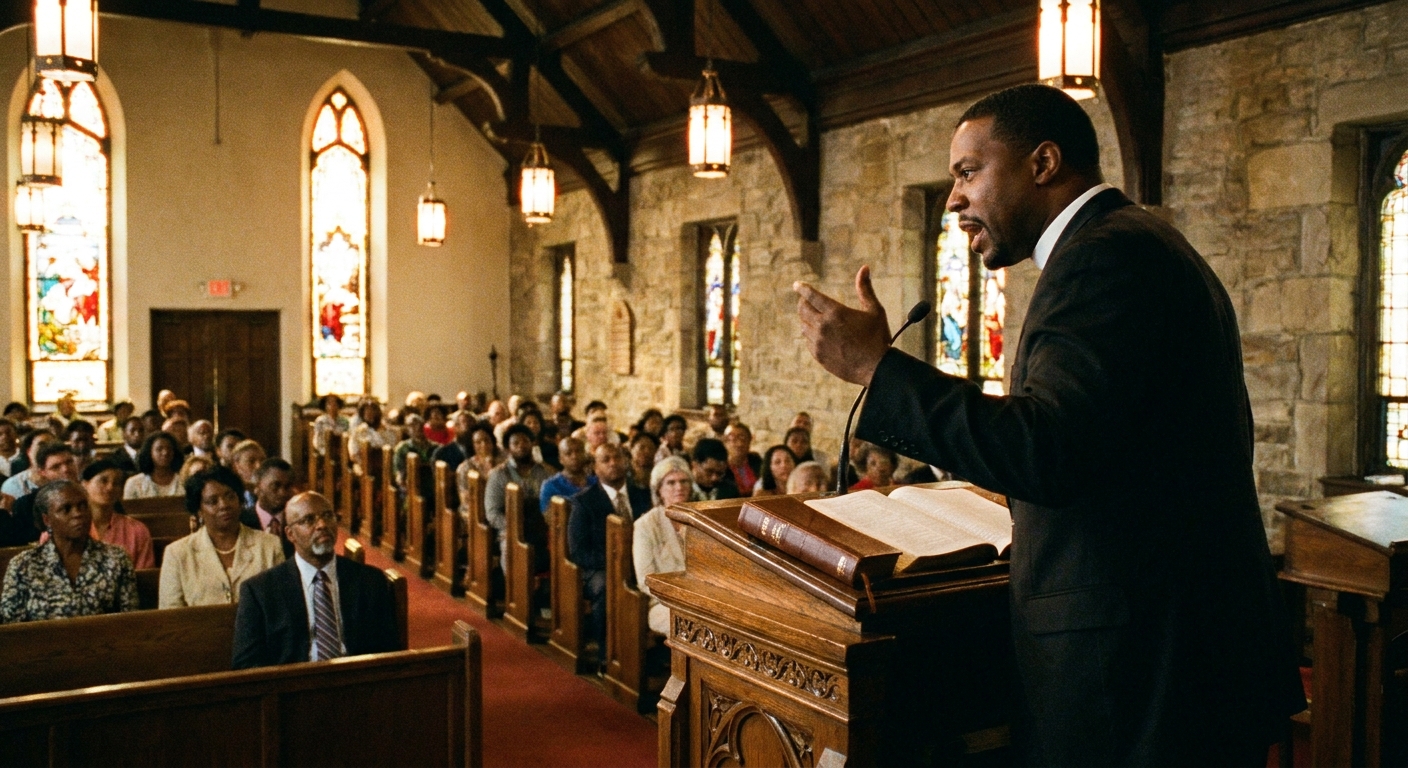
In Lutheran preaching, law and gospel are not “two segments” that must be evenly balanced. They are two necessary words aimed at two different spiritual problems.
When preaching needs law
If people are secure in their self-righteousness, numb to harm, or convinced they do not need mercy, preaching that offers comfort too quickly can become cheap reassurance. Law addresses the lie, “I am fine, and I do not need a Savior.”
When preaching needs gospel
If people are crushed by guilt, stuck in shame loops, or exhausted from trying to earn God’s favor, preaching that only gives commands will deepen despair. Gospel addresses the lie, “God is against me, and I must fix myself before I can come near.”
The Lutheran claim is that only the gospel creates Christians, because only the promise creates trust. More carefully said, the Holy Spirit creates and sustains faith through the gospel as it is spoken and given in Word and Sacraments. The law can restrain, educate, and warn, but it cannot resurrect a heart.
When they get mixed up
Most spiritual confusion I see, across traditions, comes from mixing these two voices.
When law is preached as gospel
This happens when commands are offered as the cure. The result is often anxiety, performance spirituality, and burnout. People hear, “Do better,” but not, “Christ has done it.”
When gospel is preached as law
This happens when grace is turned into a new measuring stick. The message becomes, “God forgives you, so prove you are grateful by being worthy.” The result is often hidden shame, because even gratitude becomes one more task we fail.
When gospel is preached without law
Less common in some circles, but still real: if sin is never named, grace can become vague and unnecessary. The heart quietly concludes, “I did not really need rescuing.” In Lutheran terms, law makes room for gospel by telling the truth about the depth of the wound.
Related questions
If you have heard discussions about “the uses of the law” or debates about James and Paul, you are standing next to important, worthwhile conversations. Without getting lost in the weeds, Lutherans often summarize the law’s uses like this: it curbs outward harm, it mirrors sin by accusing us, and it guides the believer’s life in love.
But the center of the law and gospel distinction is simpler and more pastoral: Is God addressing me here with a command that exposes my sin, or with a promise that gives me Christ?
FAQ
Is the law bad in Lutheran theology?
No. The law is good because it comes from God and names what love looks like. The problem is not the law. The problem is what sin does in us, turning even good things into ladders for self-salvation or sources of condemnation.
Is the gospel just “God loves you”?
“God loves you” can be gospel, but in Lutheran terms the gospel is more specific. It is God’s promise that in Jesus Christ, your sin is forgiven and you are reconciled to God.
Can one Bible verse be both law and gospel?
A single verse can contain both elements, or it can function differently depending on the hearer. But typically, a statement is either primarily demand (law) or primarily promise (gospel). Paying attention to grammar helps: commands and conditions often signal law; declarations and gifts often signal gospel.
How does this help in everyday life?
It helps you locate what your soul actually needs. When you are excusing harm, you may need the law’s honest mirror. When you are drowning in shame, you may need the gospel’s unearned promise. Most of us need both, but not as a blended smoothie. We need them as clear words that do their proper work.
A gentle closing
In my garden out back, the Oregon air can change in minutes, from sharp wind to a soft clearing. The shift is not because the world became unreal. It is because visibility returned.
That is what the law and gospel distinction has offered many Christians across the centuries: visibility. The law tells the truth about us without flinching. The gospel tells the truth about God without hesitation.
If you are learning to read Scripture through this lens, take your time. Listen carefully for what is being asked, and what is being given. And when you hear the promise, let it be promise. Let it land as gift.