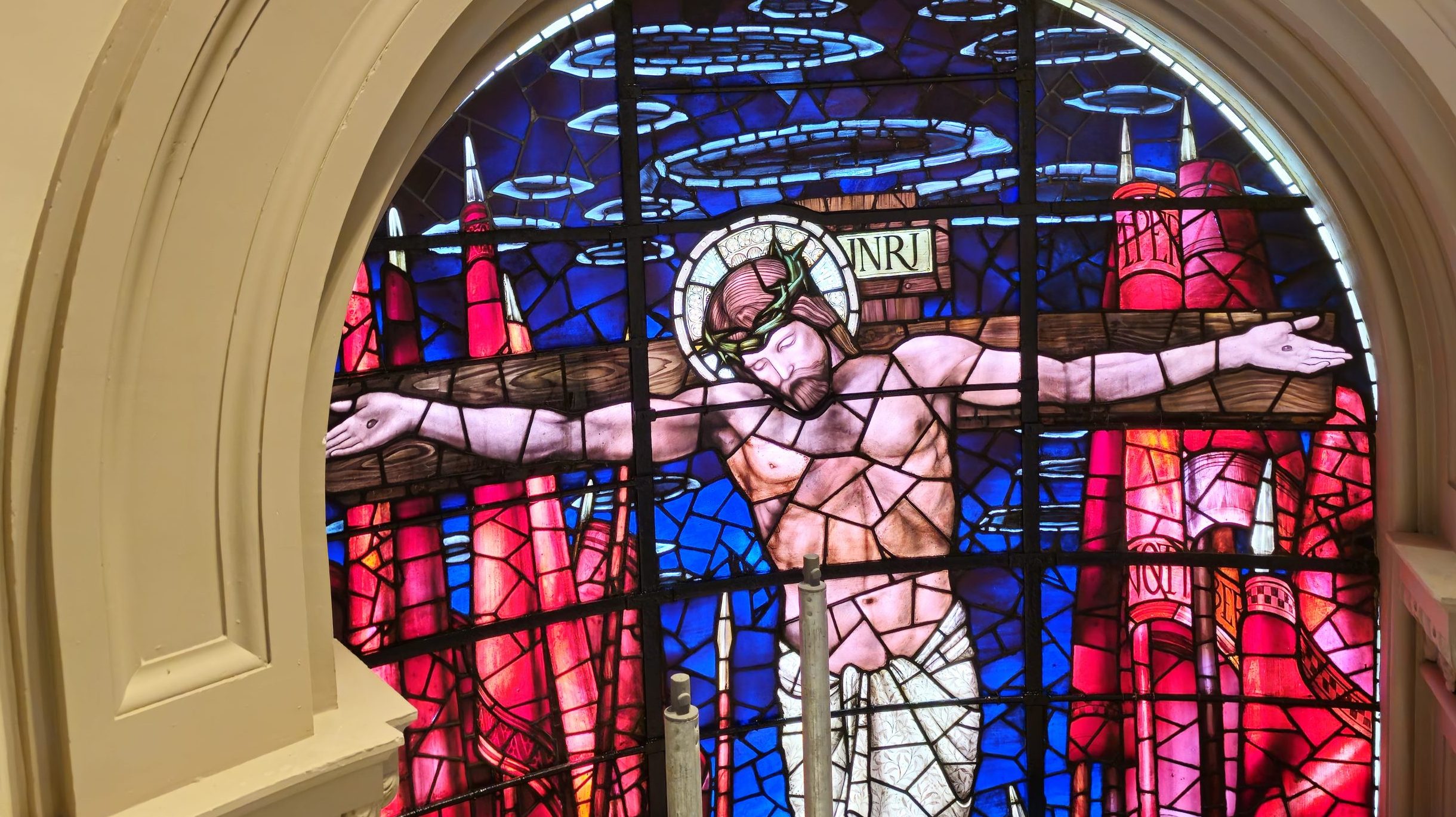
I still remember the first time I heard Ephesians 2:8-9 read aloud in a small living room Bible study. Someone spoke the words slowly, like they were laying kindling for a fire: “By grace you have been saved through faith… not a result of works, so that no one may boast.” The room went quiet. Not because we had solved anything, but because it sounded like an answer to something we were all tired of proving.
These verses are famous, but they are not meant to float on their own. They sit inside a tightly woven paragraph, Ephesians 2:1-10, where the letter presents the apostle Paul telling a before-and-after story: dead in sin, made alive in Christ, saved by grace, and then sent back into the world for good works that flow from that grace.
“For by grace you have been saved through faith. And this is not your own doing; it is the gift of God, not a result of works, so that no one may boast. For we are his workmanship, created in Christ Jesus for good works, which God prepared beforehand, that we should walk in them.” (Ephesians 2:8-10)

Ephesians 2:8-9 in context
Here is the flow of thought in Ephesians 2:1-10, in plain language:
- Verses 1-3: Humanity’s “before” picture. The writer describes people as spiritually “dead” in sins, swept along by destructive patterns, and unable to rescue themselves.
- Verses 4-7: The turning point begins with two words many readers find especially hope-filled: “But God.” God acts out of mercy and love, making people alive with Christ.
- Verses 8-9: A summary of the rescue: salvation is by grace, received through faith, not produced by works, and therefore not a basis for bragging.
- Verse 10: The “after” picture. Those who are saved become God’s workmanship, created in Christ for good works that God has already prepared.
So Ephesians 2:8-9 is not anti-good-works. It is anti-boasting. It is a declaration that the root of salvation is God’s gift, not human achievement.
“By grace you have been saved”
Grace in Paul’s letters is more than God being lenient. It is God’s generous, initiating kindness, a love that moves first.
In the immediate context (Ephesians 2:4-5), grace is anchored in God’s character: “rich in mercy” and acting “because of the great love with which he loved us.” The emphasis is not on how impressive human faith is, or how improved someone has become. The emphasis is on God’s decision to give life where there was death.
When Christians quote Ephesians 2:8-9, they often mean: salvation begins in God’s mercy, not in our moral resume.
“Through faith”
Faith here is best understood as trusting reliance on what God has done in Christ. It is not simply agreeing that certain statements are true, and it is not a spiritual performance that earns points.
Because the passage has just described people as “dead” in sin, “through faith” reads like an open hand rather than a ladder. Faith receives. Faith clings. Faith turns toward the rescuer.
This is why many Christians speak of faith as the means, or the channel, through which grace is received. Grace is the source. Faith is the posture that says, “Yes, I need this gift.”

“Not from yourselves”
This short line has generated a lot of careful conversation among Christians, partly because the phrasing can be read in slightly different ways.
At the heart of it, the point is the same one made since “But God” in verse 4: the saving initiative is God’s. The rescue is not self-generated. It is given.
Some Christian teachers emphasize that salvation is the gift. Others go further and say even the faith by which we receive salvation is itself God’s gift. Whichever emphasis a person leans toward, the direction stays the same: the spotlight belongs on God’s generosity, not human spiritual leverage.
“Not a result of works”
When the text says salvation is “not a result of works,” it is not saying that actions do not matter. It is saying that works are not the basis for being saved.
In other words:
- Works are not the price tag of salvation.
- Works are not the proof that you are worthy of grace.
- Works are not the currency that purchases a place with God.
In the wider New Testament, Christians still hear strong calls toward holiness, generosity, reconciliation, and care for the vulnerable. Ephesians itself goes on to urge a new way of life shaped by love. But Ephesians 2:8-9 insists that none of that is how you earn your way into God’s mercy.
“So no one may boast”
This is the punchline of the sentence. It does not merely say “not by works” as a theological technicality. It attaches a purpose clause: so that no one may boast.
Boasting is what happens when we treat salvation like a personal trophy. It is the impulse to divide the world into the deserving and the undeserving, with ourselves conveniently on the deserving side.
And boasting can look very ordinary. It can sound like, “I would never struggle with that,” or “God must be pleased with me because I am not like them.” It can hide inside religious credentials, moral comparison, or the quiet pride of feeling spiritually ahead.
Ephesians goes on to address the dividing wall between Jews and Gentiles (Ephesians 2:11-22). In that light, the “no boasting” line safeguards humility and unity. If salvation is a gift, then the ground is level at the foot of the cross.
How verse 10 completes it
If Ephesians 2:8-9 is where people often stop, Ephesians 2:10 is where the picture is completed:
“For we are his workmanship, created in Christ Jesus for good works, which God prepared beforehand, that we should walk in them.”
This matters because it keeps readers from two common misreadings:
- Misreading #1: “Not by works” means Christians do not care about ethics. Verse 10 immediately says the opposite: believers are re-created for good works.
- Misreading #2: Good works are optional add-ons for extra spiritual people. Verse 10 presents them as part of the intended path, something God prepares and invites people into.
A simple way many Christians summarize it is: we are not saved by good works, but we are saved for good works.

How traditions read it
Christians broadly agree on the heartbeat of this passage: salvation is God’s gift, not human achievement. Still, different traditions often emphasize different angles.
Many Protestants lean hard on the “not a result of works” language to protect the idea that we cannot earn salvation. Many Catholics and Orthodox are equally serious about grace as the beginning of salvation, while also stressing that a living faith grows into love and obedience as part of a real transformation. In practice, the debate is often less about whether grace is necessary and more about how to describe the relationship between God’s gift and a life that actually changes.
That is also why readers often connect Ephesians 2 with James 2 (“faith without works is dead”). James is not trying to smuggle earning back into the gospel. He is warning against a faith that is only words. Put them together and you get a fuller picture: grace saves, faith receives, and genuine faith does not stay alone.
What Christians mean by it
Because these lines are so compact, Christians use them in a few recurring ways. When you hear Ephesians 2:8-9 in conversation, it often functions like shorthand for these convictions:
- Salvation is God’s initiative. God moves toward people before they can clean themselves up.
- Faith is trusting reception, not moral achievement. The emphasis is dependence, not impressiveness.
- No one gets to brag. Spiritual pride has no stable ground when everything is gift.
- Grace produces a different life. The “not by works” of verses 8-9 is followed by the “for good works” of verse 10.
Common questions
Does “not by works” mean good deeds are worthless?
No. In this passage, good works are not treated as worthless. They are treated as downstream. They follow salvation rather than cause it. Ephesians 2:10 makes that explicit.
If salvation is a gift, what is my part?
In this framing, the human response is faith, which includes trust, turning, and receiving. Christians differ in how they describe the mystery of divine action and human response, but Ephesians 2 places the weight on God’s grace as the foundation.
Is this mainly about the Law of Moses?
Ephesians 2 later talks about Gentiles and Jews being brought together, and it mentions the “law of commandments expressed in ordinances” (Ephesians 2:15). Still, in verses 8-10 the focus is broader: no kind of human “works” can become a basis for boasting in God’s presence.
Why does this feel so personal to people?
Because it meets a familiar ache: the fear that we are only as loved as we are impressive. Ephesians 2 says love moved first. Grace came while we were helpless. The Christian life begins not with a demand to prove yourself, but with an invitation to receive.
A gentle takeaway
Ephesians 2:8-9 places salvation in the realm of gift. Grace is the source. Faith is the receiving. Works are not the basis. Boasting is shut out at the door.
Then verse 10 steadies the whole thing. The gift does not leave us unchanged. It re-creates us into people who can finally do good, not to earn God, but because God has already moved toward us in love.