I grew up in a house where prayers came in different languages and from different holy books. That meant we were careful with words, not because God was fragile, but because relationships are. In most religious traditions, how we speak about the divine reveals what we love, what we fear, and sometimes what we are trying to push away.
“Blasphemy” is one of those words that can sound like ancient thunder. But it still shows up in everyday questions: Is it blasphemy to joke about God? To doubt? To be angry? To say something in a moment of pain?
Let’s define blasphemy in biblical and Catholic terms, then gently sort out what it is and what it is not.
Blasphemy, simply defined
In the broad biblical sense, blasphemy is speaking in a way that shows contempt for God, God’s name, or God’s glory. (Some traditions also extend the idea to actions that express the same contempt, but in Scripture the focus is usually on what is said and proclaimed.)
Blasphemy can include:
- Direct insults aimed at God
- Attributing evil to God or mocking God’s goodness
- False or presumptuous claims to divine status or authority in a way that tries to take God’s place
- Public contempt for what is held sacred, as a way of dishonoring God
In Catholic moral theology, blasphemy is treated as a sin against the Second Commandment, which concerns reverence for God’s name.
Blasphemy in the Bible
Old Testament: God’s name and holiness
In the Old Testament, God’s “name” is not just a label. It represents God’s presence, reputation, and covenant relationship with the people. That is why the commandment against taking the Lord’s name “in vain” (see Exodus 20:7) is not mainly about a vocabulary list. It is about treating God as weightless, usable, or dismissible.
The most explicit legal treatment appears in Leviticus 24:10–16, where a man is accused of “blaspheming the Name.” The passage presents blasphemy as a grave communal offense. In that world, publicly cursing God was not merely private speech. It was understood as tearing at the covenant fabric that held a community together.
It helps to remember that ancient Israel’s civil and religious life were intertwined. The severity of the penalty in Leviticus reflects that social reality. Scripture is describing how Israel understood its holiness obligations under covenant law.
New Testament: accusations around Jesus
In the Gospels, “blasphemy” becomes a flashpoint around Jesus’ identity and authority.
At times, religious leaders accuse Jesus of blasphemy because he speaks and acts with God’s prerogatives, particularly in two areas:
- Forgiving sins. In Mark 2:5–7, when Jesus forgives a paralytic, some scribes respond, “Why does this man speak that way? He is blaspheming. Who can forgive sins but God alone?” The charge here is theological: Jesus is doing what belongs to God.
- Claiming a unique unity with the Father. In John 10:33, opponents say, “It is not for a good work that we are going to stone you but for blasphemy, because you, being a man, make yourself God.”
Then, at Jesus’ trial, the language becomes even more direct. In Mark 14:61–64, after Jesus affirms his identity in terms that echo Daniel’s vision, the high priest tears his garments and declares, “You have heard his blasphemy.”
From a Christian reading, these accusations are tragically ironic: the one most perfectly revealing God is condemned as someone dishonoring God. That tension is part of what makes the Gospel accounts spiritually unsettling and so enduring.
Blasphemy in Catholic teaching
The Catholic Church addresses blasphemy under the Second Commandment. The Catechism of the Catholic Church describes blasphemy as speech that shows contempt or irreverence toward God and sacred realities, including using God’s name in ways that express hatred, reproach, defiance, or insult (see CCC 2148).
In plain terms, the Catechism treats blasphemy as:
- Speaking against God inwardly or outwardly
- Using God’s name to curse, threaten, or demean
- Insulting sacred persons or things in a way that targets God’s holiness
Because blasphemy strikes at God’s honor, Catholic tradition generally considers it grave matter. But Catholic moral teaching also considers two other elements when evaluating personal guilt: full knowledge and deliberate consent (see CCC 1857–1859). And it recognizes that responsibility can be reduced by factors like ignorance, duress, fear, habit, or psychological and social pressures (see CCC 1860).
If you are scrupulous or anxious, hold onto this: Catholic teaching does not reduce sin to accidental syllables. God is not waiting to “catch” you. God looks at the heart, the intention, and the freedom you actually had.
Is it always mortal sin?
In Catholic terms, blasphemy is usually classified as grave matter, meaning it has the kind of seriousness that can be mortal sin. Whether it is mortal in a particular case depends on the classic criteria (see CCC 1857–1859):
- Grave matter: the act is seriously wrong by its nature
- Full knowledge: the person understands what they are doing is seriously wrong
- Deliberate consent: the person freely chooses it
So yes, deliberate, knowing contempt of God can be mortal. But there are also many situations where a person’s responsibility is reduced: mental distress, habit, social pressure, immaturity, intoxication, or moments of intense grief can all complicate “full consent” (see CCC 1860).
If you are trying to sort through your own experience, a trusted priest, pastor, or spiritual director can help you discern without panic.
The unforgivable sin
People often hear “blasphemy” and immediately think of “the unforgivable sin.” In the Gospels, Jesus warns about blasphemy against the Holy Spirit (see Matthew 12:31–32; Mark 3:28–30; Luke 12:10). This is not the same thing as blasphemy in general.
What does it mean?
In context, Jesus’ warning is tied to a specific, hardened posture: religious leaders witness his works and attribute the Spirit’s work to evil. Christian tradition often explains “blasphemy against the Holy Spirit” as an obstinate refusal to accept the grace that saves, including what catechisms often call final impenitence or a settled resistance to repentance.
That is why it is described as “unforgivable”: not because God runs out of mercy, but because a person can become so closed off that they refuse the very forgiveness being offered.
A pastoral sign
If you are afraid you committed the unpardonable sin, that fear itself is usually evidence that your heart is still tender and responsive. The unpardonable sin is marked less by anxious regret and more by settled, defiant rejection of grace.
Blasphemy vs sacrilege
Blasphemy and sacrilege can overlap, but they are not identical.
Blasphemy: contempt toward God
Blasphemy is primarily about dishonoring God, often through words: insults, curses, mockery, or hostile defiance. It is aimed at God directly or at what is distinctly associated with God’s holiness.
Sacrilege: violating what is sacred
Sacrilege is the profanation or unworthy treatment of sacred persons, places, or things. It is often more concrete or physical: desecrating a church, abusing sacred objects, or receiving a sacrament unworthily.
Here is a simple way to remember the difference:
- Blasphemy dishonors God, often with words.
- Sacrilege violates sacred things, often with actions.
Sometimes they occur together, like mocking the Eucharist while deliberately desecrating it. But it is possible to have one without the other.
Common questions
Is saying “Oh my God” blasphemy?
Sometimes people mean this phrase as a prayer. Other times it is a casual exclamation. Many Catholic moralists would distinguish careless or irreverent speech from true blasphemy, which involves contempt, hatred, or a will to insult God.
That said, it can become irreverent if it is used carelessly or dismissively. The moral weight depends on intention, habit, and context. Many people use phrases automatically, without conscious contempt. A gentle spiritual practice is to retrain your speech, not from fear, but from love and reverence.
Is profanity the same as blasphemy?
No. Coarse language can be uncharitable, crude, or disrespectful without being blasphemy. Blasphemy is more specific: it targets God, God’s name, or sacred realities with contempt.
Is joking about God blasphemy?
Humor is complicated. Some humor is affectionate and human. Some humor is cruel or contemptuous. A useful question is: Does this joke train my heart toward reverence, or toward dismissal? Another is: Would I speak this way in the presence of someone I deeply love?
Is doubting God blasphemy?
Doubt is not the same as contempt. In Scripture, faithful people wrestle, question, lament, and plead. The Psalms are full of raw speech that is not polished, yet remains prayer. Blasphemy is less about honest struggle and more about willful dishonor.
What if I had an intrusive thought about God?
Intrusive thoughts are not chosen. They can be distressing, especially for people with anxiety or OCD patterns. In most spiritual traditions, the moral issue is not the presence of an unwanted thought, but whether you consent to it and cultivate it. If this is a recurring burden, it can help to speak with both a pastor and a mental health professional.
What to do if you think you blasphemed
If you have used God’s name carelessly, spoken harshly in anger, or participated in mocking what is sacred, the path forward is not despair. It is repair.
- Bring it to God plainly in prayer. You do not need elaborate language. Honest is enough.
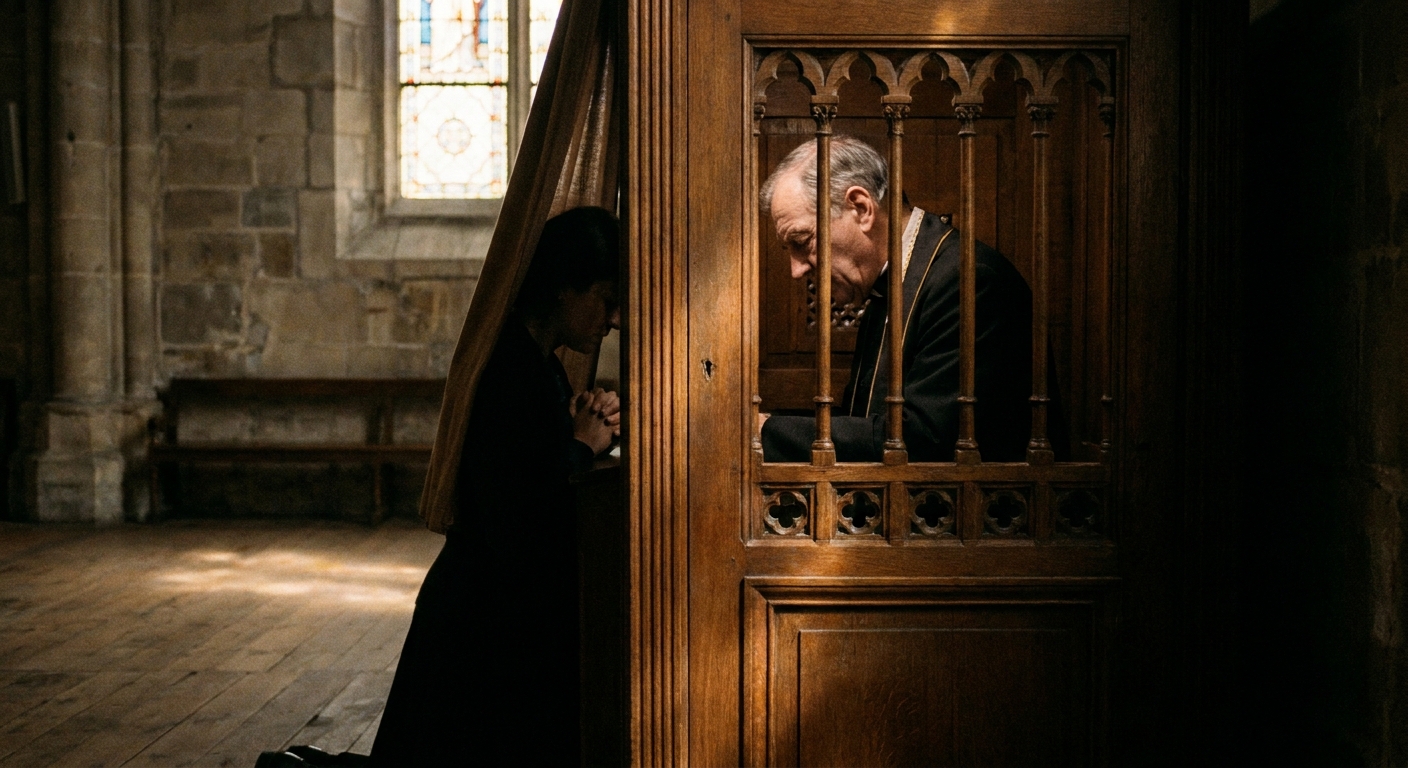
- If you are Catholic, go to the Sacrament of Reconciliation. Confession is not there to trap you. It is there to restore you.
- Practice different words and habits, not as superstition, but as formation. Reverence grows the way any relationship grows, through attention.
In my experience, most people who worry about blasphemy are not looking to insult God. They are looking to come home.
Quick summary
- Blasphemy is contemptuous speech against God, God’s name, or God’s glory.
- In the Old Testament, blasphemy is treated as a grave covenant offense (notably in Leviticus 24).
- In the Gospels, Jesus is accused of blasphemy for forgiving sins and claiming divine authority (Mark 2, John 10, Mark 14).
- The Catechism presents blasphemy as a serious sin against the Second Commandment (CCC 2148). It is often grave matter, with guilt depending on knowledge and consent (CCC 1857–1859) and sometimes diminished responsibility (CCC 1860).
- Blasphemy against the Holy Spirit refers to a hardened refusal of grace, not the same as blasphemy in general.
- Sacrilege is the profanation of sacred things, distinct from blasphemy though they can overlap.