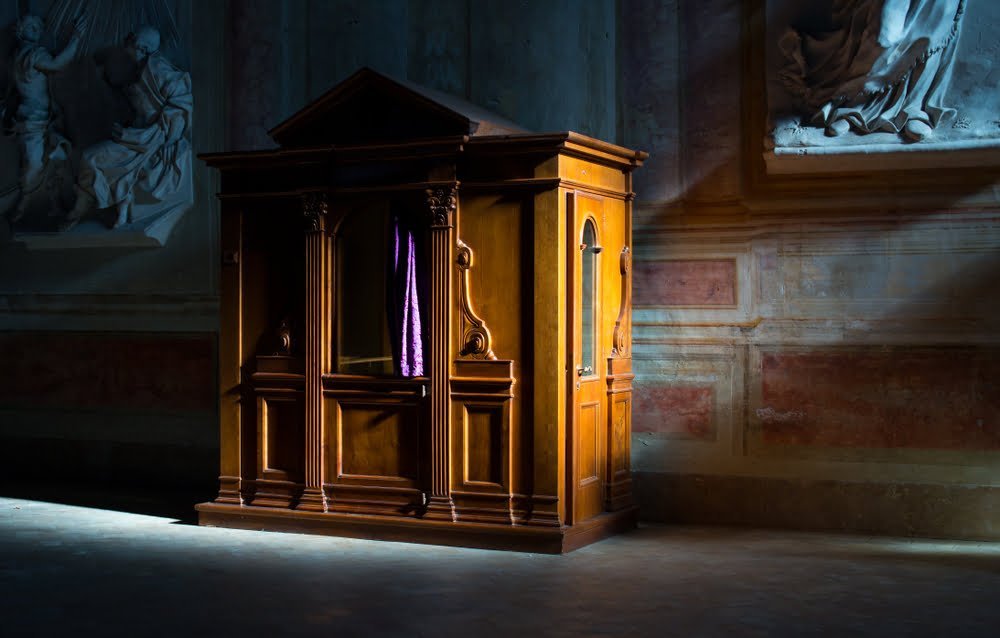
I still remember the first time I saw the Anointing of the Sick up close. It was not in a dramatic hospital scene like you might expect, but in a quiet parish side chapel after a weekday Mass. An older man sat with his hands open on his lap, his daughter beside him, and the whole moment felt tender rather than frightening. In my multi-faith upbringing, “anointing” was a word that could sound mystical or distant. In Catholic life, it is strikingly human. It is a sacrament for real bodies, real fear, real hope.
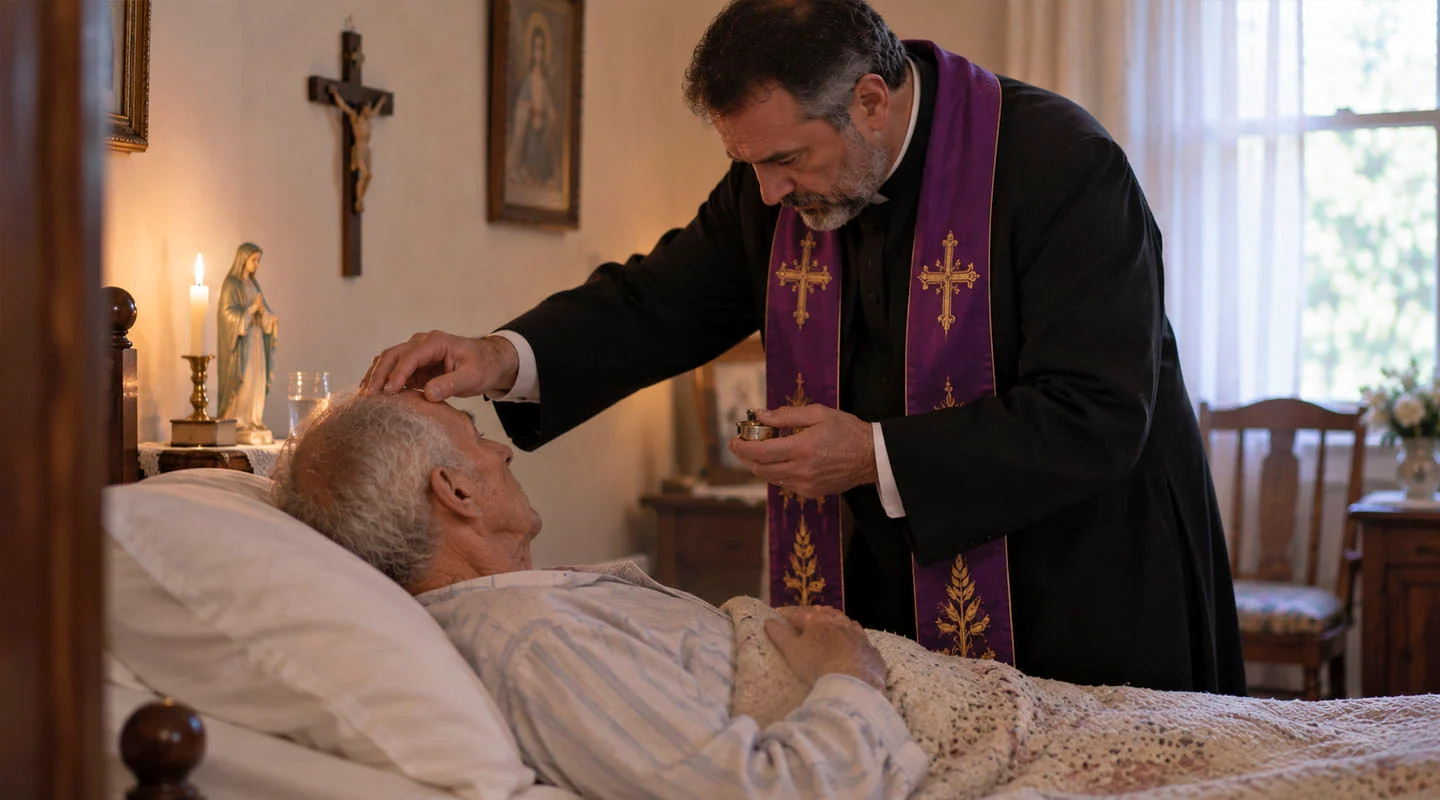
If you have ever wondered whether this is only for the dying, what actually happens, or how it relates to “last rites,” you are not alone. Let’s walk through it simply, and with the kind of care the sacrament itself is meant to offer.
What it is
The Anointing of the Sick is one of the seven sacraments in the Catholic Church. It is administered by a priest or bishop, and its purpose is spiritual healing and strengthening for a baptized person who is seriously ill, facing major surgery, weakened by old age, or otherwise in a condition where illness and fragility are real and pressing.
Catholics sometimes call it a “sacrament of healing” because it asks God to:
- give the person grace, peace, and courage
- unite the person’s suffering with Christ’s compassion and saving love
- forgive sins if the person is unable to go to Confession
- bring about physical healing if that is God’s will
- prepare the person for passing into eternal life, if death is near
That combination matters. The Church does not promise a guaranteed medical outcome. It does promise that no suffering is spiritually meaningless, and no one needs to be left alone inside it.
Who can receive it?
In Catholic teaching, the Anointing of the Sick is for members of the faithful who have reached the use of reason and have begun to be in danger due to sickness or old age. Practically, that includes several common situations.
Common reasons people request anointing
- Serious illness, especially when it is worsening or involves significant treatment.
- Before major surgery, when the surgery is connected to a serious condition.
- Advanced age, when frailty becomes pronounced, even without one specific diagnosis.
- Serious mental illness when it is gravely burdensome or destabilizing and the person is genuinely in danger. Priests do not treat this as a blanket rule, and they typically follow diocesan guidance and careful pastoral discernment.
It is not only for the final hours of life. In fact, one of the most pastorally important shifts in the modern Church has been encouraging people to ask earlier, when they can still consciously pray, receive comfort, and participate in the sacrament without panic.
What about children?
Children who have not reached the age of reason are generally not anointed in the usual way because the sacrament is ordered toward strengthening the person in illness with conscious faith. That said, families with a seriously ill child should still call the parish. A priest can pray with the family, offer appropriate blessings, and help discern what the Church provides in that situation.
Can someone be anointed more than once?
Yes. A person can receive the sacrament again if the illness becomes more serious, if a serious illness returns after recovery, or if a new serious condition develops.
Who cannot receive it?
- Someone who is not baptized cannot receive this sacrament, though a priest can still pray with them and offer pastoral support.
- Someone who is not seriously ill or not meaningfully weakened by age should not treat it as a general devotional blessing.
- In rare cases, a priest may need to pause sacramental celebration if someone is openly rejecting repentance. In real life, priests are not looking for reasons to refuse. They are looking for any opening toward grace, reconciliation, and peace.
If you are unsure, reach out anyway. Priests are trained to respond with charity and discernment, not suspicion.
What happens
The rite can take place in a hospital room, at home, in a nursing facility, or at church. Sometimes it is celebrated for many people at once at a parish Mass, and sometimes it is intimate, with only close family present. Either way, the heart of the sacrament is prayer and anointing with blessed oil.
What the priest does
- Invites prayer and may sprinkle holy water as a reminder of Baptism.
- Offers Scripture or short readings, depending on the situation and the person’s stamina.
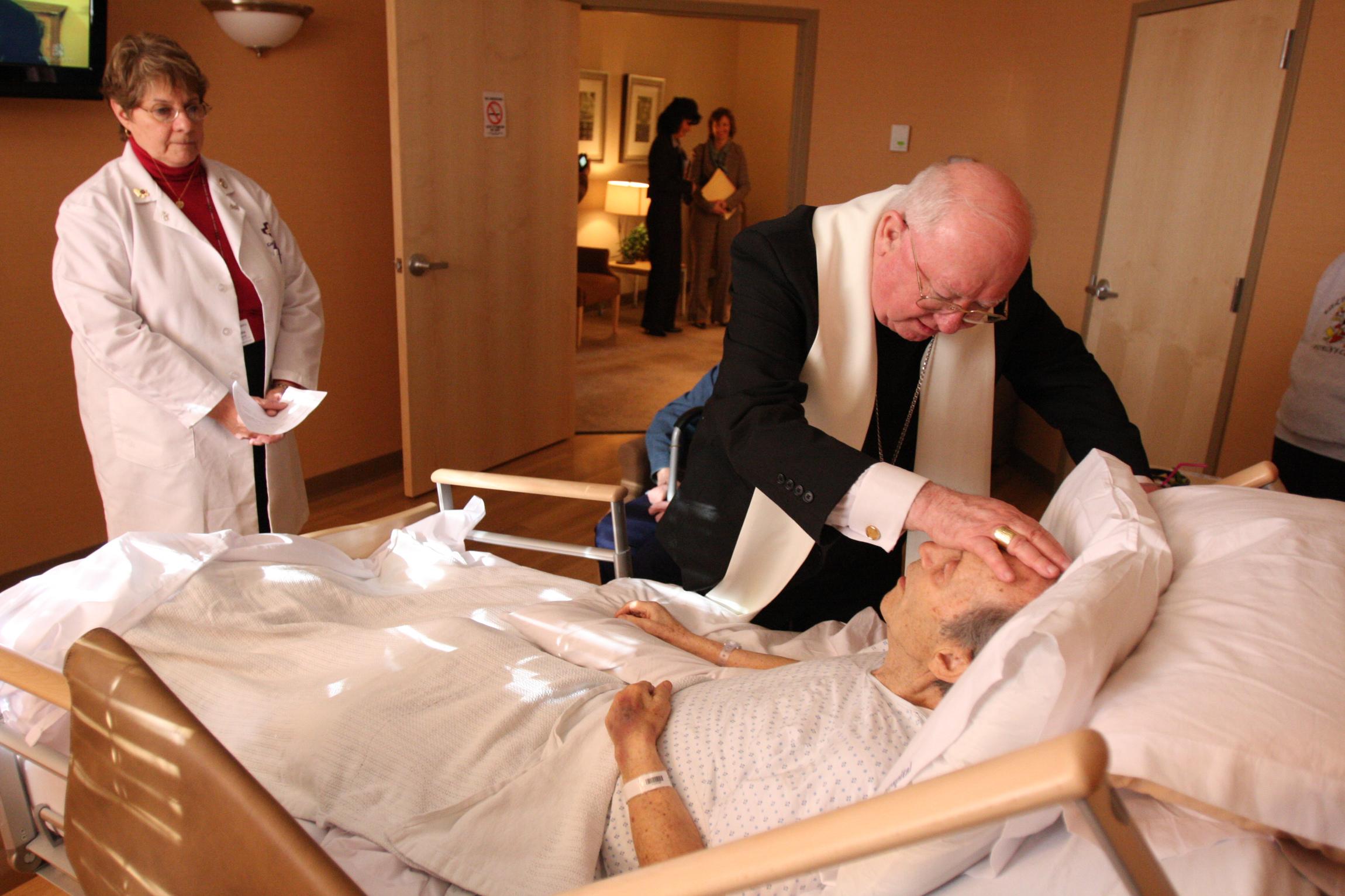
- Lays hands on the sick person, praying for the Holy Spirit’s help and comfort.
- Anoints with the Oil of the Sick (a blessed plant oil, very often olive oil), typically on the forehead and hands, while praying a sacramental prayer. In some urgent situations, the anointing may be on the forehead alone.
- May hear Confession beforehand if the person is able and wants to receive it.
- May give Holy Communion if appropriate, meaning the person is Catholic, desires to receive, and can do so safely and reverently.
- Concludes with prayer and a blessing for the sick person and those present.
What you may notice
If you have never seen it before, it can help to know what is ordinary. The priest makes the sign of the cross with a small amount of oil. You may see a gentle sheen on the forehead or hands afterward, and you may smell the oil faintly. The tone is usually quiet and unhurried, more like a bedside prayer than a ceremony.
What you and your family can do
If you are the one receiving anointing, your job is not to perform, or to have the “right” emotions. Simply be as present as you can. If you are supporting a loved one, you can:
- ask the person what feels comforting: silence, prayer, holding a hand
- remove distractions if possible, like loud televisions
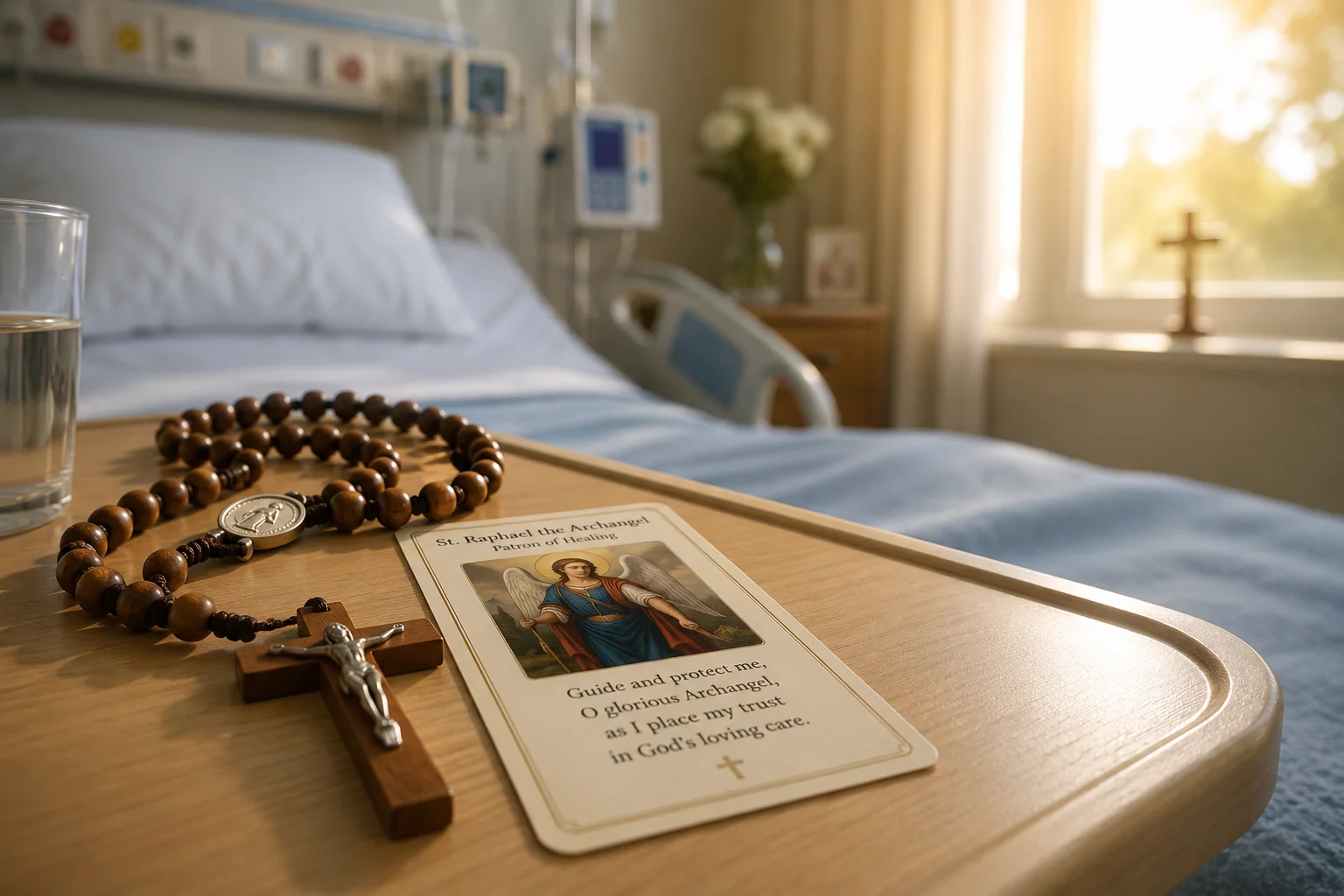
- bring a small crucifix or rosary if the person finds it meaningful
- tell the priest anything important: whether the person is conscious, Catholic, able to speak, or requesting Confession
One of the most beautiful things about this sacrament is its realism. It makes room for fatigue, confusion, tears, and quiet.
Biblical roots
When Catholics speak about the biblical roots of the Anointing of the Sick, the clearest anchor is the Letter of James:
“Is anyone among you sick? He should summon the presbyters of the church, and they should pray over him and anoint him with oil in the name of the Lord, and the prayer of faith will save the sick person, and the Lord will raise him up. If he has committed any sins, he will be forgiven.” (James 5:14-15)
Notice how much is held together in those verses: the community (summon the presbyters), the physical sign (oil), the spiritual act (prayer of faith), healing (the Lord will raise him up), and mercy (sins forgiven). Catholic practice grows from that integrated vision of the human person as body and soul.
Anointing, last rites, Viaticum
These terms are often used interchangeably, especially in movies. In Catholic life, they are related, but not identical.
Anointing of the Sick
What it is: A sacrament for the seriously ill or frail, for healing and strengthening.
When it is given: During serious illness, before major surgery connected to serious illness, or in advanced age and frailty. It can also be part of end-of-life care, but it is not limited to that.
Viaticum
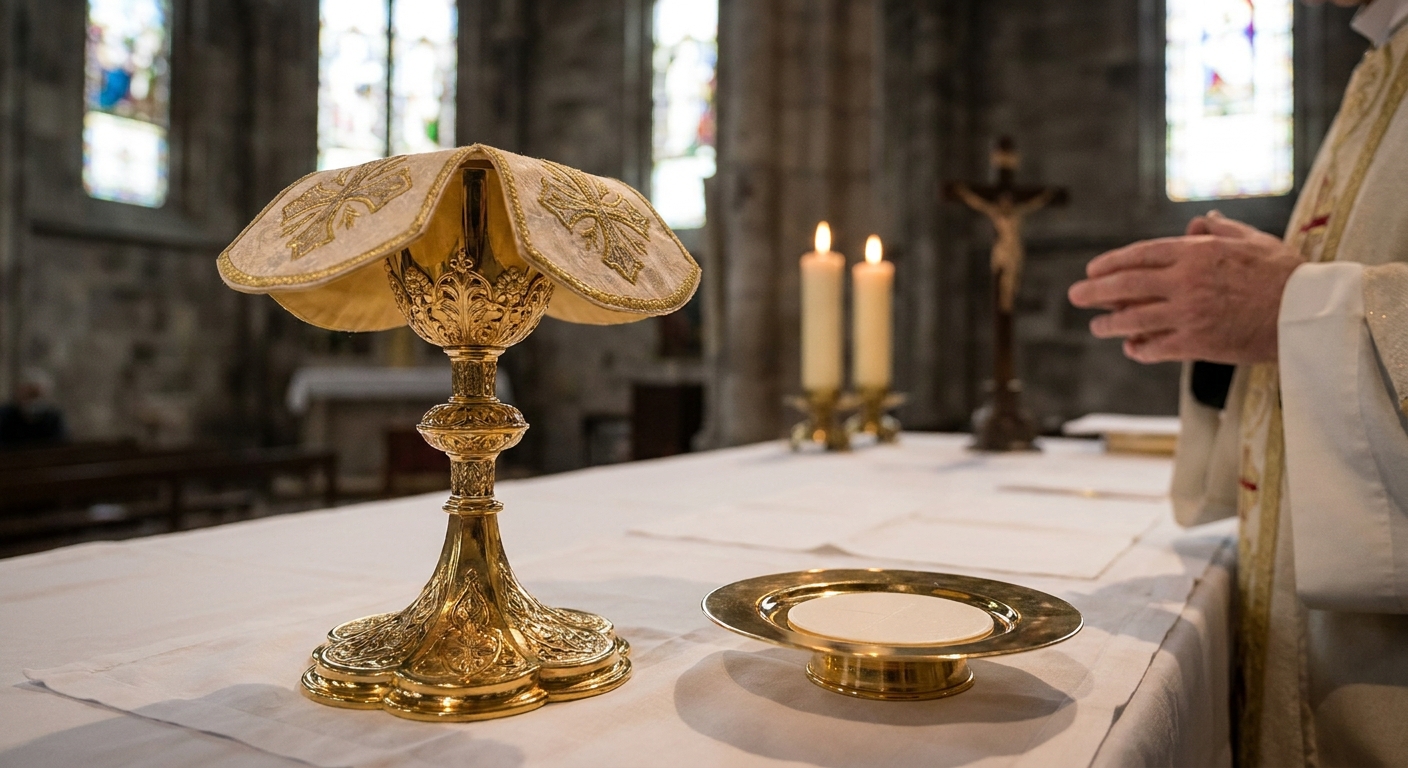
What it is: Holy Communion given to someone who is nearing death. The word points to “food for the journey.” In the Catholic imagination, it is nourishment for passing from this life to the next.
When it is given: When death may be near, ideally while the person is still conscious and able to receive safely. A person might be anointed and also receive Viaticum, but Viaticum is specifically the Eucharist.
Last rites
What it is: Not one single sacrament, but a pastoral set of rites the Church offers near the end of life. In many cases, last rites can include:
- Confession (if possible)
- Anointing of the Sick
- Viaticum (Communion)
- Prayers for the dying, such as the Apostolic Pardon and commendation of the soul
So, Anointing of the Sick can be part of last rites, but it is not synonymous with last rites.
Does it forgive sins?
Catholic teaching holds that the Anointing of the Sick can bring forgiveness of sins if the sick person is unable to receive the Sacrament of Reconciliation and is genuinely contrite. In ordinary circumstances, if a person is able to confess, Confession is the usual way serious sins are forgiven sacramentally.
This can feel especially important for families who worry, “What if we waited too long?” The Church’s instinct here is mercy. If someone is unconscious or unable to speak, the Church still prays with confidence in God’s tenderness and the person’s lifelong relationship with grace.
When to call
If there is one practical takeaway, it is this: call sooner than you think you need to. Many priests will tell you that the hardest calls are the ones that come only in the final minutes, when the person can no longer be conscious or comforted in the same way.
A simple rule of thumb
- Call when an illness is serious, not only when death seems imminent.
- Call before a major surgery related to a serious condition.
- Call when an elderly loved one takes a noticeable turn toward frailty.
If you are in a hospital, ask for the Catholic chaplain or request a priest through the nurses’ station. If you are at home, call the local parish office or the after-hours emergency line if one is provided.
Words you can use
If it helps to have a script, you can say: “Father, could you come for the Anointing of the Sick?” If the person wants it and is able, you can add: “And could you hear their Confession?” If death may be near, you can also ask: “If possible, could they receive Communion as Viaticum?”
If the person is not Catholic
The sacrament itself is for baptized Catholics, but spiritual care is for everyone. If your loved one is not Catholic or has been away from the Church for a long time, it is still worth reaching out. A priest can offer prayer, presence, and gentle guidance about what is possible and appropriate, including whether the person desires reconciliation with the Church.
And if you are reading this from the edge of belief, unsure what you think about sacraments at all, I want to say this plainly: the Anointing of the Sick is not about putting religious pressure on suffering people. At its best, it is the Church doing what it claims to exist to do, which is to bring the consolation of God near to those who are weak.
FAQs
Is it only for the dying?
No. It is for anyone whose health is seriously threatened by illness or the burdens of old age. It can be given near death, but it is not meant to be saved only for that moment.
Can it happen at a parish Mass?
Often, yes. Many parishes offer communal anointing services or include anointing at certain Masses. It is not meant for everyone present. People should self-discern honestly about serious illness or notable frailty due to age, and they can always ask the priest if they are unsure.
Will the priest anoint if the person is unconscious?
In many cases, yes, especially if there is reason to believe the person would have wanted it. The Church does not treat unconsciousness as a barrier to God’s grace.
Does anointing mean we are giving up?
Not at all. For many families, the sacrament is a way of continuing to hope, but with deeper honesty. It asks for healing, and it also asks for courage, peace, and the presence of God no matter what comes next.
What should we prepare?
If possible, create a quiet space. Have a small table available. If the person wants, you can place a crucifix, rosary, or a candle nearby, but none of that is required. The essential preparation is simply asking.
A gentle closing
In every tradition I have studied, people reach for something when illness strips away the illusion of control. The Catholic Anointing of the Sick is one of the clearest examples I know of spirituality that does not deny the body. It blesses the body. It acknowledges fear. It does not force cheerfulness. It offers grace that can be quiet and strong at the same time.
If you are considering calling a priest for yourself or someone you love, you do not need to have perfect theology. You only need the simple, brave honesty that says: we are not meant to carry this alone.