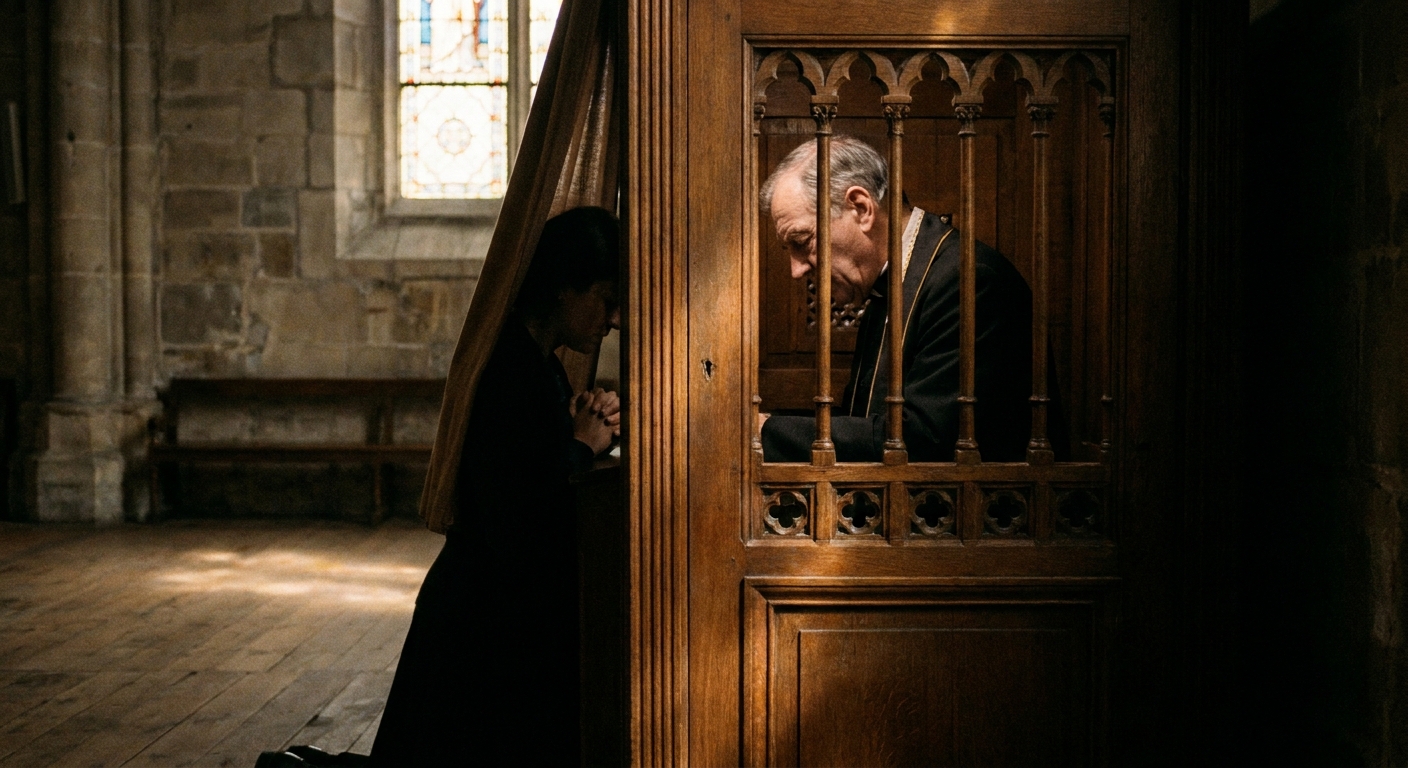
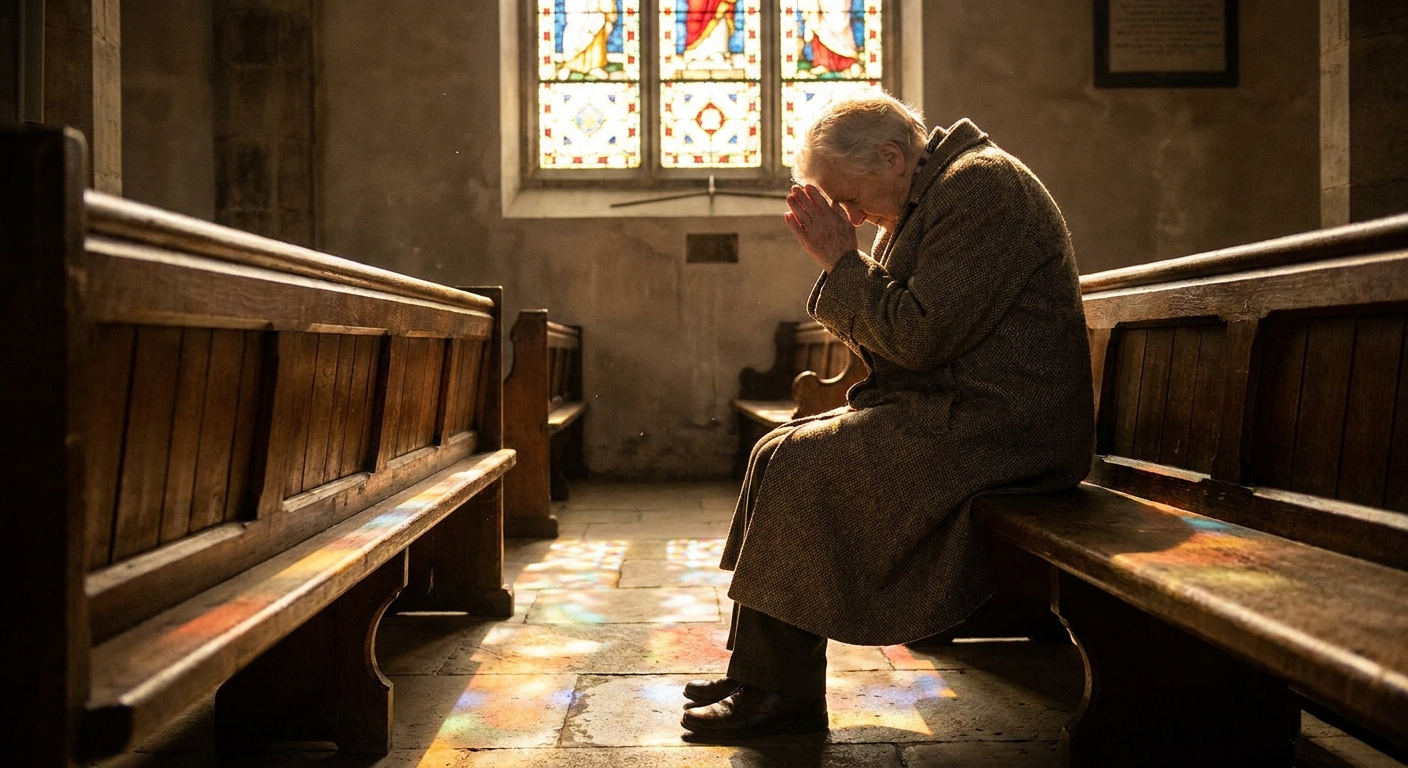
Years ago, I sat with a retreat participant who kept whispering, “I know God is merciful… but what if I did not confess it right?” They had already spoken with a trusted clergy member. They had already prayed, apologized, and tried to move on. Still, the fear kept returning like a wave that never quite receded. What they were describing was not a tender conscience. It was a pattern that has a name: scrupulosity.
Scrupulosity can latch onto any faith tradition or moral framework. It often borrows religious language, but at its core it tends to function like an obsessive-compulsive pattern: persistent doubt, compulsive checking, and a gnawing inability to feel “sure enough” to rest.
Scrupulosity, defined
Scrupulosity is a pattern of obsessive fear about having sinned gravely or failed morally, paired with compulsive attempts to achieve certainty and relief. In religious settings, it often shows up as:
- Constant fear of committing serious sin, even in ordinary situations
- Repeated confession or reassurance seeking (from clergy, a faith leader, friends, online forums, or endless self-review)
- Inability to accept forgiveness, even after confession, repentance, or making amends
- Ritualized mental review, replaying conversations, thoughts, or actions to “make sure” nothing was sinful
- Hyper-focus on intent and details, especially around whether something was “fully deliberate” or “serious enough”
Scrupulosity is often conceptualized as a religious or moral presentation of Obsessive-Compulsive Disorder (OCD). Only a qualified clinician can diagnose OCD, but the overall “shape” is familiar: obsessions that spike fear, and compulsions that promise relief but keep the doubt alive.
Not every religious person who worries has scrupulosity. Scrupulosity typically has the unmistakable flavor of never getting relief, no matter how much you try to “do it right.”
Healthy conscience vs scrupulosity
A healthy conscience is like a lantern. It illuminates what needs attention, then it lets you walk forward. Scrupulosity is like a strobe light. It blinds you, freezes you, and convinces you that you cannot move until you have total certainty.
Signs of a healthy conscience
- You can name what you did, why it was wrong, and what repair looks like.
- You can receive forgiveness with time, even if you still feel some regret.
- You grow in humility and compassion, not just fear.
- Your moral life has room for nuance, learning, and maturity.
Signs scrupulosity may be at play
- You confess the same “sin” repeatedly because it never feels resolved.
- You feel compelled to confess everything, including intrusive thoughts, tiny uncertainties, or imagined scenarios.
- You are preoccupied with technicalities: the exact wording, the exact memory, the exact degree of intent.
- You avoid ordinary life choices (relationships, hobbies, meals, entertainment, work tasks) because nearly everything feels spiritually dangerous.
- You experience relief only briefly, then the doubt returns stronger.
One of the quiet heartbreaks of scrupulosity is that it can masquerade as holiness. But fear-driven spirituality tends to shrink the soul. Healthy conscience, even when it convicts us, ultimately makes us more honest, more grounded, and more able to love.
When sin categories become a trap
Some traditions use categories like “mortal” and “venial” to describe the seriousness of wrongdoing. In Catholic teaching, for example, those categories can bring clarity and proportion. For someone with scrupulosity, the same language can become a mental minefield.
Scrupulosity often turns moral reflection into an impossible math problem:
- Was my knowledge complete enough?
- Was my consent full enough?
- Was the matter serious enough?
- Did I have even a flicker of the wrong intention?
- What if I forgot a detail?
Instead of guiding a person toward repentance and trust, the categories become fuel for obsessive doubt. If you recognize that spiral, the goal is not to throw away moral teaching. The goal is to stop using moral teaching as a tool for compulsive certainty-seeking.

Scrupulosity vs dryness
Another common confusion is between scrupulosity and spiritual dryness. Many sincere people go through seasons where prayer feels flat, worship feels routine, or God feels far away. Dryness can be painful, but it is often a normal part of spiritual growth.
Spiritual dryness often sounds like
- “I do not feel much when I pray lately.”
- “I miss the sense of closeness I used to have.”
- “I am showing up, but it feels quiet inside.”
Scrupulosity often sounds like
- “What if I offended God by praying wrong?”
- “If I do not feel peace, it must mean I am not forgiven.”
- “If I cannot be 100% certain, I am in danger.”
Dryness is about lack of consolation. Scrupulosity is about fear, obsession, and compulsive repair. A dry season may invite patience and gentle perseverance. Scrupulosity usually requires a more structured approach, often including professional treatment.
Common themes
Scrupulosity tends to cling to whatever a person values most. That is why it often targets sacred areas of life. Some frequent themes include:
- Confession and forgiveness: “Did it count?” “Did I say it correctly?” “What if I held something back accidentally?”
- Blasphemy and intrusive thoughts: Unwanted images or phrases that feel terrifying, then repeated attempts to neutralize them
- Sexual purity: Excessive monitoring of thoughts, attraction, arousal, or normal bodily responses
- Prayer rituals: Restarting prayers until they feel perfect, repeating phrases to “make sure” God heard them correctly
- Honesty and promises: Fear of accidentally lying, exaggerating, or breaking a vow unintentionally
- Communion or sacred participation: Avoiding worship or sacraments due to fear of being unworthy
One important note, especially for tender-hearted readers: intrusive thoughts are not chosen thoughts. They are a well-known OCD symptom. For many people, the more they try to force intrusive thoughts away, the louder and stickier they can become.
What keeps the cycle going
Scrupulosity often runs on a loop:
- Obsession: “What if I committed a grave sin?”
- Anxiety and shame: A rush of dread, self-accusation, fear of separation from God
- Compulsion: Confessing again, researching rules, asking for reassurance, replaying memories, repeating prayers
- Temporary relief: Calm for minutes or hours
- Return of doubt: “But what if I missed something?”
The relief is real, but it is short-lived. Over time, the brain learns: Do the ritual, get relief. That learning is one reason scrupulosity can feel so stubborn, even for deeply faithful people.
When to get clinical help
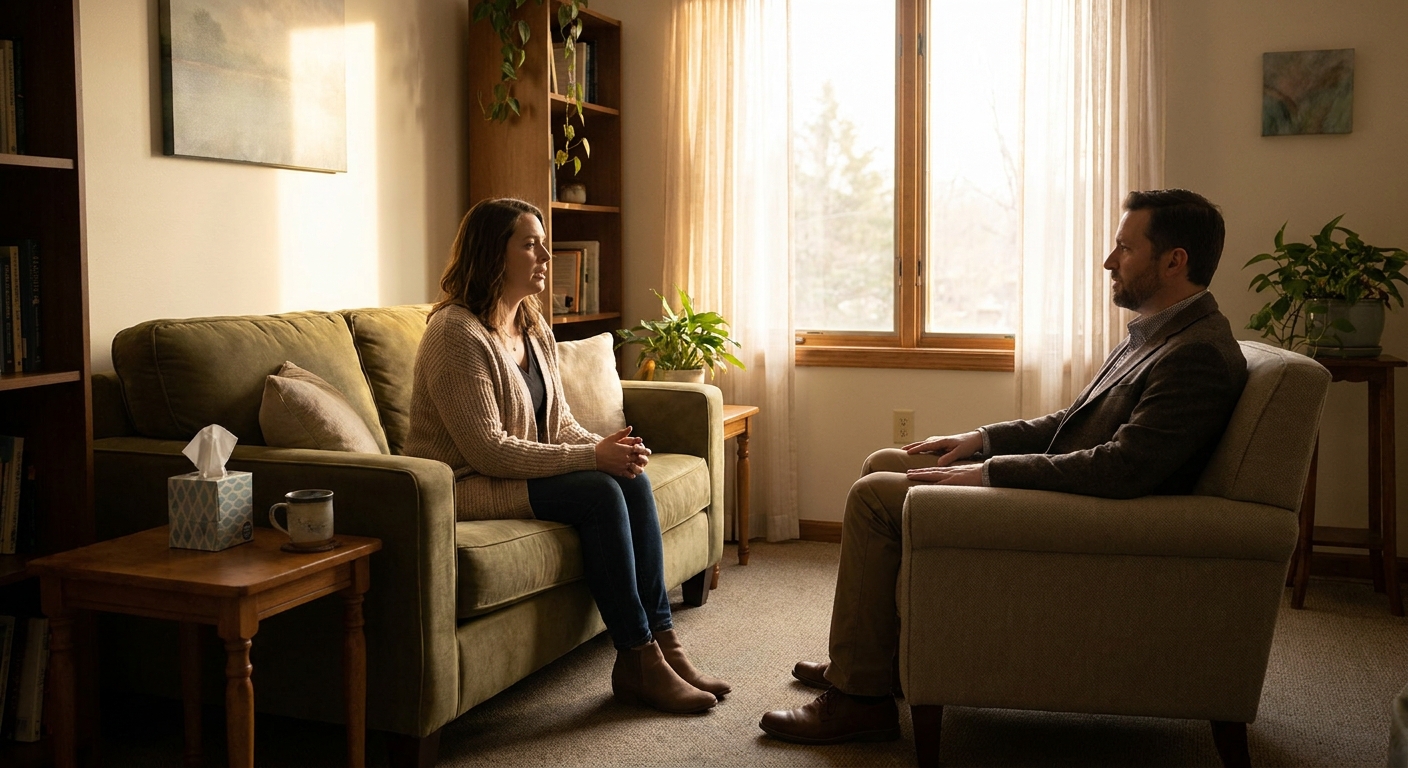
Many people with scrupulosity benefit from a wise clergy member or spiritual director, especially one familiar with OCD patterns. But there are times when spiritual counsel is not enough on its own, because the problem is not primarily theological. It is psychological.
Consider reaching out to a licensed mental health professional if:
- Your fear of sin is consuming hours of your day.
- You feel unable to stop confessing or checking, even when you want to.
- You avoid normal life activities due to fear of moral contamination.
- Your sleep, work, relationships, or health are being affected.
- You experience panic, depression, self-harm thoughts, or feel unsafe.
Evidence-based treatment for OCD often includes Exposure and Response Prevention (ERP), sometimes alongside medication such as SSRIs, under medical guidance. ERP is not about disrespecting faith. It is about gently retraining the brain to tolerate uncertainty without compulsions.
Scrupulosity can also overlap with depression, trauma, or other anxiety patterns. A qualified clinician can help sort what is driving what and tailor treatment accordingly.
In the best cases, spiritual care and clinical care work together. A therapist helps with the OCD cycle. A pastoral caregiver helps you reconnect with a vision of God that is trustworthy, compassionate, and not dependent on perfect internal certainty.
If you are in immediate danger or feel you might harm yourself, call your local emergency number right now, or reach out to a trusted person who can stay with you and help you get urgent care.
A small plan for this week
Scrupulosity improves with wise support and practice over time, but it can help to have a simple next step that does not become another ritual. If you need a place to start, try this:
- Pick one guide. Choose one trusted clergy member, faith leader, or spiritual director and commit to fewer “second opinions.”
- Name one compulsion. Identify your most common one (reassurance texts, rereading rules, repeating prayers) and write it down plainly.
- Practice a small delay. When the urge hits, wait 10 minutes before doing the compulsion. Let the uncertainty exist without solving it right away.
- Schedule the right kind of help. If you can, book a consultation with a therapist who treats OCD using ERP, and tell them scrupulosity may be part of the picture.
This is not about “trying harder.” It is about stepping out of the certainty trap, one small choice at a time.
Spiritual guidance that helps
If you suspect scrupulosity, the most loving spiritual guidance is usually the kind that reduces compulsions rather than intensifying them. That can feel counterintuitive at first.
What often helps
- One trusted guide: Choose one clergy member or spiritual director and limit “second opinions.”
- Simple, consistent practices: Grounding prayer, brief examen, acts of mercy, a stable routine.
- Permission to be imperfect: Accept that some uncertainty is part of being human.
- A wider view of holiness: Growth in love, patience, and honesty matters more than constant self-policing.
What often makes it worse
- Endless researching of rules, loopholes, and moral edge cases.
- Repeated reassurance seeking from multiple people.
- Confessing every intrusive thought or every doubt as if doubt itself were sin.
- Spiritual advice that treats anxiety as proof of guilt.
In many traditions, the heart of repentance is not obsession. It is turning, returning, and trusting that grace is sturdier than your fear.
You are not spiritually “bad”
Scrupulosity can be deeply isolating because it convinces you that you are uniquely dangerous to God, uniquely guilty, uniquely at risk. In reality, scrupulosity is a known pattern. It has names, tools, and treatments. And it shows up often in people who are trying sincerely to live with integrity.
If you are caught in this cycle, I want to say this as plainly as I can: you deserve help that brings you peace. Not the fragile peace of “I checked one more time,” but the sturdier peace of learning to live, pray, and love without constant inner prosecution.
Faith grows best in truth and tenderness. If your spiritual life feels like constant emergency, that is not a personal failure. It is a sign to reach for support.
FAQ
Is scrupulosity a sin?
Scrupulosity is not a sin. It is a pattern of obsessive fear and compulsive behavior that can attach itself to moral or religious concerns. People do not choose intrusive thoughts and anxiety loops, and they should not be shamed for having them.
Can scrupulosity happen outside religion?
Yes. Some people experience “moral scrupulosity,” where the obsession is about being a good person in a secular sense. The cycle is similar: fear of wrongdoing, compulsive checking, and inability to accept “good enough.”
Should I keep confessing if I do not feel forgiven?
If you have confessed sincerely and your tradition assures forgiveness, repeatedly confessing the same matter can become part of the compulsion. This is where a single trusted clergy member and a therapist familiar with OCD can help you create a plan that honors your faith without feeding the cycle.
What if my fear is actually the Holy Spirit convicting me?
Conviction is usually clear, proportionate, and oriented toward repair and renewed love. Scrupulosity tends to be vague, repetitive, and punishing, with no lasting resolution. If you are unsure, bring the question to one trusted spiritual guide who understands scrupulosity, rather than seeking many opinions.
What type of therapy helps scrupulosity?
Many people benefit from therapy for OCD, especially Exposure and Response Prevention (ERP). A clinician can tailor ERP to respect your beliefs, focusing on reducing compulsions and building tolerance for uncertainty.