Some of the most tender conversations I have had on retreats begin with a quiet confession that sounds like this: “I was baptized. I love God. So why do I still feel pulled toward things I do not want?”
Christian tradition has a word for that ongoing inner tug: concupiscence. The word can feel clinical or even harsh, but at its heart it describes something many people recognize in ordinary life, the gap between what we know is good and what we find ourselves desiring in the moment.

In this article, I will explain what concupiscence means in Christian theology, how Augustine helped shape the conversation, what the Council of Trent taught in response to Reformation era debates, and the crucial question many people carry: Is the inclination itself a new personal sin?
Concupiscence in plain language
Concupiscence (from Latin concupiscentia, “strong desire” or “craving”) refers, in Catholic and wider Latin-Christian usage, to a disordered inclination within the human person that leans toward sin. It names the inward tendency that can remain even when a person sincerely wants to do what is right.
It is important to name what concupiscence is not:
- Not always identical to “original sin.” In Catholic teaching, original sin is the inherited condition or wound in human nature. Concupiscence is often described as one of its lingering effects. Some other traditions use “original sin” more broadly and may fold concupiscence into that larger category.
- Not automatically a personal act. Concupiscence is about inclination and attraction. Personal sin involves a chosen act, an interior “yes,” not merely a felt pull.
If you have ever experienced a sudden flash of envy, a surge of anger, a fantasy you did not invite, or a selfish impulse that arrives before you have time to think, you have felt the kind of inner movement Christian writers often associate with concupiscence. The moral question begins at the point of what you do with it.
Why baptism does not erase it
In Catholic teaching and other sacramental traditions, baptism is not presented as a magic switch that removes every disordered impulse. Rather, baptism is understood as a real cleansing and a real incorporation into Christ, while the believer still lives in a world, a body, and a psyche that require ongoing healing and formation.
That is why these traditions speak about the Christian life as both gift and growth:
- Gift: forgiveness, reconciliation with God, and a new identity.
- Growth: sanctification, discipleship, and learning to desire rightly over time.
Very practically, growth can look like this: you feel the familiar pull toward sarcasm, you notice it, you pause, you choose a gentler sentence, and later you ask God to reshape what made sarcasm feel so satisfying in the first place. Concupiscence is one way of describing the terrain where that long work happens.
It is the place where temptation still has traction, and where grace is practiced, not merely received.

Augustine on disordered desire
St. Augustine of Hippo (354 to 430) is one of the most influential voices in Western Christianity on the nature of sin, grace, and desire. Augustine’s own story, especially as told in his Confessions, is saturated with the experience of divided longing. He knew what it was to want God and also want what pulled him away from God.
In Augustine’s thought, sin is not only about breaking a rule. It is also about a kind of misdirected love, loving lesser goods in a way that displaces the highest good. This is why he is so attentive to desire itself, not merely external behavior.
Augustine’s language about concupiscence becomes especially developed in his anti-Pelagian writings, in debates about how deeply the fall wounded the human will and desires. He connects concupiscence with the way human longing became disordered after the fall. The will can become conflicted. The appetites can resist reason. The heart can be pulled toward self over God. Even when forgiveness is real, the inward habits and impulses that distort love may remain and need ongoing healing.
That Augustinian emphasis shaped centuries of Christian reflection, especially in the Latin West. It also helped frame later disputes about what exactly remains after baptism and how to name it.
What Trent says and does not say
The Council of Trent (1545 to 1563), responding to Reformation era controversies, addressed the doctrine of sin and baptism with careful precision. In its Decree on Original Sin (Session V), Trent affirms that baptism truly removes the guilt of sin, while also acknowledging that something the baptized still experience remains: an inclination toward sin.
Trent’s key clarification is this: concupiscence remains, and Scripture can speak of it with the language of “sin,” but in the baptized it is not truly and properly sin in the sense of personal guilt, because it does not have the nature of sin unless there is consent. It is real, and it is something to resist, but it is not the same thing as having chosen evil.
That matters pastorally. A person can be sincerely devoted to God and still experience temptation. The presence of temptation is not proof that baptism “did not work.” It is, in Trent’s framing, part of the arena where grace empowers resistance, growth, and holiness.
Is it a personal sin?
This is the question that so many people carry, sometimes with real shame: “If I feel the desire, have I already sinned?”
In the Catholic articulation shaped by Trent and later catechetical teaching, the answer is essentially: no.
Inclination versus consent
Concupiscence describes the inclination, not the fully chosen act. Christian moral reasoning typically treats personal sin as involving willing participation, whether external or internal.
That means:
- Temptation is not sin. An uninvited thought or desire can be a temptation.
- Dwelling can become sin. Choosing to entertain, intensify, or savor a disordered desire can cross a moral line.
- Acting can become sin. The outward action can be sinful, and in serious matters can be gravely sinful.
If you have read about how personal acts are evaluated by factors like the seriousness of the matter, a person’s understanding, and genuine consent, keep that as background here. Concupiscence is what happens before that consent. It is the pressure at the doorway, not the decision to open it.
Why the distinction matters
If we treat every unwanted impulse as a sin, the inner life becomes a courtroom with no exit. People become afraid of their own minds. But if we treat every impulse as morally meaningless, we lose the seriousness of formation and self-mastery. The Christian tradition tries to hold the middle ground: the pull is real, and the choice is real.
How it shows up day to day
Theologians can make concupiscence sound abstract. Most of us encounter it far more simply, as the mismatch between our deepest values and our immediate cravings.
It can show up as:
- Wanting to be generous, but feeling possessive when money is tight.
- Wanting to speak kindly, but feeling the heat of sarcasm rising first.
- Wanting fidelity in thought and action, but noticing your imagination wander.
- Wanting to forgive, but feeling a stubborn desire to replay the injury.
In this sense, concupiscence is not only about dramatic moral failure. Often it is about the daily, ordinary labor of becoming integrated, where love and desire slowly learn to move in the same direction.

How Christians respond
Across Christian traditions, the response to concupiscence is usually not denial, but formation. Different communities emphasize different practices, but the shape is familiar: name the pull, resist what is harmful, and cultivate what is life-giving.
- Prayer and watchfulness: noticing what arises in the heart without immediately obeying it.
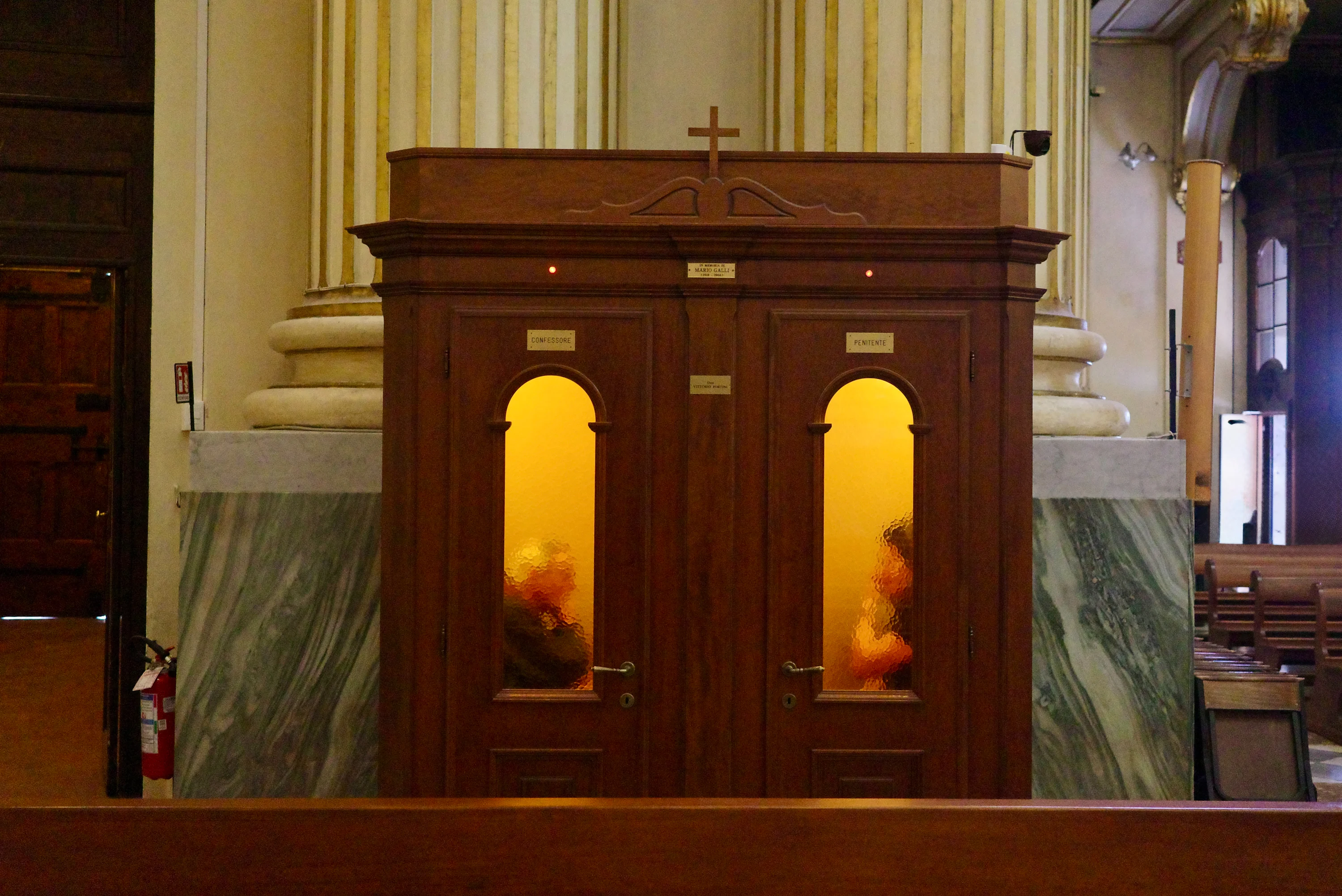
- Confession and accountability: bringing patterns into the light, especially when consent and action have followed the pull.
- Fasting and self-discipline: learning that not every desire deserves satisfaction.
- Works of mercy: training desire outward toward love of neighbor.
- Community and sacramental life: receiving grace in embodied, repeatable ways.
None of these are about earning God’s affection. They are about learning to live inside God’s affection with a freer heart.
Different Christian views
If you move outside Catholic and broader Latin-sacramental categories, you will hear real differences in emphasis. Many Reformed writers, for example, speak of concupiscence itself as sinful because it falls short of perfect love, even if they also stress that believers are not condemned in Christ. Lutherans have their own careful ways of speaking about sin’s ongoing presence and the believer’s struggle. In Eastern Orthodox contexts, you will often hear less about “concupiscence” as a technical term and more about the passions and the long healing of the heart.
Still, there is common ground most Christians recognize in practice: temptation is real, the struggle can continue after baptism, and the life of grace is not only pardon but transformation.
FAQ
Is concupiscence the same as lust?
Not exactly. Lust can be one expression of disordered desire, especially in the sexual sphere. Concupiscence is broader. It refers to the general inclination toward sin and disordered cravings, including pride, greed, envy, and more.
If I am baptized, why am I still tempted?
Because baptism is understood, especially in Catholic and sacramental traditions, to heal and restore our relationship with God, not remove every consequence of humanity’s wounded condition all at once. Many traditions teach that growth in holiness is a process, and temptation is part of that terrain.
Are intrusive thoughts concupiscence?
They can overlap in experience, since both involve unwanted mental content. But intrusive thoughts can also be related to anxiety, trauma, or OCD. From a pastoral standpoint, it helps to remember that an uninvited thought is not the same as chosen consent. If intrusive thoughts cause distress, it can be wise to seek support from a qualified mental health professional alongside spiritual care.
Does the Council of Trent say concupiscence is sin?
Trent (Session V) acknowledges concupiscence remains and must be resisted. It also clarifies that in the baptized it is not “truly and properly” sin in itself. It becomes morally relevant when a person consents to it or acts from it.
A gentler way to hold it
When concupiscence is taught poorly, it can sound like Christianity is suspicious of the human body, the human mind, or desire itself. When it is taught carefully, it can sound like something closer to honesty: we are not as integrated as we want to be, and grace meets us inside that inner conflict.
In my own life, I have come to see this teaching less as a label of shame and more as a map. The map says: yes, the pull is real. No, the pull is not the same as your truest self. And yes, you can learn, slowly and with help, to choose love more freely.
That is not a small hope. It is the daily work of sanctification in plain clothes, in the middle of real life.