When you are looking for a faith community, it can feel like dating, moving to a new neighborhood, and choosing a therapist all at once. You are not just picking a service time. You are choosing a set of stories, a rhythm of practices, and a group of real human beings who will shape you over time.
I grew up in a multi-faith home, which meant I learned early that “right” and “wrong” are not always the most helpful categories. A better question is often: Where do I become more compassionate, more honest, and more alive?

This guide is meant to be practical and steadying. You can use it whether you are returning to a tradition you already know, exploring something entirely new, or simply looking for a healthier version of what you grew up with.
Start with your needs
Before comparing communities, take ten quiet minutes and name what you are seeking in this season. Not what you “should” want. What you truly need.
Three grounding questions
- What am I hungry for? Belonging, healing, intellectual depth, service, silence, joy, structure, community for my kids, or something else.
- What am I tender about? Grief, church hurt, identity questions, anxiety, doubt, addiction recovery, loneliness.
- What do I have to offer? Time, music, mentoring, cooking, listening, organizing, caregiving, advocacy, prayer.
Your answers are not a contract. They are a compass. A community can be imperfect and still be a good place to grow, but it should not consistently ask you to betray your conscience or shrink your humanity.
Beliefs: core and stretch
Beliefs matter, but not always in the way we think. Many communities share similar moral aims while telling different sacred stories. Others use similar language but mean very different things in practice.
How to read “what we believe”
Some traditions publish a formal statement of faith. Others share a mission, covenant, set of values, lineage, catechism, teaching, or guiding principles. Whatever the label, you are looking for the same thing: what they consider true, what they consider good, and how they expect people to live.
- Identify the non-negotiables. For example: views of God or the divine, scripture, prophets, salvation or liberation, human nature, and what a good life looks like.
- Notice what is emphasized. Is the focus on sin and purity, compassion and service, mystical union, justice, evangelism, scholarship, or family life?
- Look for room to breathe. Are questions welcomed? Is doubt treated as failure, or as part of faith?
Questions you can ask
- What does membership or belonging require?
- How do you handle disagreement within the community?
- What does this community teach about people of other religions, or people with no religion?
- How do you approach gender roles, marriage, and LGBTQ+ inclusion?
- What is your relationship to sacred texts: literal, contextual, devotional, scholarly?
If asking honest questions makes people defensive or shaming, consider that information. A healthy community can name its convictions with clarity and still treat you with warmth.
Practices: weekly life
Beliefs are the map. Practices are the road you walk every week. Pay attention to what the community does, not only what it says it values.
What to notice when you attend
- Worship style and tone. Quiet or ecstatic, formal or conversational, music-forward or text-forward, ritual-heavy or simple.
- Prayer and contemplation. Is there space for silence? For lament? For embodied practices like bowing, kneeling, chanting, or breath prayer?
- Teaching and formation. Is the message mostly inspirational, deeply textual, ethically challenging, or intellectually rigorous?
- Service and justice. Are there concrete opportunities to volunteer, give, advocate, or learn? Is service relational, or performative?
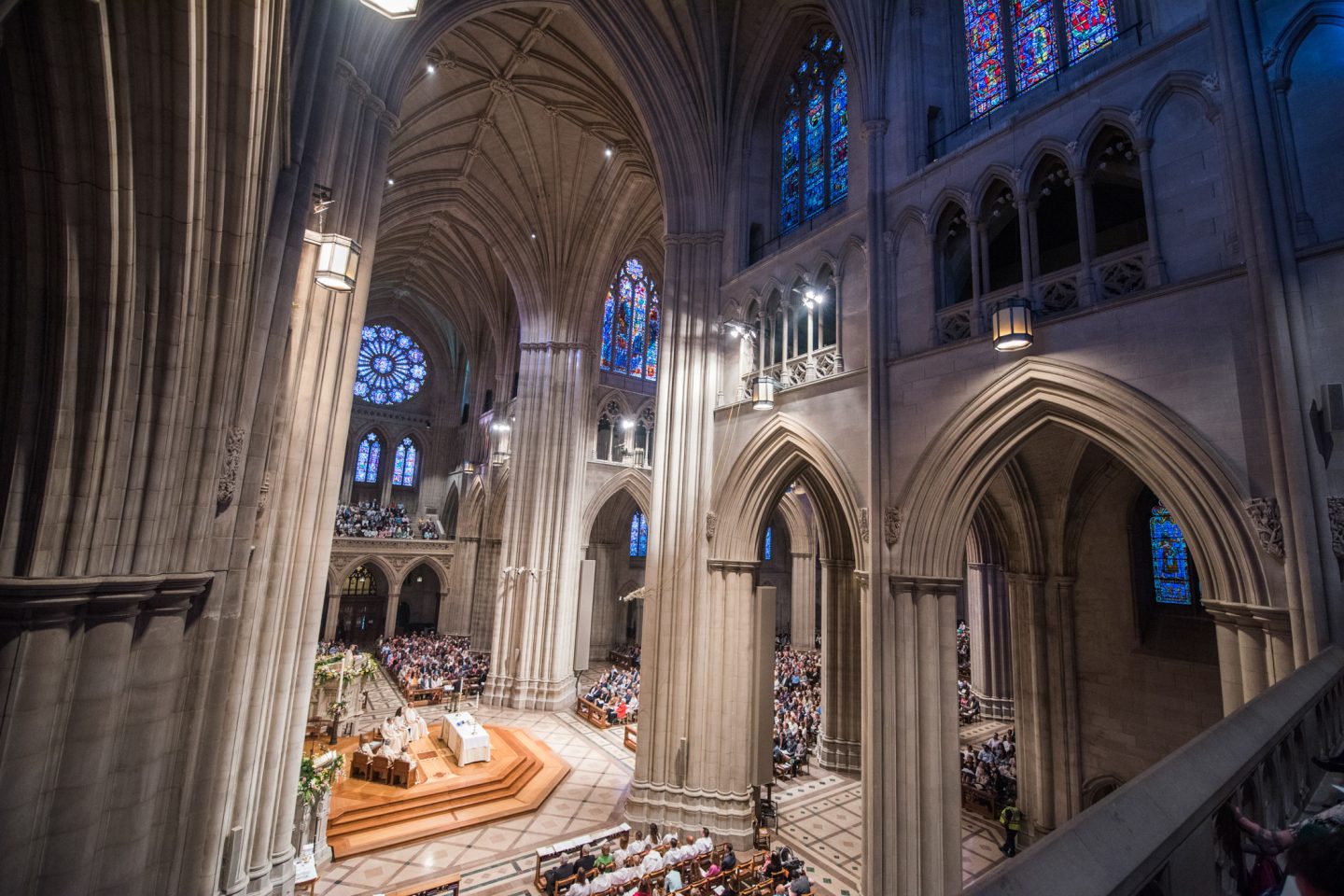
There is no perfect style. What matters is whether these practices help you become more grounded, more loving, and more present in your daily life.
Leadership and power
If you have ever been harmed by a religious community, you already know this: theology can be beautiful, but power can still be misused. Even in well-meaning communities.
Green flags
- Clear accountability. Leaders answer to a board, council, elders, or another real structure, not just personal charisma.
- Appropriate transparency. Many communities will share a budget summary, annual report, or financial updates, even if the format varies by tradition and country.
- Repair is normal. Leaders can apologize plainly and make changes without spinning.
- Safeguarding is real. Ask whether they have policies and training for children, teens, and vulnerable adults, and how those policies are used.
- Boundaries are respected. People are encouraged to rest, keep relationships outside the community, and say no without punishment.
Red flags
- One charismatic leader is beyond question.
- Pressure to cut off “outsiders,” including family and longtime friends.
- Shame used as a primary tool for compliance.
- Secrecy around money, leadership decisions, or misconduct.
- Love-bombing followed quickly by control, guilt, or fear.
You do not need to become cynical to be wise. A good community will not punish you for asking how decisions are made.
The newcomer experience
Pay close attention to your first three visits. Not just to the friendliness at the door, but to the texture of belonging.
Signs you can exhale
- You are welcomed without being pushed to perform enthusiasm.
- There is a clear pathway for newcomers: orientation, small groups, classes, meet-and-greets.
- People introduce themselves and also respect your space.
- You can attend multiple times without pressure to join, give, volunteer, or disclose personal details.
Practical things to check
- Accessibility: ramps or elevators, wheelchair-accessible restrooms, seating options, hearing assistance, captions or ASL interpretation where possible, online options.
- Children and youth: ask about background checks, the two-adult rule, training frequency, clear reporting procedures, and inclusion for disability and neurodiversity.
- Language: is jargon explained, or assumed?
- Hospitality: bathrooms, signage, greeters, parking, what to wear, where to sit.

If you leave feeling smaller, anxious, or spiritually graded, trust that signal. If you leave feeling more human, even if you are still unsure, that also matters.
Culture fit
Some communities feel like home immediately. Others take time. And sometimes what we call “fit” is actually just familiarity. The goal is not to find a room where everyone is exactly like you. The goal is to find a room where you can be honest, and where difference is handled with dignity.
Look for everyday values
- How do people talk about those who are not present?
- How do they handle conflict?
- Who gets listened to?
- Is there laughter and warmth, or constant intensity?
- Are people encouraged to grow, or mainly to conform?
If you are from a marginalized background, you are allowed to ask direct questions about safety and belonging. A community that is truly welcoming will not make you feel guilty for needing clarity.
Visit without burnout
It is easy to turn spiritual seeking into a consumer project. To protect your heart, choose a gentle pace and a simple method.
A three-visit approach
- Visit 1: Observe. Take notes afterward. Notice your body: did you tense up or soften?
- Visit 2: Participate as you feel comfortable. Stay for the greeting time, if there is one.
- Visit 3: Ask one real question of a leader or long-time member. Not a test question, a real one that matters to you.
A short comparison list
After each community, rate these from 1 to 5:
- Sense of peace or groundedness
- Intellectual and spiritual nourishment
- Kindness and relational warmth
- Alignment with your ethics and identity
- Leadership health and transparency
- Opportunities to serve and connect
Then choose the top two and return again. Depth comes from repetition. It is hard to know a community from one impressive sermon or one awkward morning.
If you are healing
If you have been harmed in a religious setting, the idea of joining anything can feel threatening. You might crave community and fear it at the same time.
“Religious trauma” and “spiritual trauma” are common terms people use to describe that experience. They are not a diagnosis, but they can be a sign you deserve support that is steady, skilled, and not rushed.
Gentle ways to begin
- Start with online services or lectures, then attend in person when you feel ready.
- Choose a community that explicitly names consent, boundaries, and safeguarding.
- Look for traditions that honor questions and do not rush disclosure.
- Consider a therapist or spiritual director who understands religious harm while you explore.
Healing does not require forcing yourself into a room that feels unsafe. It does require listening to what your nervous system is telling you.
Online communities
Online and hybrid spaces can be a lifeline, especially if you are homebound, in a rural area, or easing your way back after hurt. They can also blur boundaries in ways that are easy to miss at first.
What to look for online
- Moderation and safety. Clear rules for comments and groups, and a plan for harassment or predatory behavior.
- Privacy. Care with personal stories, small-group confidentiality, and how prayer requests are handled.
- Healthy authority. Teaching that encourages agency, not dependence or fear.
- Giving pressure. Invitations to support the work can be normal; high-pressure tactics are not.
Online can be real community, especially when it leads to grounded relationships rather than a constant performance of closeness.
Questions for leaders
If you are not sure what to say, here are questions that tend to reveal the heart of a community quickly.
- What do you hope a person becomes after being part of this community for five years?
- How do you support people who doubt, deconstruct, or disagree?
- What does accountability look like for clergy and leadership?
- How are financial decisions made, and can members see a budget or summary?
- How do you keep children and vulnerable people safe?
- What are the main ways newcomers actually connect here?
Notice not only the content of the answers, but the tone. A thoughtful, unhurried response is often a quiet sign of maturity.
When to commit
Committing does not mean you never change your mind. It means you choose to practice faith with real people long enough for love to become more than a feeling.
You may be ready to take the next step when:
- You respect the community even where you do not fully agree.
- You feel both supported and challenged in healthy ways.
- You can imagine serving, not just receiving.
- Your closest self feels welcome, not merely tolerated.
A community that fits is not one that never disappoints you. It is one that helps you return to what is true, again and again, with compassion.
FAQ
Do I have to match every belief to belong?
Not always. Some communities require formal assent to specific doctrines. Others center practices and shared values, leaving room for personal interpretation. What matters is clarity. You deserve to know what is expected, and they deserve honesty about where you are.
What if I like the people, but the theology troubles me?
Give yourself permission to take that seriously. Sometimes friendships can form without formal membership. Sometimes your questions can be explored safely over time. But if the core teachings repeatedly conflict with your conscience, it is usually kinder to everyone to keep looking.
How long should I wait before joining?
Many people benefit from a season of attending first, often a few months. If there is a membership class or newcomer pathway, it can be a low-pressure way to learn the culture and ask questions.
Is it okay to visit multiple communities?
Yes. Seeking is not betrayal. Especially if you are new to a city, coming back after time away, or healing from harm, exploring is a wise and honest step.