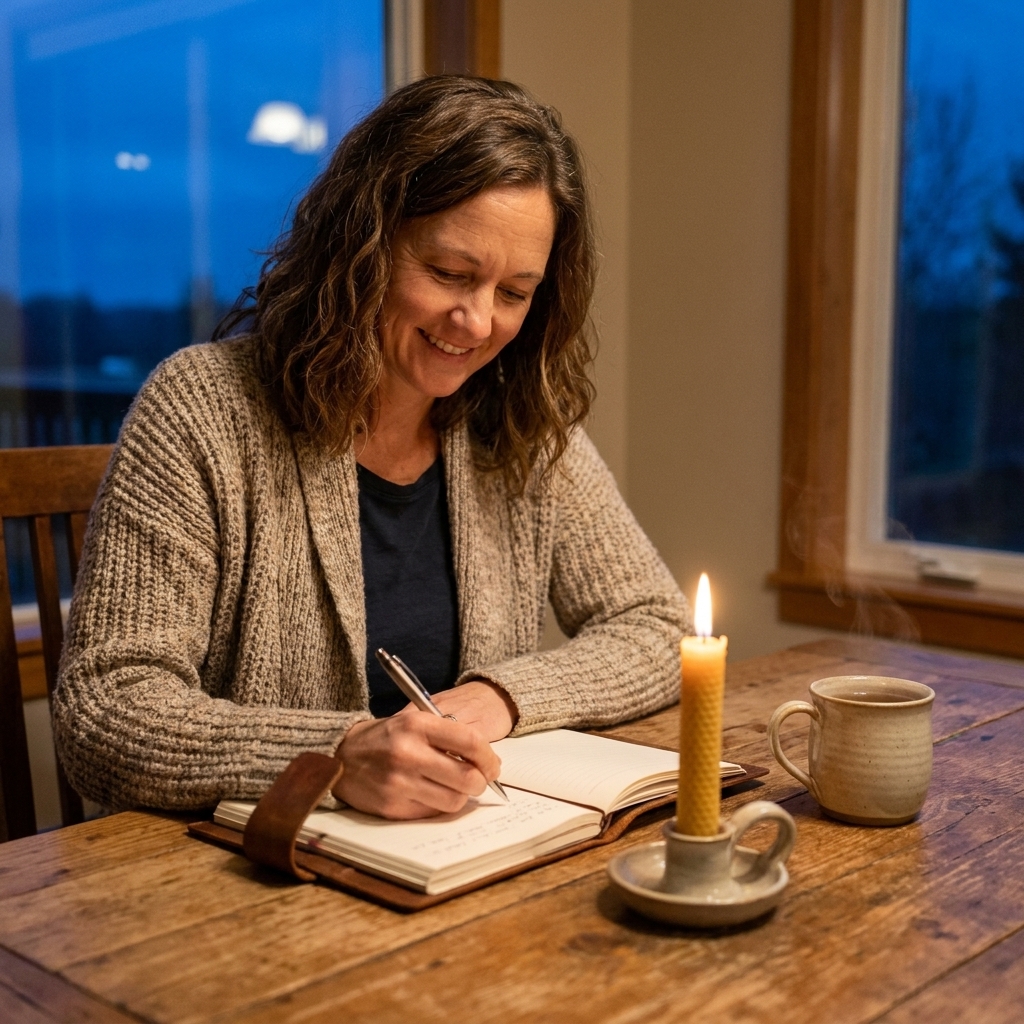
Some choices announce themselves with fireworks. Most do not. Most arrive quietly, braided with practical concerns, old fears, genuine desire, and the tender hope that we are not alone in making our way.
Spiritual discernment is the skill of listening beneath the noise. It is the process of testing beliefs, decisions, and spiritual experiences against wisdom, tradition, and conscience, so that we can move forward with honesty and steadiness, not just intensity.
In many faiths, discernment is less about getting a magical “yes” and more about becoming the kind of person who can recognize what is life-giving, what is ego-driven, and what is simply unprocessed emotion asking for care.

What it is
At its simplest, spiritual discernment is a practice of wise testing. You are asking: “Is this thought, decision, teaching, or experience trustworthy? Is it leading me toward compassion and integrity? Is it consistent with the best wisdom I know?”
Discernment can be applied to:
- Decisions (a relationship, a job, a move, a commitment)
- Beliefs (a teaching you heard, an interpretation of scripture, a spiritual trend)
- Experiences (a vivid dream, a sense of calling, a powerful emotion in prayer or meditation)
- Community influences (pressure from leaders, family expectations, social media certainty)
Discernment does not require perfection or certainty. It asks for sincerity, patience, and the willingness to learn as you go.
What it is not
Discernment becomes clearer when we name its common counterfeits.
Not anxiety dressed as “wisdom”
An anxious mind can feel deeply moral while it rehearses worst-case scenarios. Discernment can include caution, but it rarely feels like frantic spinning.
Not chasing signs to avoid responsibility
Many traditions honor signs and synchronicities, but discernment does not outsource your agency. A “sign” can be meaningful and still need testing.
Not rigid certainty
Certainty can be a gift, but it can also be armor. Discernment stays humble enough to say, “I might be wrong,” without collapsing into confusion.
Not a quick fix
Some clarity arrives quickly. Much of it arrives slowly, as your life becomes the proving ground.
Three anchors
When people ask me how to “test” something spiritual, I return to a simple framework I have found steadying. Different traditions name these differently, but the movement is familiar: draw on what is wise, remember what has endured, listen for integrity.
1) Wisdom
Wisdom includes sacred texts, lived experience, trustworthy scholarship, and the practical insight of people who have walked the road longer than we have. Wisdom asks, “What tends to be true about human beings? What patterns repeat?”
2) Tradition
Tradition is not mere habit. At its best, it is a community’s long memory, a record of what has healed and what has harmed. If you belong to a tradition, discernment asks, “How does this fit with our deepest values, not just our loudest opinions?”
3) Conscience
Conscience is the inner moral compass that senses integrity and misalignment. A well-formed conscience is not just personal preference. It is shaped over time by prayer, reflection, accountability, and compassion.
Noise vs. conviction
One of the hardest parts of discernment is telling the difference between what is loud and what is true.
Emotional noise often feels like:
- Urgency: “Decide right now or you will miss your chance.”
- Catastrophizing: “If I choose wrong, everything will fall apart.”
- Compulsion: “I have to do this to prove myself.”
- Performing: “This will finally make me look faithful, enlightened, or worthy.”
- Short-lived intensity that burns hot and then leaves shame or confusion behind
True conviction often feels like:
- Clarity that can breathe, even if it is challenging
- A steady pull toward goodness, not toward superiority
- Increased compassion for yourself and others
- Consistency over time, not just a single peak moment
- A clean kind of courage: fear may still exist, but it is not driving the car
One gentle test is to ask: Does this move me toward love and responsibility, or toward fear and self-protection?

How to practice
Discernment becomes trustworthy when it becomes a rhythm. Here is a grounded step-by-step process you can return to whenever life presents a fork in the road.
Step 1: Name the question
Vague questions create vague answers. Write your discernment question in one sentence.
- Instead of: “What should I do with my life?”
- Try: “Should I accept the job offer in Portland, or stay where I am for one more year?”
If multiple issues are tangled, separate them. You might have one discernment question about a job and a different one about belonging, grief, or burnout.
Step 2: Ground your body
When the body is flooded, everything sounds like a warning. Before deep reflection, do something simple and regulating:
- Take a slow walk
- Place one hand on your chest and breathe for three minutes
- Eat something nourishing
- Sleep if you are exhausted
Discernment is spiritual, and it is also profoundly human.
Step 3: Prayerful reflection
Prayer can look like formal liturgy, a whispered plea, silent meditation, chanting, or simply sitting with openness. The goal is not to force an answer. The goal is to become receptive and honest.
If you do not pray, you can adapt this step as quiet listening: a few minutes of stillness in which you ask, “What is most true here?”
Try this simple prayer: “Spirit of Truth, help me want what is good. Help me release what is not mine to carry. Show me the next faithful step.”
Step 4: Journal for patterns
Journaling is where discernment often becomes visible. Instead of writing only what you think you “should” feel, write what is real. Then look for repeated themes.
Prompts that tend to open clarity:
- “If no one could judge me, what would I choose?”
- “What am I afraid will happen if I say yes?”
- “What am I afraid will happen if I say no?”
- “What values do I want this decision to express?”
- “What part of me feels young or wounded in this situation?”
- “What would a compassionate, grounded version of me do?”
Step 5: Test it with wisdom
This is where you ask: “Has anyone wiser than me written about this?” In your own tradition, that might mean scripture, commentaries, saints, mystics, teachers, elders, or trusted communal practices.
If you are interfaith or not formally religious, your “wisdom sources” might include:
- Ethical teachings you respect (compassion, non-harm, honesty)
- Therapeutic insight that helps you recognize trauma patterns
- Time-tested practices like meditation, service, and community accountability
A helpful question here is: Does this choice make me more truthful and more loving, or more self-justifying and more defended?
Step 6: Seek trusted counsel
Discernment is personal, but it is rarely meant to be solitary. Find one or two people who can hold your story gently without controlling it.
Look for counselors who are:
- Emotionally steady (they are not easily inflamed by drama)
- Spiritually mature (they care about integrity more than being right)
- Not invested in a specific outcome
- Willing to ask good questions, not just give quick advice
This could be a spiritual director, pastor, imam, rabbi, sangha mentor, therapist, or a wise friend. Sometimes the best discernment partner is someone who knows your patterns and can lovingly name them.
Step 7: Try a small experiment
Many decisions do not require one dramatic leap. They require the next doable step. If you are unsure, try a limited trial that generates real information.
- Volunteer once before committing long-term
- Take the class before changing careers
- Have the honest conversation before ending the relationship
- Try a practice for 30 days and observe its effects
Discernment is not only listening. It is also learning through action.
Step 8: Watch what it produces
One time-tested way to discern is to examine what a path produces in you over time. In Christian language you might hear this described as looking for the “fruit.” Other traditions use different words, but the test is similar: what is this making of you?
After you take a step, ask:
- Am I becoming more compassionate?
- Am I more honest, or more hidden?
- Do I feel more grounded, or more frantic?
- Are my relationships becoming more respectful and real?
- Is my conscience clearer, even if the path is hard?
Not every good choice feels easy. But a good choice tends to make you more whole.
Spiritual experiences
Sometimes the question is not “What should I do?” but “What just happened to me?” A dream, a sense of presence, an unexpected message during prayer, or a powerful emotion can feel sacred. It can also be the mind processing stress, grief, hope, or longing.
When discerning an experience, consider these tests:
- Consistency: Does the message align with your deepest values, or does it contradict compassion and ethics?
- Humility: Does it make you feel superior, chosen, or above others? That is often a warning sign.
- Freedom: Does it invite you into a freer, more loving life, or does it coerce you through fear?
- Integration: Can you live it gently, in ordinary days, without obsession?
If an experience pushes you toward harm, secrecy, manipulation, or grandiosity, slow down and seek grounded counsel. The sacred does not need you to abandon wisdom.
Obstacles
When you feel stuck
Sometimes discernment stalls because the real need is rest. Exhaustion makes even good options feel impossible. If you are depleted, start by caring for the body and simplifying your commitments for a season.
When you fear the wrong choice
This fear is often a hidden belief that God, life, or the universe is waiting to punish you. Many traditions hold a different view: that we are met with grace and guidance even when we stumble.
A grounding reframe: There may be more than one good path.
When you are frozen
Sometimes fear uses the language of “discernment” to keep you stalled. It can look like endless pros and cons lists, asking five different people for permission, or re-litigating the same decision every night without taking any step that would generate new information. If that is you, add counsel and one small experiment step.
When community pressure is loud
If your spiritual community requires you to ignore conscience, suppress questions, or cut off healthy relationships, that is not discernment. That is control.
If you need clearer red flags, take this seriously: demands for secrecy, enforced isolation, financial exploitation, humiliation framed as “obedience,” or pressure to confess beyond your consent are warning signs of a coercive environment.
When mental health is part of it
Spiritual discernment and mental health care can support each other. If you are experiencing paranoia, intrusive thoughts, mania, or severe depression, reach out to a licensed professional and a trusted support network. If you feel at risk of harming yourself or someone else, seek emergency help in your area right away.

Seven-day practice
If you want a gentle structure, try this one-week rhythm. Keep it light. The point is not to force certainty, but to cultivate inner honesty.
- Day 1: Write your question in one sentence. List the options you can see.
- Day 2: Sit in silence for 10 minutes. Notice what arises without judging it.
- Day 3: Journal: “What do I most want?” and “What do I most fear?”
- Day 4: Consult wisdom: read a trusted text or teaching. Note what resonates and what troubles you.
- Day 5: Talk with one wise person. Ask them to reflect back what they hear.
- Day 6: Take one small experiment step related to your decision.
- Day 7: Review the week. Look for what it produced: peace, courage, honesty, compassion, clarity.
At the end, you might still be undecided, but you will likely be more grounded, and that is often the real beginning.
FAQ
How long should it take?
Long enough to become honest, and not so long that fear is using “discernment” to keep you frozen. Small decisions can take a day. Major life choices may take months. If you have been circling for a long time, add counsel and a small experiment step.
Intuition or anxiety?
Anxiety often shows up as urgency, repetition, and catastrophe. Intuition is often quieter and steadier. But these signals can get complicated by trauma, OCD, mania, or chronic stress. A useful practice is to regulate your body first, then revisit the question. What remains true when you are calmer is worth listening to, and if you feel stuck in loops, professional support can help.
What if I do not have a tradition?
You can still practice discernment by anchoring in ethics, wisdom literature, contemplative practice, and trusted community. The core movements are the same: reflect, test, consult, and observe what it produces.
Can discernment change over time?
Yes. Discernment is not a one-time test, it is a lifelong practice. Sometimes the most faithful thing is to revise your understanding as you grow.
A closing blessing
If you are in a season of decision, I hope you feel this: you do not have to manufacture certainty to be faithful. You can move with tenderness. You can take one honest step, then the next.
May your discernment be grounded in wisdom, softened by compassion, and strengthened by courage. May you learn to recognize what is truly yours to carry, and what you can release into the care of Something larger than your fear.