I grew up in a house where different scriptures lived on the same shelves. A Bible with soft, worn pages. A prayer book with ribbons. A slim volume of poetry that my mother treated like sacred text. That upbringing made me curious about a particular kind of religious speech: the short phrases that carry whole worlds inside them.
The Five Solas are like that. They are not a complete summary of Christianity, and they were not coined as a neat five-part list in the earliest days of the Reformation. Early Reformers pressed these themes with force, but the fivefold set most people recite today solidified later as a kind of Protestant shorthand.
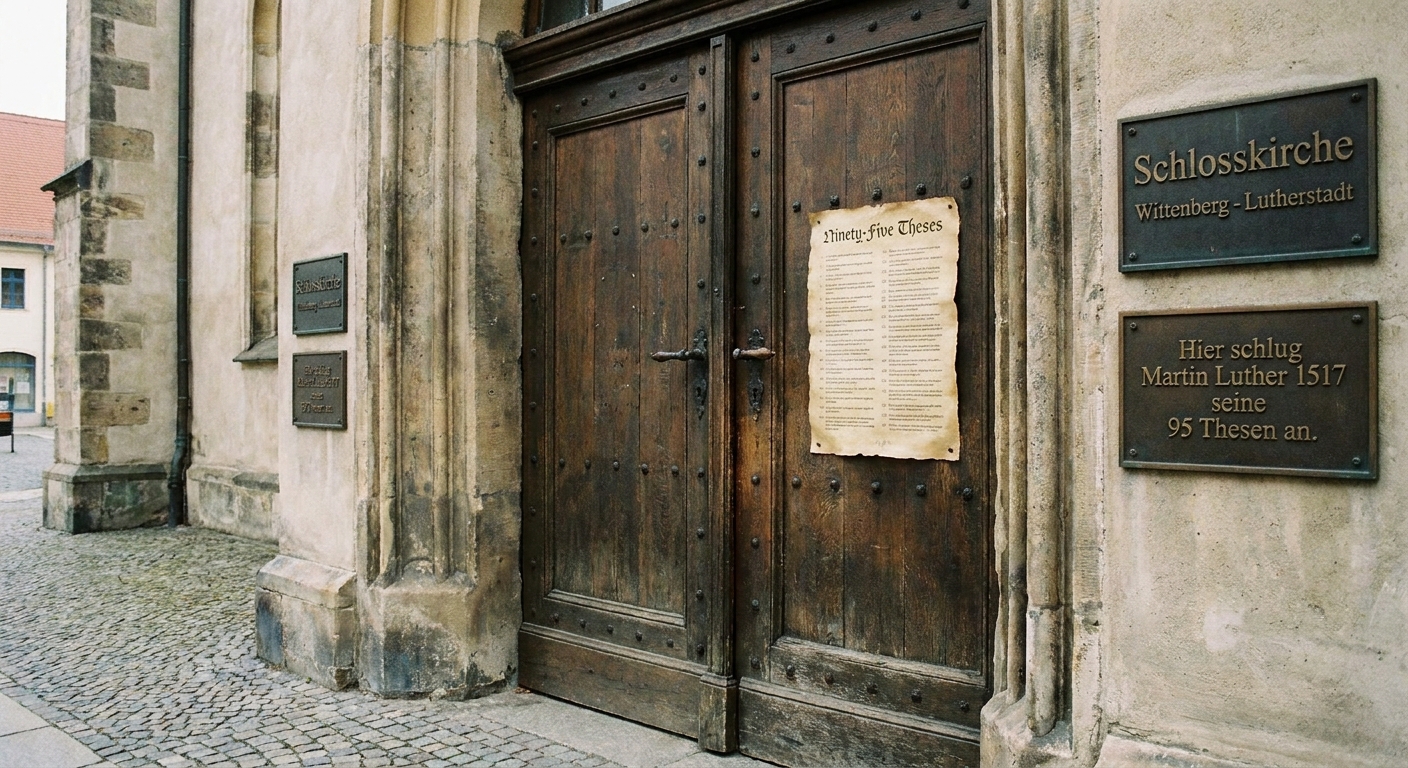
Each sola (Latin for “alone”) makes a claim about what is ultimate in Christian authority, salvation, and worship. And each one was also a protest. Not usually against ordinary Catholics as people, but against certain teachings and practices that Reformers believed obscured the gospel.
The setting
The Protestant Reformation emerged in 16th-century Western Europe amid intense spiritual hunger, real abuses of church power, and deep debates about authority. Many Reformers were priests and professors trained within the medieval Catholic system. They did not start as outsiders. They were insiders who came to believe something precious had been buried under layers of custom, politics, and fear.
One flashpoint was indulgences. In official medieval teaching, indulgences were connected to the remission of temporal punishment, not the simple idea that a person could buy forgiveness outright. But in practice, the preaching, fundraising, and popular understanding around them often sounded like money could move the divine ledger. That gap between theology and lived experience became combustible.
Reformers also argued against what they perceived as a salvation framework that, in ordinary church life, could feel like a complicated blend of sacramental participation, moral effort, and church mediation. Their concern was not only technical doctrine. It was pastoral. They believed the center of gravity had shifted away from resting in God’s promise in Christ.
The solas became a way to say, with urgency and clarity, where confidence belongs.
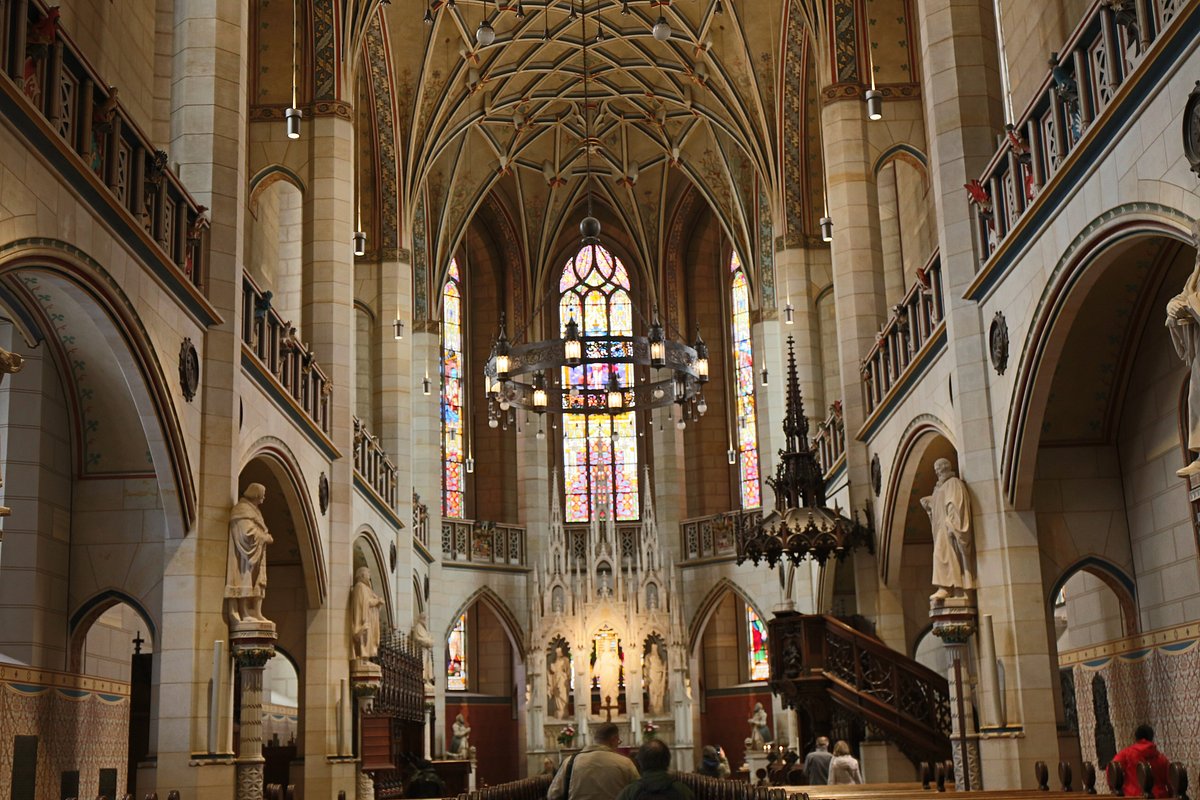
The Five Solas
- Sola Scriptura, Scripture alone
- Sola Fide, faith alone
- Sola Gratia, grace alone
- Solus Christus, Christ alone
- Soli Deo Gloria, to the glory of God alone
Now let’s take them one by one, with two questions in mind: what each slogan affirms, and what it was rejecting.
Sola Scriptura
What it means
Sola Scriptura says that Holy Scripture is the church’s final, highest authority for teaching, correction, and doctrine. Reformers did not claim the Bible is the only authority in any sense. They still valued creeds, councils, teachers, and the wisdom of earlier Christians. But they insisted that all of those must be measured and corrected by Scripture.
This also does not mean everything Christians believe must be stated explicitly in a single proof text. It means that whatever is binding on the conscience must be normed by Scripture.
What it was rejecting
The main rejection was an authority arrangement in which church tradition or magisterial rulings could function as co-equal, binding norms that were not finally corrigible by Scripture. Reformers feared that, over time, this could allow teachings to drift from the biblical witness while still being treated as required belief.
In other words, Sola Scriptura was not a rejection of history. It was a rejection of an authority structure that could not be appealed beyond itself.
For many Protestants, Scripture is not a replacement for community or tradition. It is the measuring line that keeps both honest.
Sola Fide
What it means
Sola Fide teaches that a person is justified, counted righteous before God, by faith alone. Not because faith is a moral achievement, but because faith is the open hand that receives Christ and his promises.
In mainstream magisterial Protestant theology, good works matter deeply, but as the fruit of salvation, not the root. Faith unites the believer to Christ. Works follow as the shape of a changed life.
What it was rejecting
Reformers rejected what they understood as a blending of God’s justifying acceptance with human merit. They also argued against approaches to justification that, in their view, made assurance nearly impossible for ordinary believers. They worried people were being taught to relate to God primarily through anxiety, calculation, and spiritual bookkeeping.
Sola Fide pushed back against the fear that you could never know where you stand with God.
Sola Gratia
What it means
Sola Gratia states that salvation is by grace alone. It begins in God’s initiative, not ours. Grace is not God meeting us halfway after we prove ourselves serious. It is God coming all the way down to lift up those who cannot save themselves.
If Sola Fide emphasizes how salvation is received, Sola Gratia emphasizes where salvation originates.
What it was rejecting
This slogan rejected the idea that human beings, apart from prior divine help, can take the first saving step toward God. Reformers believed that any view that makes salvation finally depend on human ability, moral effort, or spiritual performance diminishes the depth of human need and the freedom of God’s mercy.
In everyday terms, Sola Gratia was rejecting spiritual self-reliance as a foundation for hope.
Solus Christus
What it means
Solus Christus proclaims that Christ alone is the mediator between God and humanity, and that his life, death, and resurrection are sufficient for salvation. No additional mediators are required to make God accessible, and no additional sacrifice is needed to complete what Christ has accomplished.
This does not necessarily mean Protestants deny the value of praying with others, learning from saints of the past, or seeking pastoral care. It means that none of those things replaces or competes with Jesus.
What it was rejecting
Reformers rejected what they saw as an overdependence on a sacerdotal priesthood as a necessary channel of saving grace. They also critiqued devotional patterns that could be experienced in practice as if Mary and the saints were alternative access points to God’s favor, even when official teaching framed their role differently.
They also challenged understandings of the Mass that, in their view, blurred the finality of Christ’s once-for-all sacrifice. Catholic theology has typically spoken of the Mass as a re-presentation or application of Christ’s one sacrifice rather than a new one. The Reformers did not accept that account as they heard it in late medieval worship and teaching, and the disagreement became one of the era’s defining fault lines.
Soli Deo Gloria
What it means
Soli Deo Gloria is the doxology of the set. It claims that the purpose of salvation and the aim of the Christian life is God’s glory alone. Not the glory of the church as an institution. Not the glory of religious elites. Not the glory of the saintly few. God’s.
In the Reformation imagination, this was not cold abstraction. God’s glory was tied to God’s character, God’s beauty, God’s mercy, God’s truth. To glorify God was to place God at the center where peace can finally be found.
What it was rejecting
This slogan rejected any spiritual system in which human boasting can creep back in, even subtly. If salvation is by grace, received by faith, grounded in Christ, and known through Scripture, then the spotlight cannot finally rest on human achievement.
It also pushed back against a church culture in which power, wealth, or prestige could look like holiness.
How they fit
It can help to see the Five Solas as a single sentence with five emphases:
- What is our final authority? Scripture alone.
- How are we made right with God? By faith alone.
- Why is salvation possible at all? By grace alone.
- On what basis is salvation secured? Christ alone.
- What is the ultimate goal? The glory of God alone.
They rise and fall together. If you remove grace, faith becomes a work. If you remove Christ, faith has no sure object. If you remove Scripture as a final norm, the message can drift. If you remove God’s glory as the aim, religion becomes self-improvement dressed in sacred language.
A concrete example: if you start to believe God’s welcome rests on your performance, you will almost inevitably treat prayer as negotiation. But if you believe God welcomes you in Christ by sheer grace, prayer becomes less like bargaining and more like returning home.
Where the phrase came from
People sometimes assume the Reformers gathered and published “the Five Solas” as an official manifesto. The reality is messier and more human. Luther, Calvin, and other early Reformers emphasized these convictions in different words and with different priorities. Over time, especially as Protestant identity developed, later writers distilled recurring Reformation claims into five Latin watchwords that were easy to remember and hard to mistake.
If you want a few historical anchors, you can hear the heartbeat of Sola Fide in Luther’s preaching and debates about justification. You can see a full-bodied account of Solus Christus, grace, faith, and Scripture throughout Calvin’s Institutes. You can also find the Reformation’s pastoral tone in documents like the Augsburg Confession and its defense.
Misunderstandings
1) “Scripture alone” means “me alone”
Many people have heard Sola Scriptura used to justify a hyper-individual approach: me, my Bible, and no one else. Historically, that is not what the Reformers argued for. They wrote catechisms, appealed to earlier theologians, and cared intensely about communal interpretation. The claim is about final authority, not solitary reading.
2) “Faith alone” means works do not matter
Mainstream Reformation teaching insisted that genuine faith produces love and obedience. The debate was about what justifies, not about whether transformed living matters. Many Protestants would say that works are evidence, not entrance fee.
3) The Five Solas are a full creed
They are not a complete statement of Christian belief. They are a set of boundary lines and center-of-gravity claims that arose in a specific controversy. They tell you what the Reformers were trying to protect, but not everything they believed.
Why they matter
Even if you have never set foot in a Reformation history class, the questions underneath the solas are still with us:
- What voice gets the last word in my spiritual life?
- Do I relate to God through fear and performance, or through trust?
- Do I believe grace is real, or just a religious way of saying “try harder”?
- When I pray, do I feel I need to earn access, or is Christ truly enough?
- Is my spiritual life aimed at God’s glory, or at my own image?
In my retreat work, I have met people exhausted from proving themselves. I have also met people wounded by harsh religion who flinch at any talk of authority. The Five Solas, when taught with humility, can offer both clarity and comfort: a God who speaks, a Christ who saves, a grace that precedes you, a faith that receives, and a life that returns to praise.
FAQ
Are the Five Solas found as a list in the Bible?
No. They are theological slogans that summarize how Reformers read Scripture, especially on authority and salvation.
Did all Reformers use all five phrases?
Not in the same way or with the same emphasis. The solas became a commonly grouped set over time as Protestant identity developed.
Are the Five Solas anti-Catholic?
They arose in protest against certain Catholic teachings and practices of the time, so they are polemical by origin. But they can be studied today without contempt. Many Christians use them as a lens for self-examination rather than a weapon.
Is “sola gratia” the same as “grace in Christianity” generally?
It overlaps, but it is more specific. Sola Gratia is one Reformation claim within a set of five, focusing on the origin of salvation in God’s unearned favor.