I grew up in a house where prayer sounded different depending on who was speaking. Some nights it was a well-worn Christian bedtime prayer, other times it was a Jewish blessing over candles, and later in my twenties, it was the quiet rhythm of breath in a meditation hall. That upbringing made me curious about spiritual language. A phrase can be a doorway, or it can become a fence.
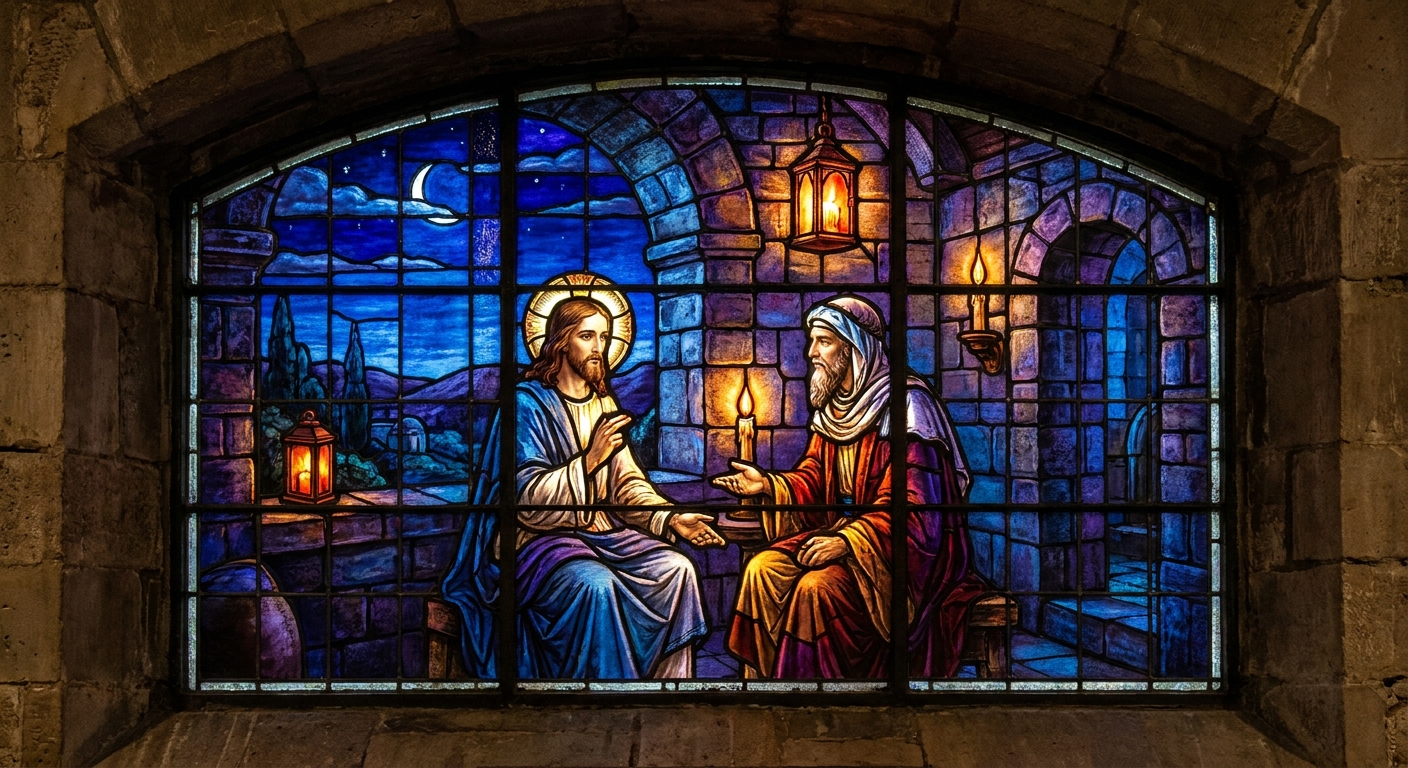
“Born again” is one of those phrases. For some, it names the most tender turning point of their life. For others, it brings to mind a cultural stereotype or a political label. In the Gospel of John, though, it begins as a nighttime conversation between Jesus and a thoughtful, religious teacher named Nicodemus. It is intimate, searching, and surprisingly practical.
The short meaning
In Christian teaching, to be “born again” means to receive new spiritual life from God. It is not self-improvement or a fresh start you manufacture through willpower. It is a kind of inner rebirth, a new beginning that Christians describe as God’s grace meeting a person’s trust.
Many churches, especially evangelical communities, use “born again” as another way to say conversion: moving from simply knowing about God to personally entrusting yourself to Christ and beginning a changed life.
Jesus and Nicodemus in John 3
John 3 opens with Nicodemus, a Pharisee and “ruler of the Jews,” coming to Jesus at night. Nicodemus is not presented as a cartoon villain. He is a serious religious scholar who recognizes that something about Jesus is from God.
Jesus responds with a statement that cuts to the heart: “Unless one is born again, he cannot see the kingdom of God.” (John 3:3, wording varies by Bible translation)
“Born again” or “born from above”?
The Greek word John uses, anōthen, can mean “again” and can also mean “from above.” That double meaning matters. Some translations lean toward “born again,” others toward “born from above,” and both capture something true about what Jesus is saying.
Nicodemus hears the phrase in a literal, physical sense, which is why he asks how an adult could re-enter their mother’s womb. Jesus clarifies that he is talking about a birth that comes from God, not a second biological birth. In other words, it is “again,” yes, but it is also “from above.”
“Born of water and the Spirit”
Jesus continues: “Unless one is born of water and the Spirit, he cannot enter the kingdom of God.” (John 3:5, wording varies by Bible translation)
Christians interpret “water and Spirit” in a few main ways. Some read it as a direct reference to baptism as part of how God gives new life. Others connect “water” to cleansing and repentance, echoing themes found in the Hebrew Scriptures and in John the Baptist’s ministry. Still others hear “water” as a way of describing natural human birth, contrasted with birth by the Spirit.
However you land on that phrase, many Christians agree on Jesus’ central point in the passage: there is ordinary human life (“flesh”) and there is life given by the Spirit (“spirit”). New birth is not merely adopting religious habits. It is receiving a new kind of life that God initiates.
“That which is born of the flesh is flesh, and that which is born of the Spirit is spirit.” (John 3:6)
Jesus also compares the Spirit’s work to wind: you cannot control it or predict it perfectly, but you can see its effects. At its best, Christian spirituality takes that image seriously. New birth is real, but it is not reducible to a script or a performance.
From text to church life
John 3 is a theological conversation, but it is not abstract. The language of new birth has shaped how real communities talk about faith, change, and what it means to belong to God.
What it looks like
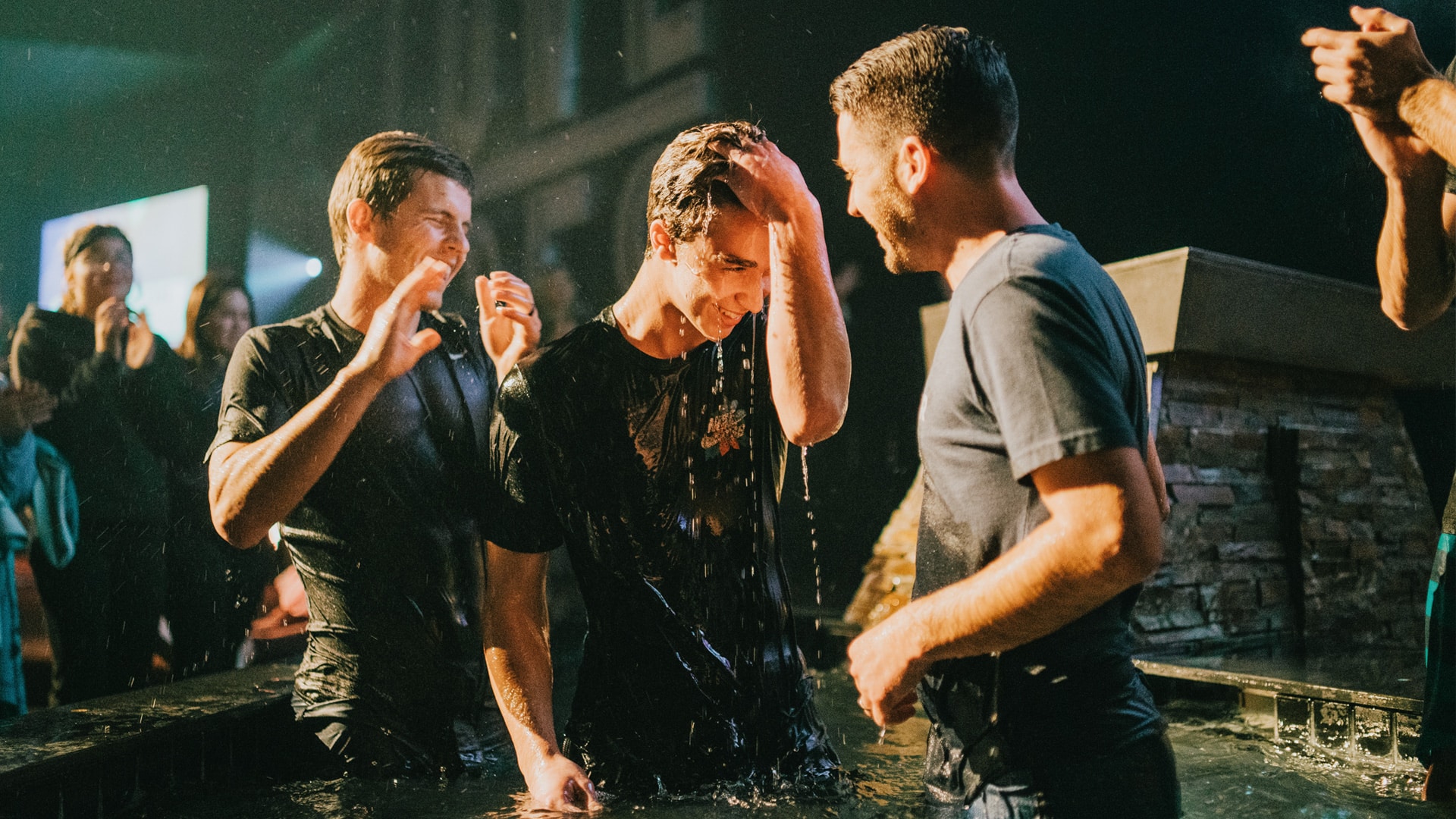
In many evangelical churches, being born again is often spoken of as a clear moment when someone:
- recognizes their need for God’s mercy
- believes the gospel message about Jesus’ life, death, and resurrection
- responds with repentance and trust
- begins a new way of living with Christ at the center
This is why testimonies are so common in these spaces. People tell the “before and after” not because life becomes instantly perfect, but because something genuinely changes: their center of gravity shifts.
A moment or a process
Some Christians can name the day and hour they felt awakened to faith. Others cannot. They might describe a slow dawning, like morning light filling a room.
Both stories can fit John 3. “Born again” names a reality, not a required personality type. The Spirit’s work can be sudden or gradual, dramatic or quiet. What matters is the arrival of new life and the continuing fruit of that life.
Across traditions
Different Christian traditions talk about new birth with different accents, even when they agree on the need for inner renewal.
In evangelical settings, “born again” is often tied to a conscious turning of faith and a personal relationship with Christ. In Catholic and Orthodox churches, the language of new life is frequently connected to baptism, catechesis, and a lifelong journey of becoming more fully united with Christ. Many mainline Protestant communities hold these themes together in their own way, stressing both God’s initiating grace and the ongoing formation of a person within worship, Scripture, and community.
Beyond John 3
John 3 is the classic text, but the theme is not isolated. Elsewhere in the New Testament, you see similar language, like the “washing of regeneration” (Titus 3:5), becoming a “new creation” (2 Corinthians 5:17), and being given “new birth” into a living hope (1 Peter 1:3). Different authors use different metaphors, but they circle the same mystery: God does not only instruct us, God remakes us.
Common misunderstandings
1) It means moral superiority
In the best Christian sense, new birth leads to new desires and real ethical change. But it begins with humility, not superiority. If “born again” becomes a badge used to look down on others, it has drifted far from Jesus’ tone with Nicodemus, which is both direct and invitational.
2) It is just a subculture label
In American life, “born again” sometimes functions like a sociological category. But in John’s Gospel it is a spiritual reality: God giving life from above. Christians outside evangelicalism may not use the phrase as often, yet many still affirm the underlying idea that faith involves an inner renewal empowered by God.
3) It is only emotion
People sometimes equate being born again with a rush of emotion at an altar call or retreat. Those experiences can be sincere and transformative. But John 3 points to something deeper than feelings: the Spirit creating new life that continues when the music stops and ordinary life resumes.
4) It ends struggle
New birth is a beginning, not a finish line. Many Christians describe it as receiving a new heart and new direction, while still learning, healing, and sometimes wrestling with old patterns. In fact, the desire to grow and the grief over what harms love can be signs of life, not proof of failure.
Born again and saved
In many churches, yes, Christians use the terms closely together. “Saved” highlights rescue and deliverance. “Born again” highlights new creation and new life. They are two angles on the same grace: God not only forgives, but also renews.
Some Christian traditions make finer distinctions between ideas like regeneration, conversion, justification, and sanctification. Even then, the pastoral heartbeat is similar: God initiates, we respond, and a new life begins.
In John 3, Jesus goes on to speak about belief and God’s love for the world, leading to the famous line: “For God so loved the world…” (John 3:16). In this chapter, new birth and believing are tightly connected. Christians generally understand the new birth as God’s work, received through faith.
Baptism
Many readers naturally ask about baptism when they hear Jesus say “water and the Spirit.” Christians have long connected baptism with the language of new life, cleansing, and beginning again.
At the same time, Christians do not all agree on how baptism relates to the new birth. Some traditions teach that baptism is a primary means through which God gives that new life. Others teach that baptism is a powerful sign and public witness of the new life God has already begun.
John 3 keeps the spotlight on the Spirit’s work and the necessity of life from above. If baptism is on your mind, you are asking a normal and important follow-up question, but it is worth noticing that Jesus’ emphasis here is not on a technique. It is on transformation that God initiates.
Signs of new birth
Christians describe the fruit of being born again in many ways. Not all of them appear at once, and none of them are perfect. But over time, new life tends to show itself through things like:
- new trust: a growing confidence in God’s mercy
- new desires: a pull toward prayer, worship, Scripture, and community
- new honesty: a willingness to name sin, harm, and self-deception
- new love: increased compassion, patience, and concern for others
- new resilience: returning to God after failure rather than hiding
If you are unsure
If “born again” language has ever felt pushy or simplistic to you, I understand. In my work facilitating interfaith spaces, I have seen how quickly sacred words can be used as shortcuts or as identity markers rather than invitations.
But John 3 is not a sales pitch. It is a conversation about what humans cannot give themselves: life from above.
If you want to explore gently, consider trying one small step that matches the spirit of the passage:
- Read John 3 slowly, and notice what Nicodemus misunderstands and what Jesus emphasizes.
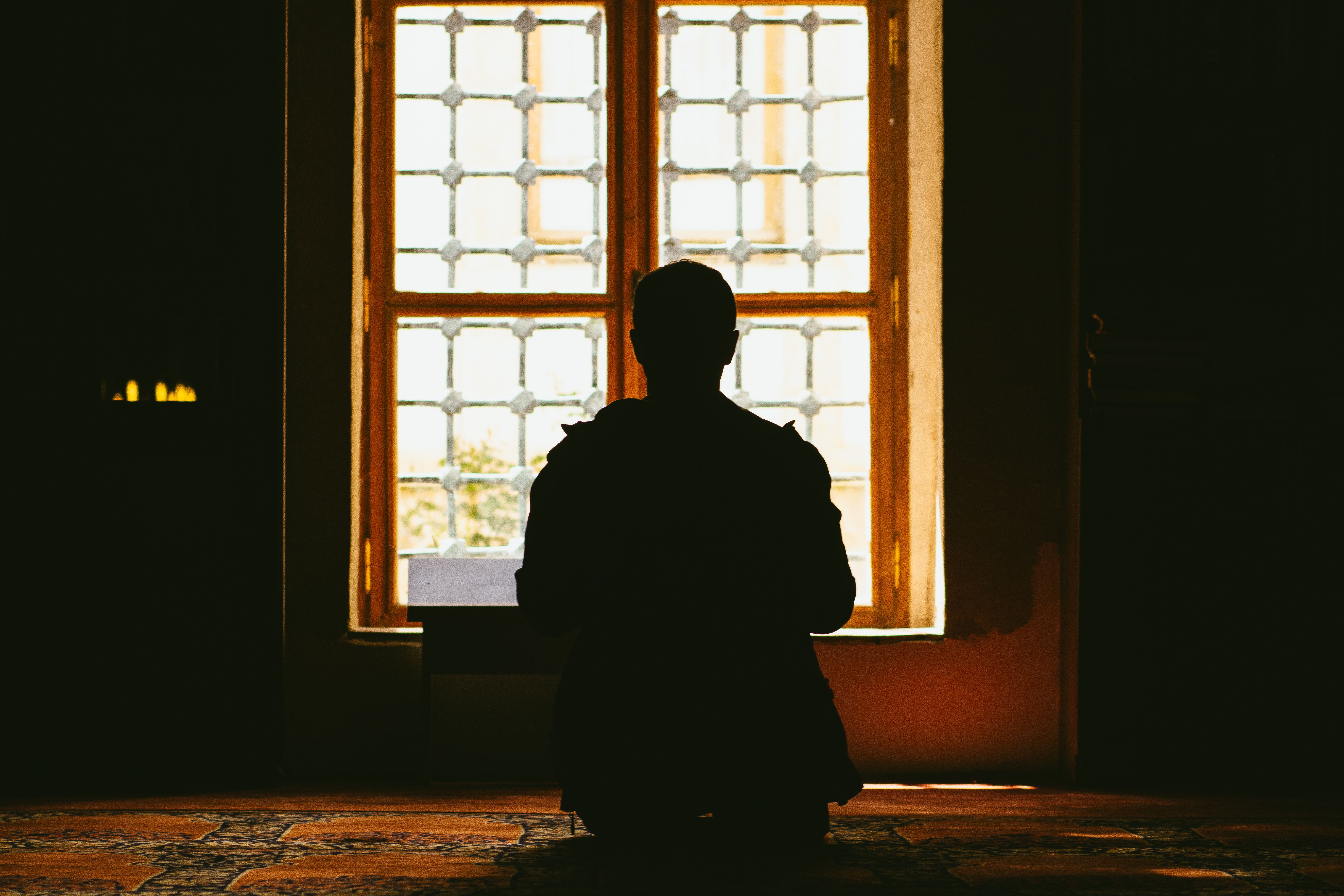
- Pray honestly, even if your prayer is simply, “God, if you are real, make me new in whatever way is true.”
- Talk with a trusted Christian who is more interested in listening than winning.
FAQ
Do you have to say “born again” to be Christian?
No. Some Christians use different language, like “converted,” “saved,” “renewed,” or “made new.” What matters is the reality the phrase points toward: new life from God through the Spirit.
Is it just my decision?
In John 3, the emphasis is on God’s action. Christians typically say we respond with repentance and faith, but the new birth itself is a gift, not a self-generated achievement.
Can you be born again and still doubt?
Yes. Doubt can be part of a sincere faith journey. New birth does not remove every question. It plants a new relationship with God that can hold questions while continuing to grow.
What if I do not have a dramatic story?
You are not alone. Some people experience a clear turning point, others experience a gradual awakening. The Spirit is not limited to one storytelling style.