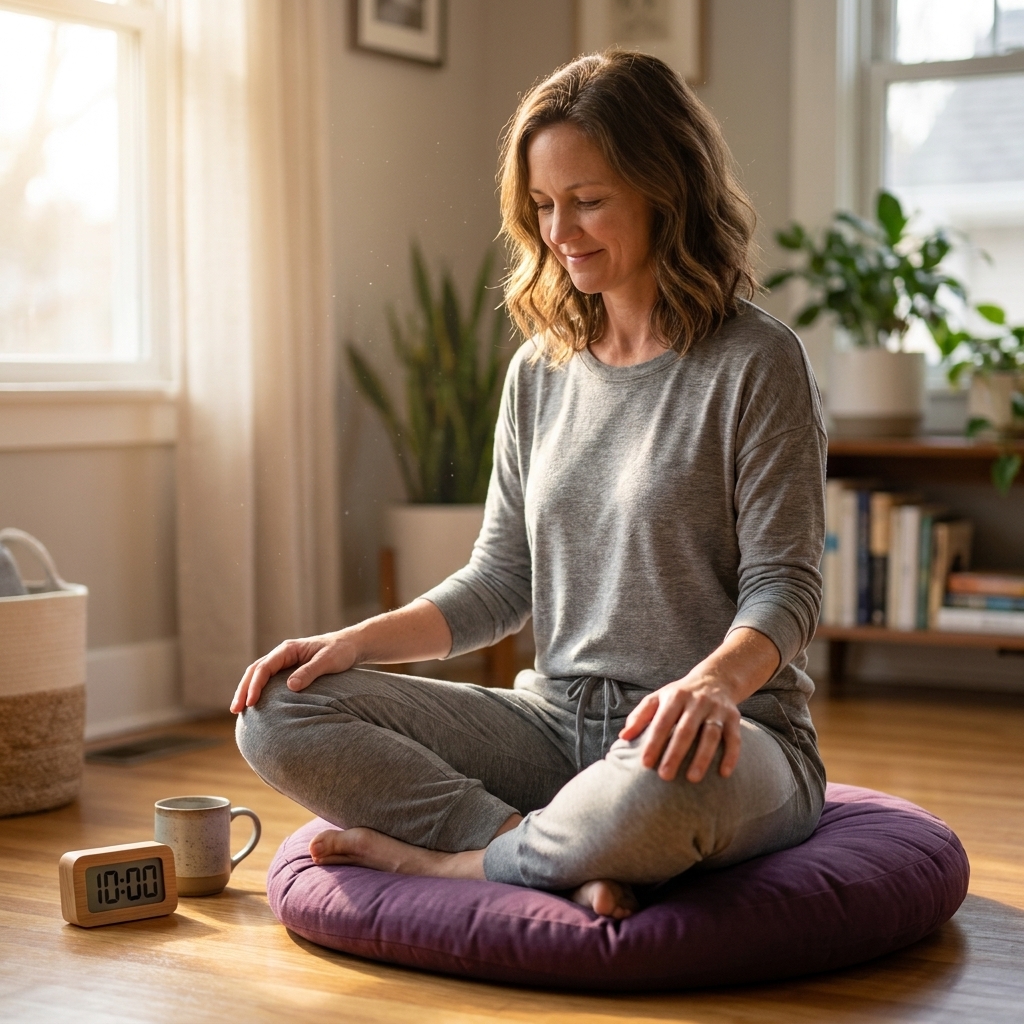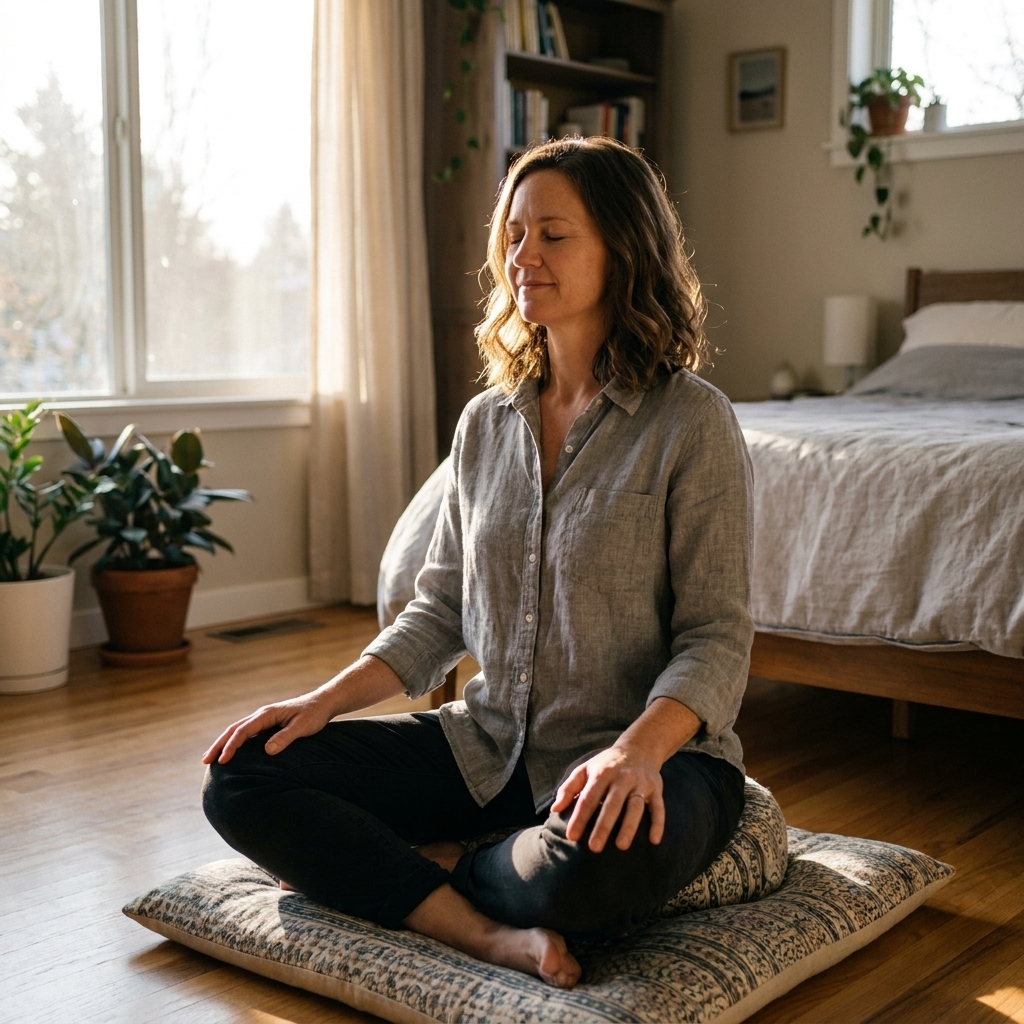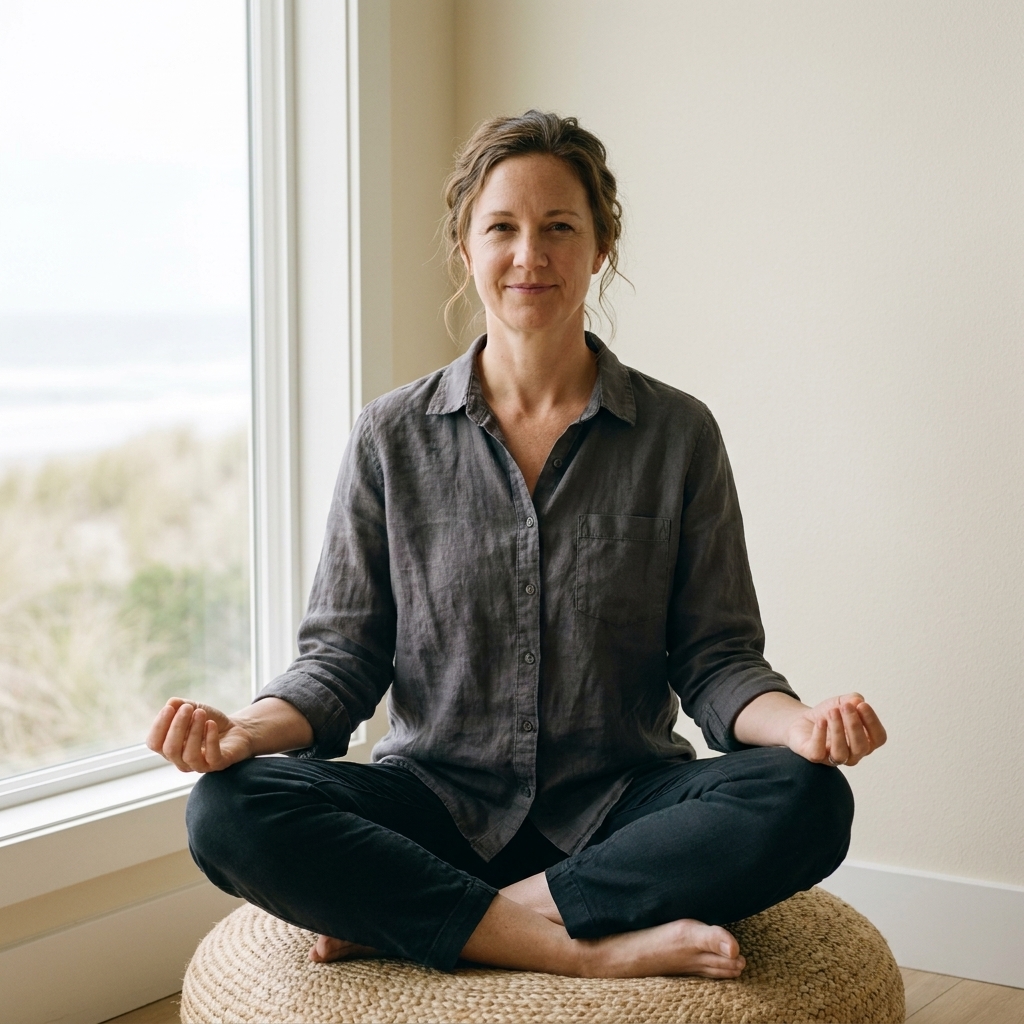
Some days, sitting still feels like the hardest kind of prayer. Your mind races. Your body fidgets. The world keeps calling.
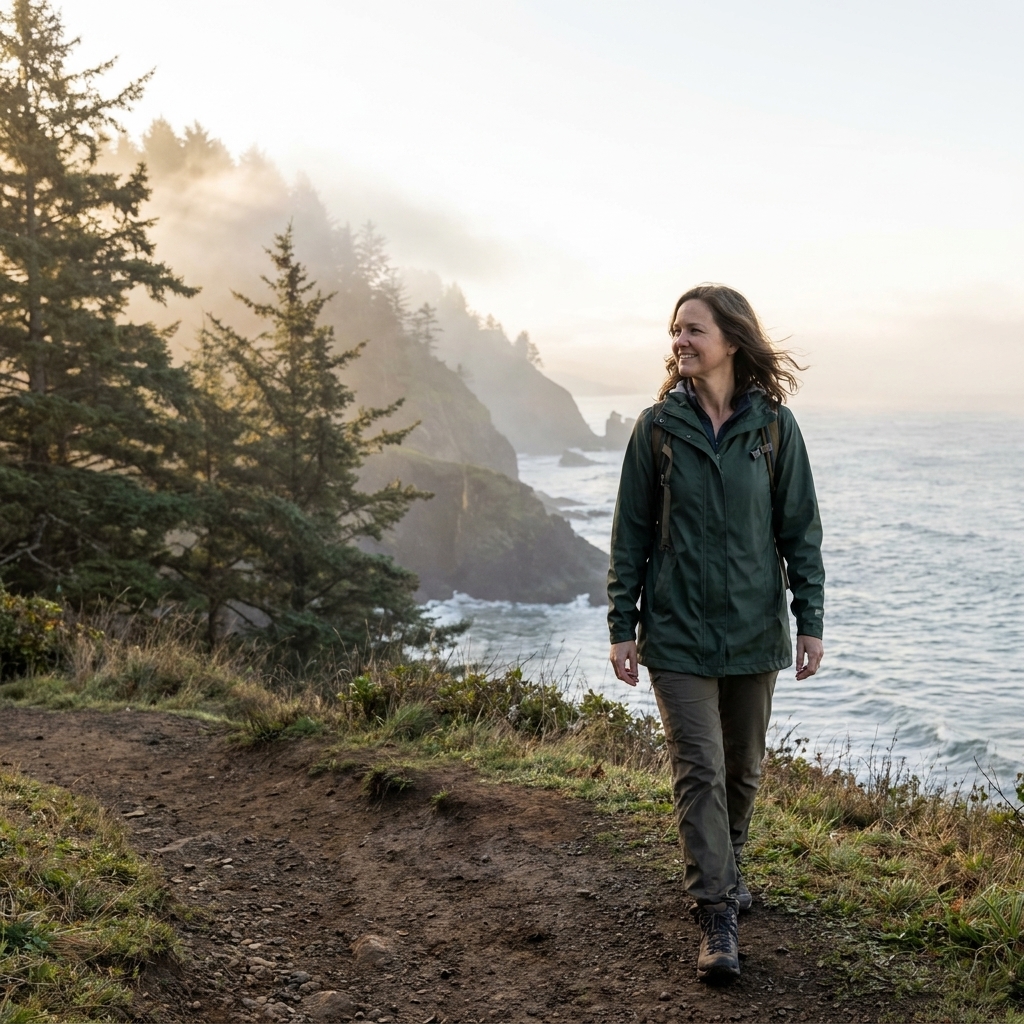
Mindful walking offers another doorway. It is meditation with soles and sidewalks, a way of practicing presence while still moving through your actual life. In Zen Buddhism, for example, there is a form of walking meditation often practiced between periods of seated meditation to steady attention. Across many traditions and settings, people use mindful walking to calm the mind, soften stress, and remember what matters. You do not need special clothing, perfect posture, or a secluded retreat center. You just need a few minutes and a willingness to arrive where you already are.
What it is
Mindful walking is a moving meditation where the “object” of attention is simple and close: the breath, the sensations of the feet, the rhythm of steps, the sounds and textures of the world around you.
Unlike a power walk where the goal is distance, speed, or productivity, mindful walking is about presence. You are not trying to get somewhere else mentally. You are practicing being here, in this body, on this earth, in this one ordinary moment.
Many people find it helpful to remember: this is not a performance. If your mind wanders, that is not failure. That is the practice. You notice. You return.
Before you start
Choose a supportive route
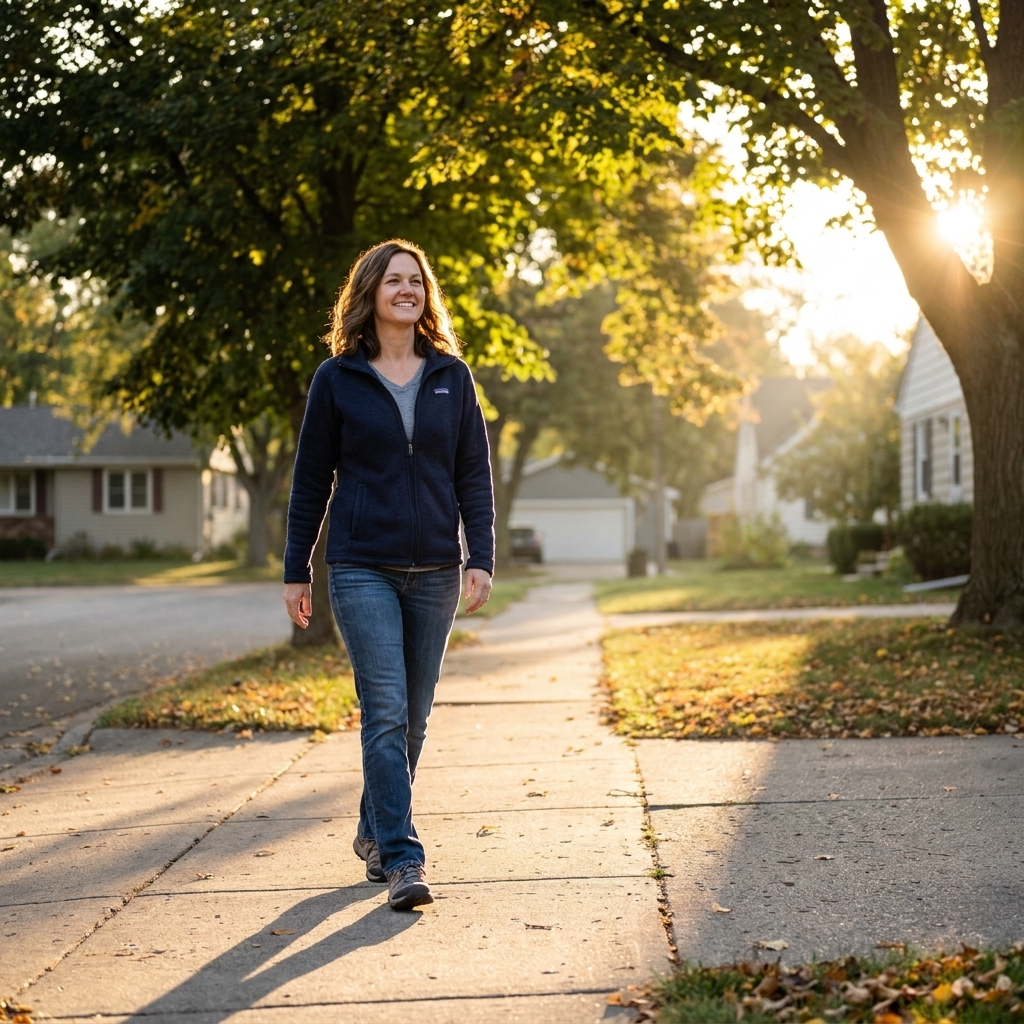
If you are new to mindful walking, pick a path that is relatively predictable for 5 to 15 minutes: a quiet block, a park loop, a hallway, even your backyard. Complexity can come later.
- Low distraction: a neighborhood street, track, or park trail.
- More supportive: somewhere with trees, water, or open sky if that calms your nervous system.
- Most realistic: your usual route, with mindfulness woven in.
Set one gentle intention
Intentions keep the walk from becoming just another task. Keep it simple, almost tender.
- “Today, I practice returning.”
- “May I be kind to my body.”
- “Let this walk be enough.”
Safety and accessibility
Mindfulness is not meant to override common sense. If you are near traffic, crossings, uneven terrain, or crowds, let safety lead. You can be mindful without closing your eyes, slowing dramatically, or tuning out your surroundings.
Footwear and terrain: choose shoes you can trust and ground you can read. If you have foot pain, balance concerns, or dizziness, keep the route short and even, use supports as needed, and consider checking in with a clinician if symptoms persist or worsen.
Weather and seasons: adjust the practice to the day you have. In heat, shorten the walk and hydrate. In ice or poor air quality, bring the practice indoors in a hallway or living room loop. The point is attention and care, not proving something.
The basic practice
If you only learn one structure, let it be this: breathe, step, notice.
1) Arrive with one breath
Stand still for a moment, or slow down before you begin. Feel the contact of your feet with the ground. Take one steady inhale and one steady exhale.
If prayer language is natural for you, you might quietly offer: “Here I am.” If it is not, simply feel the breath as it is.
2) Choose a feelable pace
Mindful walking is often slower than usual, but it does not need to look unusual. The key is to pick a speed where you can perceive the details of movement. If you cannot feel your feet at all, slow slightly.
3) Anchor in the feet
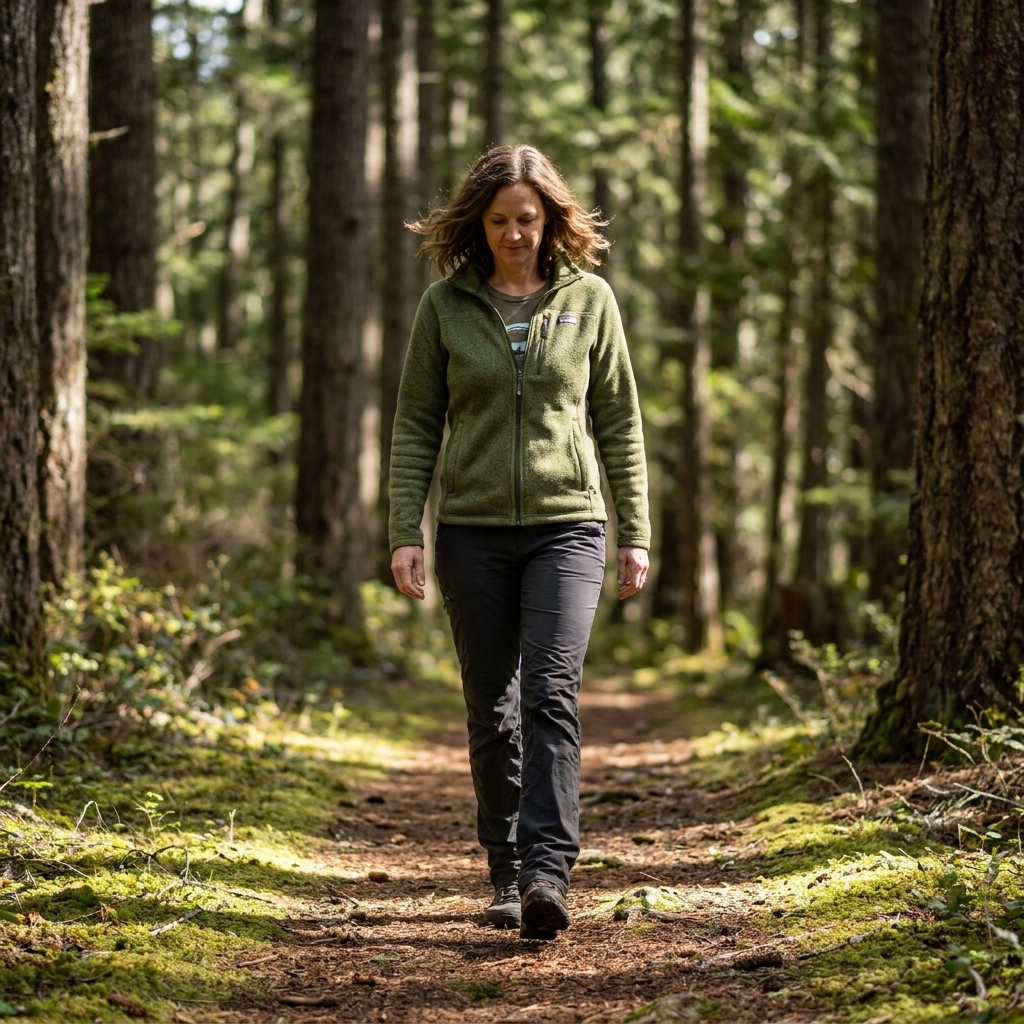
Let your attention rest on the soles of your feet and the subtle choreography of each step:
- Heel touching down
- Weight shifting
- Toes releasing
- Lift, swing, place
When the mind pulls you away, gently return to the next step. The next step is always available.
4) Pair steps with breath (optional)
Try a simple rhythm for a few minutes:
- Inhale for 3 to 4 steps
- Exhale for 3 to 4 steps
If that feels strained, shorten it. The goal is ease, not control.
5) Open to the senses
Once you feel steady, widen your attention to the senses, one at a time:
- Sound: birds, traffic hum, your own footsteps.
- Sight: colors, movement, the shapes of leaves or buildings.
- Touch: wind on skin, temperature, sunlight.
- Smell: rain, soil, salt air, someone’s dinner down the block.
Notice without grabbing. You are not collecting experiences. You are letting life be vivid without needing to possess it.
Ways to deepen
Mantra or sacred phrase
In many traditions, repetition steadies the mind and opens the heart. You can match a simple phrase to your steps.
- With each step: “Peace.”
- Inhale: “I arrive.” Exhale: “I release.”
- With each exhale: “May all be well.”
If you come from a specific faith, you might choose a short prayer, a divine name, or a line from scripture that feels grounding. Keep it light in the mouth, not clenched in the mind.
Gratitude through the senses
Try naming quiet thanks for what is present:
- “Thank you for this air.”
- “Thank you for these legs that carry me.”
- “Thank you for one more ordinary day.”
Gratitude does not need to deny difficulty. It simply makes room for more than one truth at a time.
Compassion outward and inward
As you pass people, animals, homes, or cars, offer a simple blessing in your own language:
- “May you be safe.”
- “May you be held in love.”
- “May you find ease.”
Then remember to include yourself. Many of us are fluent in compassion for strangers and strangely silent toward our own tired hearts.
When your mind wanders
Wandering is not a detour from mindfulness. It is the moment mindfulness begins.
Try this three-part reset:
- Notice: “Thinking.”
- Soften: unclench the jaw, relax shoulders, loosen the belly.
- Return: feel one step, then the next.
If you find yourself replaying a conversation or worrying about the future, do not scold yourself. The practice is returning with kindness.
Real-life situations
Busy areas
Let awareness be wide rather than narrow. Instead of focusing intensely on the soles of your feet, try “whole-body” mindfulness: posture, breath, and the flow of people around you. Stay alert. Presence includes prudence.
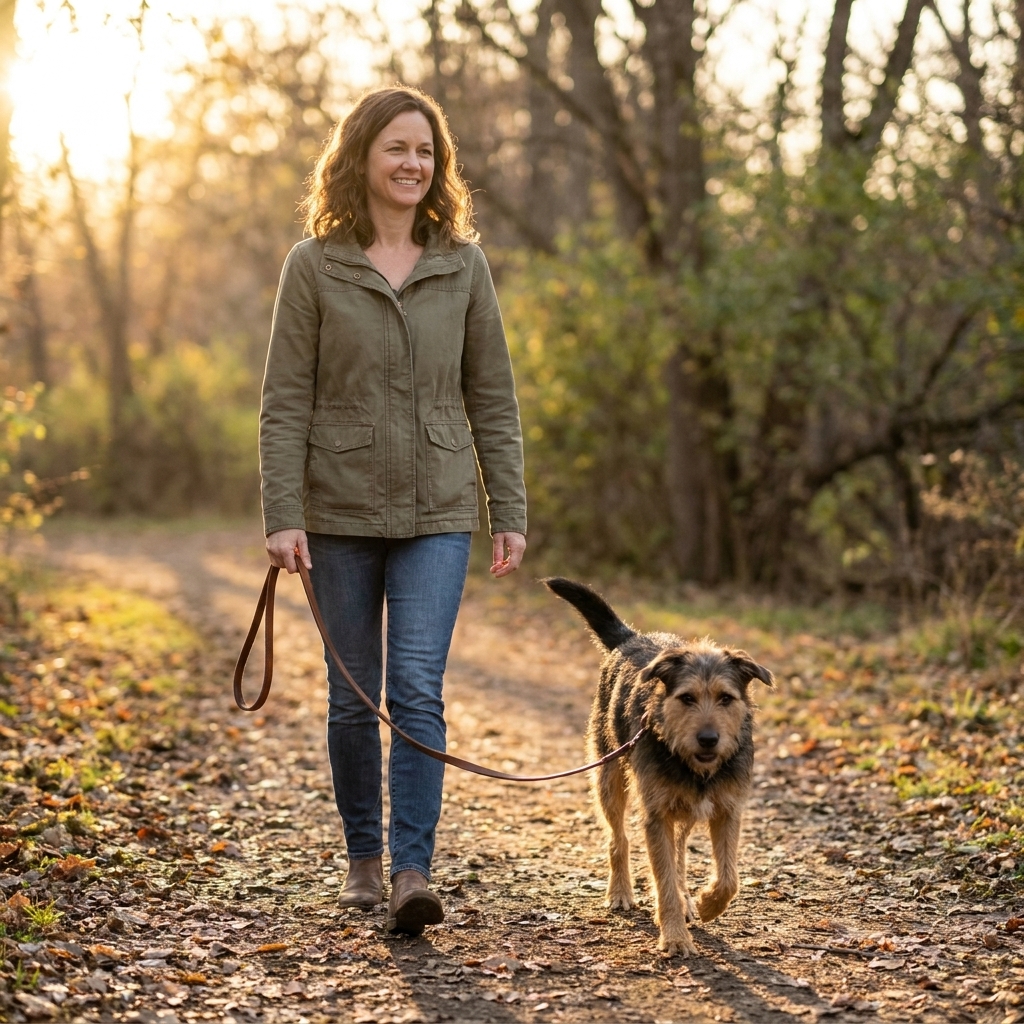
Walking with a dog
Dogs are natural teachers of embodied attention. Let your dog’s pauses become bells of mindfulness.
- When your dog stops to sniff, take one conscious breath.
- When you tug the leash, soften your grip and your impatience.
- When your dog looks up, practice looking up too.
Short on time
Do a three-minute walking meditation from your car to your front door, or from your desk to the kitchen. Choose one anchor only: breath or feet.
Spirituality does not require long stretches of time. It requires sincerity within the time you have.
Limited mobility
Mindful walking can be adapted:
- Walk indoors from room to room, pausing as needed.
- Do “mindful stepping” while holding a counter for balance.
- If walking is not possible today, practice mindful movement while seated: feel feet on the floor, shift weight gently, coordinate with breath.
The heart of the practice is attention and kindness, not mileage.
A 10-minute routine
If you like structure, here is a gentle plan you can repeat.
Minute 1: Arrive
- Stand or slow down.
- One full inhale, one full exhale.
- Set an intention.
Minutes 2 to 4: Feet
- Feel heel, arch, toes.
- Notice the shift of weight.
- Return when the mind drifts.
Minutes 5 to 7: Breath and steps
- Inhale 3 steps, exhale 3 steps, adjust as needed.
- Let the breath be natural.
Minutes 8 to 9: Senses
- Notice sound, light, temperature.
- Let everything come and go.
Minute 10: Close
- Slow down.
- Offer gratitude or a blessing.
- Take one conscious breath before returning to your day.
Closing
Mindful walking has a quiet way of restoring dignity to the everyday. It reminds us that holiness does not only live in sanctuaries, temples, or perfectly still mornings. Sometimes it lives in sneakers and sidewalks, in the soft persistence of one step after another.
If you try this and it feels awkward at first, that is completely normal. Start small. Stay gentle. Let your walk become a place where you meet your life without rushing past it.
One step is enough to return. Another step is enough to begin again.
FAQ
Is mindful walking the same as walking meditation?
They are often used interchangeably. “Walking meditation” sometimes implies a more formal practice, while “mindful walking” can be as simple as bringing steady attention to your steps on an ordinary errand. Both are forms of moving meditation.
How long should I practice?
Even 5 minutes can help many people feel calmer and more grounded. If you enjoy it, expand to 10 or 20. Consistency matters more than duration.
Should I listen to music or a podcast?
If your goal is mindfulness, silence is usually more supportive, especially at first. But life is nuanced. If music helps you regulate or feel safe, try instrumental tracks and keep the volume low. Consider alternating: one mindful block in silence, then your usual audio.
What if I feel emotional while walking?
This is common. Movement and quiet attention may bring emotions closer to the surface. Slow down, feel your feet, and take a few steady breaths. If emotions feel overwhelming, it is wise to reach out to a trusted friend, spiritual leader, or mental health professional. Mindful walking is a support, not a substitute for care.