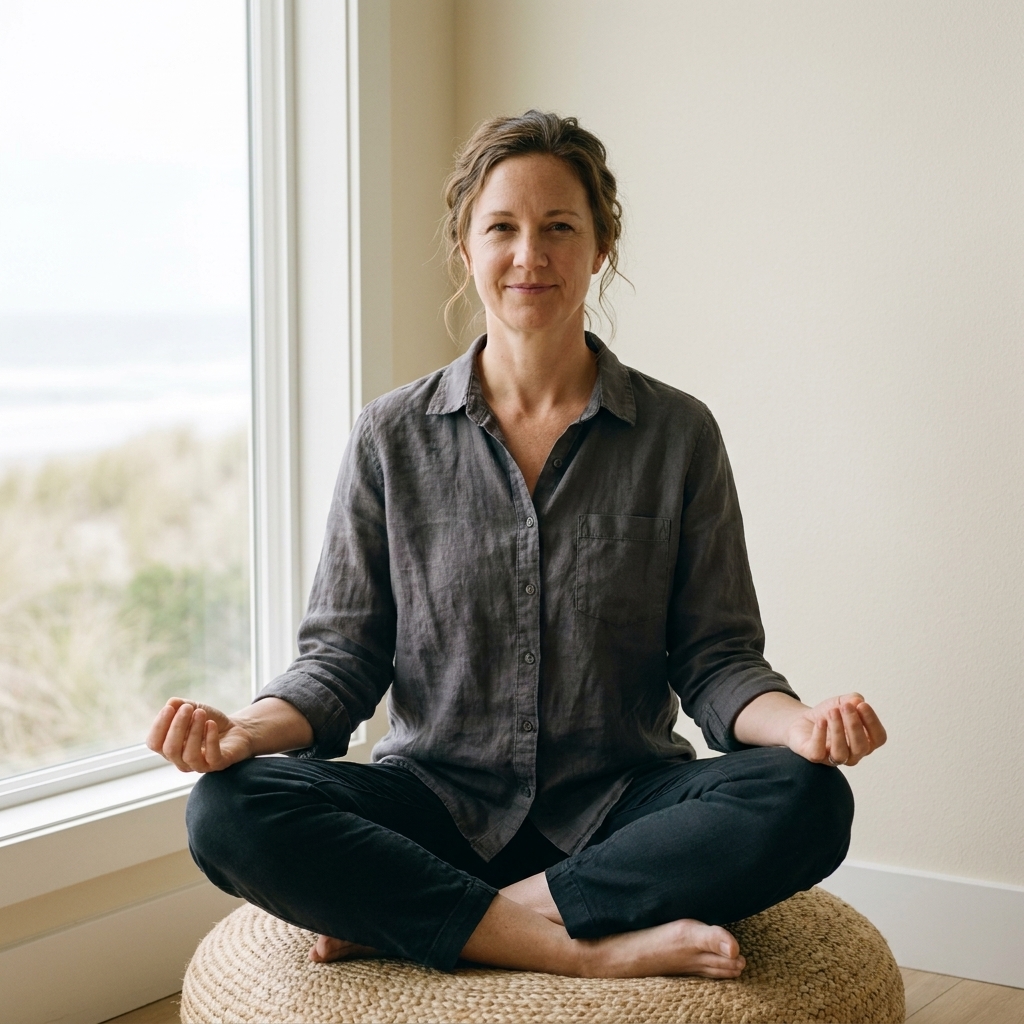
Energy healing has a way of finding us when we are tired of pushing through. Maybe your body is carrying stress you cannot quite name. Maybe your mind is loud, or your heart feels tender in a way your usual routines cannot reach. Two of the most common paths people explore are Reiki and Pranic Healing. They share a family resemblance, yet they can feel very different in practice.
My goal here is not to “rank” them. It is to help you listen for what you need right now, with enough clarity to choose a method that supports your mind, body, and spirit without pressure or hype.
What both mean by “energy”
Across many traditions, there is a shared intuition that life moves through us like a subtle current. In Japan you may hear ki. In India, prana. In Chinese philosophy, qi. Even if you do not use spiritual language, you may recognize the lived experience: some days you feel open, steady, and resourced, and other days you feel depleted, tangled, or “off.”
Reiki and Pranic Healing both work with the idea that wellbeing is influenced by subtle energy patterns. The practitioner’s role is to support balance and flow, often alongside practical care like therapy, rest, movement, hydration, and medical treatment when needed.
Think of energy work as tending the garden soil. It does not replace sunlight and water. It helps create conditions where healing can take root.
Reiki at a glance
Origins
Modern Reiki is generally traced to Mikao Usui in early 20th-century Japan, though historians and lineages sometimes differ in how they describe parts of the story. The term “Reiki” is often interpreted as something like “spiritual” or “universal” (rei) plus “life energy” (ki).
Many people appreciate Reiki because it is spacious and receptive. In my experience facilitating retreats, Reiki often appeals to those who feel grief-worn, anxious, or overstimulated. It can feel like being reminded, in the body, that you are allowed to soften.
What a session is like
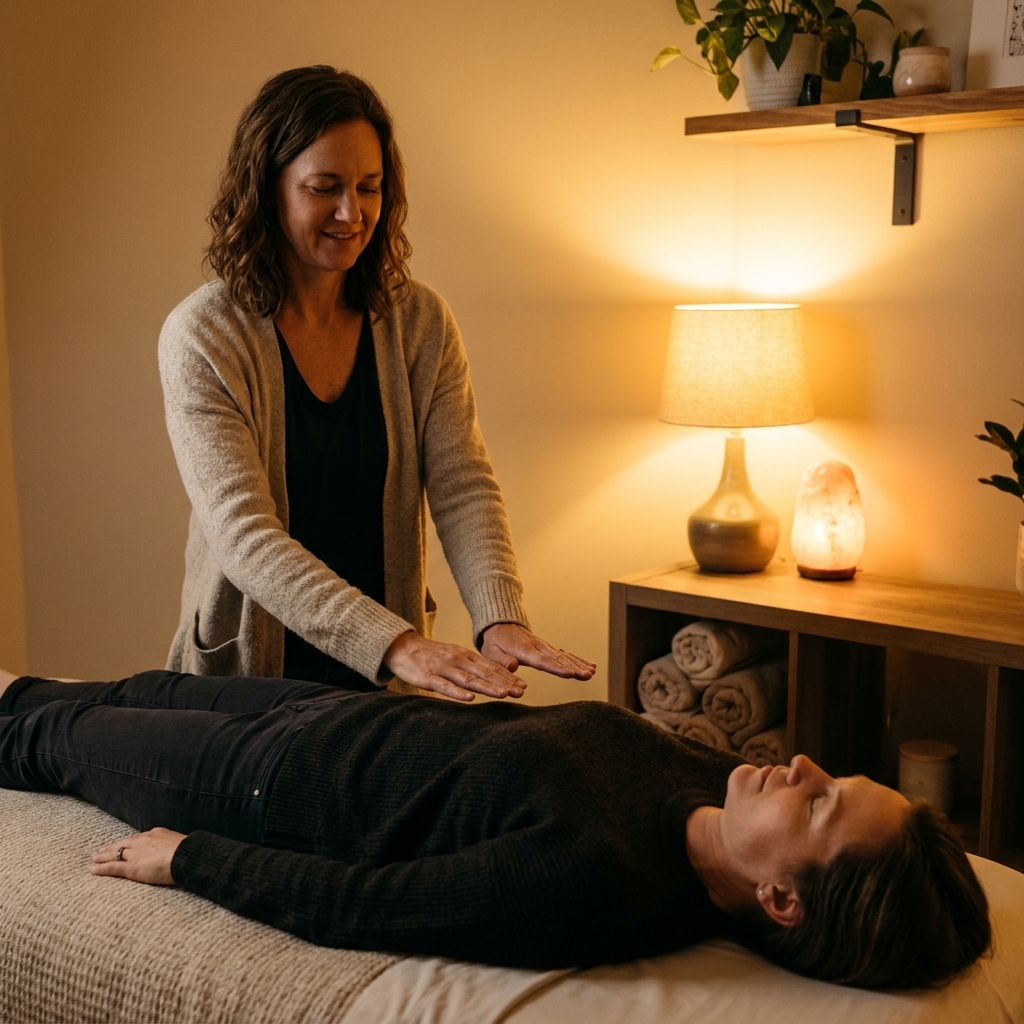
- Setting: A quiet room, often with soft lighting and calming music.
- Touch: Typically light touch in set hand positions, or hands hovering if touch is not preferred.
- Client experience: Many people report warmth, tingling, emotional release, deep relaxation, or simply a sense of calm.
- Structure: Usually 45 to 75 minutes, often with a brief check-in at the start and reflections at the end.
Common reasons people seek Reiki
- Stress reduction and nervous system regulation
- Support during grief, transitions, or burnout
- Sleep support and relaxation
- Support during recovery, alongside medical care
- Feeling “disconnected” from self or body
Pranic Healing at a glance
Origins
Pranic Healing is a system popularized by Master Choa Kok Sui in the late 20th century, drawing from yogic and other energy traditions. It is often described in more technical language than Reiki, with an emphasis on scanning the energy body, cleansing congested areas, and energizing depleted ones.
If Reiki feels like a warm river you can rest beside, Pranic Healing can feel like a focused toolkit. Many practitioners speak in terms of protocols and steps, and clients sometimes appreciate that sense of clarity and method.
What a session is like
- Touch: Commonly no-touch, with the practitioner working in the energy field.
- Techniques: Scanning, cleansing, and energizing, sometimes paired with guided practices.
- Client experience: People may notice lightness, clarity, warmth, emotional shifting, or fatigue afterward as the body integrates.
- Structure: Often 30 to 60 minutes, sometimes as a series depending on the concern.
Common reasons people seek Pranic Healing
- Focused support for specific concerns (physical discomfort, emotional patterns, stress symptoms)
- When someone wants a more structured, step-by-step approach
- Clearing heavy emotional residue after conflict, trauma, or intense life change
- Support for mental clarity, motivation, and overall vitality

Key differences
1) Touch vs. no-touch
Reiki often includes light touch (with consent), though distance Reiki is also practiced. Pranic Healing is commonly no-touch and works in the energy field. If touch feels uncomfortable or activating, Pranic Healing may feel emotionally safer. If gentle, respectful touch feels grounding, Reiki may be comforting.
2) “Channeling” vs. “cleansing and energizing”
Reiki practitioners often describe themselves as a channel for universal energy, allowing the body’s wisdom to receive what it needs. Pranic Healing practitioners more often describe an active process: scanning for imbalances, cleansing congestion, then energizing and stabilizing.
3) Intuitive flow vs. protocols
Reiki can be highly intuitive in how it unfolds, even when using traditional hand positions. Pranic Healing frequently uses specific protocols for particular concerns. Neither is better. They simply reflect different temperaments. Some people heal best in softness and spaciousness. Others relax when there is a map.
4) The feel of the session
These are not guarantees, but they are common descriptions: Reiki is often described as soothing, meditative, and emotionally tender. Pranic Healing is often described as crisp, clearing, and energizing, though it can also be gentle depending on the practitioner and your sensitivity.
5) Training and lineages
Both have training pathways and ethical standards, though they are organized differently. Reiki is often taught in levels (commonly Reiki I, II, and Master). Pranic Healing also has tiered courses and additional specializations. In both cases, the practitioner’s maturity, humility, and consent practices matter as much as any certificate.
What research can and cannot say
It is wise to be both open-hearted and clear-eyed. Research on Reiki and related biofield therapies suggests possible benefits for relaxation, stress reduction, and improved wellbeing for some people, but study quality varies and mechanisms are not fully established within conventional biomedical models.
Two often-cited examples include:
- Jain S, Mills PJ (2010), a systematic review of biofield therapies, which found some positive signals but also methodological limitations across studies.
- Anderson JG, Taylor AG (2011), a systematic review focused on Reiki, which concluded that evidence was promising in some areas yet limited by study size and design.
Pranic Healing has a smaller body of published research in peer-reviewed journals, and the same general cautions tend to apply: results can be encouraging in individual reports, but the overall evidence base is still developing.
My grounded takeaway: if a practice reliably helps you feel calmer, more resourced, and more connected to healthy choices, that matters. Keep it in its rightful place as supportive care, not a substitute for diagnosis or treatment.
Choosing what fits
If you want nervous system calm
Consider Reiki if you want deep rest, emotional holding, and a gentle permission to exhale. It often pairs beautifully with therapy, meditation, and bodywork.
If you want clearing and vitality
Consider Pranic Healing if you like a more targeted approach and you want the practitioner to actively work with patterns that feel stuck, heavy, or draining.
If you are sensitive or easily overstimulated
Either modality can work, but ask the practitioner to go slowly. Some highly sensitive people prefer Reiki’s softness, while others prefer Pranic Healing because it is no-touch and can feel more contained.
If you are spiritual, interfaith, or unsure
Both practices can be approached in a non-dogmatic way. Choose practitioners who respect your beliefs and do not pressure you into a particular cosmology. Healthy energy work should expand your agency, not shrink it.
If time or budget matters
Reiki is often booked as a longer single appointment, while Pranic Healing may be offered in shorter, more frequent sessions depending on the concern. Ask about packages, sliding scale options, or community clinics if available.
Who should be cautious
Most people experience energy work as gentle. Still, there are times when it is wise to proceed slowly, choose an especially grounded practitioner, or prioritize clinical support first.
- If you are in acute crisis (panic that feels unmanageable, suicidal thoughts, severe insomnia, or rapidly worsening symptoms), reach out to a licensed medical or mental health professional or emergency support.
- If you have a history of mania, psychosis, or severe dissociation, body-based and energy-based practices can be destabilizing for some people. If you are curious, consider discussing it with your clinician and choose a practitioner who is trauma-informed and willing to keep sessions simple and stabilizing.
- If touch is triggering, choose no-touch work, or ask for clear consent pauses and hands-hovering only.
How to find a reputable practitioner
- Ask about training and lineage: What levels or certifications have they completed, and with whom?
- Ask how they handle scope: A good practitioner does not diagnose, promise cures, or advise you to stop medications.
- Ask about consent: Especially around touch, emotional topics, and personal disclosures.
- Notice their tone: Look for humility, clarity, and professionalism rather than fear-based language.
- Check professional affiliations if relevant: Some practitioners are listed with Reiki associations or Pranic Healing certification bodies in their region.
After a session
People sometimes expect a dramatic moment. More often, energy work is subtle and cumulative. You might notice a calmer mood, better sleep, a clearer mind, or an emotional release that surprises you two days later while washing dishes.
- Hydration: Drink water and keep your schedule gentle if you can.
- Integration: Journal a few lines about what you felt, even if it seems small.
- Body cues: Rest if you are tired. Take a walk if you feel energized.
- Follow-up: If you are working on a long-standing issue, consider a short series rather than a one-off visit.
Safety and boundaries
Energy work should feel respectful and empowering. A few simple guardrails help you stay safe and grounded.
Good signs
- They invite consent around touch, topics, and boundaries
- They avoid fear-based language and miracle promises
- They encourage appropriate medical care when needed
- They speak with humility and transparency
- They keep sessions confidential and professional
Red flags
- They tell you to stop medications or avoid doctors
- They claim they can guarantee cures
- They use shame, spiritual superiority, or coercion
- They push expensive add-ons or create dependence
If you have a serious or worsening symptom, seek medical guidance. Energy work can be a beautiful companion, but it should never be your only lifeline.
Can you do both?
Yes, many people do. Some alternate based on the season of life they are in: Reiki during grief or burnout, Pranic Healing when they are rebuilding momentum. Others choose one as their home base and visit the other occasionally.
If you combine modalities, keep the rhythm gentle at first. Give your body and nervous system time to integrate. Healing is not a race, and more is not always better.
Simple decision guide
- Choose Reiki if: you want deep relaxation, comforting presence, and a soft landing for the nervous system.
- Choose Pranic Healing if: you want a more structured, technique-forward approach with emphasis on clearing and energizing.
- Try either if: you are curious, you feel stuck, and you want supportive care that honors both spirit and practicality.
Whichever doorway you choose, let it be a doorway back to yourself. The best healing work does not make you feel fixed. It helps you feel whole, even while life is still unfolding.
FAQ
Is Reiki tied to a specific religion?
Reiki is spiritual in orientation but not inherently tied to one religion. Many people practice it alongside Christianity, Judaism, Islam, Buddhism, Hinduism, or no formal tradition. What matters is how the practitioner holds it and whether they respect your beliefs.
Is Pranic Healing the same as chakra healing?
Pranic Healing often works with chakras as part of its framework, but it is more specific than a general “chakra balancing” session. It typically includes scanning, cleansing, energizing, and stabilization techniques.
Can Reiki or Pranic Healing help with anxiety?
Many people use both modalities as supportive care for anxiety, especially for relaxation and emotional regulation. If anxiety is intense, persistent, or impacting daily functioning, it is wise to include a mental health professional as part of your care team.
How do I find a reputable practitioner?
Ask about training lineage, session structure, consent practices, pricing, and what they do when a client has medical concerns. A short phone call can tell you a lot about whether you feel safe and respected.
What if I do not feel anything during the session?
That is common. Some people feel sensations immediately, others notice benefits later, and some simply enjoy a calm hour. You do not have to perform sensitivity for energy work to be meaningful.