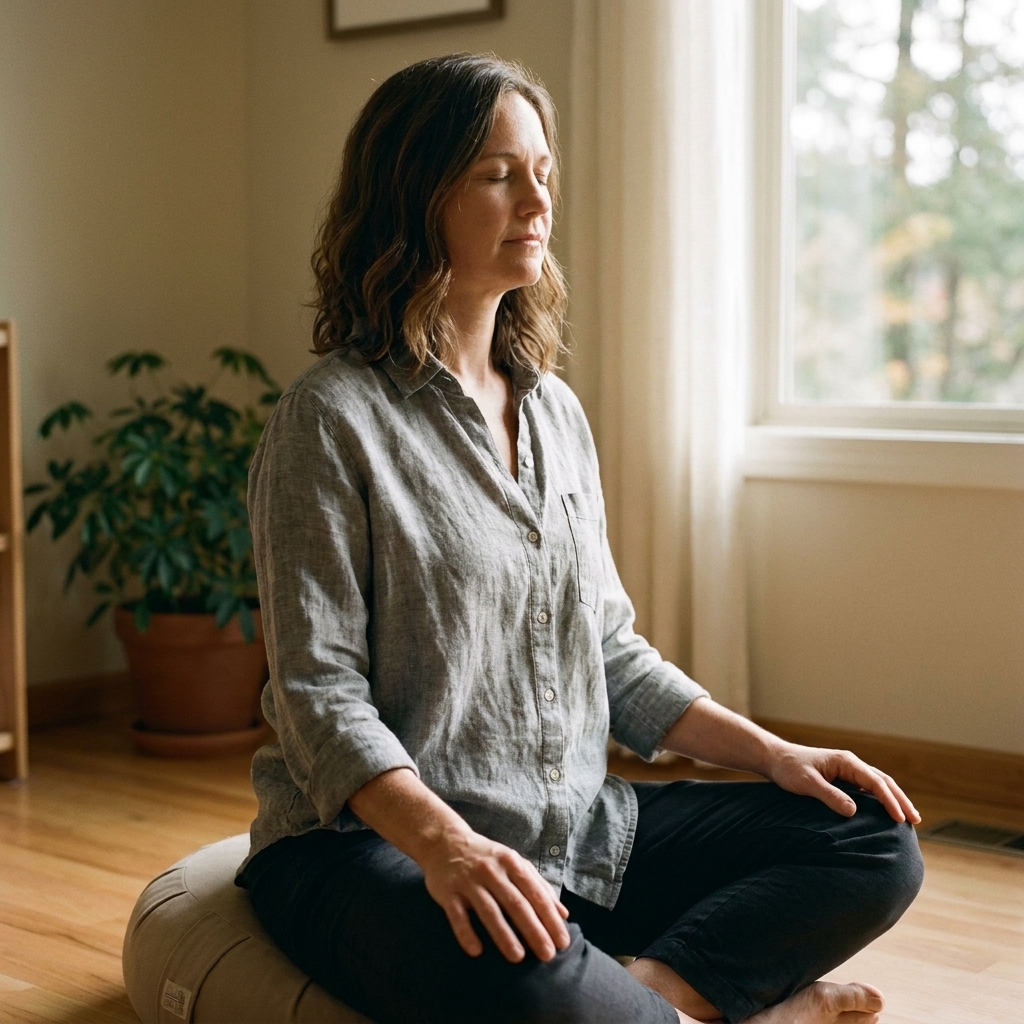
If you are an empath or a highly sensitive person , you have probably had the experience of walking into a room and feeling your inner weather change before anyone even speaks. A grocery store can feel like a storm. A family gathering can feel like a thousand invisible threads tugging at your chest.
(And if you do not use those labels, you may still know this experience. Sensory sensitivity, anxiety, neurodivergence, and trauma history can all make environments feel louder and more intense.)
Spiritual grounding is the practice of returning to yourself, on purpose. It is not about shutting your heart down. It is about giving your openness a home base, so your compassion stays wise and your nervous system stays steady.

Below are practical, step-by-step techniques you can use anywhere. Some come from contemplative traditions I have studied across faiths, and some are simply what the body has always known. You can treat them like tools in a pocket, reaching for the right one when the moment calls for it.
What grounding is and is not
Grounding is the felt sense of being connected to the present moment, your body, and something steadier than whatever is swirling around you. Many traditions name that steadiness differently: the earth, God, Spirit, the Tao, the Real, the Witness.
Grounding is not spiritual avoidance. It is not pretending you do not feel things. It is learning to feel without getting flooded.
Signs you may need grounding
- You absorb other people’s moods and carry them home.
- Crowds make you jittery, foggy, or exhausted.
- You over-explain, over-agree, or lose your boundaries when someone is intense.
- You feel spaced out, dissociated, or like you are watching life from a few steps away.
- You crave sugar, scrolling, or numbing after social time.
If any of these sound familiar, consider grounding as gentle self-leadership. It is a kindness to your sensitivity, not a correction of it.
Earthing
Earthing is as simple as letting your body make direct contact with the earth. Some cultures and contemplative traditions have practiced versions of this for a long time. Modern wellness circles talk about it too, but you do not need fancy language. You just need contact.
The benefits can be subtle and personal. Think of this as a somatic and spiritual reset, not a guaranteed medical intervention. If you are dealing with significant anxiety, pain, or sleep issues, you deserve support from qualified healthcare too.

Earthing steps (5 to 15 minutes)
Choose a safe surface. Grass, soil, sand, or a flat rock. Avoid sharp debris, extreme temperatures, and unsafe areas. If outdoors is not available, skip to the indoor options below.
Stand or sit with skin contact. Bare feet are easiest. If you can, let your palms rest on the ground too.
Soften your knees and jaw. This small shift can signal your nervous system that it can ease its brace.
Breathe down. Inhale gently. Exhale as if your breath can travel down your legs and out through your feet.
Name what is yours. Silently say: “This body is mine. This breath is mine.” Let your attention gather back to you.
Release what is not yours. On each exhale, imagine excess emotion draining out like rainwater into soil. No drama, no story. Just release.
Close with gratitude. A simple “thank you” is enough. Many people feel more settled when they acknowledge the relationship.
If you cannot go outdoors
- Wall or floor contact: Sit with your back against a solid wall, or place your hands flat on the floor and breathe slowly for one minute.
- Water grounding: Run cool water over your wrists for 30 to 60 seconds and feel the temperature as an anchor.
- Houseplant grounding: Place a hand on the soil of a potted plant and take ten slow breaths, noticing texture and scent.
If barefoot or standing is not an option
- Seated grounding: Sit in a chair, feet in shoes on the floor, and do the “breathe down” practice. You can still use imagination and sensation even without skin-to-earth contact.
- Hand grounding: Rest your hands on a heavy wooden table or a stone countertop and take five slow exhales.
- Bed or couch option: Place one hand on your lower belly and one on your chest and feel the weight of your body being held. Let the support do some of the work.
Empath tip
Earthing works best when you are not scrolling, texting, or processing a conversation at the same time. Your sensitivity needs one clear signal: “We are here. We are safe. We are connected.”
Visualization
Visualization is not about building a fortress. It is about choosing permeable boundaries, the way skin protects the body while still allowing touch, warmth, and intimacy.
In many contemplative traditions, imagination is treated as a meaningful faculty. It helps translate unseen realities into something your nervous system can cooperate with.
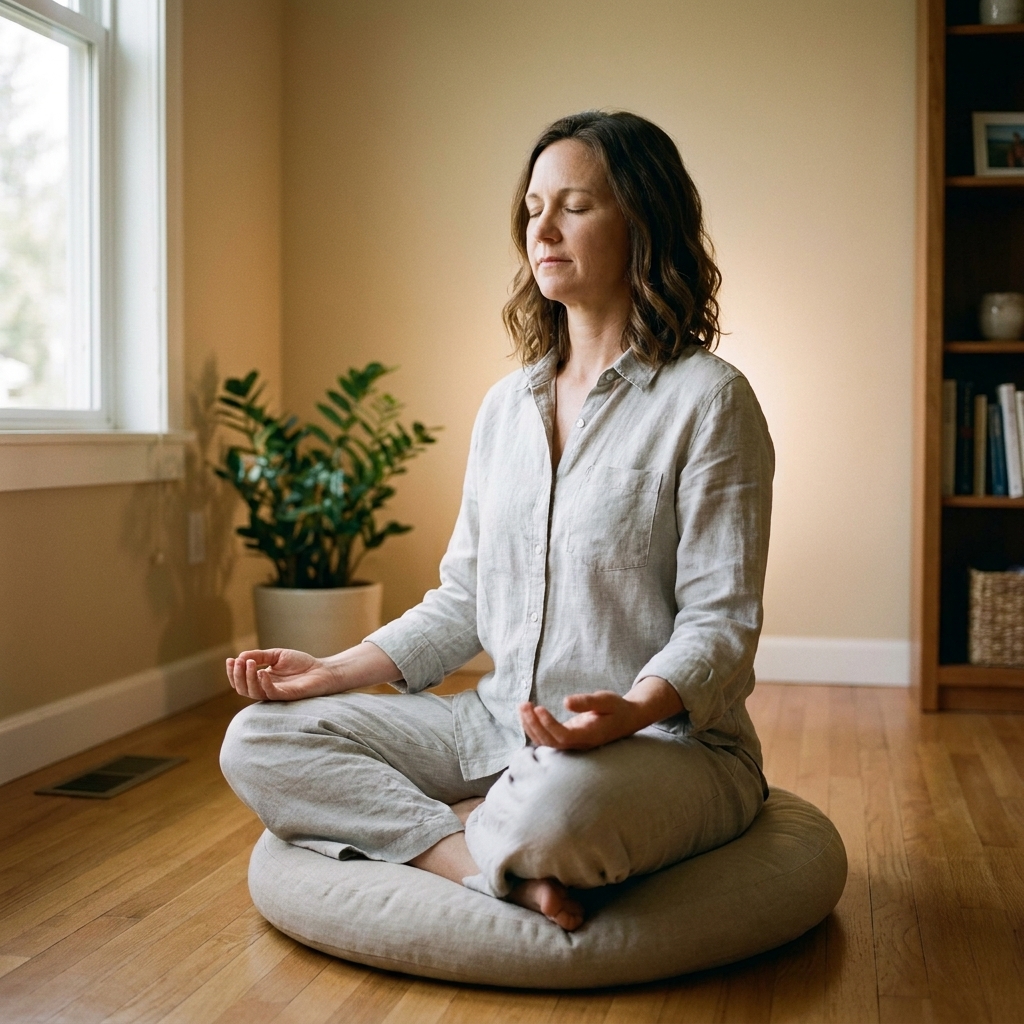
Roots and cord (2 minutes)
Stand or sit tall. Place both feet flat if you can.
Picture roots. Imagine roots growing from the soles of your feet deep into the ground. Let them go far, past the busy surface layers.
Add a steady cord of light. From your lower belly or tailbone, imagine a cord connecting you to the earth’s steadiness. Choose a color that feels calming.
Exhale into release. Send down what you picked up that is not yours: tension, other people’s fear, urgency, pressure to perform.
Inhale what you need. Draw up steadiness, clarity, and quiet confidence.
Soft sphere (before crowds)
Place a hand over your heart. Feel warmth under your palm.
Imagine a soft sphere around you. About an arm’s length in every direction. Not rigid. More like a gentle field.
Set an intention. Try: “Love can pass through. Noise cannot stick.”
Give yourself a choice. Add: “I can sense others without carrying them.”
Aftercare (when you get home)
Close your eyes and imagine you are taking off a heavy coat that does not belong to you. Shake it out and place it outside the door. Then imagine rinsing your hands in clear water. This is a simple way of training the psyche to end energetic enmeshment.
Grounding in the moment
Sometimes you do not have the luxury of a long practice. You are at work. You are in a meeting. Someone is unloading their emotions, and your body wants to absorb them like a sponge.
Physical grounding uses sensation to bring you back to the present. It is the spiritual practice of remembering you have a body.
1) Feet press (30 seconds)
Press both feet into the floor. Feel the heel, the ball of the foot, the toes.
Count five slow exhales. Longer exhale than inhale if possible.
Quiet mantra. Silently repeat: “Here. Now. Me.”
2) Finger anchor
Gently press your thumb to each fingertip, one at a time. Notice the tiny change in pressure and texture. This small ritual can interrupt overwhelm without anyone noticing.
3) Orienting
This is often used in trauma-informed and somatic approaches because it helps your body register that the present moment is different from past threat.
Look around slowly. Let your eyes move at an unhurried pace.
Name five neutral objects. A mug. A plant. A window. A book spine. A light switch.
Let your shoulders drop. Your body can learn from your eyes that you are not trapped.
4) One-sentence boundary
If you are absorbing someone, you often need a boundary in language, not just energy. Choose one sentence that feels true and kind:
- “I want to give this my full attention, can we pause and come back to it?”
- “I hear you, and I cannot hold all of this right now.”
- “I can listen for ten minutes.”
- “Let me think about that and respond later.”
For many empaths, this is the real grounding: staying connected to your values without sacrificing your nervous system.
A simple routine
If you like structure, here is a gentle sequence you can repeat before and after intense spaces. Think of it as spiritual hygiene, like washing your hands.
Before you go (2 to 4 minutes)
Hand to heart, one breath. Feel the body.
Soft sphere. Set the intention: “I can care without carrying.”
Feet press. Three slow exhales.
While you are there (10 to 30 seconds)
- Finger anchor under the table or at your side.
- Orienting: name three objects you can see.
- Relax the jaw and lengthen the exhale.
When you get home (3 to 10 minutes)
Wash hands or shower. Let water be a reset signal.
Shake out your arms. It is simple and it can help. Many bodies release tension through movement.
Aftercare visualization. Take off what is not yours.
One nourishing thing. Tea, a short walk, journaling, a prayer, a song.

When grounding feels hard
You ground and still feel flooded
Try a longer exhale and a stronger sensory anchor. Cold water on wrists, a textured object in your pocket, or stepping outside for two minutes can help your nervous system complete the shift.
If you experience intense panic, frequent dissociation, or symptoms that feel unmanageable, consider reaching out to a qualified mental health professional. Grounding is supportive, and sometimes you also need skilled care and companionship.
You feel guilty setting boundaries
Many empaths learned early that love meant access. In most wisdom traditions, love also includes truth. A boundary is not a wall. It is a doorway with a handle on your side.
You worry grounding will make you less spiritual
In my experience, the opposite is true. Grounding moves spirituality out of the clouds and into your actual life. Compassion becomes sustainable. Prayer becomes embodied. Presence becomes real.
You keep picking up other people’s emotions
Consider adding a discernment question to your day: “Is this mine?” Ask it when your mood suddenly shifts. If the answer is no, return to a physical anchor and release on the exhale.
FAQ
How long does grounding take?
Sometimes you will feel a shift in 30 seconds. Sometimes it takes 10 minutes. The more consistent you are, the faster your body recognizes the pathway back to steadiness.
Can grounding help anxiety?
Grounding can be a supportive practice for anxiety because it signals safety and reduces overwhelm. If your anxiety is persistent or intense, grounding pairs well with professional mental health support. You deserve both spiritual care and practical care.
Is protection the same as grounding?
They overlap. Grounding connects you to the present and to your own center. Protection focuses on boundaries and what you allow to enter and remain in your field. For many highly sensitive people, grounding is the foundation that makes protection gentle rather than fear-based.
What if I do not relate to energy language?
You can translate every technique into nervous system language: attention, sensation, boundary setting, breath, and self-regulation. The practice still works. The heart of it is returning to yourself.
A closing blessing
May your sensitivity be a gift you can carry with steadiness. May your compassion remain wide and your boundaries remain kind. May you be rooted enough to feel, and safe enough to rest.
If you try one practice this week, let it be the simplest: feel your feet, lengthen your exhale, and remember you are allowed to belong to yourself.