Some of the most important truths we carry are not stored in sentences. They live in the jaw that tightens before we speak, the breath that turns shallow in certain rooms, the shoulders that lift as if bracing for impact.
When people tell me they want to journal for healing but feel stuck, I often ask a different question: What does your body want to say first?
A somatic spiritual journal is a simple practice that weaves together body awareness and reflective writing. It is less about crafting a perfect narrative and more about rebuilding relationship: with your nervous system, with your inner life, and with the Sacred as you understand it.
Gentle note: This article is educational and spiritual in nature, not medical advice. If you are working with significant trauma, journaling can be a powerful companion alongside a licensed trauma-informed therapist or counselor.

What “somatic” means
“Somatic” simply means of the body. In trauma-informed spaces, somatic practices help us notice sensations, movement impulses, and nervous system states, then respond with care.
Traditional journaling tends to start in the mind. Somatic journaling starts with what is already happening in your body, then lets meaning arise slowly. When you add a spiritual layer, you are also listening for:
- Connection: Where do I feel supported, guided, or accompanied?
- Compassion: What would love do with this sensation, this memory, this fear?
- Purpose: What is my life asking for in this season?
Across traditions, the body has always been part of the path: the breath prayers of Christianity, the mindfulness of Buddhism, the embodied devotion of bhakti, the grounding practices of Indigenous and earth-centered lineages. Somatic spiritual journaling is one more way to remember that you are not a floating mind. You are a whole person.
When it helps most
Somatic spiritual journaling can be especially supportive if you:
- Feel “numb,” disconnected, or foggy when you try to reflect
- Get overwhelmed by big emotions and need a gentler pace
- Notice recurring body symptoms during stress (tight chest, clenched stomach, headaches)
- Carry spiritual wounds (shame, fear of punishment, distrust of communities)
- Want to deepen prayer or meditation with more honesty and tenderness
It can also help you spot what I call the “holy breadcrumbs,” those small, body-based moments of ease or safety. It might be a softening in your belly when you remember a safe person, or a fuller breath when you tell the truth.
Set up for safety
Trauma can train the nervous system to scan for threat. Your environment can become part of your healing when it reliably communicates: Nothing is required of you here.
Choose a container
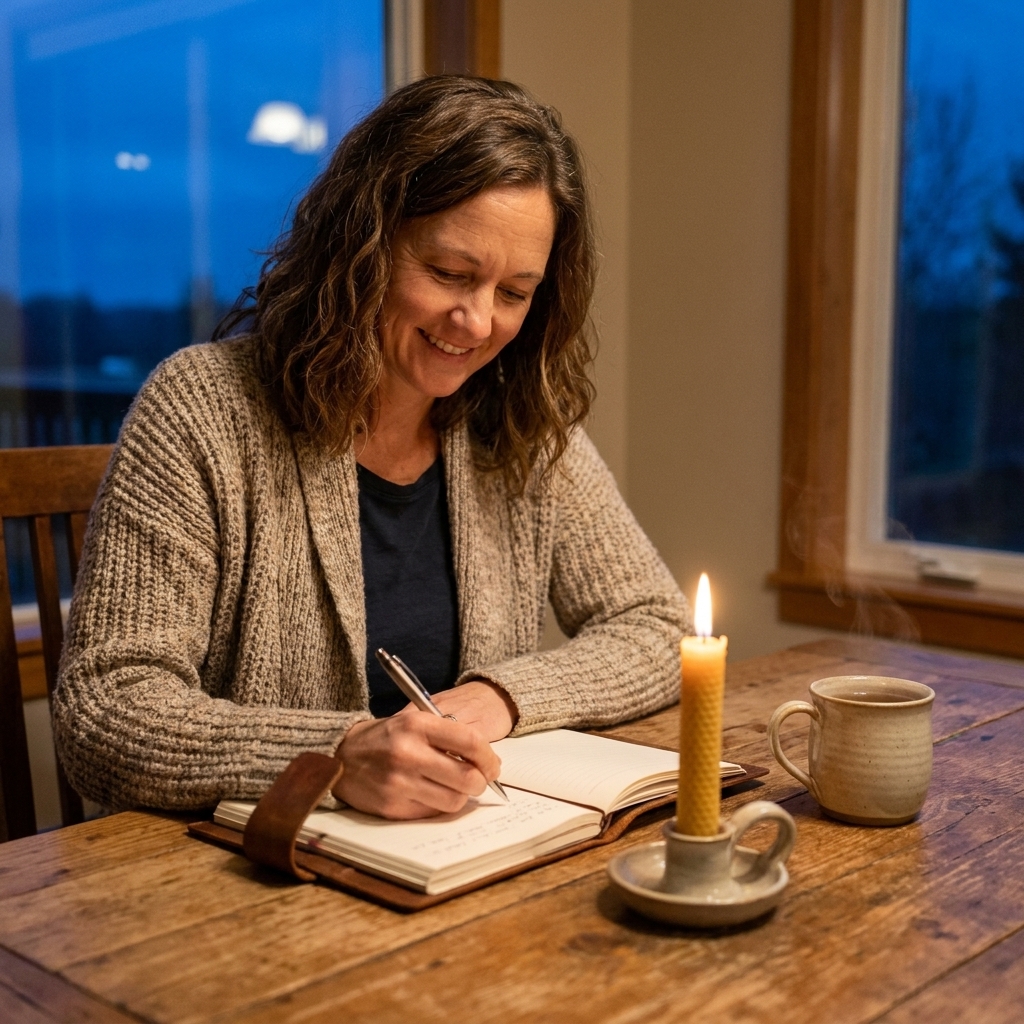
- A notebook that opens easily and lies flat, so your body does not have to fight the spine of the book
- A pen that glides smoothly, reducing tension in the hand
- Optional: a second “messy notebook” for raw pages you do not want to reread
Create a small grounding ritual
Pick one or two cues that tell your body it is time to soften.
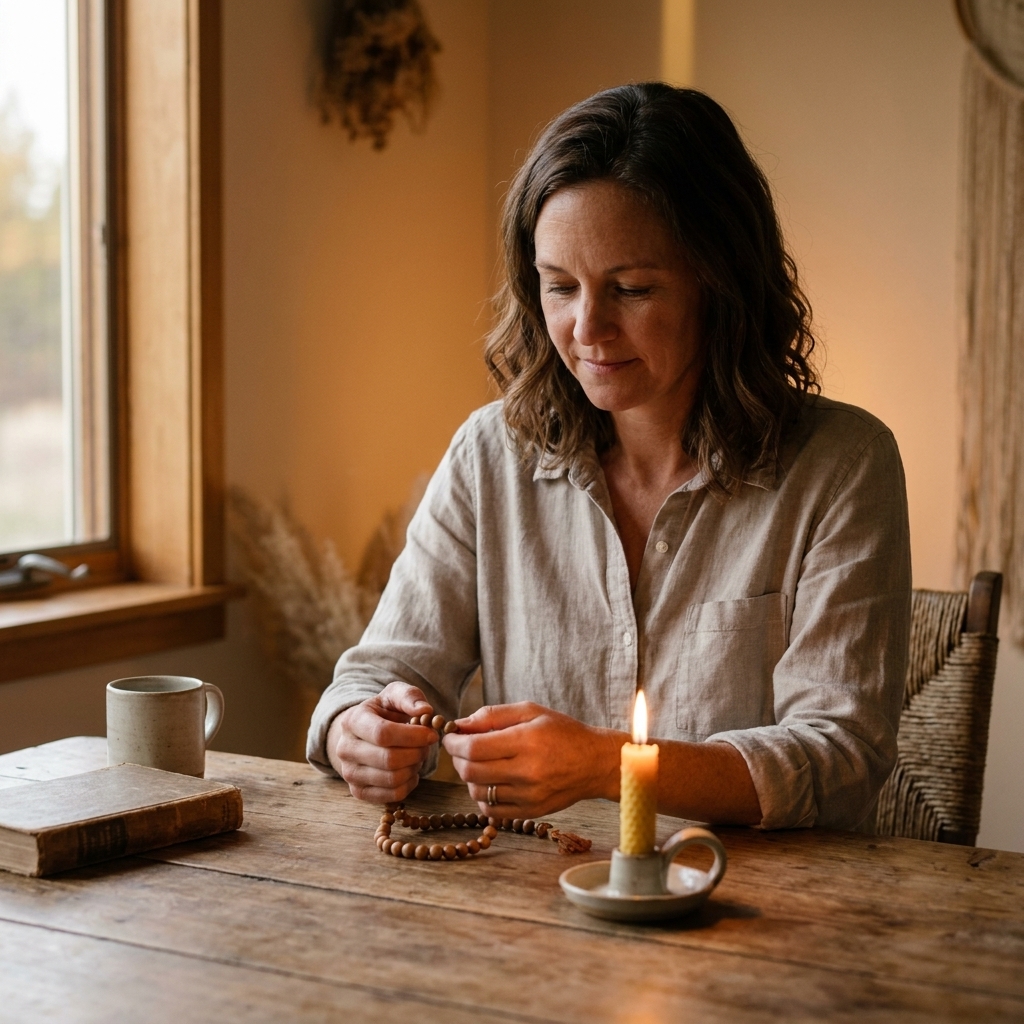
- Light a candle
- Hold a warm mug
- Wrap in a shawl
- Place one hand on your heart, one on your belly
- Open a window for fresh air if that feels safe
Keep it simple. Consistency matters more than grandeur.

The 5-step practice
Think of this as a gentle liturgy for the nervous system. It is short on purpose. Trauma healing is rarely helped by forcing yourself to “go deep” on command.
1) Arrive in the body (30 to 60 seconds)
Try one:
- Orienting: Slowly look around the room. Name five things you can see.
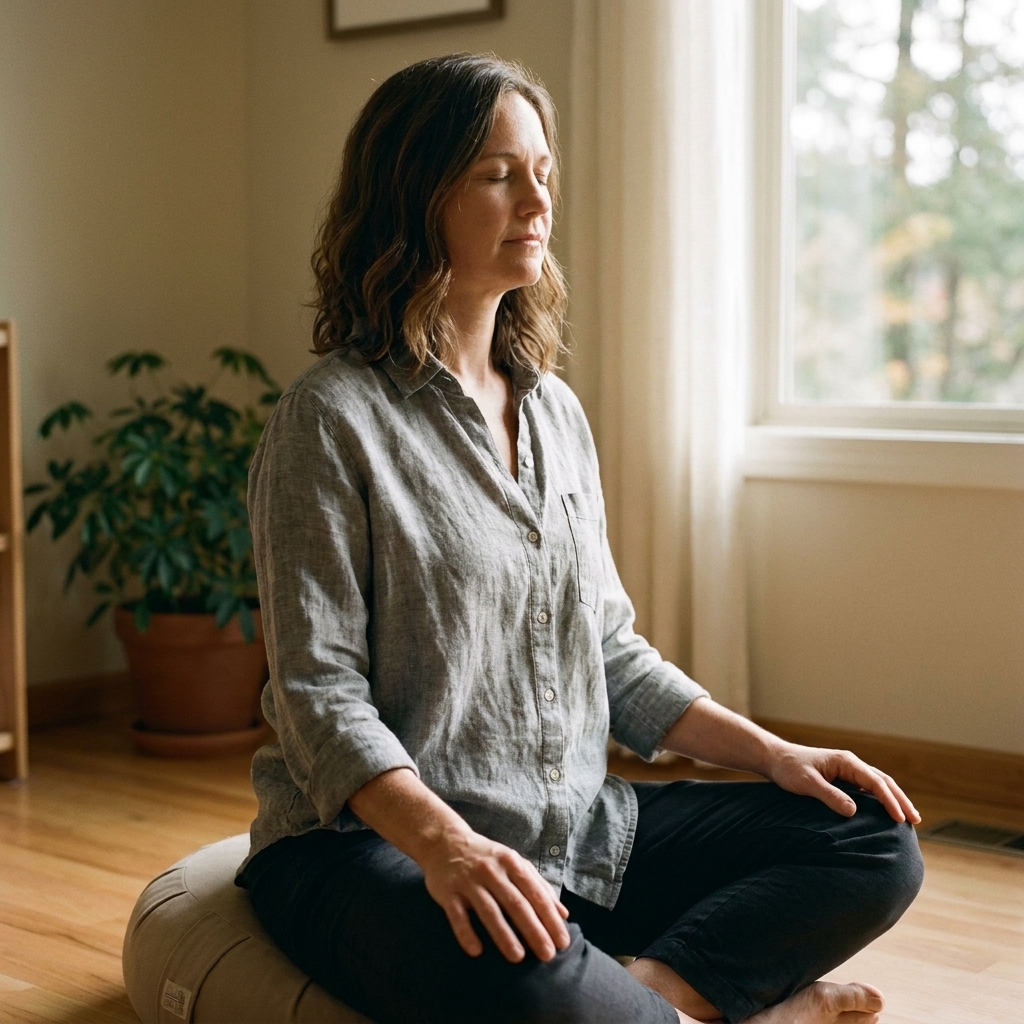
- Feet check: Press your feet into the floor and notice the support beneath you.
- Breath tracing: Follow one inhale and one exhale like you would follow a wave.
Then write one sentence: “Right now, my body feels…”
2) Name sensations, not stories
Before the mind explains, the body often speaks in texture and temperature. Choose a few words that fit.
- Pressure and shape: tight, heavy, hollow, pinned, expanded, contracted
- Energy and movement: buzzing, fluttery, shaky, steady, restless, settled
- Temperature: warm, cold, flushed, cool
Write: “I notice…” and list 3 to 7 sensations.
3) Track the edges
In somatic therapies, a common skill is staying near the edge of intensity rather than diving into the center. Ask:
- Where is this sensation strongest? Where is it softer?
- Does it have a shape or size?
- If it could move, what would it want to do?
Write for 2 to 5 minutes. If you feel yourself spiraling, return to your feet and the room.
4) Add spiritual inquiry
Now, gently invite meaning without demanding it.
- Compassion: “If this sensation had a younger self inside it, what would they need?”
- Prayer: “Holy One, meet me here.” Then write whatever arises, even if it is silence.
- Wisdom: “What boundary, truth, or grief is my body protecting?”
- Belonging: “Where do I feel a tiny yes in my body today?”
You are not trying to prove anything. You are practicing companionship with yourself.
5) Close the loop
Trauma can leave us feeling “open” after reflection. That can look like feeling raw, activated, or a little unsteady. Closing helps your system learn completion.
- Write one sentence: “For now, I am safe enough.”
- Choose a small action: drink water, step outside, stretch your hands
- Place a hand on your chest and feel three slow exhales

Prompts for trauma and stress
If you want a place to begin, here are prompts I often share on retreat. Choose one. Do not do them all at once.
For safety and grounding
- “My body knows I am safe when…”
- “A place in my body that feels neutral is…”
- “If my breath could speak, it would say…”
For boundaries and self-trust
- “My ‘no’ lives in my body as…”
- “When I override myself, I notice…”
- “One small boundary that would bring relief is…”
For grief and tenderness
- “The sadness in my body feels like…”
- “What I wish someone had said to me then is…”
- “The part of me that is still trying to survive needs…”
For spiritual repair
- “A spiritual teaching that hurt me was… My body remembers it as…”
- “A spiritual practice that makes my body soften is…”
- “If God, Spirit, or Life is compassionate, compassion might sound like…”
Keep it gentle
Journaling can be activating. The goal is not to avoid emotion, but to stay within a tolerable window where your system can learn integration.
Use the 0 to 10 scale
Before you write, rate your distress from 0 to 10. If you are at 7 or higher, start with grounding only. Write about what you see in the room, or write one paragraph to your body that says, “We do not have to do this today.”
Try pendulation
In some somatic modalities, this is called pendulation. You move attention back and forth between a challenging sensation and a neutral or pleasant one. For example: tightness in the chest, then the steady feeling of your feet. Many people find this helps reduce the chance of feeling flooded.
Set a timer
Five to ten minutes is enough. Healing is made of small, repeatable contacts with truth.
End with orientation
Look around and name where you are: the year, the room, the day of the week. Remind your body that the memory is not the current moment.
Pair with body practices
These are gentle options. Choose what fits your body and your tradition.
Hand on heart, hand on belly
Inhale into the lower hand, exhale into the upper hand. Write: “What I feel. What I need.”
Walking prayer
Take a slow five-minute walk and notice the rhythm of steps. Then journal one page beginning with: “Today, my life is asking me to…”
Breath phrase
On the inhale: “Here.” On the exhale: “Held.” Or choose words that align with your faith: “Peace,” “Mercy,” “Amen,” “Shalom,” “Om,” “Beloved.”
Gentle shaking
If it feels safe, shake out your hands, arms, and legs for 30 seconds. Some people notice their bodies naturally tremor when releasing stress. It is also okay if shaking does nothing for you, or if you prefer to skip it.
Important: If shaking makes you feel panicked, flooded, dizzy, or unreal, stop immediately. Return to orienting (look around and name objects), feel your feet, and choose a calmer practice instead.
Then write: “What moved through me just now?”

What to do with your pages
Sometimes people worry they are “doing it wrong” if they do not reread their pages. You get to decide the level of witness that feels supportive.
- Option A: Write and release. Close the notebook and let it be done.
- Option B: Highlight one line of truth. Circle one sentence that feels steady or kind.
- Option C: Make a “medicine page.” Copy only the compassionate insights into a separate section: prayers, reminders, boundaries, small steps.
If you are in therapy, you might bring themes rather than raw details: “My body tightens when I feel dismissed,” or “I notice relief when I name my no.”
Privacy matters
If you live with people who are not emotionally safe, or you worry your journal could be read, choose extra protection. You might keep it in a locked drawer, use a notes app with a passcode, write in a “messy notebook” you can tear pages from, or use simple bullet points instead of identifiable details.
A gentle 14-day plan
If you like structure, here is a small rhythm. Each session can be 8 to 12 minutes.
- Days 1 to 3: Orienting + “Right now, my body feels…”
- Days 4 to 6: Sensation list + one compassion prompt
- Days 7 to 9: Pendulation + “Where is the tiny yes?”
- Days 10 to 12: Boundary prompt + closing ritual
- Days 13 to 14: Write a short prayer or blessing for your body, as it is
Keep it negotiable. If you miss a day, your body does not fail a test. You simply return.
Who should pause
There are seasons when this may not be the right practice to do alone. Consider pausing and reaching for professional support if you are experiencing:
- Active self-harm urges or suicidal thoughts
- Severe dissociation (losing time, feeling unreal, not recognizing where you are)
- Recent trauma exposure where you are still in danger
- Flashbacks or panic that intensify when you turn inward
If any of these fit, you are not failing. Your system is asking for more support and more safety. A trauma-informed therapist, counselor, or crisis resource in your area can help you find your next right step.
FAQ
Is this safe if I have PTSD?
It can be, especially when kept short, grounded, and paired with nervous system supports. Many people with PTSD benefit from trauma-informed guidance. If journaling increases flashbacks, panic, dissociation, or a sense of being unsafe in your body, stop, orient to the room, and consider working with a licensed professional.
What if I do not feel anything?
Numbness is also a sensation. Start there with kindness: “I notice distance.” Try orienting to the room, feeling your feet, or holding something warm. Over time, the body often reveals more when it trusts the pace.
Do I have to believe in God?
No. “Spiritual” can mean connection to God, to the sacredness of life, to nature, to conscience, to love, to truth. Let the language match your lived reality.
How is this different from therapy?
This is a self-guided spiritual and reflective practice. Therapy involves assessment, treatment, and support from a licensed professional. You are always allowed to opt out, change the prompt, or stop mid-sentence. Agency is part of healing.
How is this different from regular journaling?
Regular journaling often starts with thoughts and events. Somatic journaling starts with sensation and nervous system states. The spiritual layer invites compassion, meaning, and relationship with something larger than the immediate story.
A closing blessing
May you learn your body’s language without forcing it. May you meet your emotions without abandoning yourself. May your writing become a quiet place where breath returns, truth softens, and the Sacred feels near enough to rest.
If you begin today, begin small. One hand on your heart. One honest sentence. That is already a kind of prayer.