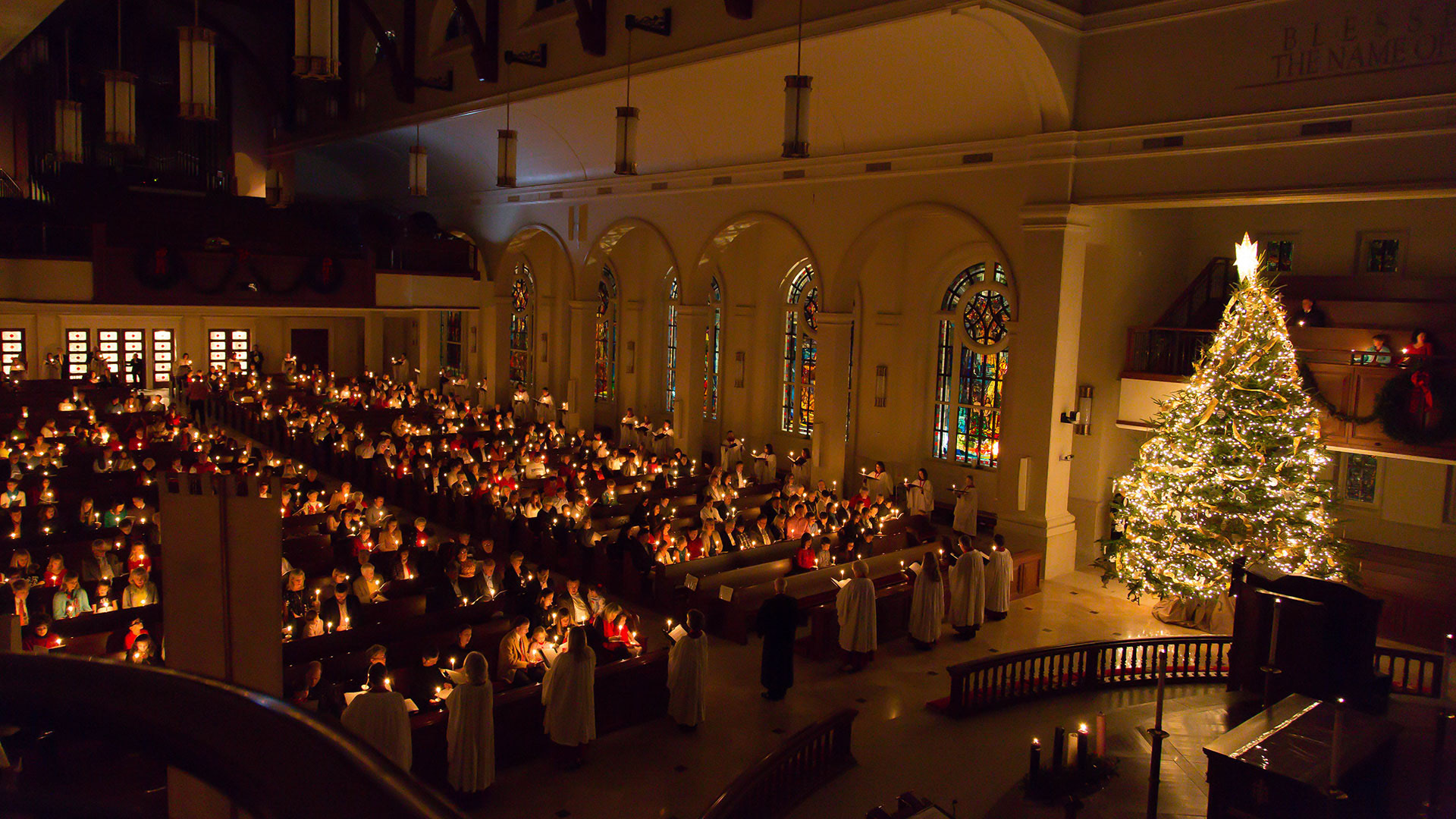
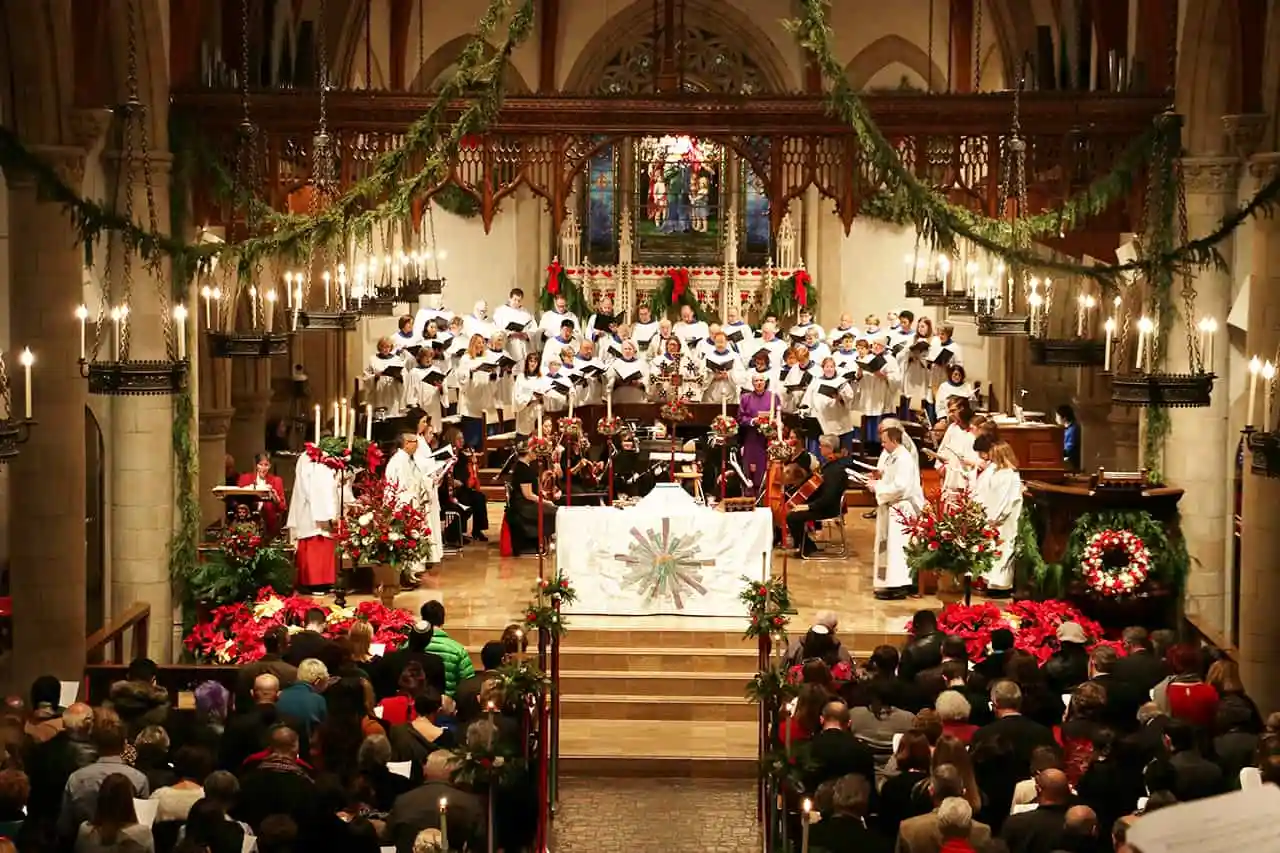
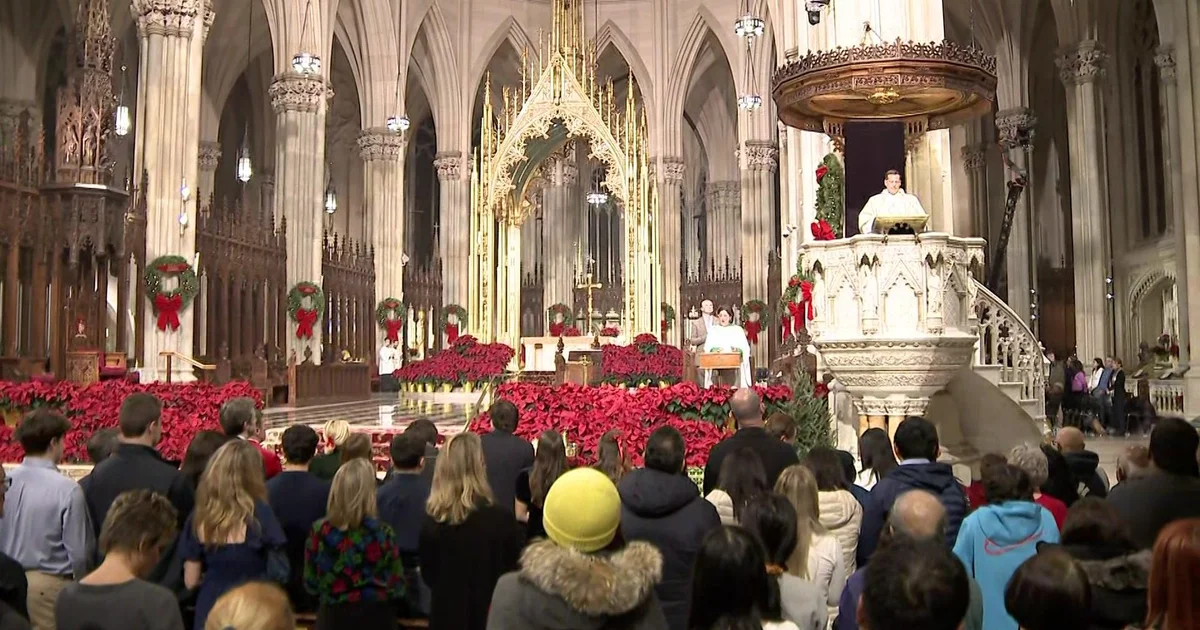
The first time I attended a Midnight Mass as an adult, I was surprised by how much it felt like stepping into a different kind of time. The streets were quiet, the sanctuary was bright with candlelight, and people who rarely showed up on an ordinary Sunday arrived carrying an almost shy hope. Midnight Mass is not “extra Catholic” so much as it is intensely human: a community keeping watch at the edge of night, singing ancient words into the dark and trusting that light belongs here.
Midnight Mass is a Christian worship service celebrated late on Christmas Eve or just after midnight on Christmas Day. In Catholic churches it is a full Mass with the Eucharist. In Anglican and Lutheran churches, a late Christmas Eve service is sometimes celebrated as a Eucharist as well, though local custom varies widely. What makes it distinct is not only the hour, but the focus: the birth of Christ, proclaimed with special prayers, readings, music, and a sense of holy celebration.
What Midnight Mass is
In the Roman Catholic tradition, “Midnight Mass” most commonly refers to the Christmas liturgy formally titled Mass during the Night (Latin: Missa in nocte) for the Nativity of the Lord. Historically it was celebrated at midnight, which is where the nickname comes from. Today, some parishes still begin at 12:00 a.m., while many schedule it earlier in the evening for practical reasons.
Even when it is held at 9:00 p.m. or 10:00 p.m., people often still call it Midnight Mass because it carries the same symbolism: a vigil-like gathering as Christmas arrives.
It also helps to know that in the Roman Catholic Christmas cycle there are traditionally several distinct Mass formularies, including the Vigil, the Night (the one most people mean by “Midnight Mass”), Dawn, and Day. If you hear a parish announce multiple Christmas liturgies, this is part of what they are referring to.
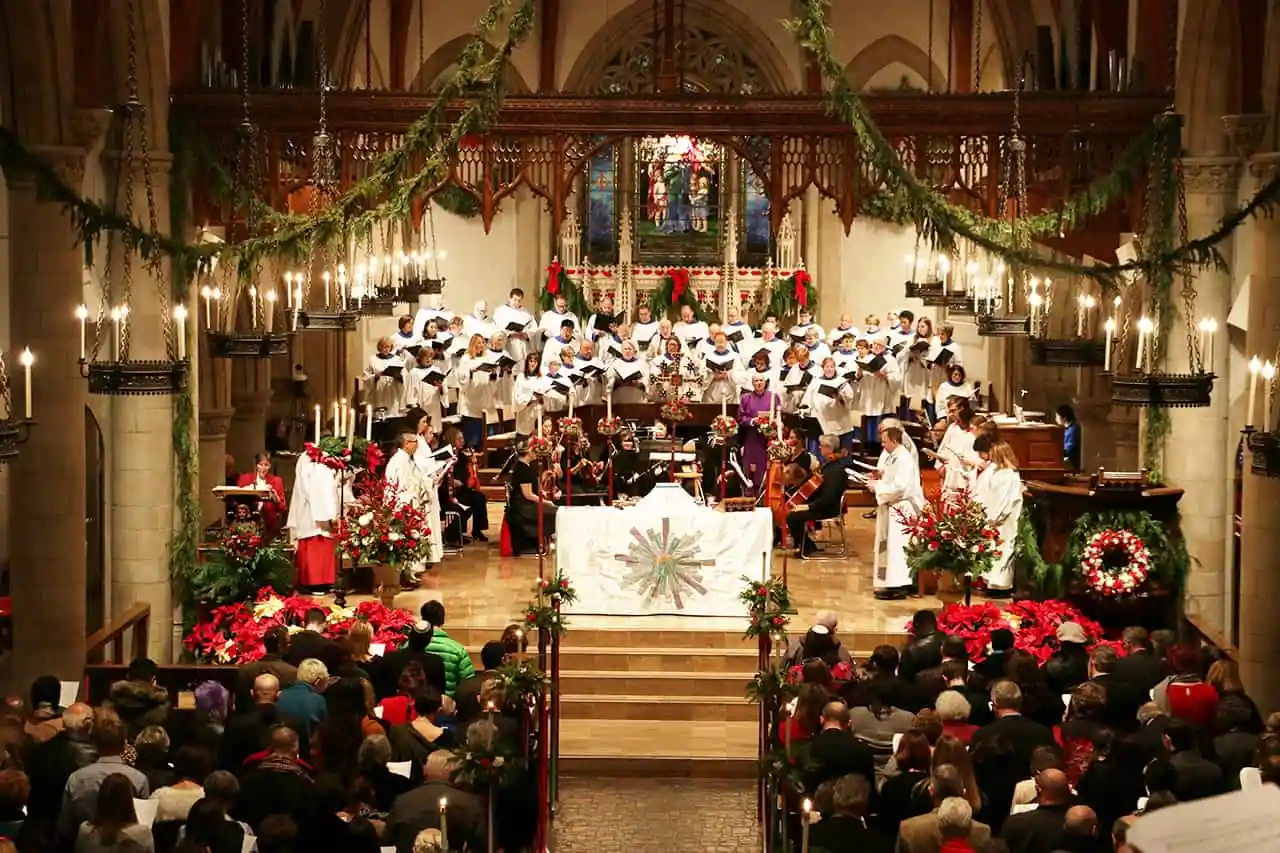
In Anglican and Lutheran settings, you will often see “Midnight Mass” used as a familiar phrase for a late Christmas Eve Eucharist in some parishes. You might also see it listed as Christmas Eve Eucharist, Holy Communion, or The Nativity of Our Lord with a late service time. In other places, the late service may be Lessons and Carols without Communion. Some parishes include a candlelit procession and traditional carols.
Why it’s on Christmas Eve
The simplest answer is calendar logic and pastoral reality: it is when the feast begins liturgically, and it is a time when more people can actually come. But there is a deeper rhythm here, too.
1) Keeping watch
Christmas tells a story of night: shepherds in the fields, angels appearing after dark, a birth that arrives without fanfare. A service held late honors that atmosphere. Many communities experience Midnight Mass as a gentle echo of older vigil practices, when believers would keep watch before a feast day.
2) Marking holy time
In many Christian traditions, major feasts begin the evening before. Christmas Eve becomes, in practice, the threshold of Christmas Day. That is why you will hear Christmas proclaimed, hymns sung, and the Nativity story read before you ever wake up on December 25.
3) Making room for the whole community
Midnight Mass is one of the times of year when people who are not regular attenders feel drawn to church. Some come for nostalgia, some for grief, some for beauty, some because a friend asked. Many churches embrace that and plan a service that is deeply traditional and gently accessible.
How it’s different
If you attend Mass regularly, you will recognize the basic shape immediately: prayers, readings from Scripture, a homily, the Eucharist, and a final blessing. What changes are the proper texts for Christmas, the music, and the emotional temperature of the night.
Readings and prayers for Christmas
In Catholic liturgy, Christmas has its own set of readings and prayers. The Mass during the Night proclaims the Nativity with a distinct emphasis: Christ’s birth as light entering darkness.
You may also notice:
- More singing than on an average weekday Mass, and often more than an average Sunday Mass.
- Incense in some parishes, especially at more solemn celebrations.
- Extra ministers and servers, simply because attendance is higher.
The Gloria returns
During Advent, many churches omit the Gloria (a hymn of praise that begins “Glory to God in the highest”). At Christmas, it returns with joy. Even if you do not know the words, you will feel the room lift when it begins.
Nativity details
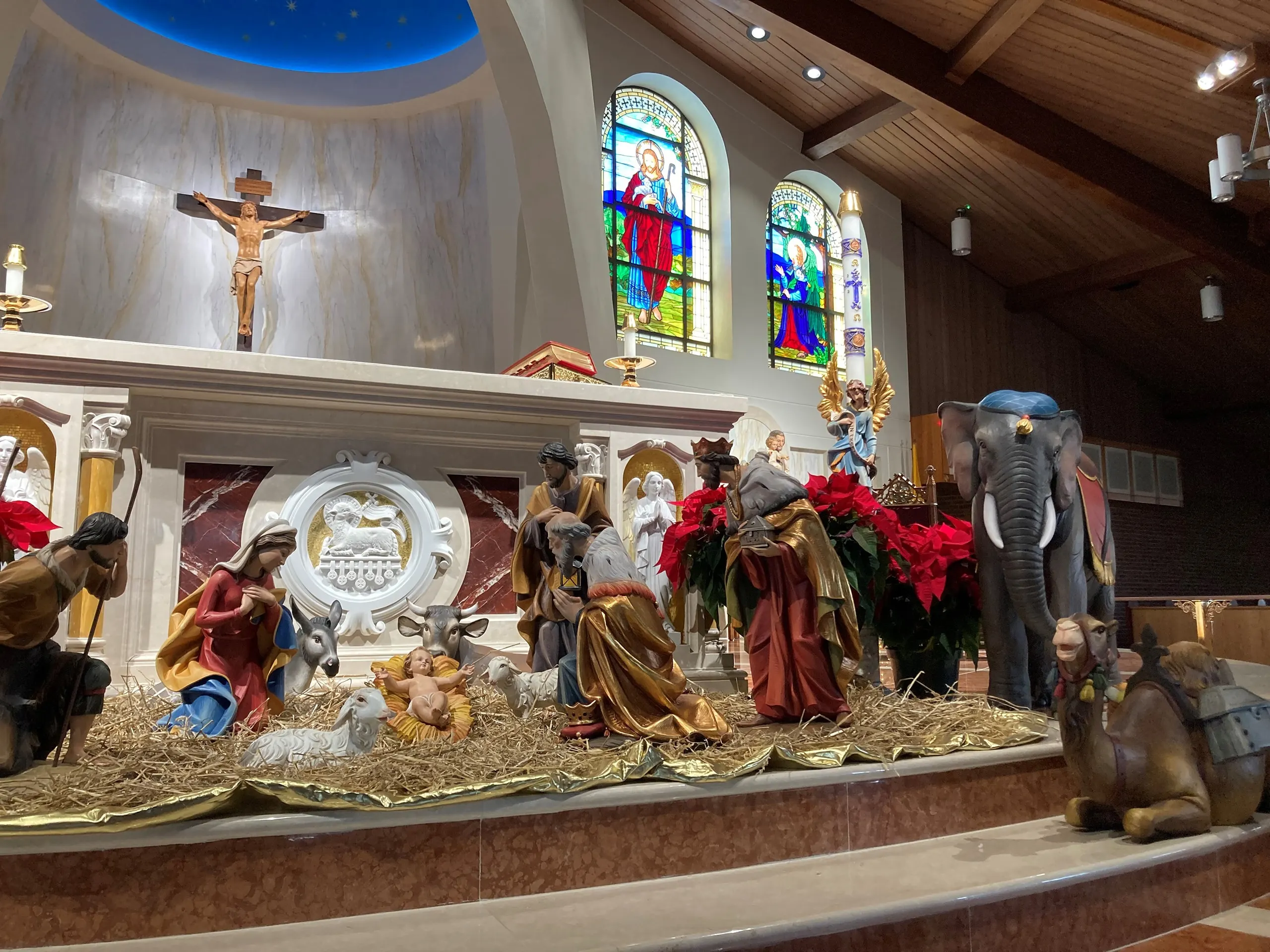
Depending on the parish, you might see a Nativity scene prominently displayed, additional candles, evergreens, and seasonal colors. Some communities place the infant figure in the manger during the service as a symbolic moment. Others keep the focus on Scripture and song without any additional gestures.
When it’s scheduled
Despite the name, Midnight Mass is not always at midnight. The goal is to celebrate Christmas in the night hours, while also acknowledging that families, elders, choir members, and volunteers need to get home safely.
Catholic parishes
Common scheduling patterns include:
- Midnight start: 12:00 a.m. on Christmas Day.
- Late evening start: often 9:00 p.m., 10:00 p.m., or 11:00 p.m. on Christmas Eve.
- Carols before Mass: many parishes begin singing 20 to 30 minutes early, with Mass starting at the posted time.
Many Catholic churches also offer multiple Christmas liturgies, such as a family-friendly Christmas Eve Mass earlier in the day, plus a late-night Mass, and additional Masses on Christmas Day.
Anglican churches
In Anglican communities, you might see:
- Late Christmas Eve Eucharist scheduled at 10:00 p.m., 11:00 p.m., or midnight.
- Lessons and Carols earlier in the evening, with or without Eucharist.
- Candlelight elements, especially during hymns.
Because Anglican practice varies by province and parish, the best clue is the bulletin wording: “Holy Eucharist” or “Communion” signals a service centered on receiving bread and wine.
Lutheran churches
Many Lutheran congregations hold Christmas Eve services that are highly musical and sermon-centered. Some celebrate Communion, and some do not. A “Midnight” service in a Lutheran setting is often a later option for those who prefer a quieter, more contemplative atmosphere than the earlier family service.
What to expect
If you are visiting for the first time, here are the most comforting things to know: you do not have to know what to do, you do not have to sing, and you will not be singled out. Simply being present is enough.
Arrive early
Midnight Mass is often one of the most attended services of the year. Arriving 20 to 30 minutes early gives you time to park, find a seat, and settle. Some people come earlier to hear prelude music or carols.
A fuller sensory experience
Even simple parishes often lean into beauty on Christmas Eve. You may encounter:
- Christmas carols and choral music
- Dimmer lighting, candles, or both
- Incense in some churches
- A longer service than an average Sunday
Length varies, but many Midnight Masses run roughly 60 to 90 minutes, sometimes longer in larger parishes or with extended music.
Standing, sitting, kneeling
In Catholic and some Anglican settings, people change posture throughout the liturgy. If you are unsure, follow the general flow of the congregation, or remain seated quietly. No one will mind.
Communion, or not
This is often the moment visitors feel most anxious about, so let me make it plain.
- In Catholic churches, Holy Communion is ordinarily received by Catholics who are properly disposed and in full communion with the Church. Visitors are welcome to remain seated, or in many places you may come forward with arms crossed for a blessing, if that is the parish custom.
- In Anglican and Lutheran churches, Communion practices vary widely. Some welcome all baptized Christians, some practice a more defined invitation. Listen to the words spoken before Communion, or check a parish website beforehand.
Choosing not to receive is not a refusal of God. It can be a reverent choice while you learn the community’s practice.
Reverent, but not cold
Many people show up carrying private stories: the first Christmas after a loss, a long season of doubt, a quiet longing for home. Midnight Mass tends to hold all of that without demanding explanations. It can be joyful and tender at the same time.
Walk-through
If you like knowing the “map” before you arrive, this general outline will help. Wording differs by tradition and local custom, but the sequence is often recognizable.
- Gathering: entrance procession, opening hymn or carol, greeting.
- Readings: Scripture readings about the promise and birth of Christ, plus a Psalm.
- Gospel: the Nativity proclamation or a related Christmas Gospel.
- Homily or sermon: a reflection on the meaning of Christmas.
- Prayers: prayers for the world, the Church, the vulnerable, the grieving, the joyful.
- Peace: in many communities, people share a sign of peace with a handshake, nod, or brief greeting. In some places this is simpler or omitted.
- Eucharist or Communion: bread and wine are blessed and shared, when the service is Eucharistic.
- Sending: final hymn, blessing, dismissal.
Often the closing hymn is something beloved and familiar, which is why people who feel uncertain about everything else still find themselves singing at the end.
Why it matters
One of the gifts of Midnight Mass is that it makes room for spiritual complexity. You can come with strong faith, shaky faith, or no faith at all, and still understand the heart of what is happening: a community telling a story of hope into the night.
In my work as an interfaith facilitator, I have met people from many traditions who attend Midnight Mass for the same reason they light a candle at a memorial or sit quietly beside the ocean at dusk. Some moments ask us to be more than efficient. They ask us to be present.
Midnight Mass is, at its best, a practice of holy attention: listening for goodness when the world feels loud, and receiving peace when you did not know you needed it.
And for clarity, “Midnight Mass” is largely a Western shorthand. In many Eastern Christian traditions, Christmas services are structured differently and scheduled differently, often with their own rich pattern of prayers and liturgy that does not typically go by this name.
Quick FAQ
Is Midnight Mass always at midnight?
No. Many churches hold it late on Christmas Eve, often between 9:00 p.m. and midnight. The traditional name often remains even when the start time is earlier.
Do you have to dress up?
Wear what helps you feel respectful and comfortable. Many people dress nicely because it feels festive, but you will also see winter coats, boots, and simple clothes. Aim for warm layers and practical shoes.
Is it okay to bring children?
Yes, but consider the time and your child’s tolerance for a longer service. Many churches also offer earlier Christmas Eve services designed for families.
Will there be “Silent Night”?
Very often, yes, though not universally. Many communities sing it near the end, sometimes by candlelight.
Can non-Christians attend?
Absolutely. You are welcome to attend as a guest and observer. The main boundary to be aware of is Communion practice, which varies by tradition.