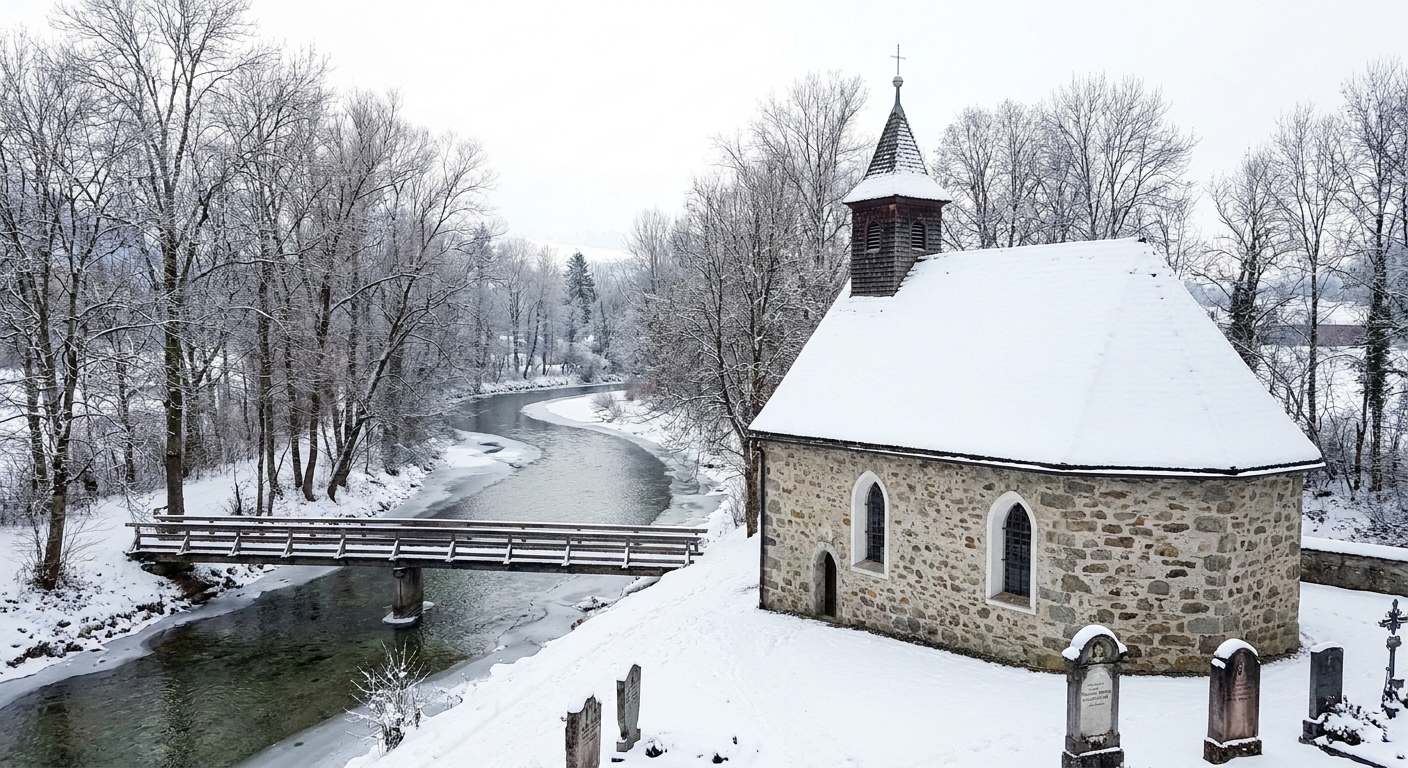
Every December, I find myself humming “Silent Night” almost without meaning to. It slips into the room softly, as if it has always belonged there. But this carol did not begin as a timeless, floating thing. It began in a particular place, among particular people, with ink, paper, winter air, and a village church on the Salzach River.
What follows is the Oberndorf story of Joseph Mohr and Franz Xaver Gruber, told as clearly as the record allows: what is documented, what is likely, and what belongs to the snow-globe realm of later legend.
Oberndorf, 1818
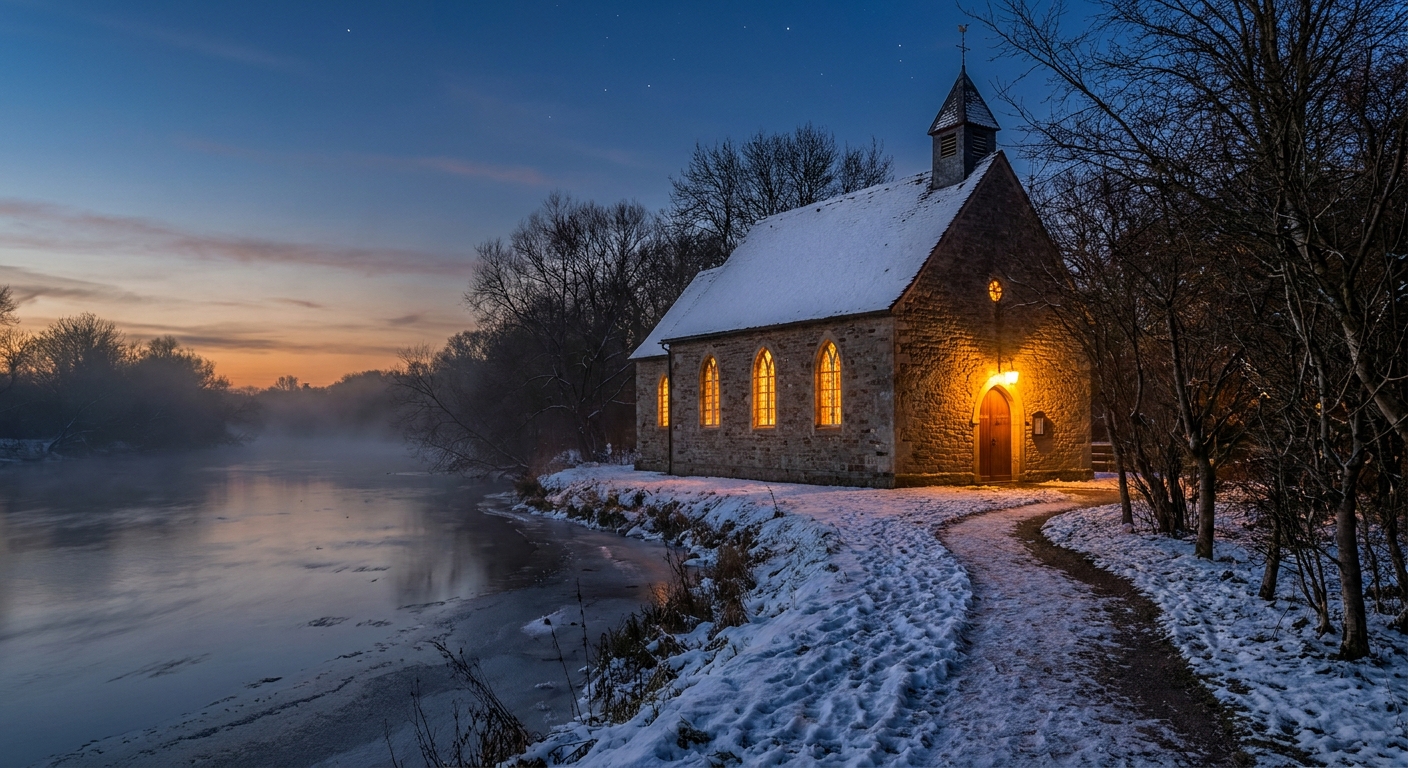
In 1818, Oberndorf was a small settlement near Salzburg, Austria, tied to the river economy and the lingering upheavals of the Napoleonic era. Borders in the region had shifted more than once in living memory. Daily life for ordinary families could be precarious, and parish life often carried the weight of what we might now call community care.
The church at the heart of this story was St. Nikolaus, Oberndorf’s parish church. It was not famous at the time. It was simply where people gathered, prayed, sang, and marked the holy days.
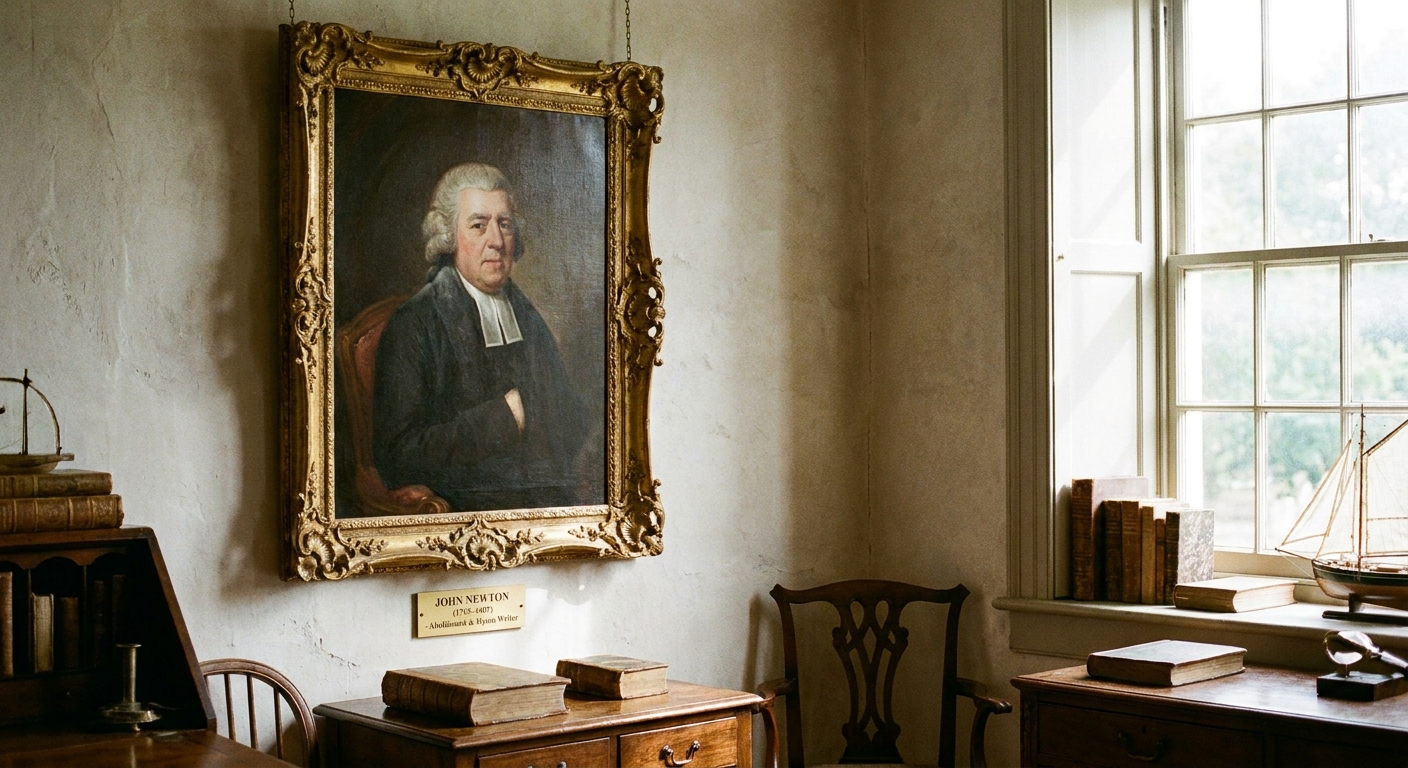
Joseph Mohr
Joseph Mohr was a young Catholic priest serving in Oberndorf, often described in modern accounts as an assistant priest. Before the carol had a melody, it existed as a poem. The text that would become “Silent Night” was written in German as “Stille Nacht! Heilige Nacht!”
What we know about the text
The poem is often dated to 1816, two years before the famous Christmas Eve performance, though the exact moment of composition is not pinned down with the kind of paperwork historians love. Still, placing the words in that neighborhood of time makes sense. Europe was recovering from war and hardship, and the climatic disruption associated with 1816, remembered as “the year without a summer,” was part of the lived backdrop for many communities.
What we can say with confidence is that the lyric originated with Mohr, and that it existed in written form before it was sung publicly in Oberndorf.
Franz Xaver Gruber
Franz Xaver Gruber was a schoolteacher and musician in the area, associated in many tellings with nearby Arnsdorf, where teachers commonly carried the musical life of the parish. In villages like these, the teacher was often the steady hand behind the singing: training voices, leading music, and keeping the calendar of worship moving.
Mohr brought Gruber his poem and asked him for a tune. Gruber composed a melody that is striking in its singability. It does not perform holiness by grandeur. It trusts stillness to carry the mystery.
Christmas Eve 1818
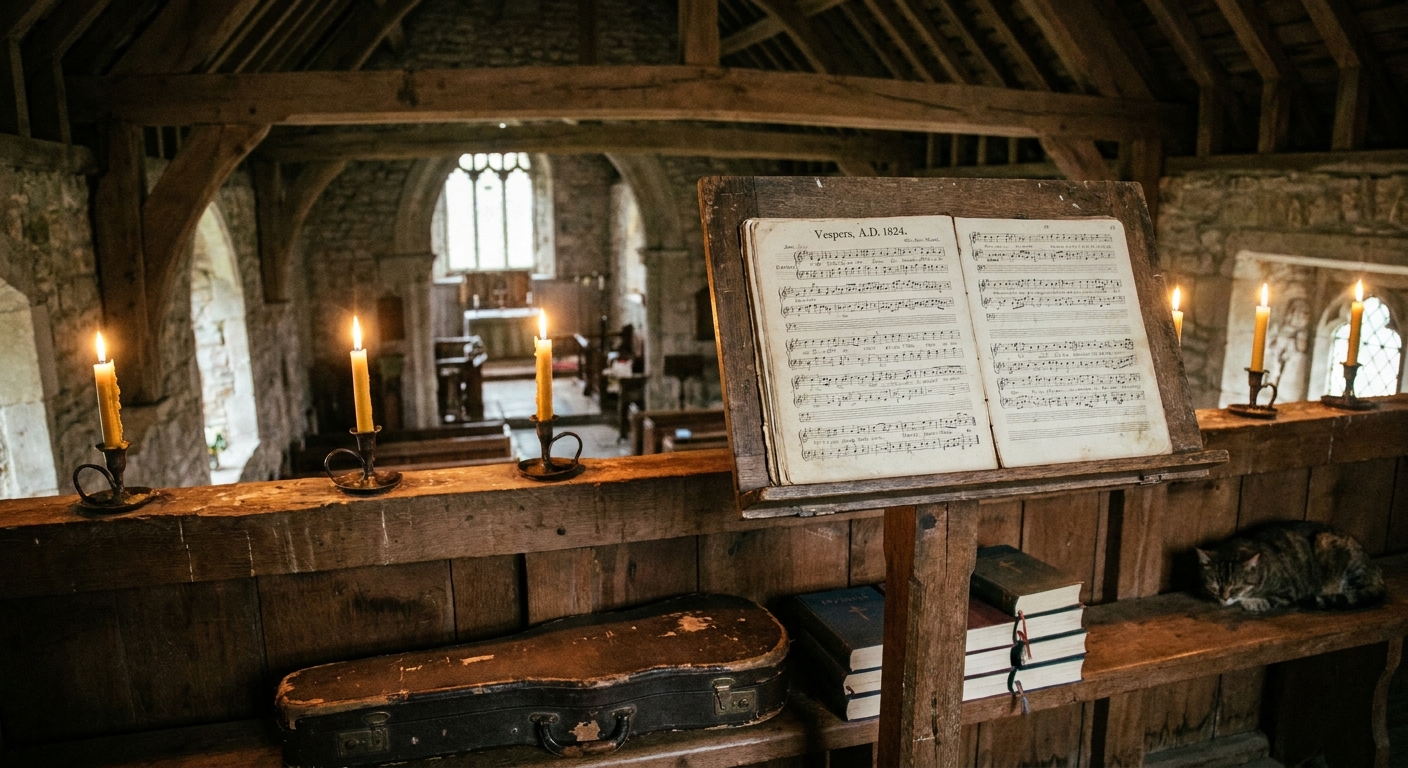
The anchor point of the story is Christmas Eve, 1818, when “Stille Nacht! Heilige Nacht!” received its first known performance at St. Nikolaus in Oberndorf.
The core facts
- Mohr wrote the text.
- Gruber composed the melody.
- The first known performance took place at St. Nikolaus in Oberndorf on Christmas Eve 1818.
Many retellings add vivid details: a frantic rush, a melody drafted in an afternoon, a congregation stunned into reverent quiet. Some of those details may preserve real memories. Some are later embroidery. What is steady beneath the storytelling is that this was a collaborative, practical act of parish ministry: a priest with a text and a musician who could give it voice.
The organ story
You may have heard the claim that the church organ was broken, sometimes with the added drama of bellows ruined by mice, forcing Mohr and Gruber to use a guitar instead.
Here is the careful version: it is plausible that the organ was unusable or unreliable, and later accounts strongly associate the earliest performance with guitar accompaniment. But the specific “mice ate the organ” detail is best treated as tradition rather than firmly documented fact. It makes a wonderful story, and it may preserve a real memory of a malfunction, but historians tend to be cautious about repeating the more cinematic versions as proven.
In a way, the legend persists because it captures something true about the carol’s character. “Silent Night” does not require grandeur. It can survive on six strings and human breath.
How it spread
“Silent Night” did not spread because it was marketed. It spread the way many beloved spiritual songs spread: through craft, travel, print, and the everyday exchange of repertoire.
From local use to wider ears
One often cited pathway involves organ builders and repairers who moved from church to church. Whether or not an organ problem was the immediate reason for the guitar accompaniment in 1818, the larger pattern fits the period: musicians and technicians carried music with them. They heard a song in one place, copied it down, taught it elsewhere, and soon it belonged to more than one valley.
Another frequently credited strand in secondary accounts is the work of Tyrolean singing families who performed beyond their home region in the early 19th century. Two names that recur in the “Silent Night” story are the Strasser and Rainer singers, associated with the Zillertal tradition, who helped carry Alpine repertoire to larger audiences. Even when details vary from source to source, the picture is consistent: the carol moved outward through performers with memorable programs and through communities eager for songs that ordinary people could sing.
Print and attribution
For a song to become truly mobile, it usually has to appear on paper. Over time, “Stille Nacht” circulated in printed collections, and the credits for Mohr and Gruber became more consistently attached to it. That slow standardization mattered. It helped the carol travel intact, instead of dissolving into a dozen local cousins.
A global carol
Once the song entered broader performance circuits, it moved quickly across language and national boundaries. A melody that singable is unusually portable. A lyric that tender is unusually translatable.
Translations
The original German begins with a hush: “Stille Nacht! Heilige Nacht!” Even in translation, the carol tends to keep its essential gesture: a world quieting down, a holy presence arriving without force.
As “Silent Night” spread, it was translated into many languages and adapted to local musical sensibilities while remaining recognizably itself. It became a song sung in cathedrals and living rooms, by trained choirs and by people who only sing once a year.
Famous because it is shared
Some hymns become famous because they are impressive. “Silent Night” became famous because it is shareable. You do not need vocal power to sing it. You need attention. You need a willingness to slow down.
Legend and record
When I facilitate interfaith retreats, I often remind people that tradition has two kinds of truth. There is the truth of documentation, and there is the truth of meaning. With “Silent Night,” the documentation gives us a sturdy core, and the meaning explains why the embellishments grew.
What we can say with confidence
- The lyrics were written by Joseph Mohr.
- The melody was composed by Franz Xaver Gruber.
- The carol’s first known performance took place on Christmas Eve, 1818, at St. Nikolaus in Oberndorf.
- The song then spread outward through regional musical networks and, over time, through print before becoming internationally known.
What is often repeated, but should be held lightly
- The precise reason the first performance used guitar.
- Specific dramatic claims about mice destroying the organ.
- Highly detailed “hour by hour” reconstructions of the day, unless tied to a primary source.
Holding those details lightly does not diminish the carol. If anything, it returns the focus to what is remarkable: two ordinary men, serving an ordinary parish, offering a song of peace that outgrew its own village.
Why it still matters
We often treat Christmas music like seasonal wallpaper. But “Silent Night” began as a small act of care, shaped for a real community on a real night. Knowing that changes how I hear it.
When you sing “Silent Night,” you are not only echoing an idealized Nativity scene. You are also echoing Oberndorf in 1818: the priest’s pastoral instinct, the teacher’s craft, the quiet courage of making something beautiful with what you have.
Sometimes the holiest songs are not the ones that arrive with trumpets, but the ones that arrive softly enough to meet us where we actually are.
FAQ
Who wrote “Silent Night”?
Joseph Mohr, an Austrian Catholic priest, wrote the lyrics (originally in German as “Stille Nacht! Heilige Nacht!”). Franz Xaver Gruber, a teacher and musician, composed the melody.
When was “Silent Night” first sung?
The first known performance was on Christmas Eve, 1818, at St. Nikolaus Church in Oberndorf near Salzburg, Austria.
Was “Silent Night” written because the organ broke?
The organ-break story, especially the “mice ate the organ” detail, is a popular legend. Guitar accompaniment is strongly associated with the earliest performance in later accounts, but the dramatic specifics are not as firmly documented as the core facts of Mohr’s text, Gruber’s tune, and the 1818 Oberndorf performance.
How did the carol spread from a village church to the world?
It traveled through regional music exchange, including the movement of musicians and craftsmen, through performing groups such as Tyrolean singers credited in many accounts with popularizing it, and through printed collections that helped standardize words, melody, and attribution over time.