On quiet mornings in my Oregon garden, I sometimes think about how ordinary devotion can become extraordinary courage. Reading Scripture with a cup of tea, in my own language, feels simple and almost inevitable. For William Tyndale, it was neither. He lived at a time when putting the New Testament into everyday English was treated not as a pastoral gift, but as a threat. And he paid for that work with his life.
William Tyndale was a sixteenth-century English scholar and translator best known for producing an English New Testament that shaped the sound and vocabulary of later English Bibles, especially the King James Version. He spent much of his adult life in exile to complete and protect his translation work, and he was executed in 1536.
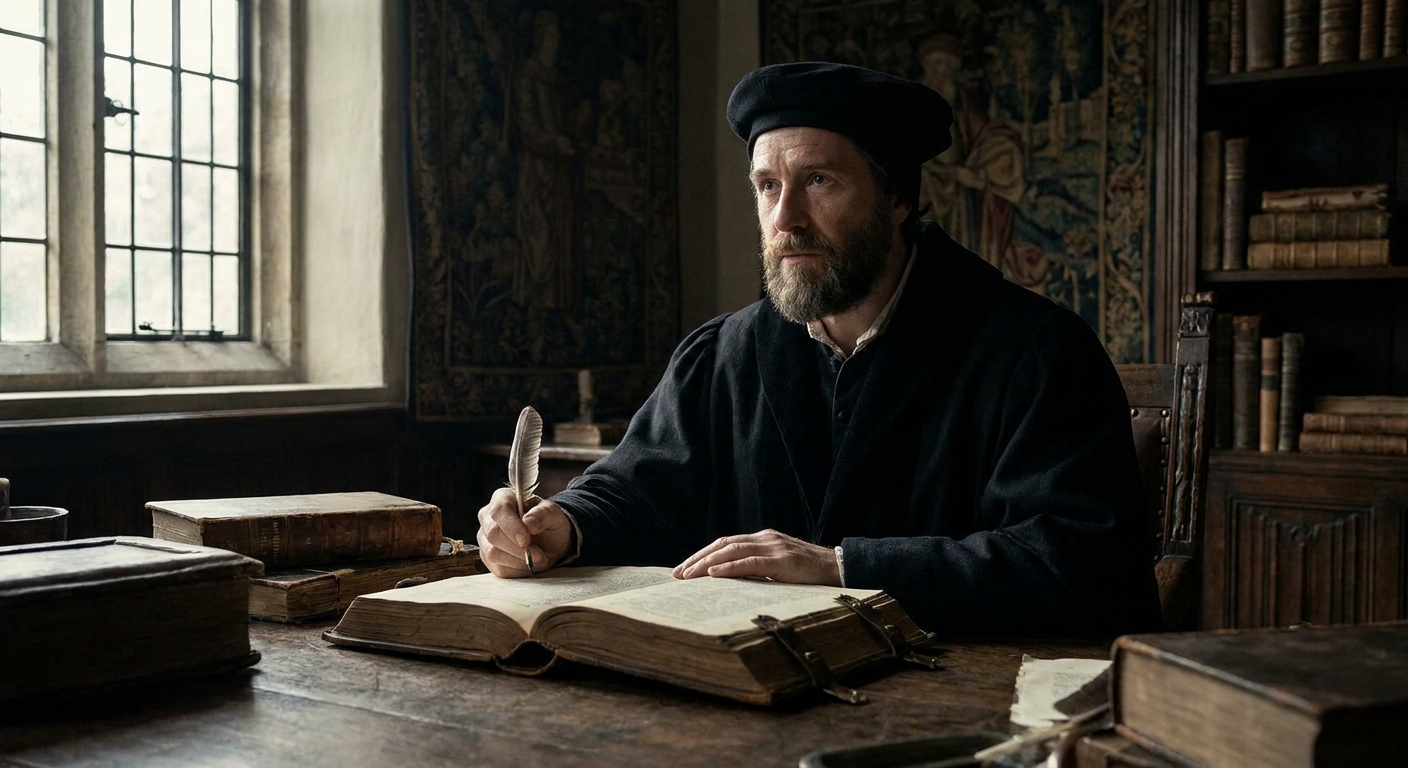
Why Tyndale mattered
To understand why Tyndale became so controversial, it helps to remember the spiritual landscape of early sixteenth-century England. The Bible used in churches was the Latin Vulgate. Educated clergy could read it, and most ordinary people could not. Sermons, prayers, stained glass, and mystery plays carried biblical stories into public life, but Scripture itself was often encountered through the Church’s mediation.
Tyndale was convinced that Christian faith should be nourished by direct access to the biblical text. Not access stripped of guidance, but access real enough that a plowman, a mother, an apprentice could hear the New Testament’s words in the rhythms of everyday speech. In that conviction, many later Protestants heard an early pulse of what would be called “Scripture alone,” not as a slogan for isolation, but as a claim that God’s word should not be locked behind a language barrier.
Early life and the making of a translator
William Tyndale was born in the west of England, likely in Gloucestershire, around 1494. He studied at Oxford and later at Cambridge, moving through the intense intellectual currents of Renaissance humanism, with its emphasis on returning to original sources. That mattered because translating Scripture well is not only about devotion. It is about languages, manuscripts, and choices made word by word.
He was a gifted linguist, trained in Latin and increasingly committed to Greek. That, too, is significant. The New Testament was originally written in Greek. A translator who works from the Greek text is not simply copying Latin into English. He is making fresh decisions about meaning, tone, and theological nuance.
One story often associated with Tyndale is his clash with a learned churchman who insisted that it would be better to be without God’s law than without the pope’s. Tyndale’s response, preserved in later accounts, captures his lifelong aim: he would cause “a boy that driveth the plough” to know more of the Scripture than that learned man. Whether or not the quote is perfectly remembered, the spirit of it fits the trajectory of his life.

The English New Testament that changed everything
Tyndale tried to pursue an authorized English translation in England, including seeking support from church authorities. When that support did not materialize, he left England and began the work abroad.
In 1526, his English New Testament was printed in the city of Worms and began to be smuggled into England. This is one of the most dramatic features of Tyndale’s story: the Bible as contraband. Copies were hidden in barrels and bales, carried through ports, circulated hand to hand.
Authorities moved quickly to suppress it. Bishops publicly condemned Tyndale’s translation, and copies were burned. Yet even suppression became a kind of advertisement. People wanted to see the book that officials feared.
What made his translation distinctive
Tyndale’s English is remembered not just because it was early, but because it was good. It was clear, muscular, and rhythmic. He wrote for the ear as much as the page. In many places, he favored short Anglo-Saxon words over Latinate complexity, which helped the New Testament land in the mind and memory.
He also made deliberate choices that carried theological weight. For example, he often translated key church terms in ways that pushed against certain medieval assumptions. Such decisions were part of why officials considered his work dangerous. Translation is never neutral. Every choice says something about what a text means and who gets to say so.
Exile, danger, and constant revision
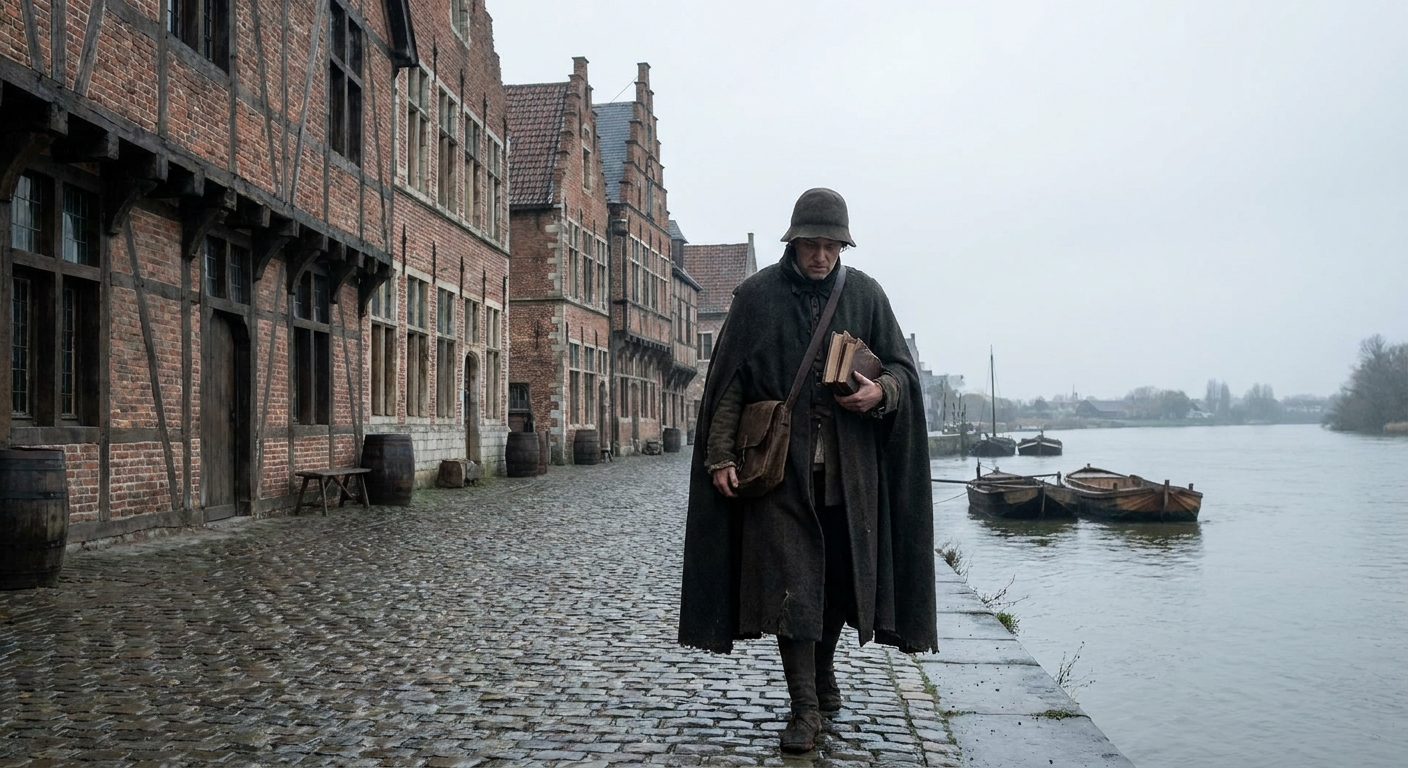
Tyndale lived much of his productive life outside England, moving through cities in the Low Countries and the German-speaking world. Exile for him was not romantic wandering. It was a practical necessity. Printing required networks, money, and relative safety. It also required an ability to disappear when needed.
During these years, he did not simply produce one book and rest. He revised his New Testament, refining language and correcting errors as better scholarship and new editions of Greek texts became available. He also translated parts of the Old Testament, including the Pentateuch, and wrote theological works that defended reform-minded convictions.
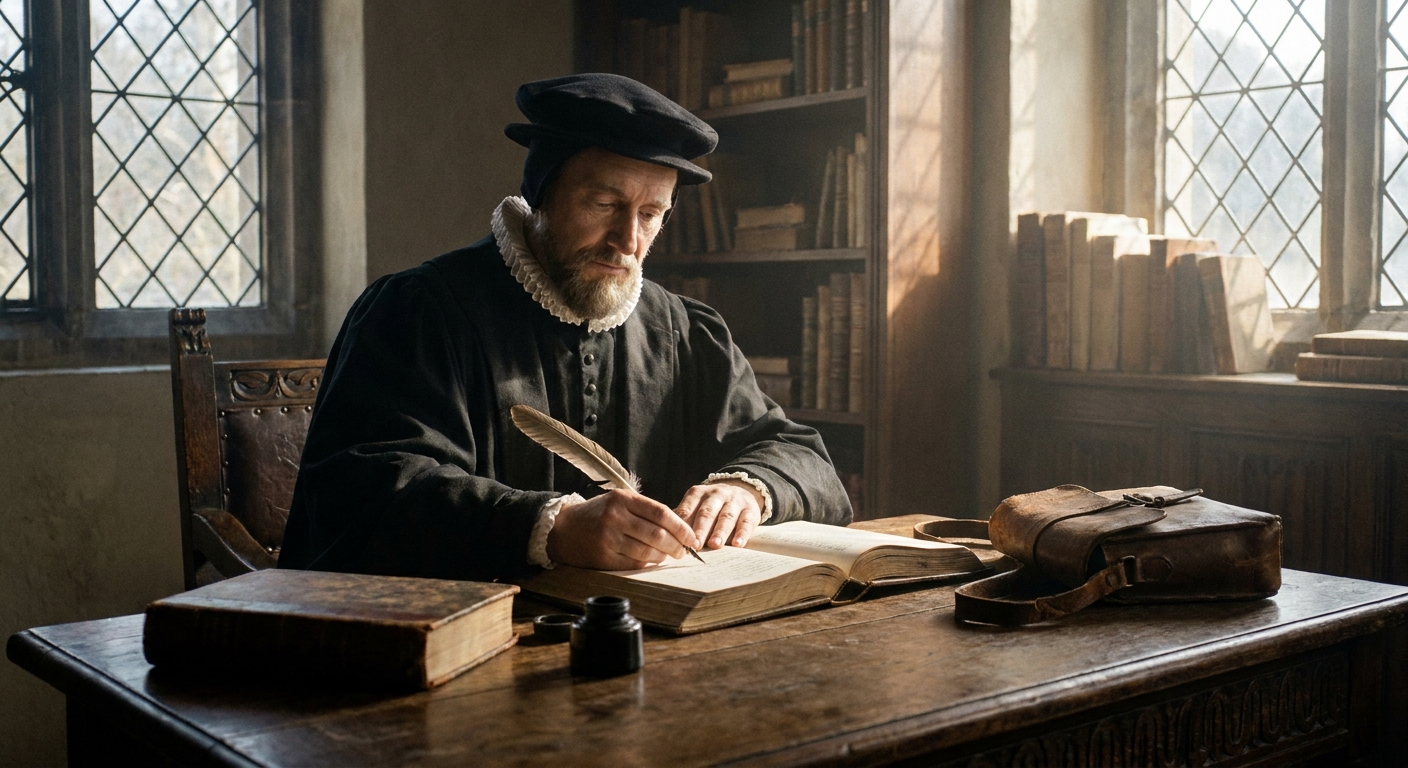
When I teach retreatants about spiritual courage, I often say that bravery is frequently repetitive rather than dramatic. Tyndale’s courage looked like returning to the desk, again and again, while knowing that the work itself marked him for arrest.
How Tyndale shaped later English Bibles
Even people who have never heard Tyndale’s name regularly hear his phrasing. His English influenced later translations profoundly, most famously the King James Version of 1611.
Scholars frequently note that large portions of the King James New Testament closely follow Tyndale’s earlier renderings, sometimes with only minor adjustments. The result is that Tyndale helped set the cadence of biblical English for centuries, shaping sermons, hymns, prayers, and everyday idioms.
Familiar phrases often linked to Tyndale
While exact wording varies across editions and later revisions, Tyndale is commonly credited with popularizing biblical expressions that became part of English spiritual vocabulary, including phrases like these:
- “Let there be light”
- “The powers that be”
- “The spirit is willing, but the flesh is weak”
- “Fight the good fight”
- “Seek and ye shall find”
- “Ask and it shall be given”
Even if you meet these phrases today through a later Bible translation, you are often still hearing an echo of Tyndale’s ear for living English.
Arrest, imprisonment, and execution in 1536
Tyndale’s story ends with betrayal. In 1535, he was arrested near Brussels, in the region then under Habsburg control, after being lured into a trap by a man who gained his trust. He was imprisoned for many months in the castle at Vilvoorde.
In October 1536, William Tyndale was executed for heresy. Accounts describe him being strangled and then burned. The brutality is difficult to read, even at a distance of centuries. Yet it is also hard to miss what history did next: within a few years, English Bibles began to appear with official approval, drawing heavily on the very translation tradition authorities had tried to destroy.
A line long associated with Tyndale’s final moments is his prayer: “Lord, open the King of England’s eyes.” Whether recorded with perfect precision or not, it expresses the essence of his life: Scripture, in English, for English people, with the hope that even those in power might come to see its value.

What to take from Tyndale’s life today
If you are not Protestant, or not Christian at all, it can still be meaningful to sit with Tyndale’s story as a human story: a person convinced that sacred words should be accessible, who used his gifts to serve that conviction, and who accepted suffering rather than abandon the work.
If you are a Christian who reads the Bible in English, Tyndale is part of the unseen lineage behind your pages. Not the only influence, and not a saint without complexity, but a pivotal figure whose choices shaped how the New Testament sounds in English-speaking hearts.
And for anyone who has ever tried to speak truth clearly in a fearful time, his life offers a sobering question: what do we do when faith becomes costly, not in theory, but in daily decisions?
Quick questions about William Tyndale
What did William Tyndale do?
He translated the New Testament into English from Greek and helped begin an enduring tradition of English Bible translation. His work strongly influenced later English Bibles.
Why did Tyndale have to live in exile?
Because church and political authorities in England opposed his unauthorized English New Testament. Working abroad allowed him access to printers and a measure of protection, though he was still in danger.
Did Tyndale translate the whole Bible?
No. He completed and revised the New Testament and translated significant portions of the Old Testament, but he was arrested and executed before he could finish the entire Bible.
How did Tyndale influence the King James Bible?
The translators of the King James Version drew heavily from Tyndale’s earlier English wording, especially in the New Testament. His phrasing helped establish the enduring style of biblical English.
How did William Tyndale die?
He was executed in 1536 after being convicted of heresy. Historical accounts describe him being strangled and then burned.