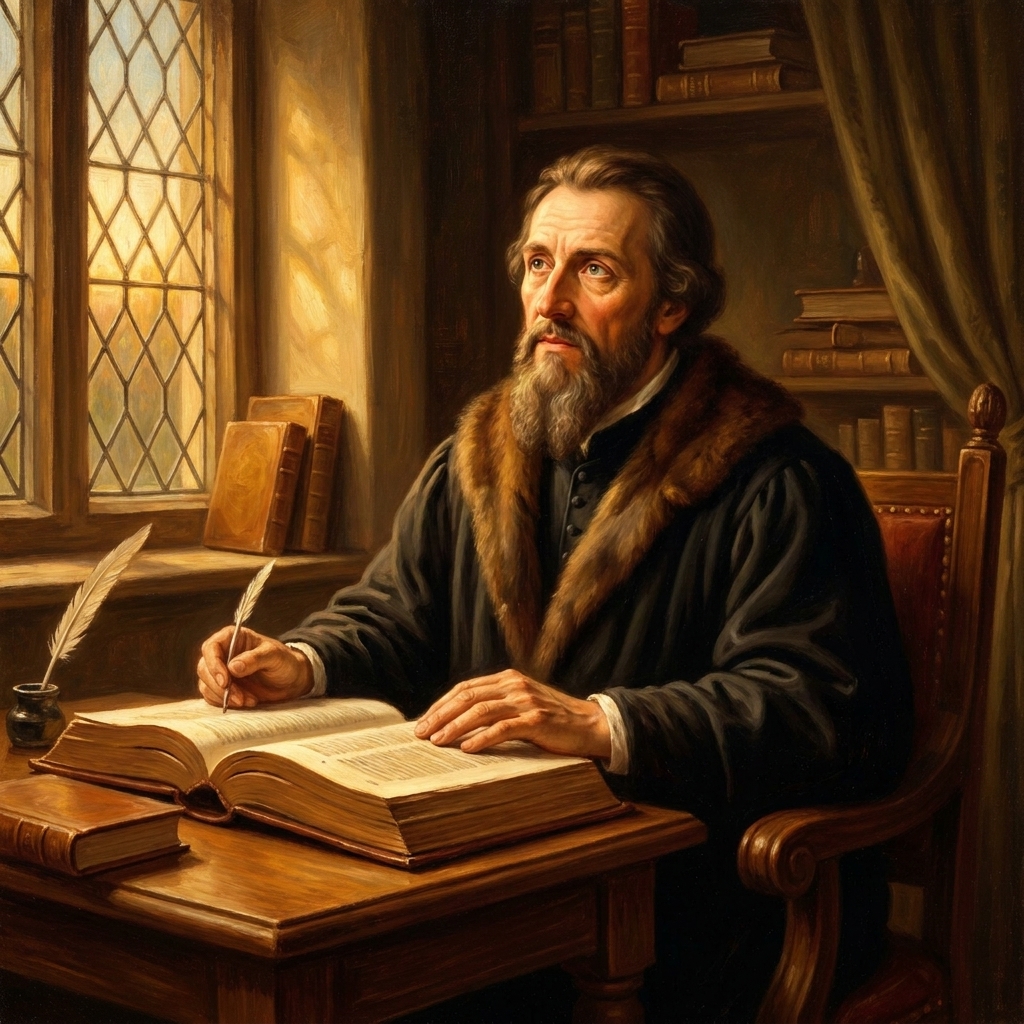
I used to imagine John Calvin as a stern figure in a dark robe, more symbol than human. But the closer you read his letters and trace the turns of his life, the more complicated the picture becomes: a brilliant refugee-scholar, often plagued by chronic ailments, frequently misunderstood, fiercely committed to what he believed Scripture required, and determined to build a church where worship and daily life could be reformed together.
Calvin’s name became attached to a broad stream of Protestant Christianity, but Calvin himself was first a student, then an exile, then a pastor-theologian trying to hold together a fragile city church in a turbulent century.
Early life and education in France
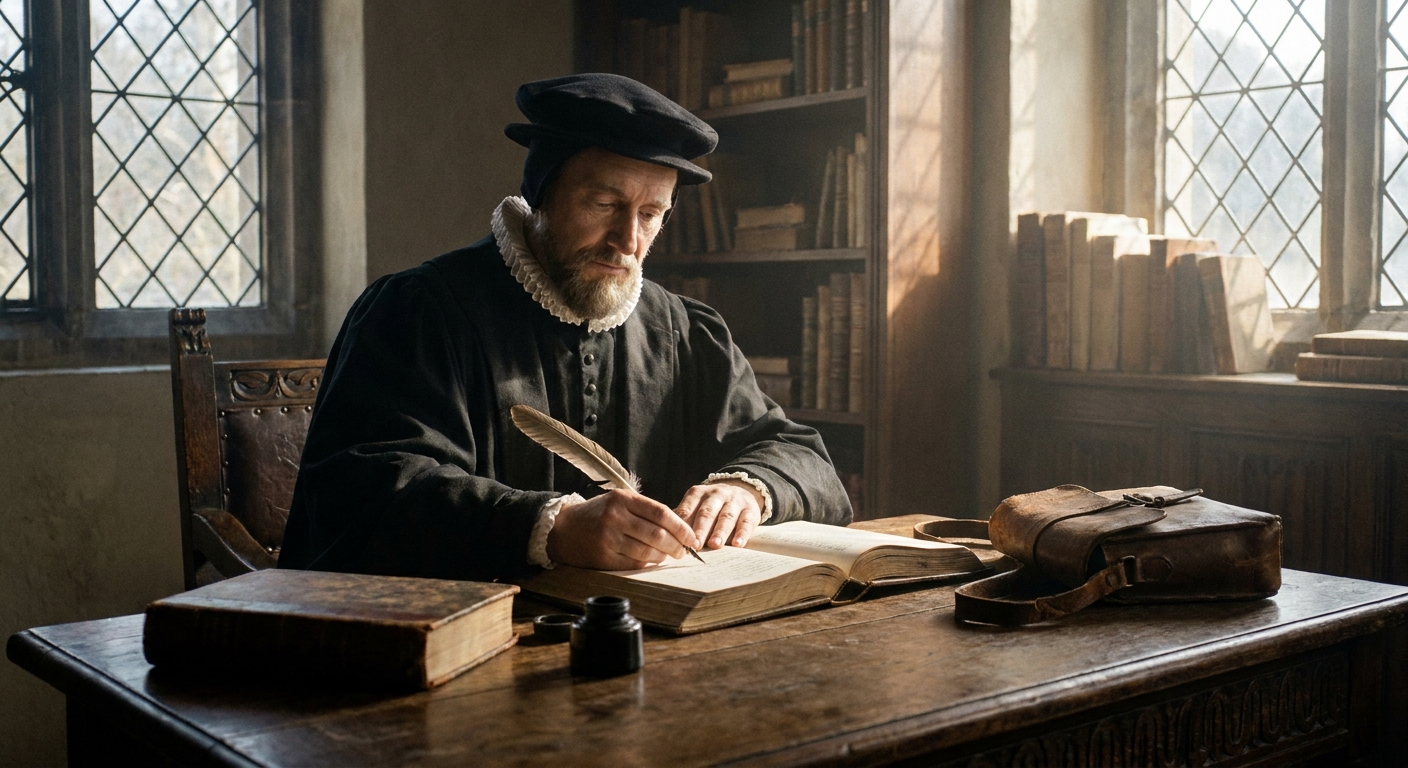
John Calvin was born Jean Cauvin in 1509 in Noyon, a town in Picardy in northern France. His family was connected to the local cathedral administration, and Calvin was marked early for advancement through education. Like many talented young men of his class, he was steered toward church-related studies, a path that promised stability and status.
Calvin’s formal training began with the liberal arts and quickly moved into serious professional study. He spent time in Paris, where humanist learning was reshaping how students read ancient texts. The humanist method emphasized returning “to the sources,” learning languages, and reading carefully rather than relying on inherited summaries. This habit of close reading never left him.
At his father’s urging, Calvin also studied law, notably at Orléans and Bourges. Legal training sharpened his sense for structure, argument, and the practical ordering of communal life. Later, when readers encounter the orderly, forceful architecture of his theology or his detailed proposals for church discipline, it is hard not to see the imprint of a legal mind at work.
Conversion and a life of exile
Pinning down the exact moment Calvin embraced the Reformation is difficult, in part because he did not narrate it the way some reformers did. He spoke of a sudden inward change, a turning of the heart that reordered his life. However it unfolded, by the early 1530s Calvin had moved decisively toward the evangelical cause that was spreading through France and beyond.
France could be dangerous for reform-minded thinkers. Religious tensions rose, and public alignments could carry severe consequences. Calvin eventually left France and lived the precarious life of a religious exile, moving through Swiss and German cities where the Reformation was taking root in different forms.
In 1536, Calvin published the first edition of what would become his most influential work, Institutes of the Christian Religion. It began as a relatively compact presentation of Protestant faith and practice. Over the years Calvin expanded it substantially, shaping it into a comprehensive theological vision that aimed to be pastoral as much as intellectual. The Institutes helped many readers make sense of the Reformation not as chaos or rebellion, but as a coherent attempt to reform Christian teaching and worship in light of Scripture.
Geneva and Calvin
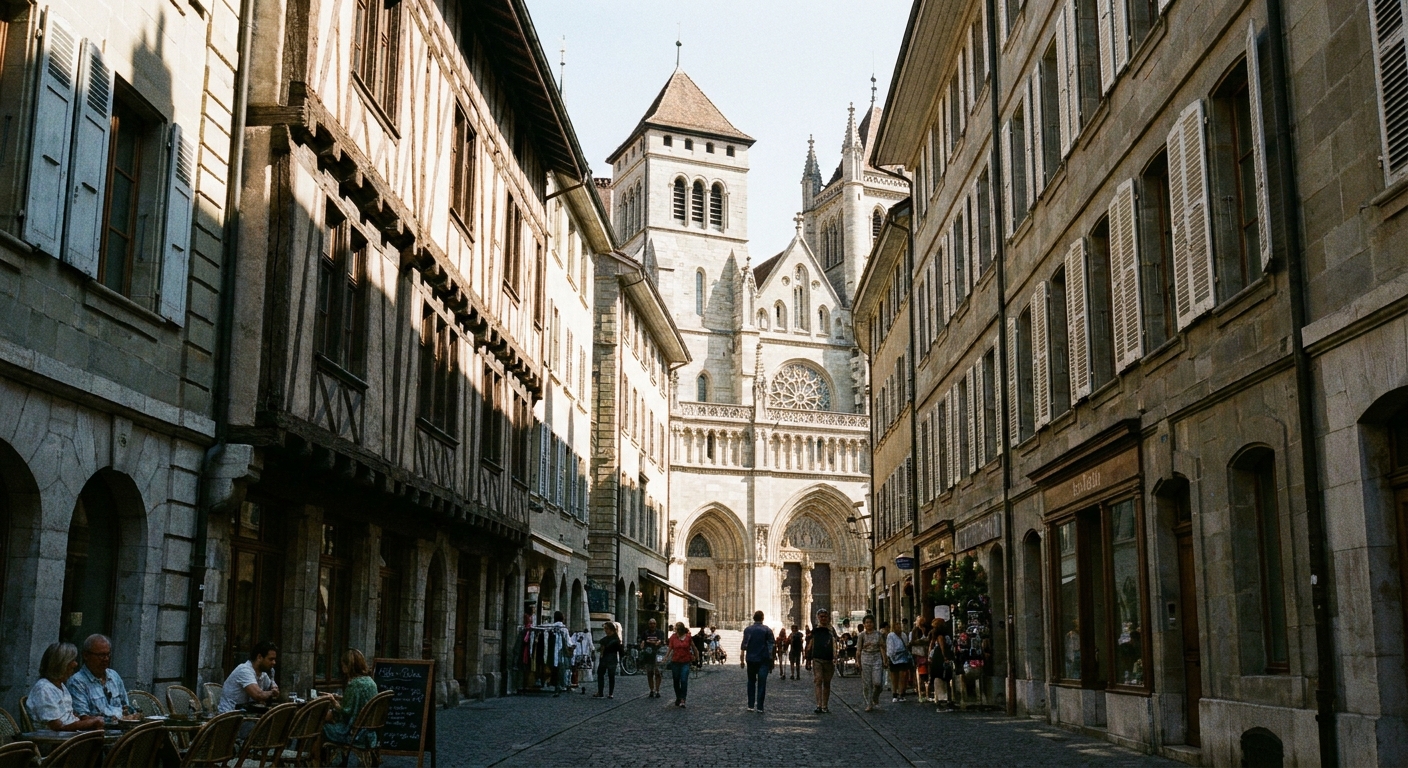
Calvin’s life is inseparable from Geneva, the city where his name would become a kind of reference point. Geneva in the 1530s was in transition, politically and religiously. It had broken with the authority of its bishop and was negotiating its identity in a contested region. Reformers such as Guillaume Farel pushed the city toward Protestant reforms, but implementing them required more than slogans. It required sermons, catechesis, structures of pastoral care, and some way to address moral and communal disputes.
Calvin arrived in Geneva more or less by accident while traveling, intending to continue his scholarly life elsewhere. Farel urged him to stay, pressing him to see pastoral leadership as a calling he could not refuse. Calvin agreed and soon became deeply involved in shaping Geneva’s reform.
First stay, then expulsion
Calvin’s initial years in Geneva were turbulent. Efforts to create a disciplined church community met resistance, and conflict grew over questions of authority and practice. In 1538, Calvin and Farel were expelled from the city. It is one of the details I return to when people talk as if Calvin’s influence was effortless or inevitable. He was, at least at first, unwanted.
Strasbourg: a quieter season
After his expulsion, Calvin went to Strasbourg, where he pastored a congregation of French refugees and learned from other reformers, including Martin Bucer. Strasbourg offered him something Geneva did not at that time: space to develop as a pastor and church leader. He preached, taught, wrote, and deepened his liturgical and ecclesial convictions. He also married Idelette de Bure, a widow who became his partner in a life marked by heavy workload and frequent illness. Their family life included grief, including the death of their son, Jacques, shortly after birth.
Return to Geneva and long work
Geneva eventually invited Calvin back, and he returned in 1541. This second Geneva period lasted until his death in 1564. Early in that return, Calvin helped shape what became known as the 1541 Ecclesiastical Ordinances, a framework for ministry, worship, and church governance that sought to make reform durable rather than improvised.
Calvin preached extensively, taught future pastors, produced biblical commentaries at an astonishing pace, and helped implement reforms meant to sustain the Reformation for the long term.
Geneva under Calvin was not a simple theocracy, but neither was it a modern pluralistic democracy. Church leaders and city councils interacted in complicated ways, sometimes cooperating and sometimes clashing. Calvin was not the civil ruler of Geneva, yet his influence was significant, especially as his reputation grew across Europe.
The Institutes
Calvin’s Institutes of the Christian Religion can feel intimidating today, but at heart it is a work of guidance. Calvin wanted ordinary Christians and pastors to understand the faith as a lived reality shaped by Scripture, centered on Christ, and sustained by grace.
Across its editions, the Institutes matured into a full theological system organized around themes like the knowledge of God and of ourselves, the person and work of Christ, the way grace is received, the role of the Holy Spirit, prayer, the sacraments, and the life of the church. Calvin’s style is often direct. He argues carefully, cites Scripture constantly, and returns again and again to the conviction that God’s mercy in Christ is the only stable ground for human hope.
It is also important to say plainly that Calvin was writing in an era when theological disputes were not abstract. They were connected to exile, persecution, civic unrest, and the fear that communities could fracture. The urgency you can feel in his prose was not theatrical. It was shaped by the stakes of his world.
What Calvin taught
If you only meet Calvin through stereotypes, his theology can sound like a single grim idea. In reality, several themes recur across his preaching, commentaries, and the Institutes.
One is union with Christ. Calvin returns again and again to the claim that the Christian life is not self-improvement powered by religious effort, but a life joined to Christ by the Holy Spirit. Another is God’s providence, the conviction that God is not a distant observer but actively sustains and governs the world, even when events look chaotic from the ground.
People also associate Calvin with predestination. He did teach it, but he did not treat it as a party trick or a cruel puzzle. He framed it as a doctrine meant to humble human pride and to anchor assurance in God’s mercy, not in the wavering strength of a person’s will.
And while Geneva is often used as shorthand for church control, Calvin’s own instincts about authority were more layered. He argued for distinct roles for church and civil government, even as he lived in a city where those spheres were tightly entangled and constantly negotiating boundaries.
Worship, discipline, and Communion
When people picture Calvin’s Geneva, they often imagine rules first and worship second. But for Calvin, worship was the heart of reform. He believed the church should gather around the Word preached, prayer, psalm singing, and the sacraments, with an intentional simplicity that avoided practices he thought lacked biblical warrant.
Worship reforms
Calvin supported congregational singing, especially of the Psalms, and he strongly encouraged the Genevan church’s work that produced what is now called the Genevan Psalter. Calvin was not the sole author of its texts or tunes. The project drew on major contributors such as Clément Marot and later Théodore de Bèze for metrical psalms, with composers like Louis Bourgeois and others shaping melodies. Calvin’s role was chiefly pastoral and organizational: he wanted the whole congregation to sing Scripture together, not simply to listen.
He also emphasized services conducted in the language of the people, not in Latin, so that ordinary worshipers could understand and participate.
Church discipline and the Consistory
One of the most contested issues in Calvin’s Geneva was discipline: how the community should respond to public scandal, persistent conflict, or moral harm. In 1541 the city adopted ecclesial structures that included the Consistory, a body of pastors and elders that addressed cases ranging from marital disputes to public behavior.
It helps to be precise here. The Consistory’s authority was ecclesiastical, such as admonition and, at the extreme, excommunication. Civil penalties belonged to the magistrates. In practice, the line could blur, because church and city leadership often cooperated, and that cooperation could tighten into something severe.
For Calvin, discipline was not meant to be mere punishment. In his own framing it was aimed at repentance, restoration, and the health of the church. In practice, it could feel coercive, and that tension is part of what makes Geneva so debated.
Communion disputes
The Lord’s Supper was another flashpoint. Calvin believed that participation should be fenced, meaning that those under serious discipline should not receive Communion until repentance and reconciliation were pursued. Conflicts over who had authority to admit or bar someone from the table were not minor procedural debates. They touched the nerve center of what the church understood itself to be.
The Servetus case
No life of Calvin can honestly bypass the case of Michael Servetus. Servetus was a Spanish physician and theologian known for anti-Trinitarian views that were considered dangerous and heretical by both Catholic and Protestant authorities of the time. Calvin had corresponded with him, and their exchanges became increasingly hostile.
In 1553, Servetus came to Geneva and was arrested. He was tried and ultimately executed by burning. Calvin was not the sole civil authority behind the sentence, and the decision involved Geneva’s councils and the wider consensus of the era about heresy and public order. Still, Calvin supported the conviction, and his role has rightly remained part of the moral reckoning attached to his legacy.
Some later accounts claim Calvin hoped for a less brutal form of execution, though the outcome was the same. However you parse the decision-making, the human cost does not disappear.
When I sit with this episode, I feel the ache of how fear and certainty can fuse. It also reminds me that historical understanding is not the same as moral approval. Knowing what was typical for the time does not make it less tragic. It makes it more urgent to ask what we are capable of when we believe the stakes justify coercion.
Later years and influence
Calvin’s later decades were marked by relentless labor and worsening health. He preached frequently, lectured, advised churches beyond Geneva, and maintained an enormous correspondence with leaders and refugees across Europe. Geneva became a kind of hub for Reformed Protestantism, training pastors who would carry Reformed ideas into France, the Netherlands, Scotland, and elsewhere.
Calvin also produced biblical commentaries that remain historically significant. Even readers who do not share his theology often recognize the seriousness of his engagement with the text. He was not interested in Scripture as a set of slogans. He treated it as a living, demanding witness that shaped doctrine, worship, and ethics.
It also helps to remember that Calvin was not building alone. Geneva’s reforms were part of a wider Reformed world that included Zurich and other cities, and Calvin’s influence traveled through debates, letters, and people moving across borders under pressure. That broader network is one reason his impact outlived his own lifespan.
Death in 1564
John Calvin died in Geneva on May 27, 1564. In keeping with his desire to avoid personal veneration, he was buried in an unmarked grave, a quiet ending for a life that had been anything but quiet.
His influence outlived him through institutions, confessions, catechisms, worship practices, and networks of churches that carried Reformed theology across borders. Calvin did not invent every idea now associated with “Calvinism,” but his clarity, organizational energy, and written legacy helped give the Reformed tradition a durable shape.
Why Calvin still matters
Calvin’s life raises questions that still feel surprisingly current: How should faith shape public life? What does a community owe its members, and what does it demand? How do we balance reform with compassion, conviction with humility, and the desire for purity with the call to mercy?
If you come to Calvin looking only for a villain or a hero, you will miss the human being in the record. If you come looking for a conversation partner about Scripture, worship, community formation, and the moral hazards of certainty, you may find that the sixteenth century is closer than it looks.
Quick facts
- Born: 1509, Noyon, France
- Died: 1564, Geneva (May 27)
- Known for: Leading Reformed Protestant reforms in Geneva; major theological writings; extensive biblical commentaries
- Major work: Institutes of the Christian Religion (first published 1536, expanded in later editions)
- Key church order text: Ecclesiastical Ordinances (1541)
- Key controversy: The 1553 trial and execution of Michael Servetus in Geneva