When people tell me they want to meditate, they usually mean something deeper than “sit quietly.” They are longing for steadiness. A place inside themselves that does not get whipped around by the news cycle, the group chat, the calendar, or the old anxieties that sneak in at night.
If you are a beginner, let me offer you a blessing disguised as permission: your daily spiritual meditation routine does not need to be perfect to be real. It just needs to be yours, practiced with gentle consistency.
What spiritual meditation can mean
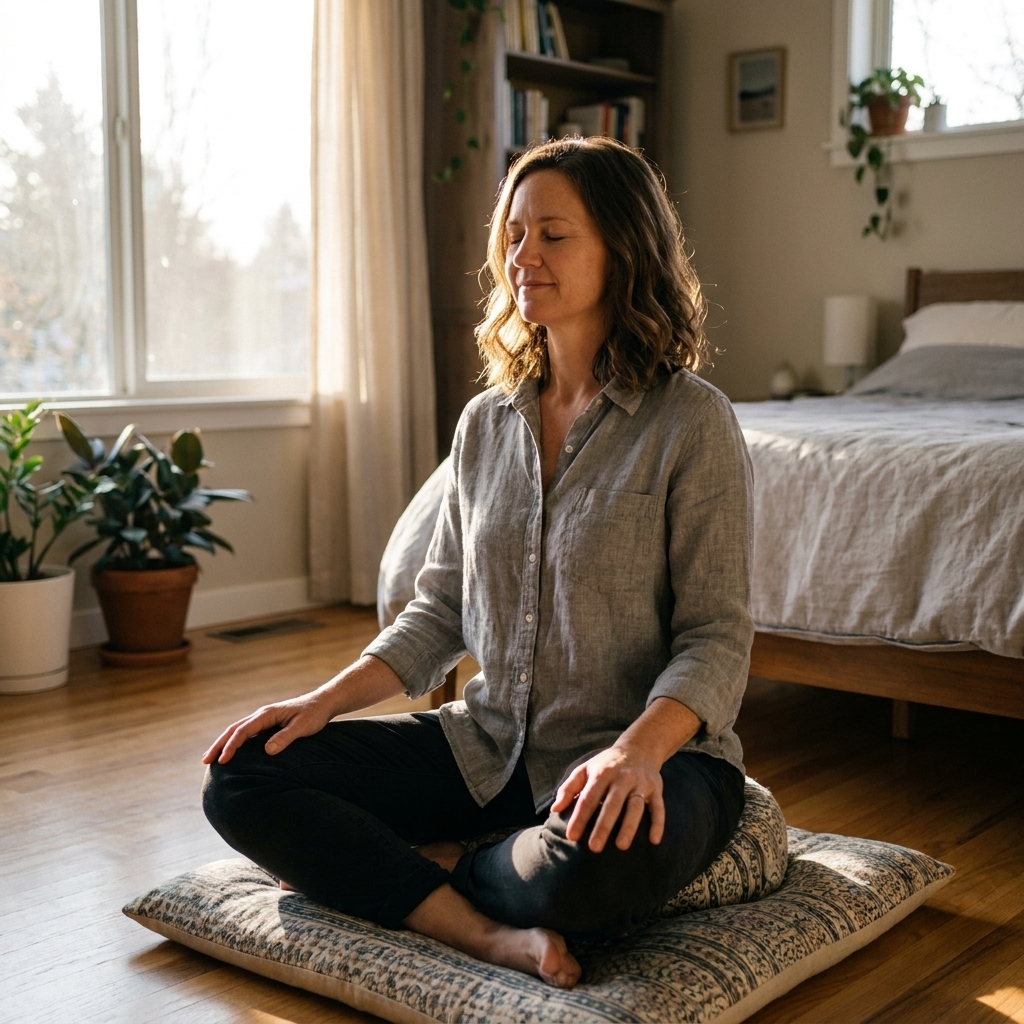
Meditation is often taught as a mental skill, and it is. But for many of us, it is also a way of remembering what we belong to. Depending on your tradition or temperament, spiritual meditation might look like:
- Prayerful stillness, where you sit in God’s presence without many words
- Mindful awareness, noticing breath and body as a doorway to the sacred
- Mantra or sacred phrase, repeating words that steady the heart
- Scripture or wisdom reflection, listening for what is alive in a short passage
- Gratitude practice, naming gifts as an act of devotion
You do not have to borrow someone else’s language for the divine. If “God” is your word, use it. If “Spirit,” “Beloved,” “Truth,” or “compassion” is closer, begin there. What matters most is sincerity.
Start small, start daily
Beginners often aim for a heroic routine, then feel defeated by day three. Instead, choose a practice you can keep on your most ordinary day. I like this formula:
- Duration: 3 to 7 minutes to begin
- Frequency: every day, even if it is brief
- Location: one consistent spot if possible
A shorter practice done daily can support steadiness over time. It often helps regulate your attention, and for many people it can be a quiet kind of nervous system care. It says, “I will show up.”
If you can spare a few minutes to scroll, you can spare a few minutes to sit. Not as a scold, but as a reminder of what is available.
Build your routine in 5 steps
1) Choose an anchor time
The best time to meditate is the time you will actually keep. For many beginners, one of these works well:
- Morning: before your phone, before the day asks anything of you
- Midday reset: a small clearing in the middle of life
- Evening: a way to release what you carried
If you are unsure, try morning for one week. Keep it simple: wake up, sip water, sit.
2) Create a small sacred space
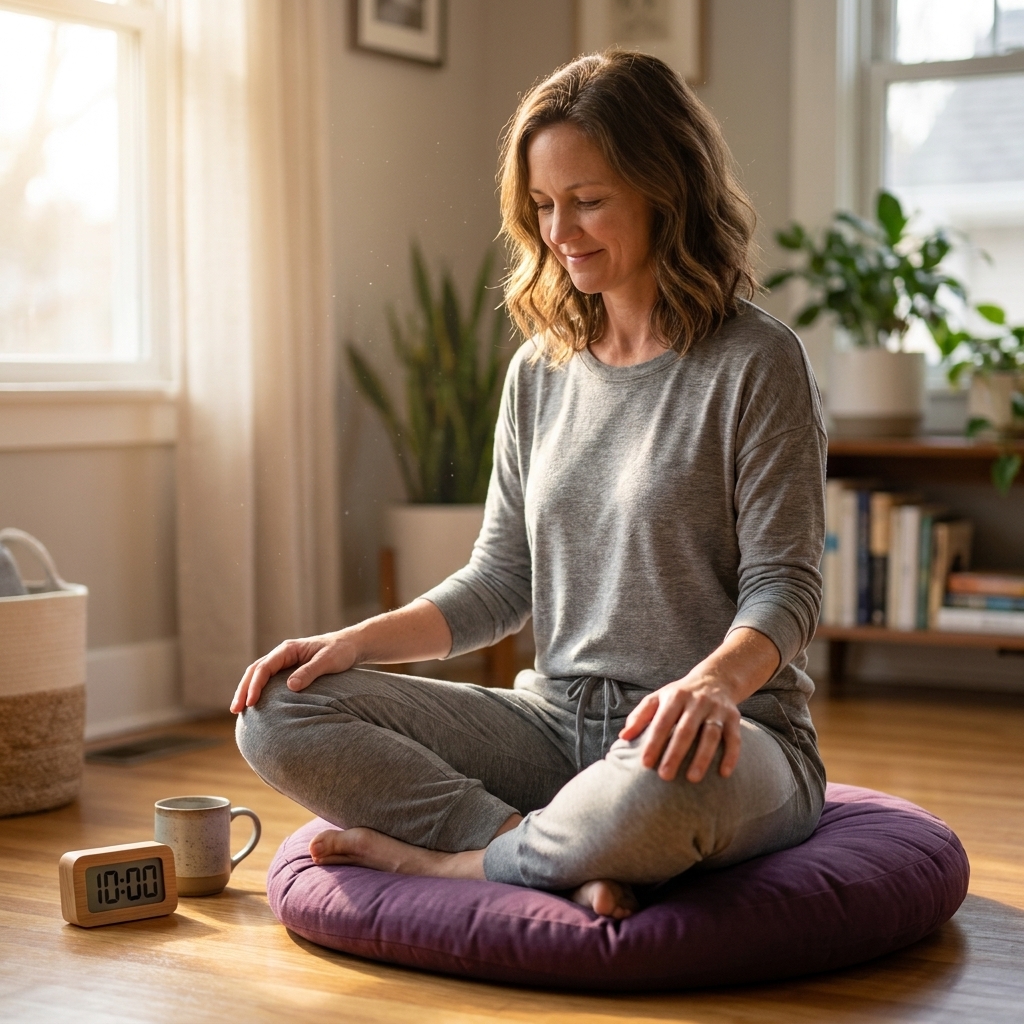
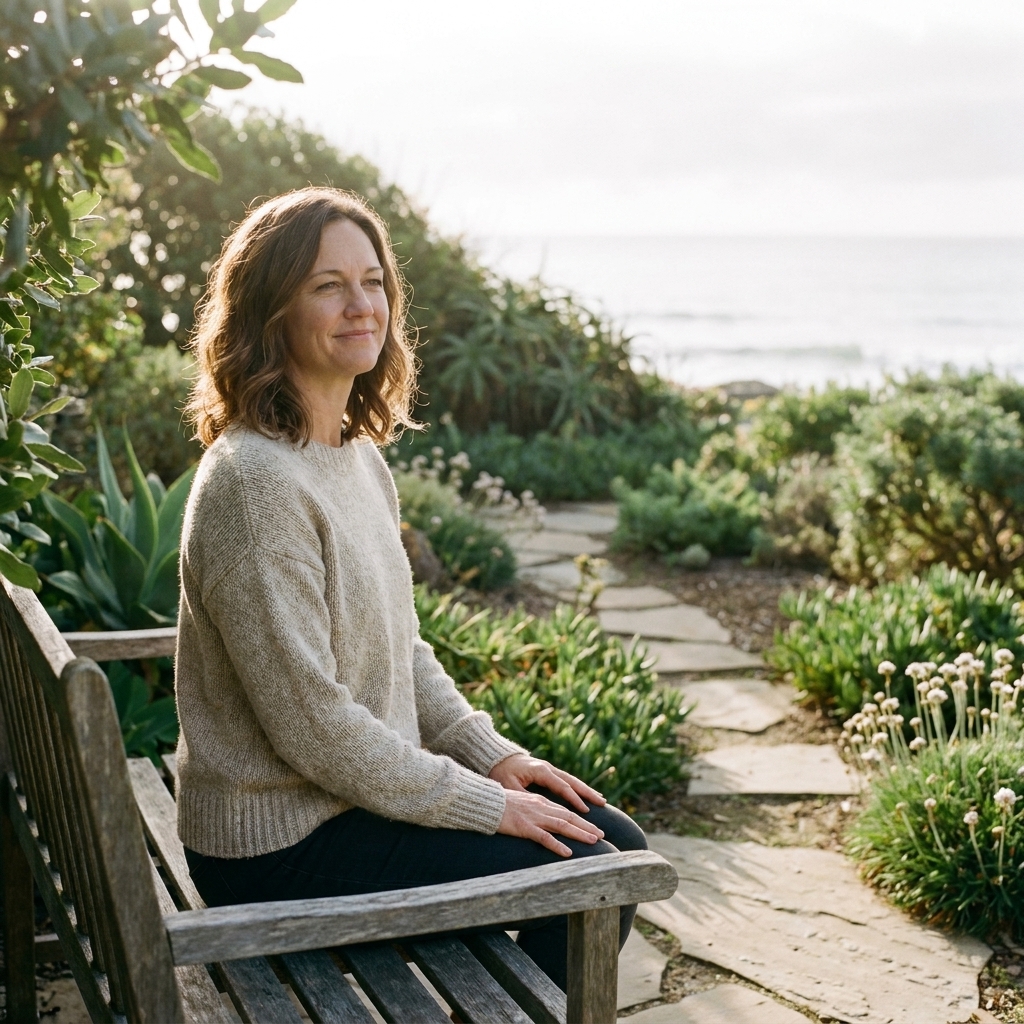
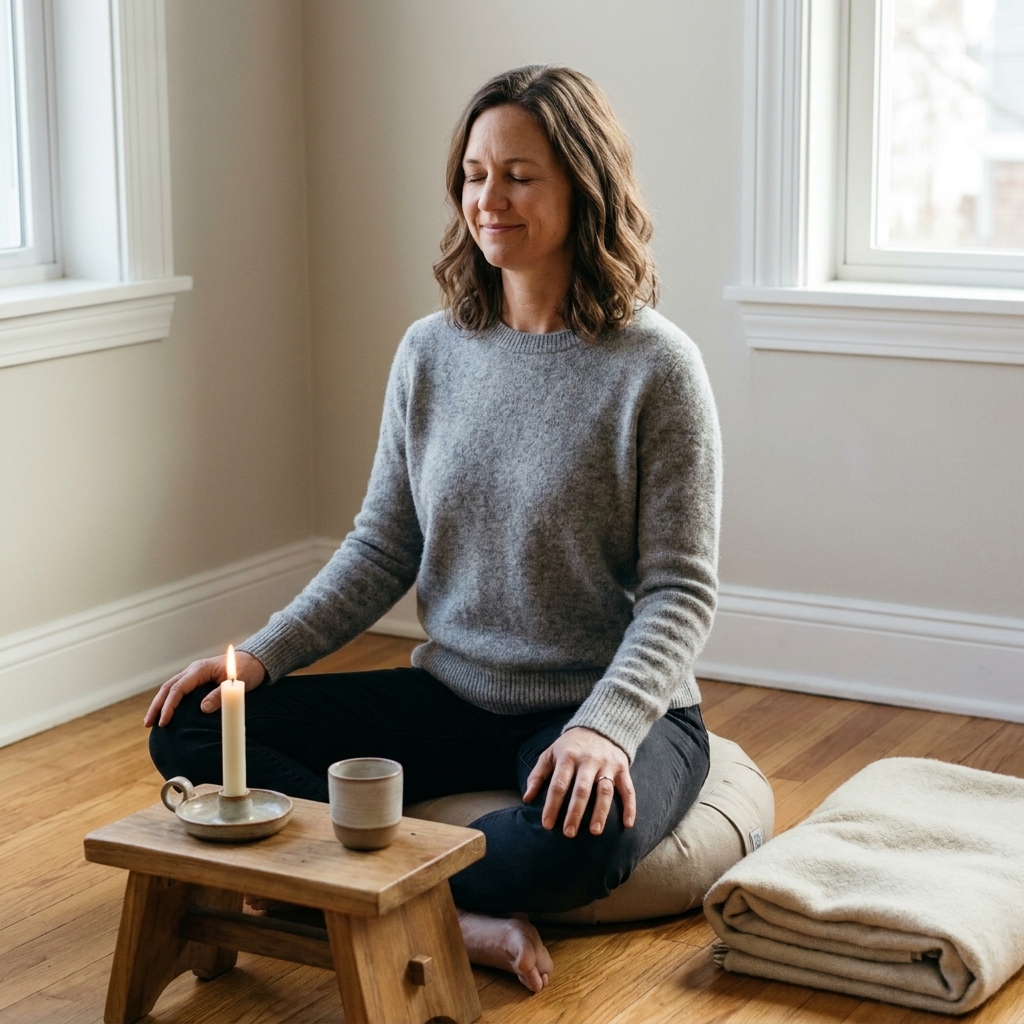
You do not need a dedicated room. A “space” can be a chair by a window, the edge of your bed, or a folded blanket on the floor. Add one meaningful object if you like:
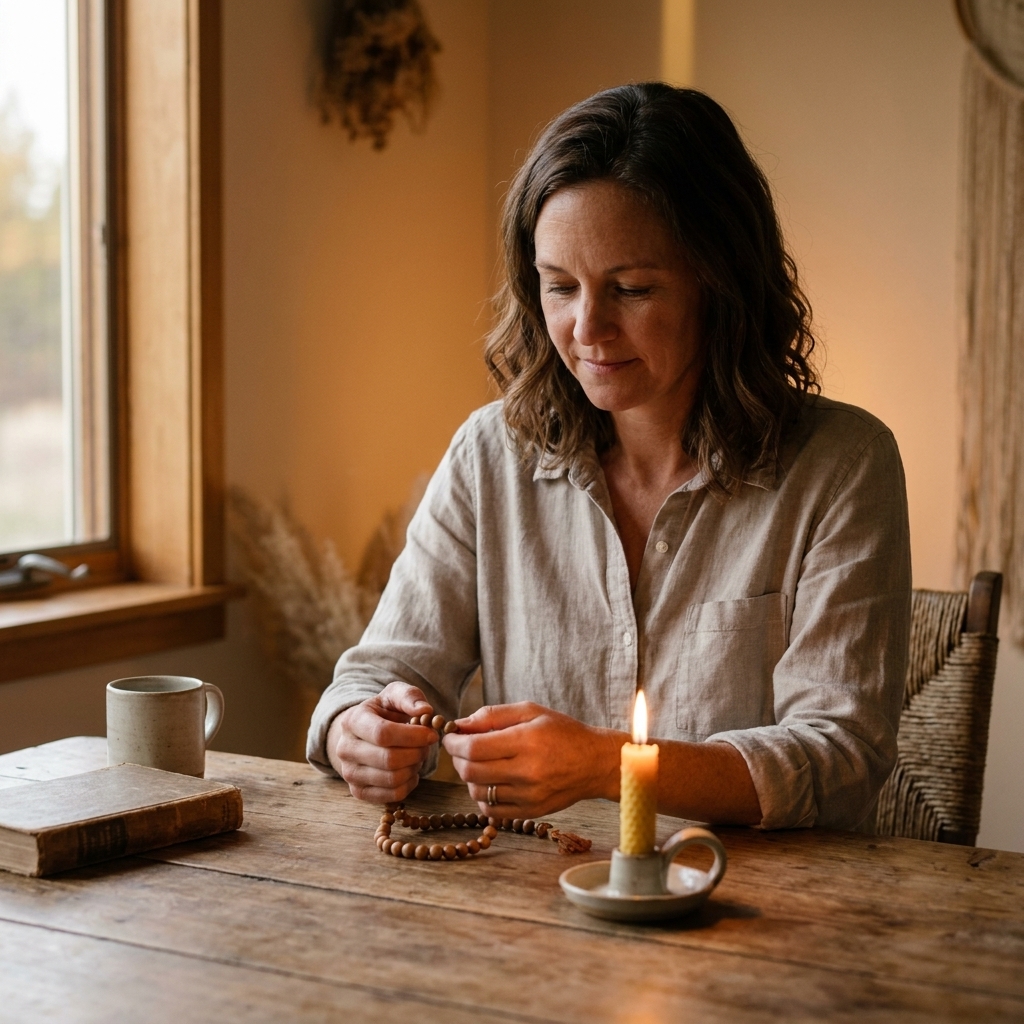
- A candle (or an LED candle if you prefer)
- A small stone or mala beads
- A cross, prayer card, or verse
- A photo that reminds you of love or lineage
3) Pick one anchor for attention
Many beginners get stuck here, so let it be simple. Choose one primary place to return:
- Breath if you want something always available
- A sacred word if you want something heart-centered
- Sound (like birds, a fan, or a soft timer) if breath feels edgy
- Hands or feet if you want something grounded and physical
You are not trying to hold attention perfectly. You are practicing returning, with kindness.
4) Use a gentle container
Set a soft timer so you do not have to bargain with the clock. Start with 3 minutes if you are resistant, 5 minutes if you feel ready, and 7 minutes if you already know you like it.
5) Close with one sentence
End the same way each day. A simple dedication helps your practice follow you into your life: “May I be patient today,” or “Let me live with care.”
A beginner meditation to try today
Below is a routine I have used in many retreat settings because it respects different beliefs. You can adapt the language to match your faith.
Minute 0 to 1: Arrive
Sit comfortably. Let your hands rest. If it feels safe, close your eyes.
Take one slower inhale, then one longer exhale. Let your shoulders drop.
Minute 1 to 3: Breathe with attention
Bring your attention to the breath at the nose, chest, or belly. You are not trying to control it. You are simply staying close.
When the mind wanders, return without scolding. Returning is the practice.
Minute 3 to 5: Work with silence
Silence is not a blank space you have to “win.” It is a place to notice what is here.
- If a thought pulls you, try silently naming it: “planning,” “remembering,” “worrying.”
- Then return to your anchor, like you are turning back toward a candle flame.
- If you forget and drift for a while, that is normal. Begin again.
Minute 5 to 7: Add a spiritual thread
Choose one of these options:
- Sacred phrase: On the inhale, silently say “Here.” On the exhale, “Now.” Or use “Peace,” “Mercy,” “Shalom,” “Om,” “Allah,” “Jesus,” “Beloved,” or another name that opens the heart.
- Gratitude: Name three simple gifts. Not the dramatic kind. The kind you can touch, like warm tea or a friend who texted back.
- Open prayer: Offer one honest sentence. “Guide me.” “Help me love.” “Hold me.” “Thank you.” Then rest in silence.
Last 30 seconds: Dedicate the day
Before you stand, set a quiet intention that translates your practice into your life. Something like:
- “May I speak more gently today.”
- “May I be present with my child.”
- “May I do one thing with care.”
Then open your eyes and re-enter slowly.
Posture and comfort
A sustainable routine is one your body does not dread. A few helpful basics:
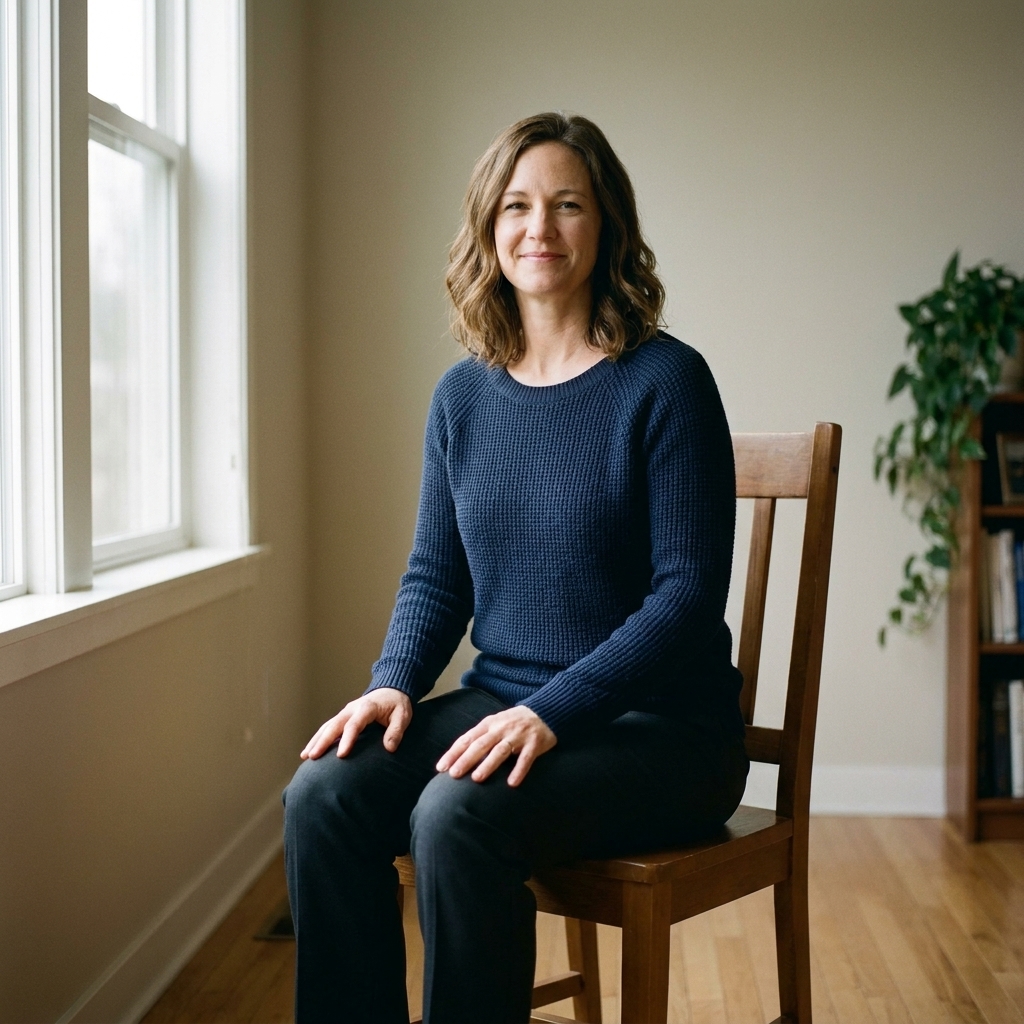
- Chair is fine. Feet on the floor, back supported, hands relaxed.
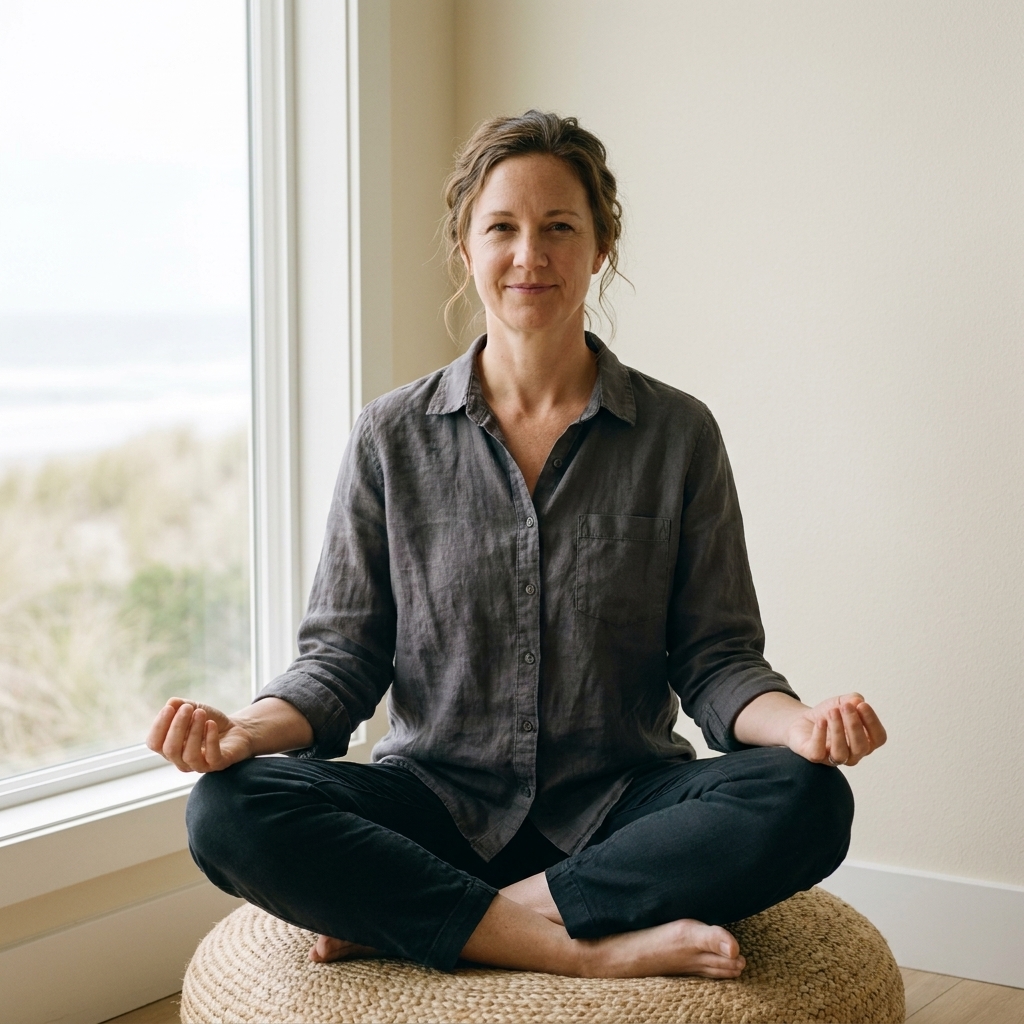
- On the floor is fine. Sit on a cushion so hips are slightly higher than knees.
- Lying down is fine if that is what your body needs, but know it may invite sleep.
Spiritual practice is not a test of endurance. If your back hurts, adjust. If your legs tingle, change position. Reverence includes the body.
Common roadblocks
“My mind will not stop.”
Good. That means you are noticing your mind. Meditation is not the absence of thoughts. It is building a different relationship with them. Each time you return to breath or prayer, you are strengthening attention and compassion.
“I do not have time.”
Start with three minutes. Attach it to something you already do, like brushing your teeth or starting the coffee. Let it be small enough that you cannot argue with it.
“I feel guilty or unworthy.”
Many traditions carry tender stories about worthiness. If guilt arises, try this: place a hand over your heart and breathe once with kindness. In many spiritual lineages, the point is not to earn love, but to remember it.
“I missed a day. Now I have failed.”
You have not failed. You are human. The routine is not broken. It is simply waiting for you. Restart the next day with the smallest version of the practice.
Stay consistent without force
A daily practice thrives on warmth, not pressure. Try one or two of these supports:
- Keep it visible: leave your cushion, candle, or beads where you will see them
- Use a gentle timer: a soft chime helps you stop checking the clock
- Track lightly: mark an X on a calendar, not to perform, but to remember
- Pair it with a reward: meditate, then drink your favorite tea or step outside for fresh air
- Create a minimum practice: one minute of breathing still counts on hard days
In my own life, consistency often comes from identity. Not “I should meditate,” but “I am someone who returns.”
Adapt for your faith
If you come from a specific tradition, meditation can become even more nourishing when it speaks your native spiritual language. Here are a few respectful entry points:
- Christian: contemplative prayer, breath prayer, a short Psalm line repeated slowly
- Jewish: a phrase like “Shalom,” a brief moment of gratitude, or reflective silence before prayer
- Muslim: quiet dhikr with a sacred name, or mindful breathing after salah
- Hindu: mantra repetition, japa with beads, or meditation on a divine quality like compassion
- Buddhist: mindfulness of breath, loving-kindness phrases, or simple awareness practice
- Spiritual but not religious: gratitude, intention-setting, breathwork, and ethical reflection
If you are interfaith or unsure, you can keep it simple: breath, kindness, and a commitment to live with more care.
A 14-day beginner plan
If you like structure, here is a two-week rhythm that builds naturally without overwhelming you:
Days 1 to 3: Show up
- 3 minutes daily
- Breath only
- End with one intention
Days 4 to 7: Add a sacred word
- 5 minutes daily
- Breath plus a sacred word on the exhale
Days 8 to 10: Include the body
- 6 minutes daily
- One minute of gentle body scan, then breath
Days 11 to 14: Close with gratitude
- 7 minutes daily
- Breath, sacred phrase, then three gratitudes
After day 14, you can stay at 7 minutes or slowly grow to 10 if it genuinely serves you. The goal is not longer sessions. The goal is a steadier heart.
When it feels intense
Most beginners experience restlessness. Sometimes meditation can also bring up grief, anxiety, or old memories. For a small number of people, especially those with trauma histories or certain mental health conditions, even gentle meditation can feel activating.
If you feel flooded, it is wise to:
- Open your eyes and orient to the room (name five things you can see)
- Place feet on the floor and feel the support beneath you
- Shift your anchor to sound or touch instead of the breath
- Shorten your practice and add movement, like a slow walk
- Stop altogether if you need to, and return later in a steadier moment
- Reach out to a trusted teacher, therapist, or spiritual leader if you want more support
Gentleness is not avoidance. It is wisdom about pacing.
Closing reflection
A daily spiritual meditation routine is not a performance of calm. It is a relationship. A promise you make to your inner life, and to whatever you understand as sacred.
Start with the smallest honest practice. Light a candle or do not. Use a mantra or do not. Sit for three minutes and return to your breath like you are returning to a friend.
Over time, you may notice something quiet and durable taking root: the ability to meet your day with more presence, more compassion, and a little more peace.
FAQ
How long should a beginner meditate each day?
Start with 3 to 7 minutes daily. After two weeks, increase only if you want to. Consistency matters more than length.
Is meditation against my religion?
Many faiths have contemplative practices that look a lot like meditation: silent prayer, remembrance, chanting, and reflective reading. If you are unsure, choose a form that fits your tradition, like breath prayer, dhikr, or a simple gratitude practice.
What if I keep falling asleep?
Try meditating sitting up, earlier in the day, or with eyes slightly open. If you are exhausted, sleep may be the most spiritual need in the moment.
Do I need an app, music, or crystals?
No. Those tools can be helpful, but the core practice is simple: attention, breath, and a sincere intention. Begin with what you already have.