I still remember the first time I heard A Mighty Fortress Is Our God sung full-voiced, not as background music, but as a spiritual stance. The sound had weight to it. Not just confidence, but defiance, like a community reminding itself that fear does not get the final word.
That feeling is part of the hymn’s origin story. Martin Luther’s Ein feste Burg ist unser Gott did not begin as a museum piece. It was made for ordinary people under strain, meant to be carried on the breath of worshipers who needed courage that could last.
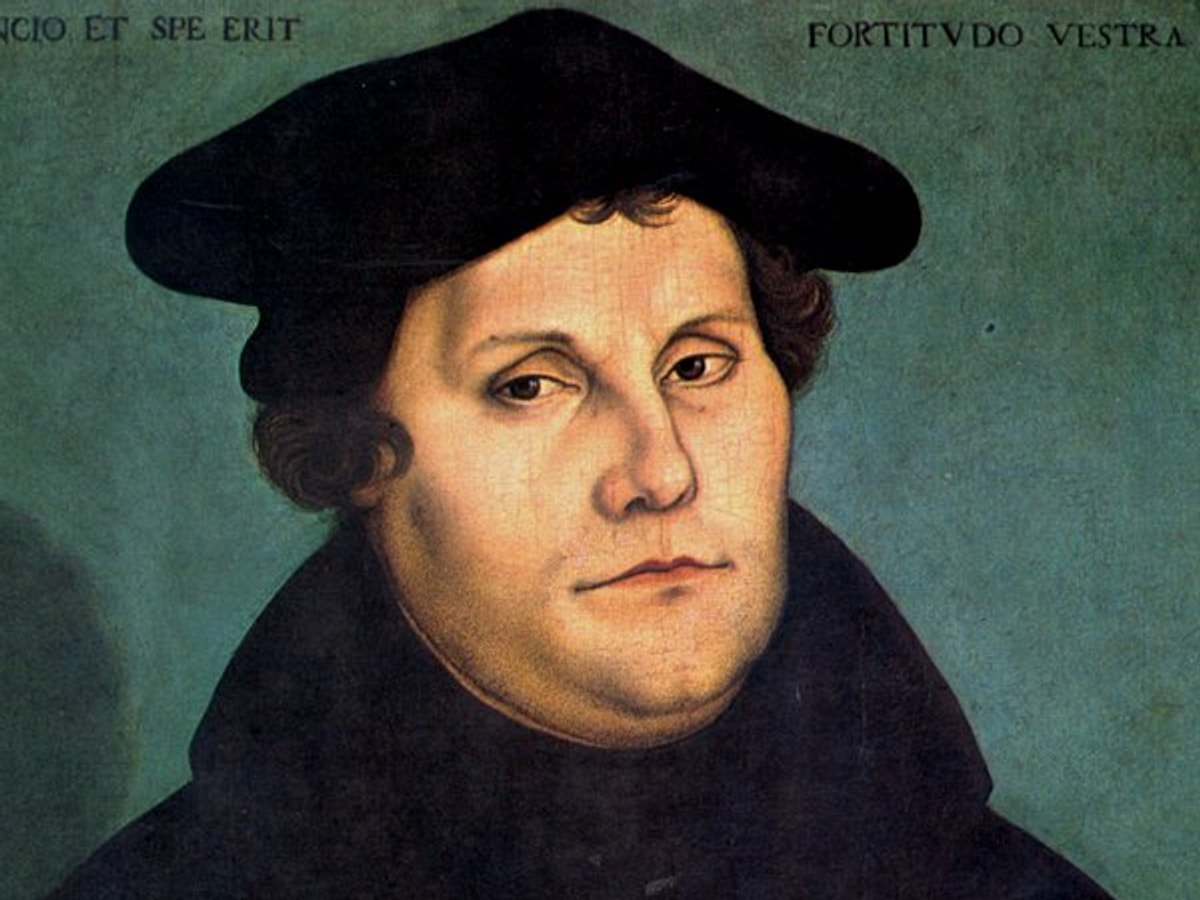
Who wrote it and what “Ein feste Burg” means
A Mighty Fortress Is Our God was written by Martin Luther, the German reformer, theologian, pastor, and hymn writer. The German title, Ein feste Burg ist unser Gott, translates to “A mighty fortress is our God” or “A strong fortress is our God.”
Calling God a fortress is not primarily about God as a weapon. It is about God as shelter. In a world where safety felt fragile, the hymn names God as a place you can stand and not be swept away.
The Psalm behind the hymn: Psalm 46
Most hymn historians and Reformation scholars connect Luther’s text closely to Psalm 46, which opens with the line: “God is our refuge and strength, a very present help in trouble.” That psalm goes on to describe earth shaking, waters roaring, kingdoms tottering, and yet a deep, steady center: God in the midst of the city, God speaking peace into upheaval.
You can hear the psalm’s heartbeat throughout the hymn:
- Refuge and strength become “a mighty fortress.”
- Cosmic turmoil becomes a world filled with “devils” and danger.
- God’s decisive word becomes the famous confidence: “one little word shall fell him.”
In other words, Luther is not free-associating battle language for drama. He is paraphrasing a biblical prayer of stability in chaos, reshaping it into a congregational song people could memorize.

When it was written
Pinning down an exact date is tricky, but the hymn is commonly dated to about 1527 to 1529, and is often placed around 1528. The uncertainty is not laziness on anyone’s part. Luther did not always date his hymns clearly, and the years blur together in the surviving records.
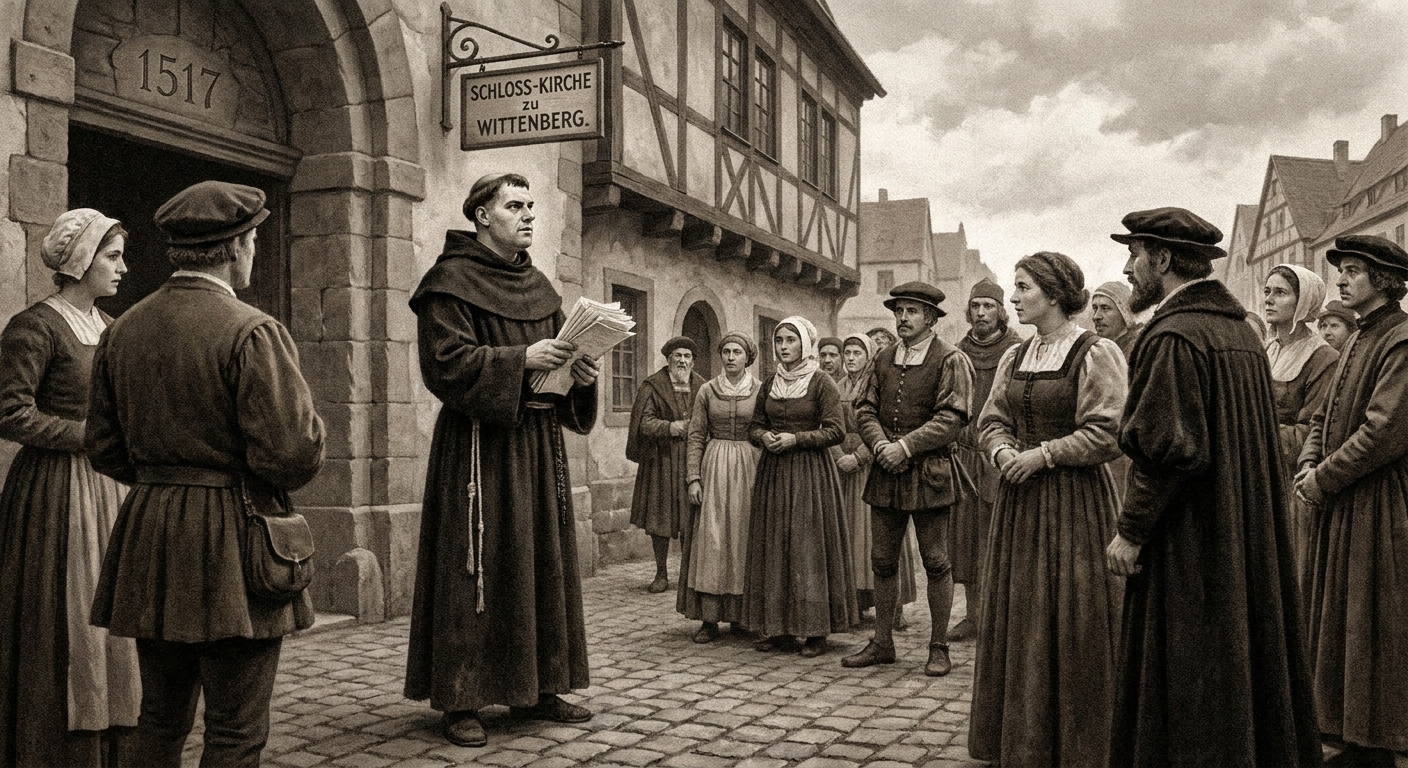
What matters for the story is the season it reflects. By the late 1520s, the early Reformation was no longer just an argument on paper. It was a movement under pressure, and the pressure had names: imperial and ecclesial opposition, local unrest, and recurring outbreaks of plague in German cities, including Wittenberg. The hymn sounds like someone who believed comfort had to be sturdy enough to hold under real stress.
How it spread in the Reformation
Luther and other reformers treated congregational singing as more than decoration for worship. They saw it as formation: a way ordinary people could learn Scripture, absorb theology, and speak faith together.
Ein feste Burg spread through the Reformation in a few key ways:
It was written in the people’s language
In much of Western Christendom, Latin still shaped a great deal of public worship. Luther’s push to sing in German mattered. When people can understand what they sing, the words lodge in the heart differently.
It traveled by print
The printing press made it possible for hymns to move quickly across towns and regions. Luther’s songs appeared in early evangelical hymn collections and pamphlet-like prints, and Ein feste Burg became one of the best-known pieces in that growing repertoire.
It belonged to the gathered church
This hymn was not primarily a performance piece. It was built for communal singing, with a melody sturdy enough to be learned and carried. Even when you only know the first stanza, it gives you something to stand on.
Why it sounds like a battlefield
Modern readers sometimes stumble over the hymn’s intensity: devils, enemies, weapons, victory. It can sound militant if we only hear it through the lens of literal warfare.
But for many singers in Luther’s world, this imagery named something they already felt: that life can become a spiritual contest for courage, conscience, and hope.
“The world with devils filled” as spiritual realism
Luther’s era was saturated with awareness of spiritual conflict. The hymn gives voice to the fear that evil is not just “out there” in abstract. It presses close. It threatens. It taunts. Naming that honestly can be strangely relieving for people who feel hunted by anxiety, guilt, or oppression.
Strength that is not bravado
The hymn’s central claim is not “we will win because we are strong.” It is the opposite. Human strength fails. Yet God holds.
Even the line about “one little word” is not a call to shout someone down. It is a confession that God’s truth is sturdier than the loudest threat.
A sung shelter for frightened bodies
When a congregation sings, breath syncs with breath. Shoulders soften. People remember they are not alone. In that sense, battle imagery can function as pastoral care: it gathers scattered nervous systems into a shared steadiness.
What it meant to early singers
It is hard to overstate how powerful it is for a community to sing, together, that God is refuge, especially when the world feels unstable.
For early Protestant congregations, A Mighty Fortress could mean:
- Belonging: “This is our song, our confession, our prayer.”
- Courage: not bravado, but the courage to keep worshiping, keep speaking, keep trusting.
- Memory: Psalm 46 carried in the mind, ready for dark nights.
- Defiance against despair: a refusal to let fear become the final authority.
I think that is why the hymn still has staying power. Even when we do not share Luther’s historical context, we understand what it is to need a refuge that is more than a mood.
How English speakers came to know it
The hymn’s path into English came through translation and re-translation over centuries. There is no single English version used everywhere, which is why you may notice small differences between hymnals.
One of the most influential English renderings is Frederick H. Hedge’s nineteenth-century translation, which helped embed A Mighty Fortress in English-speaking Protestant worship. Other translations lean more literal, or more contemporary, but most are trying to preserve two things at once: the hymn’s bracing conviction and its sense of God as a safe place to stand.
The core message remains: God is not merely an idea. God is a refuge that holds.
A gentle way to sing it today
If the battle language feels sharp to you, you are not alone. One practice I sometimes suggest on retreat is to ask: What is the real enemy in this song?
For many modern singers, the most honest answers are not “other people.” They are things like despair, addiction, dehumanization, shame, and the quiet lie that you are on your own.
In that light, A Mighty Fortress becomes less like a war chant and more like a communal breath prayer:
God is shelter. God is strength. God is present. And the forces that undo us do not get the last word.
FAQ
Is “A Mighty Fortress Is Our God” based on Psalm 46?
Yes. It is widely understood as Luther’s hymn paraphrase and meditation on Psalm 46, especially its opening themes of refuge, strength, and God’s steadiness amid upheaval.
When did Luther write “Ein feste Burg”?
It is commonly dated to about 1527 to 1529, often placed around 1528, though sources differ because the surviving evidence does not point to a single settled date.
Why does the hymn talk about devils and battle?
The imagery reflects a biblical and pastoral view of spiritual conflict. For many singers, it named fear honestly while grounding them in God’s protection and faithfulness.
Was it important in the Reformation?
Yes. It became one of the most recognizable hymns of the German Reformation, helped along by vernacular worship, print circulation, and the Reformers’ emphasis on congregational singing.