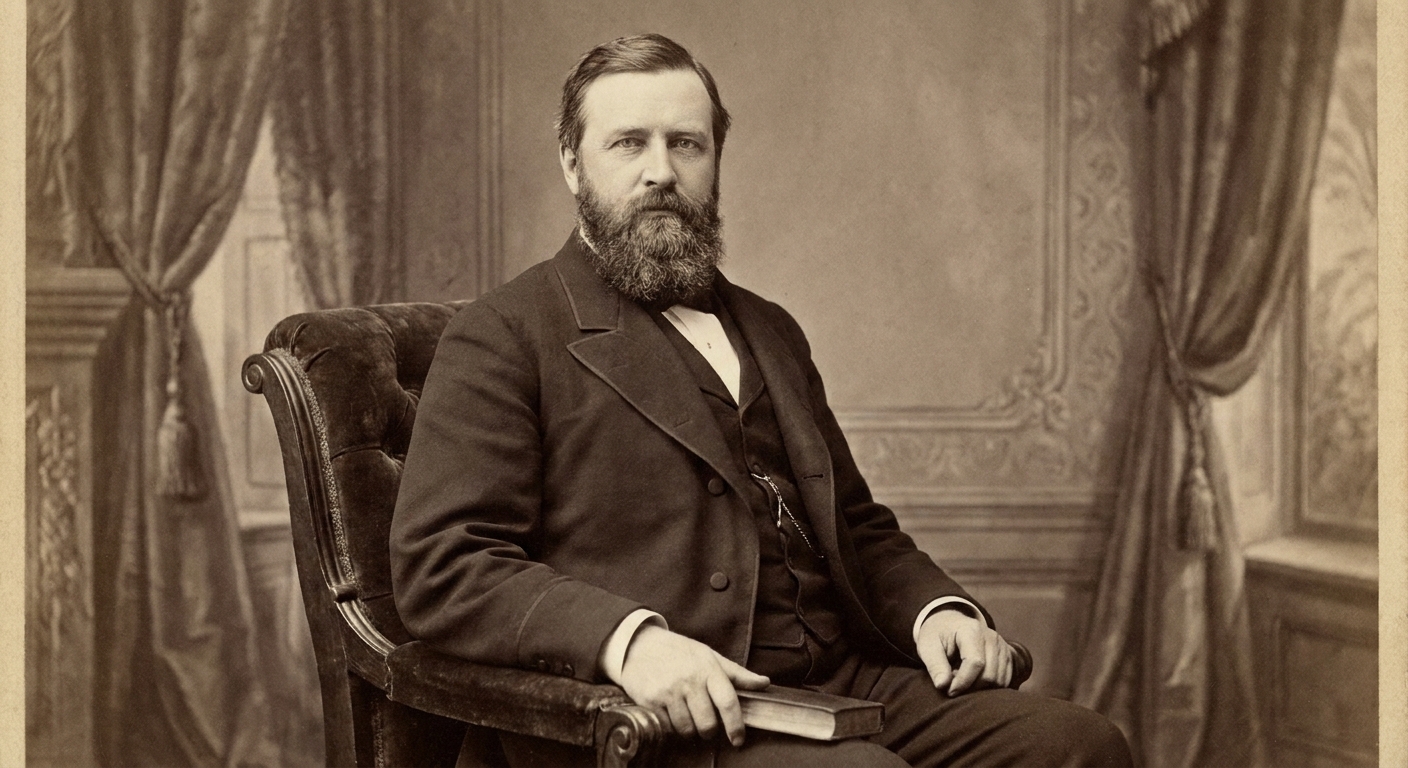
Some hymns arrive like lightning, tied to a single dramatic conversion or a public moment that changes everything. “Great Is Thy Faithfulness” comes to us differently. Its roots are quieter, more like the steady turning of seasons the hymn itself celebrates, and that is part of why it has lasted.
When I first learned the backstory, I expected a big, cinematic tale. Instead, I found two men, Thomas Chisholm and William Marion Runyan, whose lives were marked by ordinary faithfulness and a deep desire to give the church words and music sturdy enough to hold a lifetime.
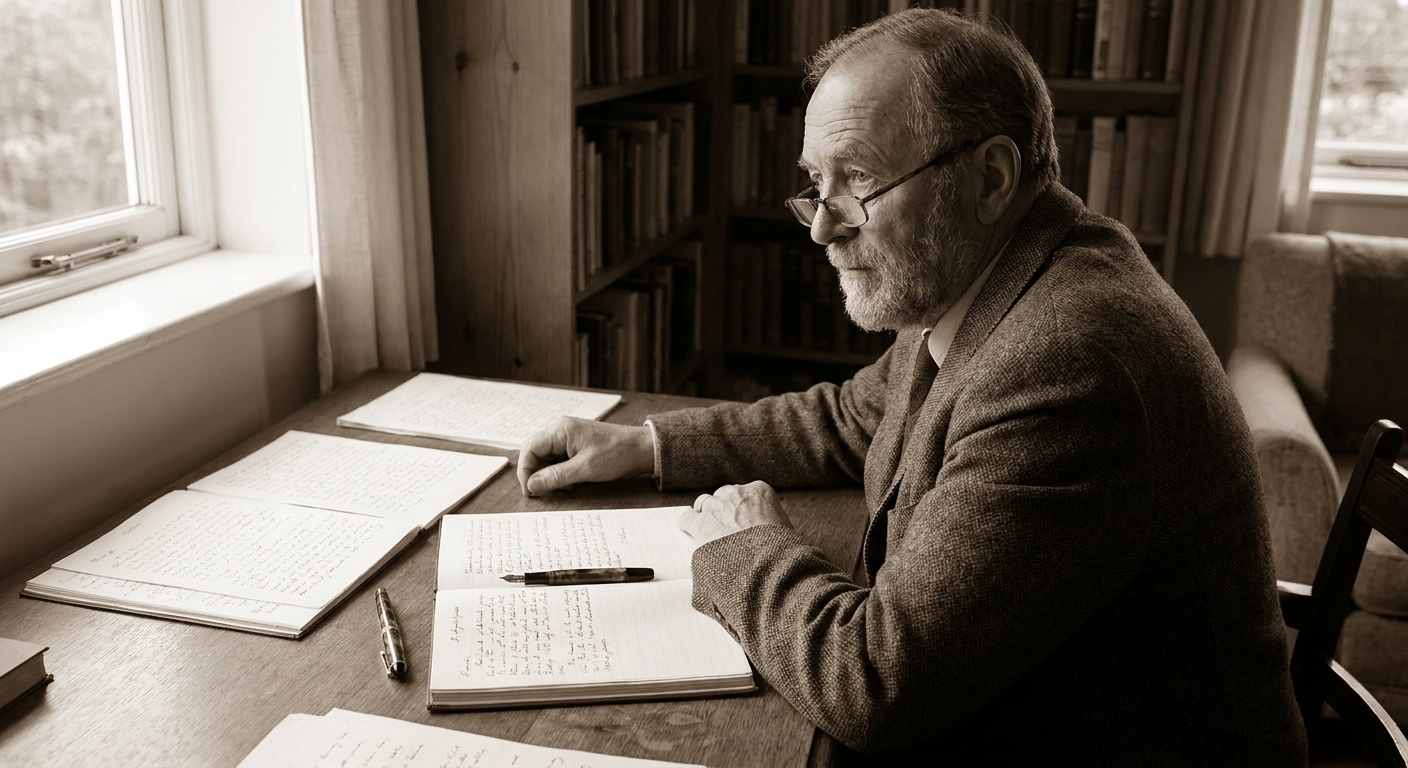
Thomas Chisholm
Thomas Obediah Chisholm (1866 to 1960) did not begin life with the kind of platform we often associate with influential Christian writers. Biographical notes gathered in major hymn indexes, including Hymnary.org, identify him as a Kentucky native, often specifying Franklin, and they note that his formal schooling was limited. However plain those facts sound on paper, they set the tone for the kind of writer he became: self-taught, attentive, and persistent.
Before he became widely known as a hymn writer, his working life is usually sketched in modest strokes: teaching, journalism, and other day-to-day writing work. The through-line is consistent. He lived close to the grain of ordinary life, where faith is tested less by spectacle than by repetition.
Many summaries also note that poor health led him away from full-time pastoral ministry. In his case, that limit became its own kind of schooling: gratitude not for a pain-free life, but for God’s reliability within an unpredictable one.
Chisholm was also remarkably productive. Hymn references regularly credit him with hundreds, and often thousands, of hymn texts and poems. “Great Is Thy Faithfulness” is the one most people recognize, but it sits within a lifetime of steady work.
The spark
Chisholm drew his central phrase from a well-known line in Lamentations. In the King James Version, Lamentations 3:23 says, “Great is thy faithfulness.” It is a short phrase in the text, but it carries the weight of repetition across hard days.
Chisholm put that conviction into singable form. The hymn text moves from testimony to observation to assurance. You can hear it in the way it names God directly, then looks out at the created order, then returns to personal confidence. “Summer and winter, and springtime and harvest” is not there merely to be pretty. It is there to make the claim touchable.
Even if you only know the refrain, you can feel what Chisholm is reaching for. The hymn is not primarily about a single rescue from danger, or one decisive spiritual turning point. It is about staying, about waking up again, about trust that keeps its footing over time.
Text and tune
Most hymn histories place the text in the early 1920s, with 1923 frequently cited in hymn handbooks and databases. The print trail can be summarized in a simple way: the words circulated through the gospel-song publishing world of that era and were paired with a melody written to be sung by ordinary congregations.
Those words reached William Marion Runyan (1870 to 1957), a minister and church musician who also worked as a song leader and editor in evangelical music publishing circles. In many accounts, Runyan is the one who supplied the tune that gave Chisholm’s text its familiar shape.
The earliest widely cited publication breadcrumb points to a Hope Publishing Company collection associated with Runyan in 1923, often identified in reference lists as Runyan’s Song Sermons. Cataloging details can vary across sources and later reprints, but that citation gives readers a concrete anchor for where hymn historians typically start.
The tune is singable without being simplistic. It rises with confidence, then returns, again and again, to reassurance. It gives the words a backbone a congregation can carry.
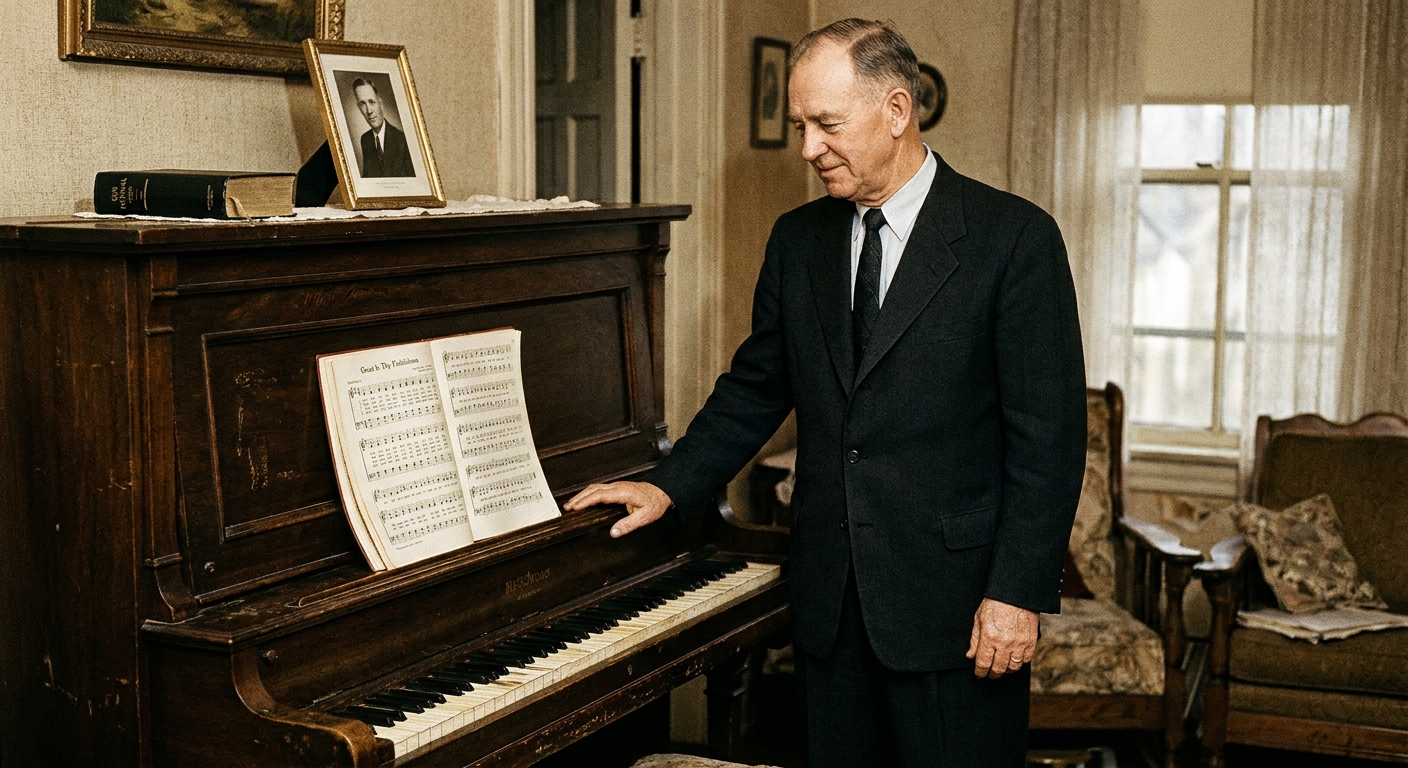
Why it lasts
It helps to remember what Chisholm was not doing. He was not trying to impress a literary circle, and he was not writing for professional singers. He was writing for worship, and worship depends on repetition. It calls for words that can be carried by a tired mind, words that still ring true when you do not have much strength to spare.
That is why the hymn leans into tangible images: morning light, seasons turning, seedtime and harvest. These are not decorative metaphors. They are shared experiences, the kinds of things even a struggling person can point to and say, “This is still happening. The world is still being held together.”
Chisholm’s own story helps explain the hymn’s balance. It does not deny hardship, but it refuses to grant despair the final word. It sounds like someone who has watched plans get interrupted and still found God steady all the same.
How it spread
After the text and tune were paired and published, the hymn traveled through the channels that shaped much of early 20th-century American church singing: songbooks, hymnals, conventions, and revival networks. Its reach widened as it was reprinted and adopted across denominational lines, especially as mid-century hymnals began drawing more freely from gospel-song sources alongside older hymnody.
One stream is often associated, in later retellings, with Moody Bible Institute in Chicago. The hymn is frequently recalled as a chapel favorite in the mid-century Moody orbit, particularly during the years when Will H. Houghton served as president (1934 to 1952). Whether you picture a formal service or a daily gathering, the mechanism makes sense: repeated congregational singing has a way of sending a song outward through alumni, pastors, and traveling speakers.
It also rode the currents of mass evangelism. George Beverly Shea, the longtime soloist closely linked with the Billy Graham Evangelistic Association, is regularly named among the prominent evangelistic singers who performed “Great Is Thy Faithfulness” for large audiences in the era of radio and crusade meetings. For many listeners, hearing it sung that way was the bridge between private devotion and public memory.
Part of the staying power is theological fit. The hymn is addressed directly to God, rich with biblical language, and centered on divine reliability. Those themes resonate across a wide range of evangelical traditions.
It also has pastoral usefulness. “Great Is Thy Faithfulness” meets people in moments when a congregation needs familiarity more than novelty: funerals, seasons of communal grief, times of transition, and ordinary Sundays when people quietly come in carrying private burdens.
Two gifts
It is tempting to treat hymn histories as if one person created the whole thing. In truth, “Great Is Thy Faithfulness” is a meeting of gifts.
- Thomas Chisholm offered language forged in the slow school of perseverance.
- William Marion Runyan offered a melody that carries those words into breath and memory.
Together, they gave the church a song that can be sung when faith feels strong and when it feels thin. It is not flashy. It is steady, and the form matches the message.
In one line
Rooted in Lamentations 3:23, “Great Is Thy Faithfulness” joins Thomas Chisholm’s plainspoken text with William Marion Runyan’s congregational tune, most often traced in print to Runyan and Hope Publishing Company in 1923, then carried outward through songbooks and hymnals and commonly associated in later memory with mid-century Moody Bible Institute singing and the wider reach of George Beverly Shea and the Billy Graham Evangelistic Association.