I have seen John 3:16 printed on posters, stitched into quilts, whispered at hospital bedsides, and held up in stadiums. It can feel like a spiritual shorthand, a single sentence meant to carry the whole weight of Christian faith.
But when I sit with the verse slowly, it reads less like a slogan and more like an invitation. It tells a story in miniature: God loves, God gives, and God promises life, while the next breath of the passage refuses to ignore the reality of judgment.

Where it happens in John
John 3:16 comes from Jesus’ nighttime conversation with Nicodemus, a religious teacher who arrives with curiosity and caution. The chapter is threaded with themes of new birth, light and darkness, and what it means to receive what God gives rather than trying to earn it. That setting matters because John 3:16 is not a detached tagline. It is part of a longer moment where Jesus is trying to help someone step into the light.
John 3:16 in one breath
Here is John 3:16 in a common English rendering (wording varies slightly by translation):
“For God so loved the world, that he gave his only Son, that whoever believes in him should not perish but have eternal life.” (John 3:16)
And here are the next lines that often get separated from it:
“For God did not send his Son into the world to condemn the world, but in order that the world might be saved through him. Whoever believes in him is not condemned, but whoever does not believe is condemned already, because he has not believed in the name of the only Son of God.” (John 3:17–18)
If we keep John 3:16 alone, we might hear only comfort. If we keep John 3:17–18 alone, we might hear only warning. Together, they form a single message: love is God’s motive, and belief is the line that reveals whether we receive that love as life or resist it into judgment.
“For God so loved the world”
This opening phrase names the source of everything that follows: God’s love. In John, love is not primarily an emotion God has, but an action God takes. The verse is not only saying, “God loved the world so much,” as if the point were measuring intensity. It can also be heard as, “This is how God loved the world.” The “so” holds at least that sense of manner, and many teachers would say it can carry intensity too.
And then there is the word world. In this Gospel, “world” can mean the human order that is often confused, wounded, and resistant to God. That matters. John 3:16 is not “God loved the lovable.” It is not “God loved the people who already had their act together.” It is the scandal and tenderness of grace: God’s love moves outward toward a world that cannot repay it.
In a multi-faith home, I learned early how quickly we sort people into “ours” and “theirs.” John 3:16 interrupts that instinct. Whatever else Christians debate, the verse insists that God’s posture toward the world begins with love, not disgust, not boredom, not abandonment.
“That he gave his only Son”
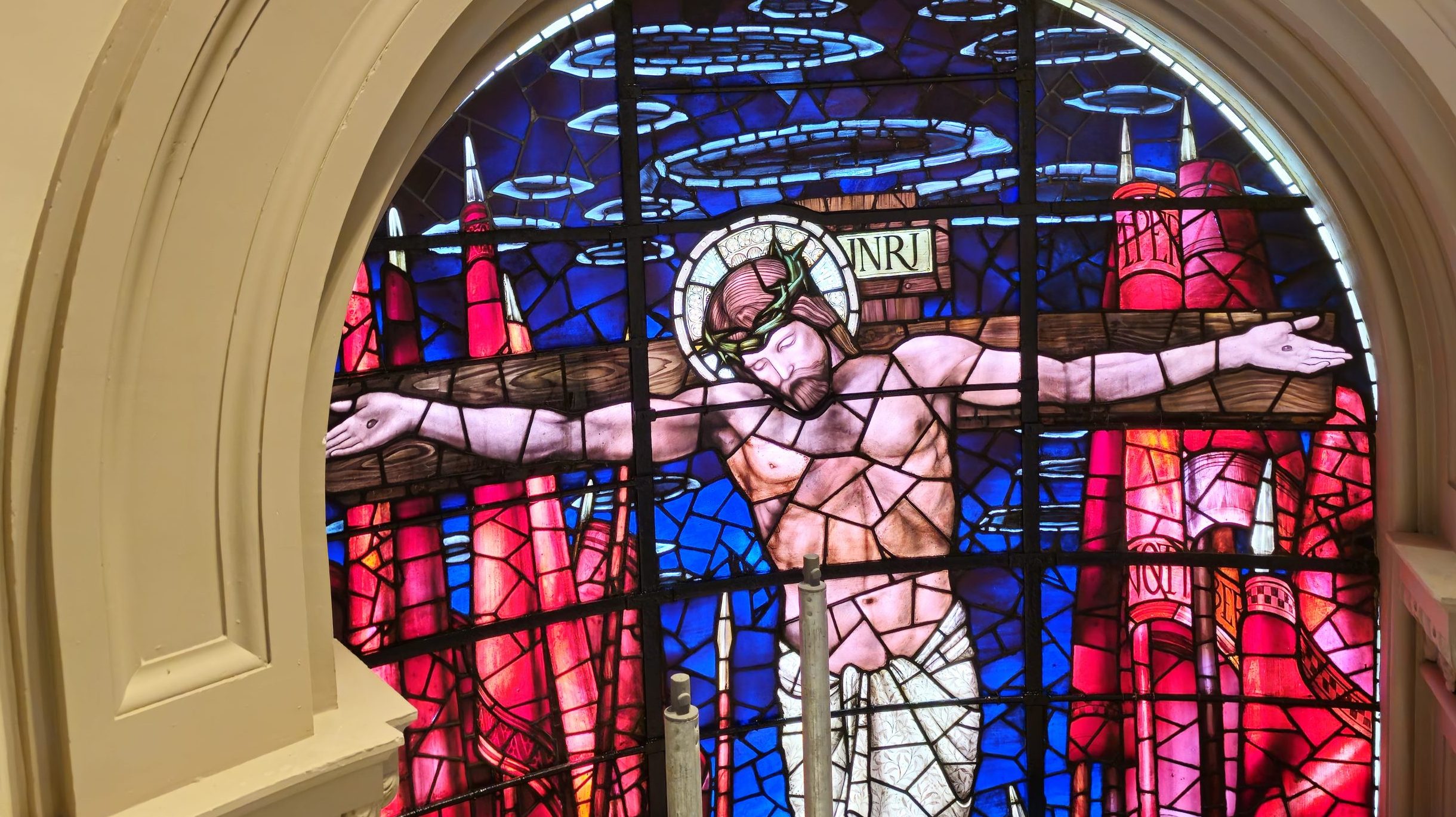
Love, in this sentence, becomes a gift. God “gave.” Christians often read this as pointing toward Jesus’ whole life and mission, and ultimately toward the cross. John will later speak of Jesus being “lifted up,” language that holds together crucifixion and exaltation.
The phrase “only Son” can sound harsh or exclusionary to modern ears, especially if we hear it as “God has one child and everyone else is out.” The Greek word monogenēs is often understood as “one of a kind” or “unique,” and some translations use “one and only.” Others retain “only begotten,” echoing older theological language about the Son’s relationship to the Father. The point in context is to emphasize who Jesus is in relation to God, not to deny human dignity.
Grace, here, is not an abstract policy. It has a face. It comes toward the world in the person of Jesus.

“That whoever believes in him”
This is where John 3:16 becomes intensely personal without becoming narrow.
“Whoever” means the door is open
The verse does not begin by limiting the invitation to a tribe, nation, class, or moral resume. “Whoever” is radically inclusive in scope. The offer is wide.
Belief is not only agreeing with a fact
In everyday English, “believe” can mean “I think that is true.” In John’s Gospel, the word carries more relational weight. To believe in Jesus is closer to trust, reliance, and allegiance. It is not merely saying, “I accept this idea.” It is leaning your life onto someone.
That matters pastorally, because many people carry a private fear that their faith is too small, too shaky, too full of questions to “count.” John 3:16 does not describe a flawless mental performance. It describes a turning of the self toward Jesus, a receiving posture. Trust can be trembling and still be real.
- Belief can include the mind, but it is not trapped in the mind.
- Belief is not the same as never doubting. It is choosing where you place your weight when you do.
- Belief in John often shows up as coming to the light, stepping forward, and remaining in relationship.
“Should not perish but have eternal life”
John 3:16 names two outcomes, and it does so plainly.
“Perish” is the tragedy grace moves toward
“Perish” can be read as spiritual ruin, separation from God, or final loss. However one maps the details of the afterlife, the verse is clear about the stakes: life with God is not a casual accessory. It is the difference between being held by God’s life and being left to the unraveling we choose.
“Eternal life” is not only about later
Many people hear “eternal life” and think only of heaven after death. John certainly includes that future hope. But in John’s language, eternal life is also a quality of life that begins now, rooted in knowing God. Later, Jesus will say it plainly: “This is eternal life, that they know you” (John 17:3).
Eternal life, then, is not just endless time. It is communion. It is life that participates in what is lasting, whole, and real.

How it sits beside judgment
It is tempting to use John 3:16 as a shield against any mention of judgment, as if love and judgment cannot share the same room. John 3:17–18 refuses that split.
First, the passage insists that God’s intent in sending the Son is not condemnation, but salvation. The fundamental movement is mercy.
Second, it says that condemnation is not simply a lightning bolt from the sky. There is a sobering line: “condemned already.” In John’s framing, judgment is tied to response. To refuse the light is to remain in darkness. John 3:19–20 continues this thought, describing how people can love darkness because it feels safer than having their deeds exposed.
When I facilitate interfaith dialogue, I often hear people say, “I could never believe in a God who condemns.” I understand the ache behind that sentence. But John is doing something more nuanced than delighting in punishment. It is describing a moral and spiritual reality: we are not neutral toward light. We either come toward it, or we pull away. John 3:16 is good news, but it is not sentimental news. It asks for a response.
A gentle paraphrase
Sometimes the clearest understanding comes from hearing the verse in fresh language. Here is a paraphrase that stays close to the meaning:
This is how God has loved the world: God gave Jesus, God’s one-of-a-kind Son, so that anyone who entrusts themselves to him will not be lost, but will share in God’s own lasting life.
If you grew up with John 3:16 as a threat, that paraphrase may soften it. If you grew up with it as mere comfort, it may sharpen it. Both can be gifts.
Common questions
With that framework in place, a few common questions tend to follow.
Does “world” mean everyone is automatically saved?
John 3:16 says God’s love is aimed at the whole world, and the invitation is open to whoever believes. John 3:18 then clarifies that the response to the Son matters. In John’s view, God’s love is universal in offer, but not automatically received by all.
Is “believe” just saying the right words?
Not in John’s typical usage. Belief is relational trust and coming into the light. Words can express belief, but John points beyond slogans toward a lived turning toward Christ.
Why do Christians call John 3:16 the heart of the gospel?
Because it holds so much in one sentence: God’s love, God’s initiative, the gift of the Son, the call to trust, and the promise of life. It is not the whole Christian story, but it is a faithful summary of its center.
Is John 3:16 meant to scare people?
The verse itself is framed as a love story: God’s motive is love, and God’s aim is life. The surrounding lines do speak about judgment, but in a way that highlights God’s desire to save rather than to condemn.
Living with the verse
If you want to sit with John 3:16 as more than a quotation, try holding one phrase at a time in quiet prayer or reflection.
- God loved the world. Where have I assumed God is disgusted with me, with others, or with the mess we are in?
- God gave. What does it mean for love to cost something, even for God?
- Whoever believes. Where am I being invited to trust instead of control?
- Eternal life. What would it look like to live today as if God’s life is already reaching toward me?
John 3:16 does not ask you to compress your whole spiritual life into one perfect sentence. It offers you a doorway: love, given. Trust, received. Life, opened.