I grew up watching mercy take very ordinary shapes. A pot of soup delivered without fanfare. A guest bed made up with clean sheets. A ride offered to someone who could not get to an appointment. In a multi-faith household, we did not always use the same words for what we were doing, but we recognized the same quiet spiritual logic: love becomes real when it touches real needs.
In Catholic tradition, that logic is gathered into what are called the corporal works of mercy, a set of concrete actions aimed at caring for the body and basic human worth. They are not abstract virtues or warm feelings. They are acts you can do with your hands, your schedule, your pantry, your presence.
What the phrase means
Corporal comes from the Latin corpus, meaning “body.” The corporal works of mercy are traditional Christian practices that respond to physical and material forms of suffering: hunger, thirst, homelessness, illness, imprisonment, lack of clothing, and even the honor owed to the dead.
In Catholic teaching, these works are a practical way to live out love of neighbor. They show up in the Church’s catechesis and in centuries of parish life, religious orders, and ministries. The Catechism of the Catholic Church summarizes them directly (CCC 2447), placing them alongside the call to see Christ in the poor.
You may also notice small variations in how the works are worded across time and communities. The underlying idea stays the same: mercy is meant to become touchable.
Matthew 25 and why it matters
In Matthew 25:31–46, Jesus describes a final judgment where the nations are gathered and separated like sheep and goats. The surprising standard is not prestige, theological fluency, or public piety. It is mercy expressed through tangible care.
“For I was hungry and you gave me food, I was thirsty and you gave me drink, a stranger and you welcomed me, naked and you clothed me, ill and you cared for me, in prison and you visited me.” (Matthew 25:35–36)
Jesus goes further, identifying himself with the vulnerable: “Whatever you did for one of these least brothers of mine, you did for me” (Matthew 25:40). Catholic tradition hears in that passage a direct call to make compassion concrete in daily life. The corporal works of mercy are a classic way the Church names that call.
The seven corporal works
Below are the traditional seven corporal works of mercy. As you read, notice how closely they correspond to the needs Jesus names in Matthew 25, and how they push us toward practical, sometimes inconvenient love.
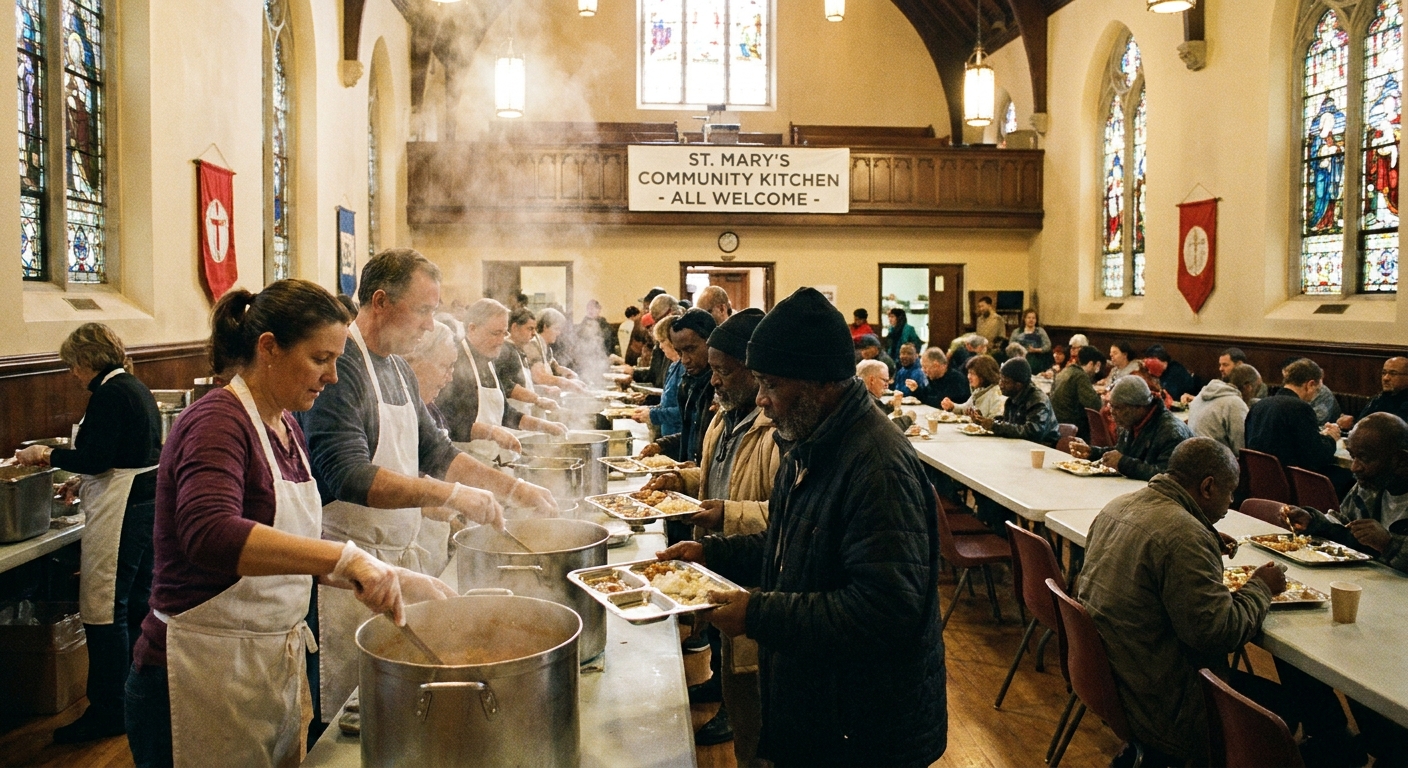
1) Feed the hungry
Matthew 25 connection: “I was hungry and you gave me food.”
Feeding the hungry includes direct aid, like sharing a meal, as well as supporting systems that keep people from falling through the cracks. In Catholic life, this might look like donating groceries, serving at a food pantry, signing up for a parish meal train, bringing dinner to a new parent, or quietly stocking a community fridge.
Mercy here is not only about “extra.” It is about remembering that food is not a luxury. It is a human need.
2) Give drink to the thirsty
Matthew 25 connection: “I was thirsty and you gave me drink.”
Sometimes this is literal, like handing someone a bottle of water during a heat advisory, providing clean water after a disaster, or helping a neighbor keep utilities from being shut off. Sometimes it is longer-term, like supporting efforts that protect safe drinking water and sanitation for communities.
This work is a reminder that mercy is not always dramatic. It can be as simple as noticing someone’s basic need and responding without humiliation or delay.
3) Clothe the naked
Matthew 25 connection: “I was naked and you clothed me.”
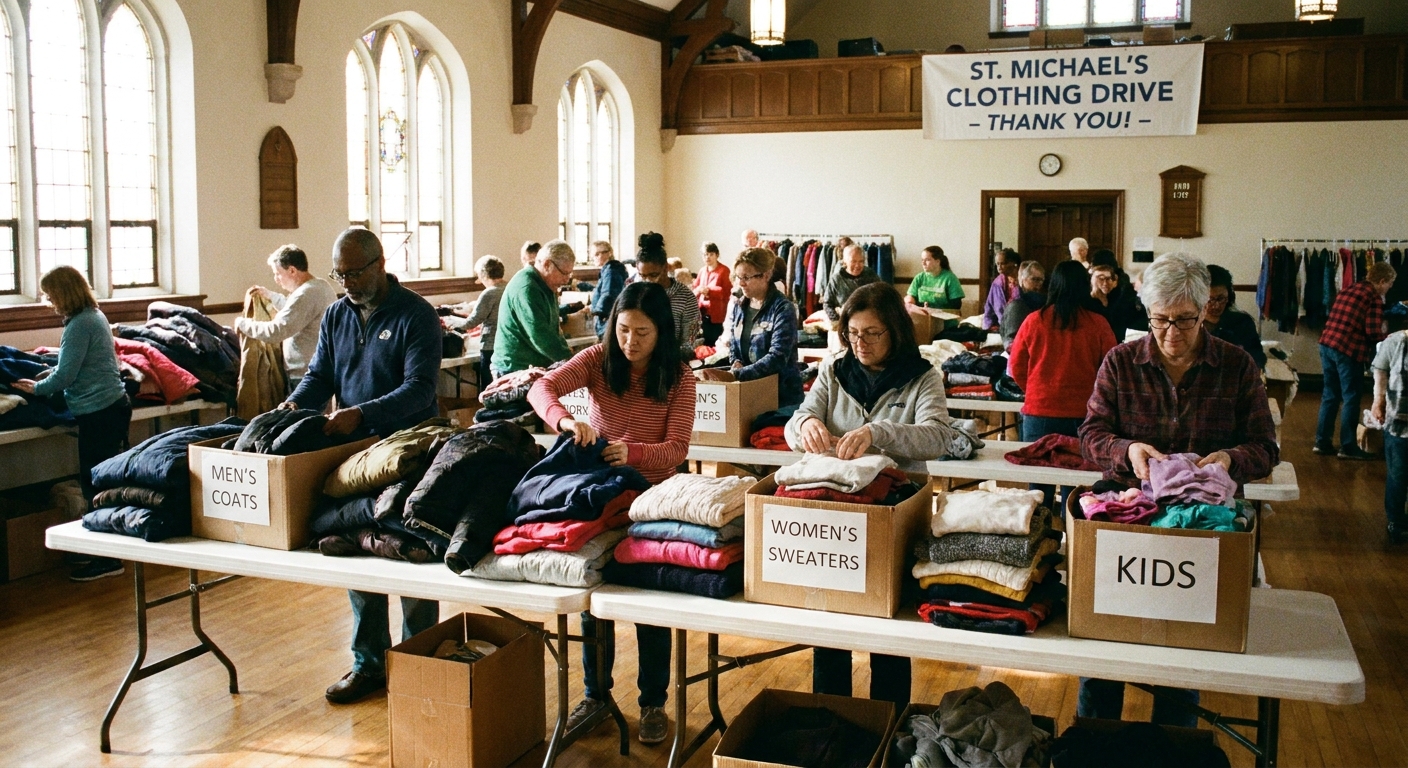
To clothe the naked is to provide what covers and protects. In practice, it can mean donating seasonally appropriate clothing, supporting shelters, giving new socks and underwear, or helping someone dress for an interview or a court date. It is also about restoring a sense of respect to someone who feels exposed, overlooked, or shamed.
4) Shelter the homeless
Matthew 25 connection: “I was a stranger and you welcomed me.”
Matthew 25 speaks of welcoming the stranger. Many catechisms and parishes express that welcome as the more concrete “shelter the homeless.” You may also encounter older phrasing like “harbor the harborless.” The wording varies, but the need is the same: safety, welcome, and a place to rest.
This can include supporting emergency shelters, advocating for affordable housing, hosting a family through a vetted program, helping someone navigate paperwork, or learning the names of unhoused neighbors you pass regularly. Welcoming is not only sentiment. It is making room in real ways.
5) Visit the sick
Matthew 25 connection: “I was ill and you cared for me.”
Visiting the sick is an embodied kind of solidarity. It can mean bringing a meal, sitting in a waiting room, offering childcare, driving someone to treatment, or checking in consistently when an illness becomes long-term and the initial attention fades.
In Catholic communities, this can also include pastoral care, prayer, and Eucharistic ministry for those who cannot come to Mass. The point is not to fix what cannot be fixed. The point is to refuse abandonment.

6) Visit the imprisoned
Matthew 25 connection: “I was in prison and you visited me.”
This is one of the most direct lines in Matthew 25, and also one of the most challenging. Visiting the imprisoned can include jail and prison ministry, letter writing, supporting reentry programs, or assisting families affected by incarceration.
Catholic social teaching places human dignity at the center, including for people who are incarcerated. The Church’s pastoral work with prisoners and its calls for humane treatment rest on that principle. Mercy does not deny accountability, but it refuses to treat any person as disposable.
7) Bury the dead
Matthew 25 connection: Not named explicitly, but grounded in the same insistence on care for “the least.”
Unlike the other six, bury the dead is not spelled out in Matthew 25. The tradition draws here from the wider scriptural and Jewish moral imagination where caring for the dead is treated as a sacred duty. A classic biblical touchpoint is the book of Tobit, which praises burying the dead as an act of righteousness. The New Testament also shows the early community honoring the dead (see Acts 8:2).
In practice, burying the dead includes attending funerals, helping families with costs or meals, supporting those who grieve, and ensuring that those who die alone or in poverty are still treated with reverence. It is a work of mercy because it says, even at the end, you are not forgotten.
Why Catholics stress concrete acts
One reason these works endure is that they keep spirituality from floating away into theory. In Catholic life, mercy is not only a feeling of compassion or a private intention. It becomes visible through choices and habits.
- They are specific. You can ask, “Did I feed someone?” rather than, “Was I a loving person in general?”
- They are relational. Even when done through organizations, they are about people, not projects.
- They protect the vulnerable. Each work responds to something that threatens basic human worth: hunger, exposure, isolation, neglect, exclusion.
- They form the heart. Repeated acts of mercy shape us into the kind of people who recognize Christ in suffering, not only in comfort.
It is also worth saying gently: Matthew 25 can feel intense because it is intense. The passage does not describe mercy as optional enrichment for the especially devout. It portrays mercy as a recognizable footprint of a life aligned with God.
Charity and justice
One helpful Catholic distinction is between charity and justice. The works of mercy are often direct, personal, and immediate. They answer the question, “Who needs help right now?” Catholic social teaching also asks, “What conditions are creating this need?”
That is why some corporal works have both a personal and a public dimension. You can hand someone water today, and also care about whether their community has safe water tomorrow. You can support a shelter bed tonight, and also care about wages, mental health care, and housing policy. In Catholic terms, mercy and justice are not rivals. They belong together.
Spiritual works of mercy
The corporal works focus on bodily needs. Catholic tradition also names spiritual works of mercy, which address suffering in the mind, heart, and soul. These are traditionally listed as:
- Instruct the ignorant
- Counsel the doubtful
- Admonish sinners
- Bear wrongs patiently
- Forgive offenses willingly
- Comfort the afflicted
- Pray for the living and the dead
If the corporal works remind us that love must become tangible, the spiritual works remind us that mercy is also expressed through truth, patience, forgiveness, and faithful presence.
How to live this without burnout
People sometimes hear “feed the hungry” and picture only large-scale charity. But most of us live inside limits: time, money, energy, health. Mercy is still possible.
Start where you are
Choose one work of mercy that fits your season of life. A parent with small children might focus on feeding and clothing through local drives. Someone with mobility limits might write letters to the imprisoned or make regular phone calls to a person who is homebound.
Think in rhythms
A monthly commitment to a pantry or a consistent check-in with someone lonely often bears more fruit than a single burst of activity that leaves you exhausted and resentful.
Keep respect at the center
Whenever possible, ask: What would make this feel respectful? Sometimes mercy is not only what we give, but how we give it.
FAQ
Are the corporal works only Catholic?
The phrase and traditional list are strongly associated with Catholic teaching, but the practices themselves are deeply Christian and widely shared across traditions. Many Protestant and Orthodox communities do these same works, even if they use different language to group them.
Why are there seven?
Seven is a traditional way of organizing them, and it became standard through catechesis and centuries of Christian practice. Six closely correspond to Matthew 25, while “bury the dead” draws from the broader scriptural tradition and longstanding Jewish and Christian practice of honoring the dead.
What if I cannot do these works directly?
Supporting trustworthy local organizations, contributing resources, and advocating for humane policies can be real participation in the works of mercy. The goal is not personal credit. The goal is that real people receive real care.
Closing reflection
When I return to Matthew 25, I always notice that Jesus does not ask the righteous whether they understood everything. He points to what they did with hunger, thirst, loneliness, illness, and captivity. Mercy, in this scene, is not an abstract theory about God’s kindness. It is love that learned to show up.
If you want to begin simply, begin with one question that is both spiritual and practical: Who is in front of me, and what do they need to be treated as fully human today?