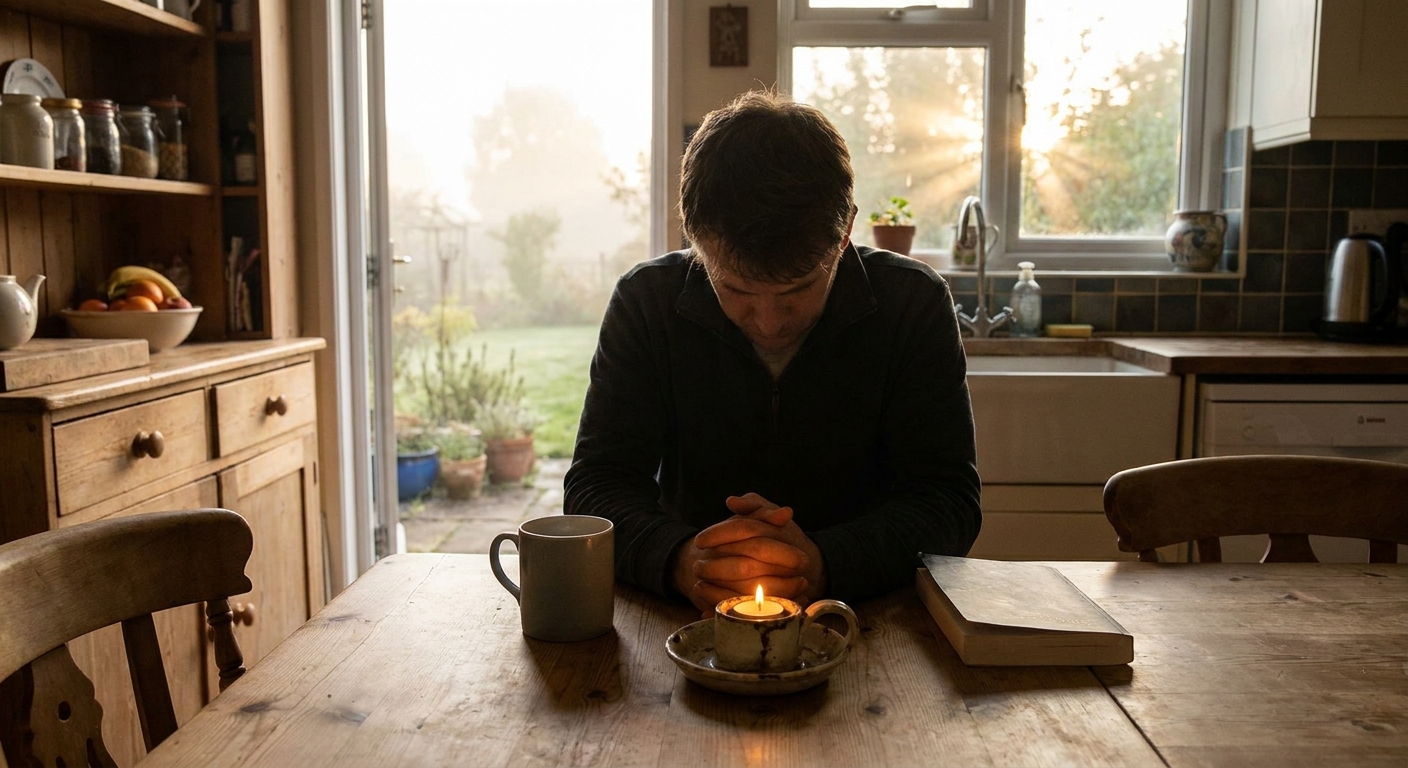
Most people do not struggle with prayer because they lack faith. They struggle because life is loud, inconsistent, and tender in all the ways schedules rarely account for. If you have ever started strong for three days and then disappeared for three weeks, you are not alone.
This guide is for beginners, returners, and the quietly frustrated. The goal is not a flawless streak. The goal is a small daily moment of contact with the Holy, the True, the Compassionate, the One, however you name it, that becomes natural enough to keep.

Start small
If you want a routine that sticks, begin by shrinking the practice. Not because prayer is small, but because consistency is built on practices you can do on your worst day.
The 2-minute rule
For the first two weeks, your daily prayer only needs to be two minutes. Set a timer if you like. Two minutes is long enough to be real and short enough to be repeatable.
- Two minutes beats twenty minutes if twenty makes you dread starting.
- Two minutes helps your body learn: this is safe, this is doable, this is mine.
- Two minutes makes room for growth later without forcing it now.
Choose a minimum prayer
Pick one tiny practice you will do no matter what. Examples:
- One line: “God, guide me today.”
- Three breaths: inhale “Here,” exhale “I am.”
- A short scripture verse, mantra, or sacred name repeated slowly.
- A simple gratitude: “Thank you for this day.”
- A brief intention: “May I be kind.”
If you already have a tradition, let your minimum be traditional. If you do not, let it be honest.
Pick a real time
People often choose the “ideal” time. The time that sounds spiritual. The time a calmer version of them would choose. Then the actual day arrives.
Instead, choose a time that can survive your schedule.
Two strong options
- Morning: before your phone, before your day gains momentum.
- Evening: after brushing your teeth, as a closing ritual.
These often work well because they connect to things you already do. Habits tend to stick when they attach to an existing rhythm.
Use an anchor
Try this formula:
After I (existing habit), I will (two-minute prayer) in (specific spot).
Examples:
- After I start the kettle, I will pray for two minutes at the kitchen counter.
- After I sit on the edge of my bed, I will offer a short prayer with my feet on the floor.
- After I park at work, I will take one minute to ask for patience and clarity.
Use a simple format
Many people quit because they do not know what to do once they sit down. Structure removes pressure. Here is a format that works across traditions.
Four steps
- Arrive (10 to 20 seconds): breathe, notice your body, become present.
- Offer (30 to 60 seconds): gratitude, praise, or simple acknowledgment of the Divine.
- Ask (30 to 60 seconds): for help, wisdom, healing, provision, forgiveness.
- Release (10 to 20 seconds): a final amen, bow, silence, or surrender.
You can do this in two minutes. You can also expand it naturally when you have more time.
A sample 2-minute prayer
Arrive: “I am here.”
Offer: “Thank you for one thing I can name right now.”
Ask: “Help me meet today with courage and kindness.”
Release: “Into Your care, I place what I cannot carry. Amen.”
Create a place
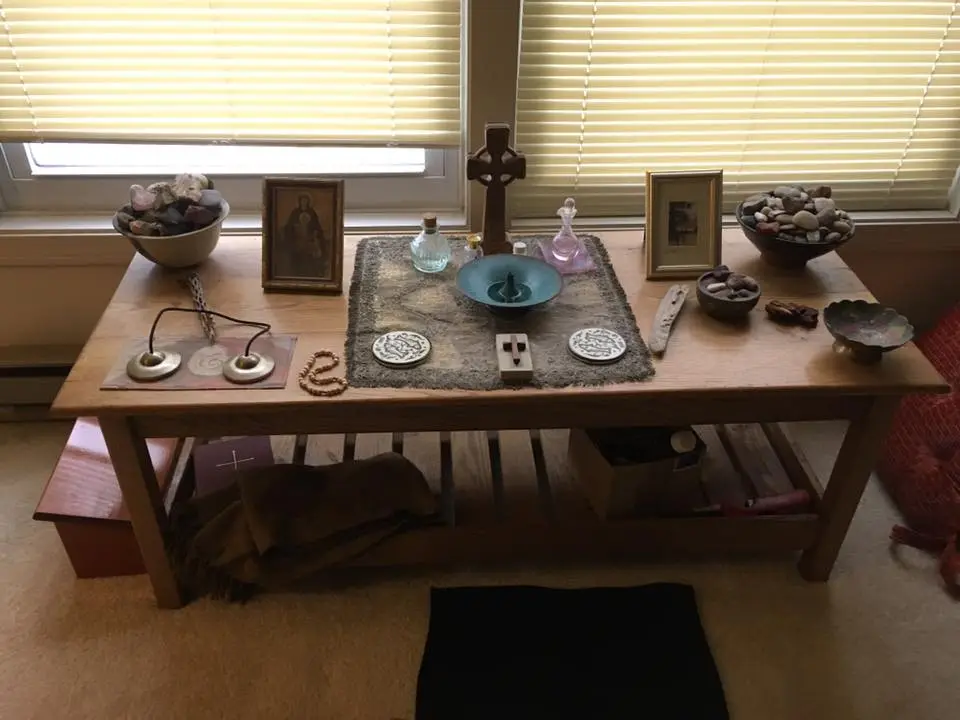
You do not need a perfect altar or dedicated room. You need a space that signals, gently, that this moment matters.
Choose one spot
- A chair by a window
- The corner of your bed
- A small table with a candle
- A prayer mat or cushion
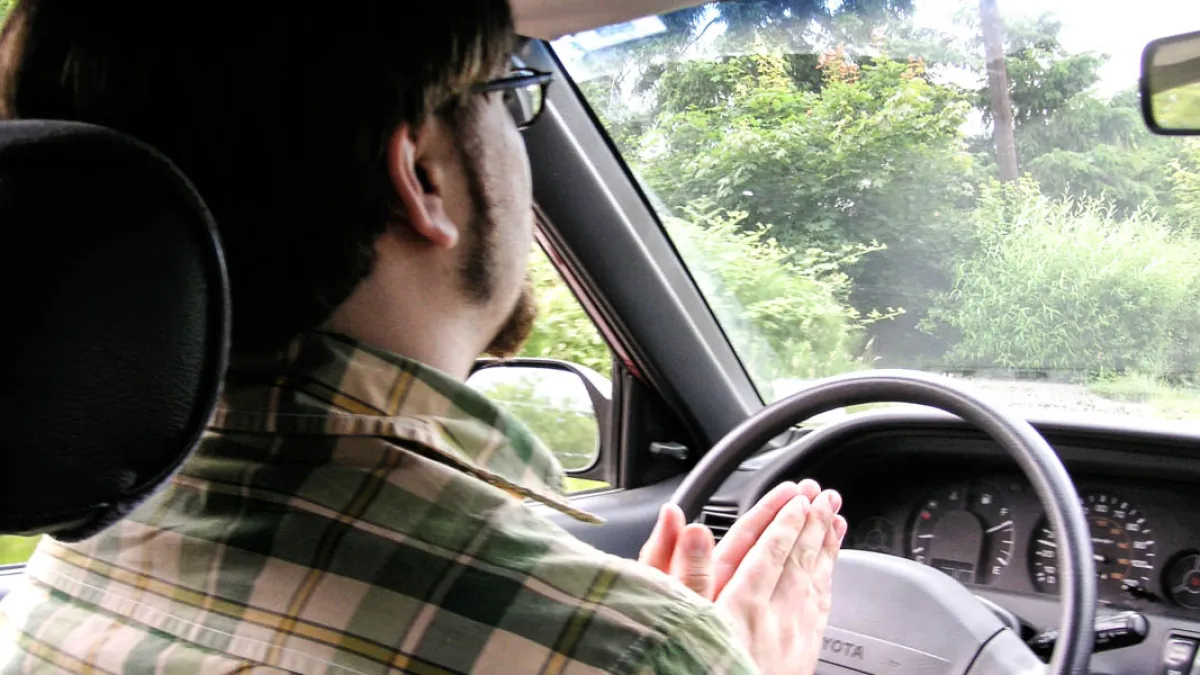
- A quiet place in your car before you go inside
Consistency of place helps consistency of practice. Your body learns the way before your mind does.
Keep one object nearby
This is not about superstition. It is about reducing friction. Consider:
- A small prayer book or sacred text
- Beads, rosary, mala, or worry beads
- A candle (or an LED candle if that is safer)
- A small stone from a meaningful place
If you use a flame, keep it on a stable surface and never leave it unattended, especially around children or pets.
When you miss a day
You will miss days. Travel happens. Illness happens. Children wake early. Grief arrives. Sometimes motivation just evaporates. A routine that sticks is not one that never breaks. It is one that restarts quickly, without shame.
Next prayer, not next Monday
Do not wait for a fresh week, a new month, or a better version of yourself. When you remember, you return. Even if it is 11:58 p.m.
Skip guilt, do a repair
If you missed a day and feel bad, try a very small repair prayer:
- “I am back.”
- “Forgive me. Help me begin again.”
- “Thank you for waiting for me.”
Then stop. Do not punish yourself with a marathon session. That teaches your brain that returning is costly.
Plan for hard days
Decide now what counts when life is chaotic. For example:
- Normal days: 2 to 10 minutes.
- Hard days: one breath prayer or one line.
- Crisis days: silent hand on heart for 20 seconds.
This is how you build a practice that survives real seasons, not just calm ones.
Adapt to your tradition
Prayer is wonderfully diverse. If you come from a specific tradition, you do not need to reinvent anything. You can simply make it smaller and more consistent. If you are exploring, you can borrow respectfully and keep it grounded in your own conscience.
Christian prayer
- Try a short set pattern: the Lord’s Prayer, a Psalm, a brief liturgy, or a decade of the Rosary.
- Keep a tiny rhythm: Scripture, reflection, intercession, amen.
- If you love spontaneity, give it a container: 1 minute gratitude, 1 minute requests.
Muslim prayer
- If you pray the five daily prayers, you may find it helps to strengthen one consistency point first. For example, if you are rebuilding after a lapse, safeguard one prayer reliably while you work your way back toward all five.
- If you are new or returning, start with a small, reliable practice of dhikr: repeating a divine name or short phrase for one to two minutes.
- Consider preparing the night before: set out clean clothes or prayer clothing if you use it, prepare a clean space, and set a reminder so the moment is easier.
Jewish prayer
- Anchor to familiar forms: Modeh Ani upon waking, Shema at night, or a short Psalm.
- If you use siddur prayers, start with a single paragraph you can do daily.
- Let it be relational: honesty counts as prayer, even when words are simple.
Hindu prayer
- Choose one mantra or divine name and repeat it for two minutes with a mala or simply with breath.
- A small offering can be daily devotion: lighting a lamp, offering water, or a brief bow.
- Keep one image or symbol in a consistent place to reduce decision fatigue.
Buddhist practice
- In many Buddhist traditions, if prayer language feels unfamiliar, use aspiration: “May I awaken compassion.”
- Try a short refuge or metta practice, even 60 seconds.
- Think in terms of training the heart, not impressing anyone, including yourself.
Spiritual but not religious
- Use honest address: “Life,” “Love,” “Truth,” “Spirit,” “the Good.”
- Try a daily listening practice: two minutes of silence, then one sentence written in a journal.
- Keep it grounded: one gratitude, one intention, one act of repair you will attempt today.
The best tradition is the one you will actually practice with sincerity.
Make it easier
Consistency thrives on kindness. Here are a few practical tools that help prayer become more automatic.
Use a cue
- Set a phone reminder labeled with a gentle phrase, not a command.
- Place your prayer book where your hand naturally lands, like beside the coffee mug.
- Pair prayer with a daily sensory cue: lighting a candle, touching beads, washing hands.
Track lightly
Some people feel trapped by tracking. Others feel supported by it. If you track, keep it simple:
- A small check mark on a calendar
- A note in your journal: one word about the day’s prayer
- A habit tracker app, only if it does not increase anxiety
Tracking is not a grade. It is a mirror.
Keep a fallback prayer
Write it down. Memorize it. Make it your emergency bridge back to God.
“Help me be loving in the next thing I do.”
If attention is hard
If you are neurodivergent, overstimulated, sleep-deprived, or simply not built for long stillness, you are not doing prayer wrong. Adjust the form so you can actually show up.
- Pray while moving: a slow walk, pacing in a hallway, washing dishes.
- Pray with your eyes open: soften your gaze on a candle, a tree, or the floor.
- Use audio: listen to a Psalm, a short guided prayer, or a chant and whisper one line back.
- Use micro-prayers: one sentence at a time throughout the day.
When it feels dry
Sometimes you will show up and feel nothing. Prayer can still be meaningful. Many contemplative writers describe seasons of dryness as part of the path, not proof you are failing.
Try a gentle shift
- Change the posture: stand, kneel, bow, walk slowly.
- Change the form: spoken prayer to silent prayer, words to breath, breath to reading.
- Pray with a text: read a Psalm, a proverb, a poem, or a sacred passage and respond with one sentence.
- Pray for someone else: intercession often softens self-consciousness.

A 7-day starter plan
If you want a clear beginning, here is a simple plan. Keep it two minutes. The win is showing up.
- Day 1: Choose your time and place. Do one line of prayer.
- Day 2: Add three slow breaths before the line.
- Day 3: Add one gratitude.
- Day 4: Add one request for the day ahead.
- Day 5: Include one person in your prayer.
- Day 6: Sit in silence for 20 seconds at the end.
- Day 7: Reflect briefly: what made it easier, what made it harder, what do you want to adjust?
After seven days, keep the practice stable before you expand it. Let prayer deepen from faithfulness, not force.
FAQ
How long should daily prayer be?
Start with two minutes and keep it small until it feels steady. If and when it stabilizes, grow gently to five minutes. Longer is not better if it makes you quit. The best length is the one you can return to daily with a soft heart.
Is it okay to pray at different times each day?
Yes, especially in seasons with unpredictable schedules. If a fixed time is not realistic, choose a fixed anchor instead, like “after I brush my teeth” or “before I open my laptop.”
What if I do not know what to say?
Use a set prayer from your tradition, a short verse, or a single honest sentence: “I am here.” You can also pray silently. Presence can be prayer.
What if I feel guilty for not praying consistently?
Let guilt be a signal, not a sentence. The spiritual move is simple return. Begin again with the smallest version, without punishment.
Can prayer be mindful without being religious?
Yes. Many people practice daily aspiration, gratitude, and silence as a way of aligning with compassion and purpose. The key is sincerity, not labels.
What if prayer triggers anxiety or painful memories?
Go gently. You might simplify the language, shorten the time, or choose a neutral practice like breath and gratitude. If prayer consistently triggers anxiety, scrupulosity, or religious trauma responses, consider reaching out to a trusted clergy member, spiritual director, or therapist for support.
A closing blessing
If your prayer life has been irregular, you do not need to fix your whole self to start. You only need a moment, a breath, a willingness to turn toward the Sacred as you understand it.
May your routine be humble enough to be doable. May it be strong enough to hold you. And may it become, over time, less like a task and more like coming home.