Mornings can feel like a small sprint: alarms, kids, inboxes, aches, the dog who insists the day must begin now. In that swirl, prayer can sound like one more “should.” I want to offer something simpler: a morning prayer routine that is small enough to be real, and meaningful enough to slowly change you.
Think of this as making a tiny hearth. You are not trying to force a spiritual mood. You are simply making a place to return to, day after day, where you can tell the truth and remember what matters.

Start with a promise you can keep
The most sustainable routine is the one that still works on your hardest mornings. Before you choose words or rituals, choose an amount of time that feels almost too easy.
- Beginner sweet spot: 2 to 5 minutes is a practical starting point for many people.
- If life is intense right now: 60 seconds is still prayer.
- If you already have a meditation habit: 7 to 10 minutes can be a gentle next step.
A helpful question is: What can I do even when I am tired, distracted, or worried? That is your baseline. You can always add more later.
A simple structure
Many people across many traditions find that morning prayer follows a similar arc: wake up, become present, offer gratitude, ask for guidance, and step into the day. Here is a short structure I have seen work for Christians, Jews, Muslims, Hindus, Buddhists, and spiritual-but-not-religious readers who still want to speak to Something More.
1) Arrive (15 to 30 seconds)
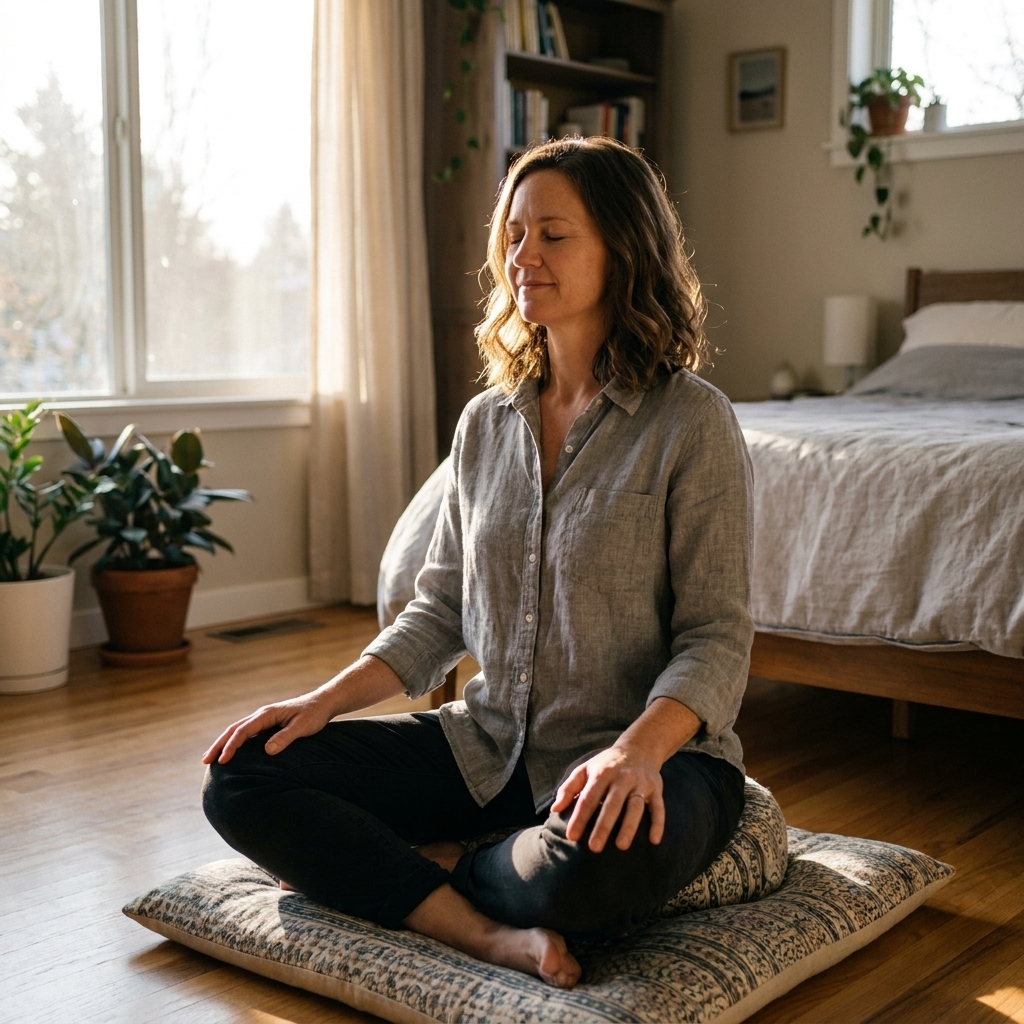
Sit or stand comfortably. Take one slow breath in and out. If you like, place a hand on your heart or belly. This is less about performance and more about honesty: “I am here.”
2) Gratitude (30 to 60 seconds)
Name three things you can genuinely appreciate. Keep them concrete: warm water, a friend who texted back, the way the sky looked yesterday.
If gratitude feels impossible, begin smaller: “Help me notice what is still good.”
3) Truth (60 to 90 seconds)
Offer what is actually present. You do not have to tidy it up.
- What am I carrying today?
- What am I afraid of?
- What am I hoping for?
4) Ask (30 to 60 seconds)
This can be intercession (for others), guidance (for your choices), strength (for your challenges), or forgiveness (for what you regret). Keep it plain.
For example: “Give me patience in that meeting.” “Help my sister heal.” “Teach me to speak gently.”
5) Blessing (15 to 30 seconds)
You can end by offering the day back to the Holy, the Good, the Divine, God, or the deepest truth you know.
You might say: “May I be a blessing today,” or “Let my actions align with love.”
If you only do one part, do this: Arrive + one honest sentence. “God, I am overwhelmed.” “Spirit, lead me.” “Mercy, meet me.”
Two quick schedules
You do not need a perfect morning to have a faithful one. Here are two realistic options, depending on what your mornings look like.
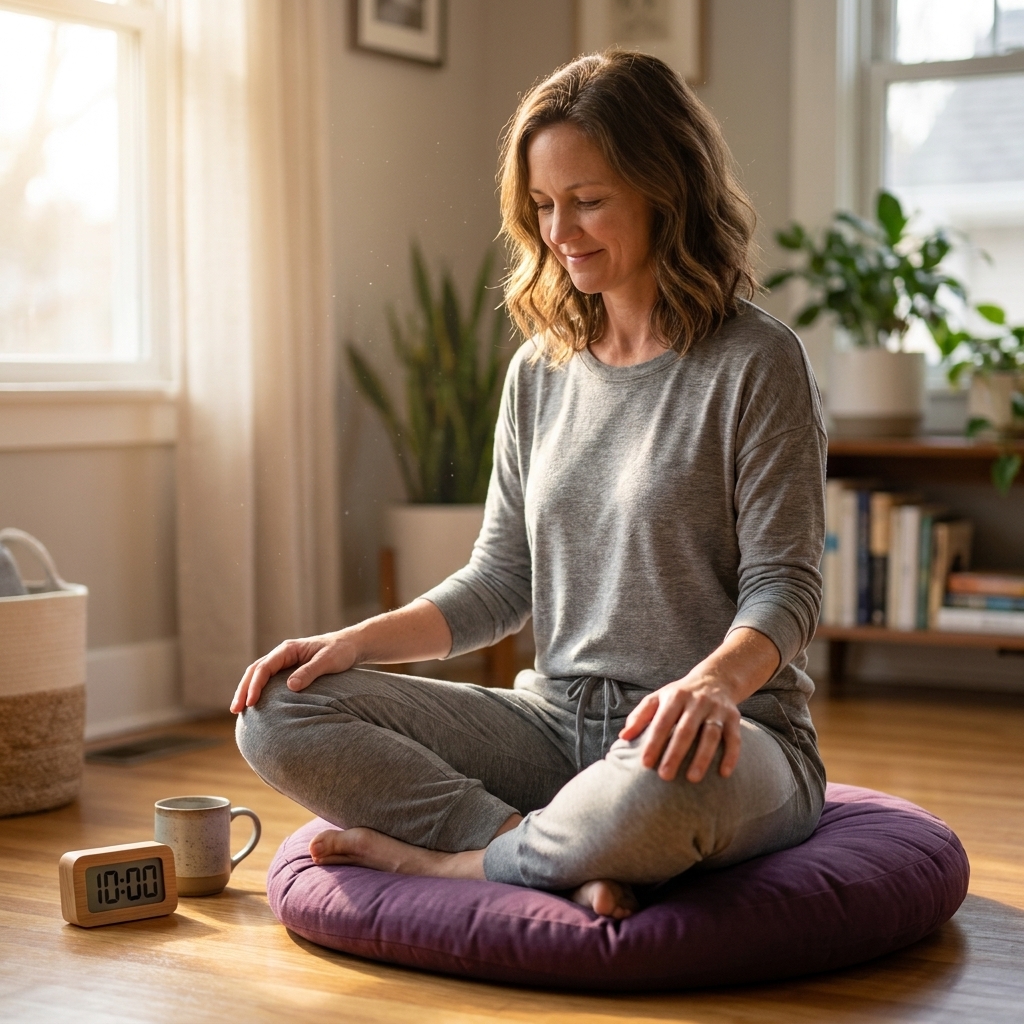
The 3-minute routine
- 0:00 to 0:30 One slow breath, settle your body
- 0:30 to 1:15 Three gratitudes
- 1:15 to 2:30 One honest sentence about what you need today
- 2:30 to 3:00 A closing line (amen, so be it, alhamdulillah, om shanti, or your own words)
The 10-minute routine
- 0:00 to 2:00 Quiet sitting and breathing
- 2:00 to 4:00 Gratitude (spoken or written)
- 4:00 to 7:00 Prayer for guidance and for others
- 7:00 to 9:00 A short reading (scripture, psalm, poem, or sacred text) and one line of reflection
- 9:00 to 10:00 A blessing over the day ahead

If you are caring for children, consider anchoring prayer to something you already do: while the kettle heats, while a bottle warms, while you wait for the bus, while you sit in the parked car before walking into work.
Choose a place and a cue
Consistency usually depends less on willpower and more on good cues. Pick a location and a trigger that practically repeats itself.
Pick a place
- A chair by a window
- The corner of your couch
- Your bedside
- A porch step
- A parked car (yes, truly)
Pick a cue
- After brushing teeth
- After making coffee or tea
- Right after you silence the alarm
- Before you look at your phone
- After you let the dog out
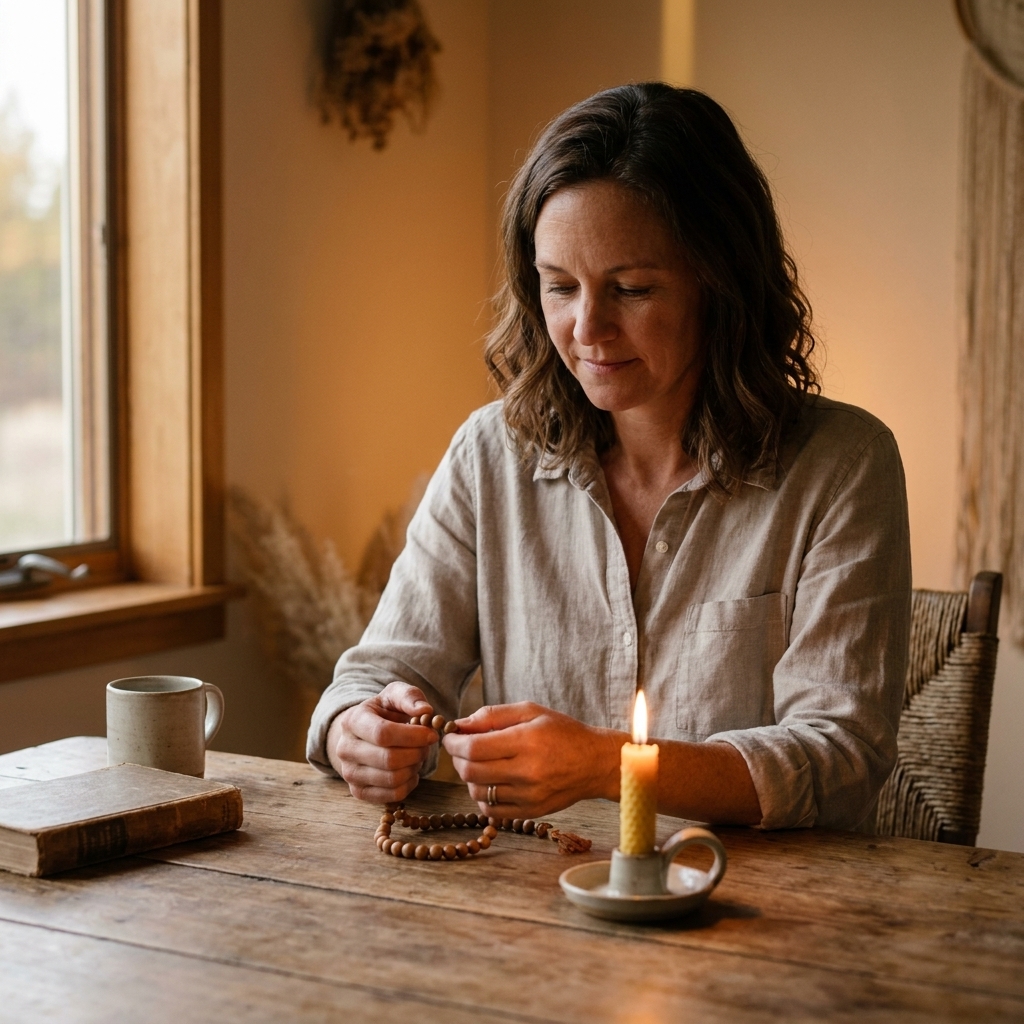
If you can, keep one small object there that signals “this is prayer time”: a candle, beads, a small book, a smooth stone, or a simple note with a one-line intention.
When you do not know what to say
Some mornings, language comes easily. Other mornings, your mind is fog and your heart is loud. Here are a few short prayers you can borrow and make your own.
For grounding
- “Here I am.”
- “Be with me in this day.”
- “Let me begin again.”
For guidance
- “Teach me what love looks like in the next hour.”
- “Give me wisdom for what I cannot control.”
- “Lead me toward what is true.”
For peace
- “Quiet what is storming in me.”
- “Let me move slowly enough to be kind.”
- “Help me breathe and trust.”
For compassion
- “Bless those I will meet today.”
- “Keep my words gentle.”
- “Make me a safe place for others.”
If formal prayers from your tradition are meaningful to you, you can absolutely use them. Many people find that a short, memorized prayer becomes a steady companion when life is unstable.
Keep it steady, not rigid
The goal is not to build a flawless streak. The goal is to build a relationship with the Sacred that can hold your actual life.
Use the “minimum viable prayer”
Decide ahead of time what counts on chaotic mornings. For example:
- One deep breath
- One gratitude
- One sentence: “Help me today.”
Plan for missed days
Missing a morning is not a moral failure. It is part of being human. Try this simple reset:
“I begin again today.”
Keep it phone-light
If your phone is your alarm, consider a tiny boundary: prayer first, scrolling later. Even two minutes of quiet before the feed can change the texture of your day.
Track gently
Some people love a calendar checkmark. Others feel pressured by it. If tracking helps, keep it simple: a dot on the calendar, or a note in your journal once a week about what you are noticing.

Let it evolve
After two or three weeks, you may want to add a reading, a song, or a few minutes of silence. Or you may need to simplify again. Both are healthy. Prayer is a living practice.
For different paths
FaithRift readers come from many traditions. These are gentle starting points, not rules. Practices vary by denomination, school, culture, and personal conscience, so feel free to adapt.
If you are Christian
You might begin with breath and gratitude, read a single psalm verse, offer intercession, and close with the Lord’s Prayer or a simple “Amen.”
If you are Jewish
Consider a gratitude upon waking, a brief moment of silence, a short psalm or blessing, and one clear intention for the day.
If you are Muslim
If you pray Fajr, you can add a brief personal du’a afterward: gratitude, guidance for the day, and prayers for family and community.
If you are Buddhist or mindfulness-based
Start with three mindful breaths, offer a few loving-kindness phrases, then set one intention: “Today, may I meet what comes with compassion.”
If you are spiritual but unsure
You can pray toward the values you trust: love, truth, mercy, courage. You might address “God,” “Spirit,” “Life,” or simply speak into the quiet. What matters is sincerity.
A secular option
If prayer language does not fit right now, you can do a values-based morning pause:
- Notice: “What is true about how I feel?”
- Name: “What matters most today?”
- Choose: “What is one kind, brave action I can take in the next hour?”
You are still practicing presence and direction, which is often what morning prayer is trying to grow in us.
Troubleshooting
“My mind races.”
That is normal. Minds wander. Give your attention a simple job: follow three breaths, or repeat a short phrase like “peace” or “guide me.”
“I do not feel anything.”
Prayer is not a mood check. Some mornings feel dry. You can still show up. Often the fruit is subtle: you interrupt reactivity, you soften, you remember you are not alone.
“I keep falling asleep.”
Try sitting up, turning on a lamp, washing your face first, or praying while standing. Even a short walk with an inward prayer can be a morning practice.
“My mornings are too crowded.”
Then make it smaller and attach it to a cue you already do. Sixty seconds counts. Also consider a “first available moment” rule: if morning fails, you pray at the first quiet pocket of the day.
“My schedule is not normal.”
If you work nights, live with chronic illness, are neurodivergent, or share space where quiet is hard, you are not doing it wrong. Try prayer while commuting, in the shower, during a first break, or as a one-minute reset before you open your laptop.
“Prayer makes me anxious.”
If prayer language triggers scrupulosity, panic, or old religious wounds, keep it neutral and gentle. You might choose breath + one safe sentence like “May I be held in kindness today,” or use the secular option above. If you feel overwhelmed or stuck, it can help to talk with a trusted counselor, spiritual director, or mental health professional who understands your background.
A 7-day start plan
If you want a simple on-ramp, try this for one week. Keep it kind. Keep it doable.
- Day 1: One breath + one sentence of honesty
- Day 2: Add one gratitude
- Day 3: Three gratitudes
- Day 4: One short request for help or guidance
- Day 5: Add a blessing over someone you love
- Day 6: Add one minute of silence
- Day 7: Reflect: What felt nourishing? What felt heavy? Adjust accordingly
By the end of a week, you are not trying to be “good at prayer.” You are simply becoming someone who returns.
FAQ
How long should morning prayer be?
Long enough to be real, short enough to be sustainable. For many beginners, 2 to 5 minutes is a helpful starting range. If you can only do 60 seconds, that still counts as a faithful beginning.
Do I need to pray at the same time every day?
Same time helps, but the deeper goal is a reliable cue. If your mornings vary, try “after I make coffee” or “before I unlock my phone” rather than a strict clock time.
Is it okay to use written prayers?
Absolutely. Written prayers can hold you when you are tired or grief-struck. Many people blend both: a memorized prayer plus a few honest sentences in their own words.
What if I miss a day or a week?
Begin again without drama. A simple restart phrase helps: “I am here again.” Consistency is built by returning, not by never slipping.
A closing prayer
If you would like a simple way to end today’s reading, here is one you can speak quietly wherever you are:
Holy One, meet me in this day.
Help me notice what is good,
tell the truth about what is hard,
and choose what leads toward love.
Amen.
A small next step
Before you move on with your day, choose one cue (coffee, teeth, car, dog) and one 60-second script. Then do it tomorrow, even if you do it imperfectly.
May your mornings become less about getting it all right, and more about being gently re-centered in what matters most.