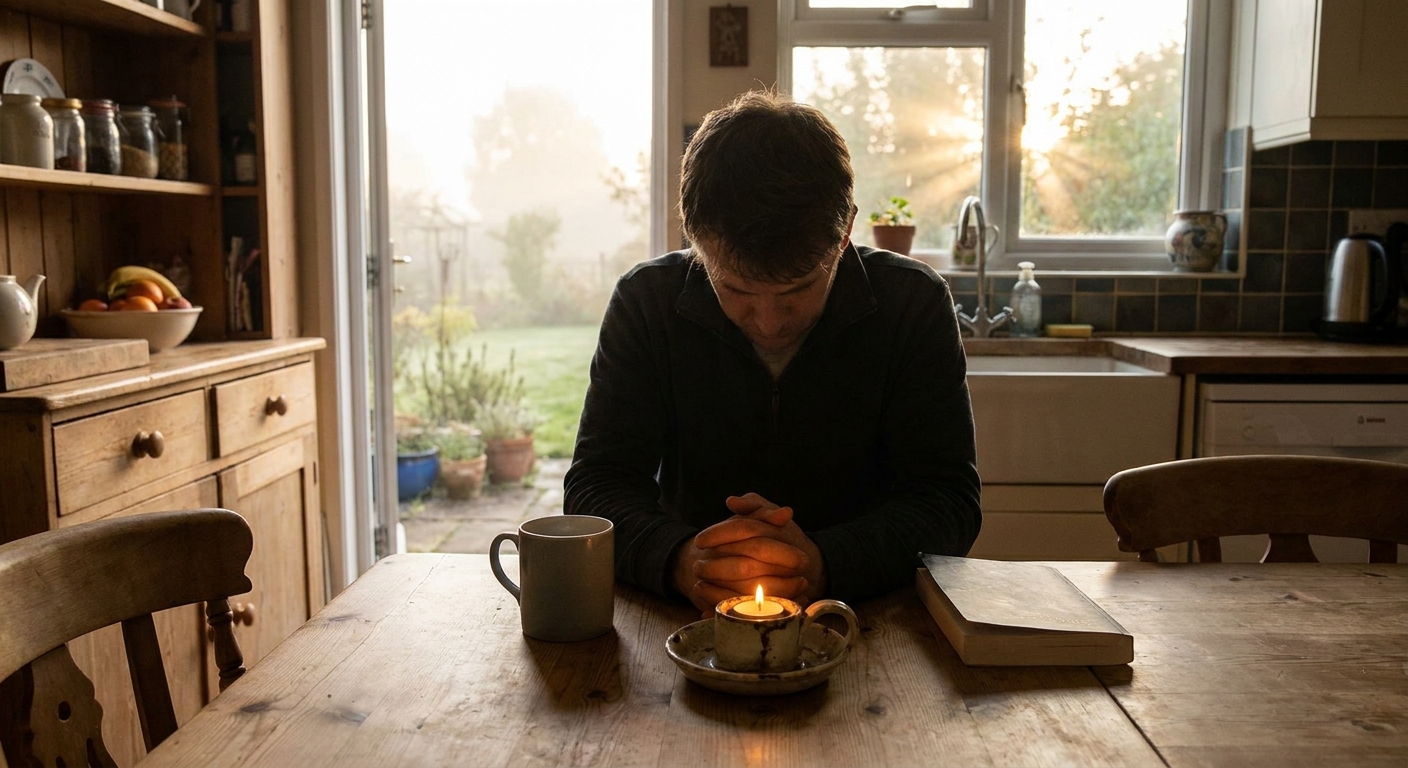
Some people talk about prayer like it is a switch you flip: you “get consistent,” you “find your rhythm,” and suddenly your spiritual life feels tidy. If that is not your experience, you are in very good company.
For most of us, a daily prayer practice begins much more quietly. It starts with a small decision to show up, imperfectly, in the middle of dishes and deadlines and half-charged phones. This guide is here to help you build something gentle and sustainable, without turning prayer into one more task you fail at.

What counts as prayer?
Depending on your tradition, prayer might mean speaking to God, repeating sacred words, sitting in silence, chanting, reading scripture, offering gratitude, or simply telling the truth about your life.
If you do not use the word God, prayer may look more like meditation, vows, compassionate intention, or a deliberate turning toward what you consider most true and good.
If you are new to prayer, it helps to use a wide, welcoming definition:
Prayer is intentional attention toward the Holy, however you understand the Holy.
That means prayer can be structured or spontaneous, verbal or wordless. It can be confident or unsure. What matters most is sincerity, not polish.
Start small, on purpose
The most common reason people feel overwhelmed is that they begin with an unspoken expectation: “I should be able to pray like someone who has been doing this for years.”
Try this instead: choose a practice so small you almost feel like it “doesn’t count.” Then do it anyway.
- Begin with 60 seconds once a day.
- Pick one place you can return to easily, like the edge of your bed, your car before work, or a chair by the window.
- Use one simple closing line so your prayer has a gentle ending, such as “Amen,” “So be it,” “May it be so,” or a silent breath.
If you do one minute for two weeks, you have built something real: a reliable doorway. You can always step through longer later.
Choose a time that will happen
Many people are told to pray in the morning. Mornings can be beautiful, but they are not morally superior. The best time to pray is the time you can return to most days.
Three beginner-friendly options
- After you wake up: before your phone, before the day speaks first.
- At meals: a built-in daily pause that does not require extra scheduling.
- Before sleep: a natural moment to release, review, and ask for rest.
If your schedule changes often, link prayer to something you already do daily. This is often called a “habit anchor” in habit coaching and practice. For example: “After I brush my teeth, I will pray for one minute.”
Pick a format
People often quit prayer because they think there is only one “right” way. In reality, you can choose a format that matches your personality and season of life.
You can also mix formats day to day. If choosing feels like pressure, let it be simple: pick one for today.

1) Conversational prayer
This is the most intuitive: speak to God as you are. You can whisper it, think it, or write it. If you do not know what to say, start with honesty: “I do not know what I am doing, but I am here.”
2) Written prayer
If your mind feels scattered, borrowed words can hold you steady. Depending on your background, that might include psalms, daily devotionals, siddur prayers, the Lord’s Prayer, or a short poem that opens your heart.
3) Repetitive prayer
Many traditions use repeated phrases to settle the mind and soften the heart. Examples include the Jesus Prayer, a mantra, or a short line like “Peace be with me” or “Here I am.” Keep it simple and kind.
4) Contemplative prayer
Silence is not empty. It is attentive presence. A beginner version can be as simple as breathing slowly for one minute and inwardly offering your breath as a gift.
A simple daily routine
If you want something structured but not complicated, try this three-part rhythm. It is flexible across traditions and works well in one to five minutes.
- Arrive: Take one slow breath. Notice where you are. Let your shoulders drop.
- Speak: Offer one honest sentence. Gratitude, confession, longing, or intercession all count.
- Release: End with a closing phrase, a bow of the head, or one more breath.
Example: “Thank you for this day. Help me meet it with kindness. Amen.”
Examples to use
Below are a few starter prayers. Feel free to adapt the language so it matches your faith, your questions, or the way you naturally speak.
Morning prayer
Simple gratitude: “Thank you for the gift of today. Help me live it with care. Guide my words, my work, and my choices.”
For anxious mornings: “I feel overwhelmed. Meet me here. Give me the next right step, not the whole staircase.”
For a fresh start: “May I begin again. Make me a person of peace, even in small moments.”
Meal prayer
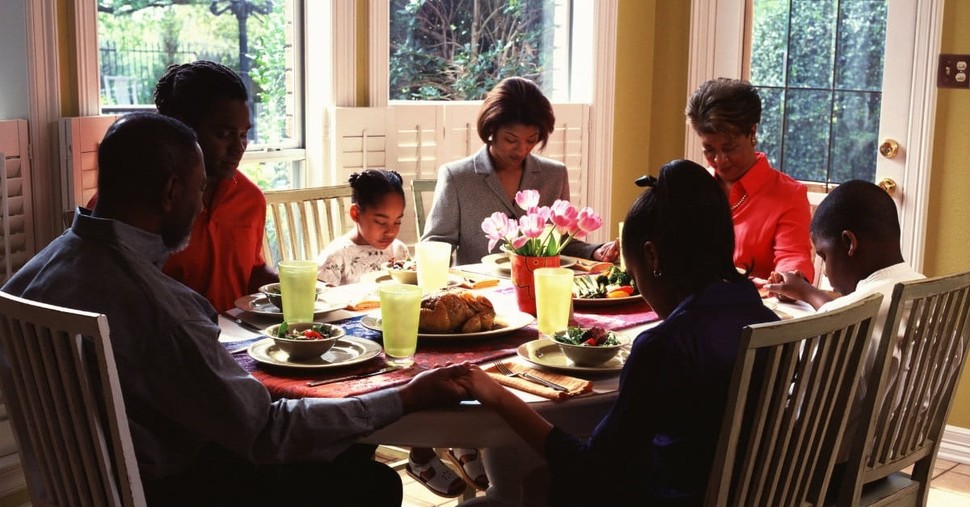
Classic gratitude: “Bless this food and the hands that prepared it. May it strengthen us for love and good work.”
When you are eating alone: “Thank you for nourishment. May I remember those who are hungry, and do what I can.”
When life is busy: “We receive this with gratitude. May we be present to one another.”
Bedtime prayer
Daily review: “Show me one moment of grace from today. Show me one place I fell short. Help me make it right tomorrow.”
Letting go: “I release what I cannot fix tonight. Hold what is unfinished. Give rest to my mind and mercy to my heart.”
For protection and peace: “Shelter those I love. Comfort those who are hurting. Let peace keep watch as we sleep.”
If you feel distracted
Distraction is not a sign that prayer “isn’t working.” It is a sign that you are human. The mind wanders. The practice is returning, kindly.
Try these gentle fixes
- Name it once: “Worry is here,” or “Planning is here,” then return to your words or breath.
- Pray with your body: place a hand over your heart, light a candle, or hold beads. Physical cues can help attention settle.
- Shorten the prayer: if your mind is loud, go smaller, not bigger. Ten sincere seconds beats ten stressed minutes.
- Use a written prompt: keep one line on a card: “Today I ask for…” or “Today I give thanks for…”
If you are inconsistent
Many of us stop praying because we miss a day and decide we have “ruined the streak.” But prayer is not a streak. It is a relationship, a returning.
Consider adopting a rule that protects you from perfectionism:
- The Two-Day Rule: a common habit guideline is that it is okay to miss a day. Try not to miss two in a row.
- The Minimum Viable Prayer: on hard days, your entire prayer can be one breath and one sentence: “Help.”
- The Repair Practice: if you have been away from prayer for weeks, begin again without apology. Start with: “I am back.”
Spiritual maturity does not mean you never wander. It means learning to return without self-punishment.
When life is messy
If you are parenting, working nights, living with chronic illness, moving through grief, or simply dealing with a brain that runs fast, prayer might not look quiet. That does not disqualify you.
Try a version that fits your actual life:
- Pray in fragments: one sentence in the bathroom, one sentence in the car, one sentence before you answer a text.
- Keep your hands busy: fold laundry, take a slow walk, wash dishes, then offer one honest line as you move.
- Use a single word: “Mercy.” “Strength.” “Peace.” Let that be enough for today.
Make a small sacred space
You do not need a perfect altar or a magazine-perfect corner. A “sacred space” can be as simple as a consistent cue that tells your nervous system: this is the moment I pause.
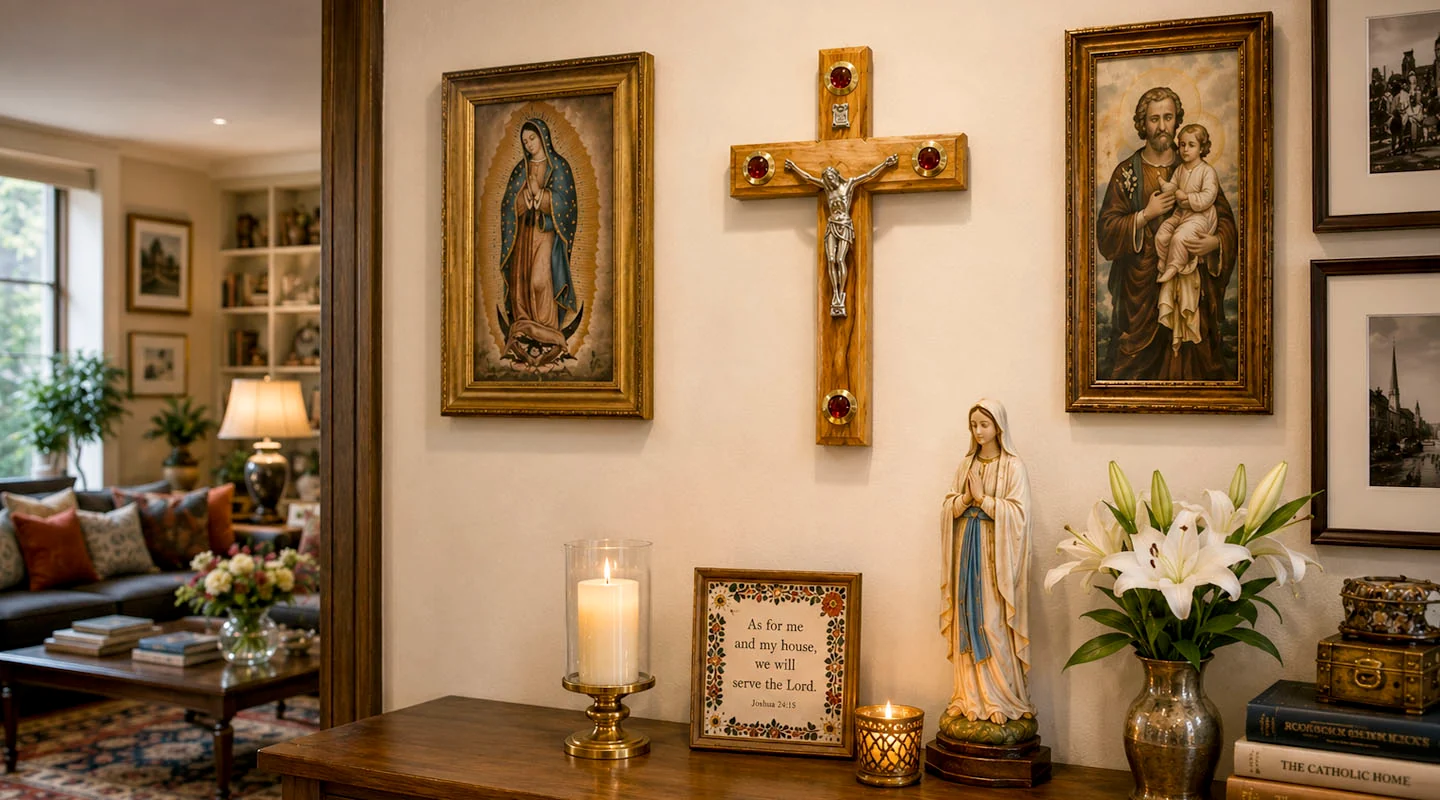
- A candle or small lamp
- A book of prayers, scripture, or poems
- Prayer beads, a smooth stone, or another tactile object
- A notebook for one-sentence prayers
Keep it simple enough that you will actually use it.
When prayer feels awkward
If you did not grow up praying, it can feel strange at first. If you did grow up praying but carry complicated feelings about faith, it can feel tender in a different way.
Either way, awkwardness is not a red flag. It is a threshold.
Here are a few starting lines that work when you do not know what you believe yet:
- “God, if you are there, meet me in a way I can recognize.”
- “Holy Mystery, teach me how to be human today.”
- “I am open to guidance. Help me choose what is loving.”
- “Thank you for carrying me this far.”
If prayer feels activating
Sometimes prayer brings up panic, shame, or old wounds, especially if your history with religion includes pressure or harm. If that is true for you, go slowly.
It may help to talk with a trusted counselor, spiritual director, or compassionate clergy member. You deserve support that makes room for safety and choice.
A 7-day start plan
If you want a clear on-ramp, here is a week you can repeat.
- Day 1: One minute of gratitude.
- Day 2: One minute asking for help with one specific thing.
- Day 3: Read one short sacred text or poem, then sit for 30 seconds.
- Day 4: Pray for one person by name.
- Day 5: Meal prayer once today.
- Day 6: Bedtime review: “Where was love today?”
- Day 7: Sit in silence for two minutes. If your mind wanders, return to your breath.
At the end of the week, ask: What felt natural? That is your practice trying to find its true shape.
Common questions
Do I have to pray out loud?
No. Silent prayer is prayer. Written prayer is prayer. Even a wordless pause offered with intention can be prayer.
What if I do not feel anything?
Feelings come and go. Prayer is not measured by emotional intensity. Sometimes prayer is simply showing up, like sitting beside a friend in silence.
Is it okay to use the same words every day?
Yes. Repetition can deepen meaning, not diminish it. Many traditions rely on daily repeated prayers for exactly that reason.
What if I am angry at God, or unsure what I believe?
Bring the truth you have. Anger can be a form of intimacy when it is honest. Doubt can be a form of reverence when it refuses easy answers.
A closing blessing
May your prayer be simple enough to be real. May it meet you where you are, not where you think you should be. And when you forget, may you remember that you can begin again in a single breath.