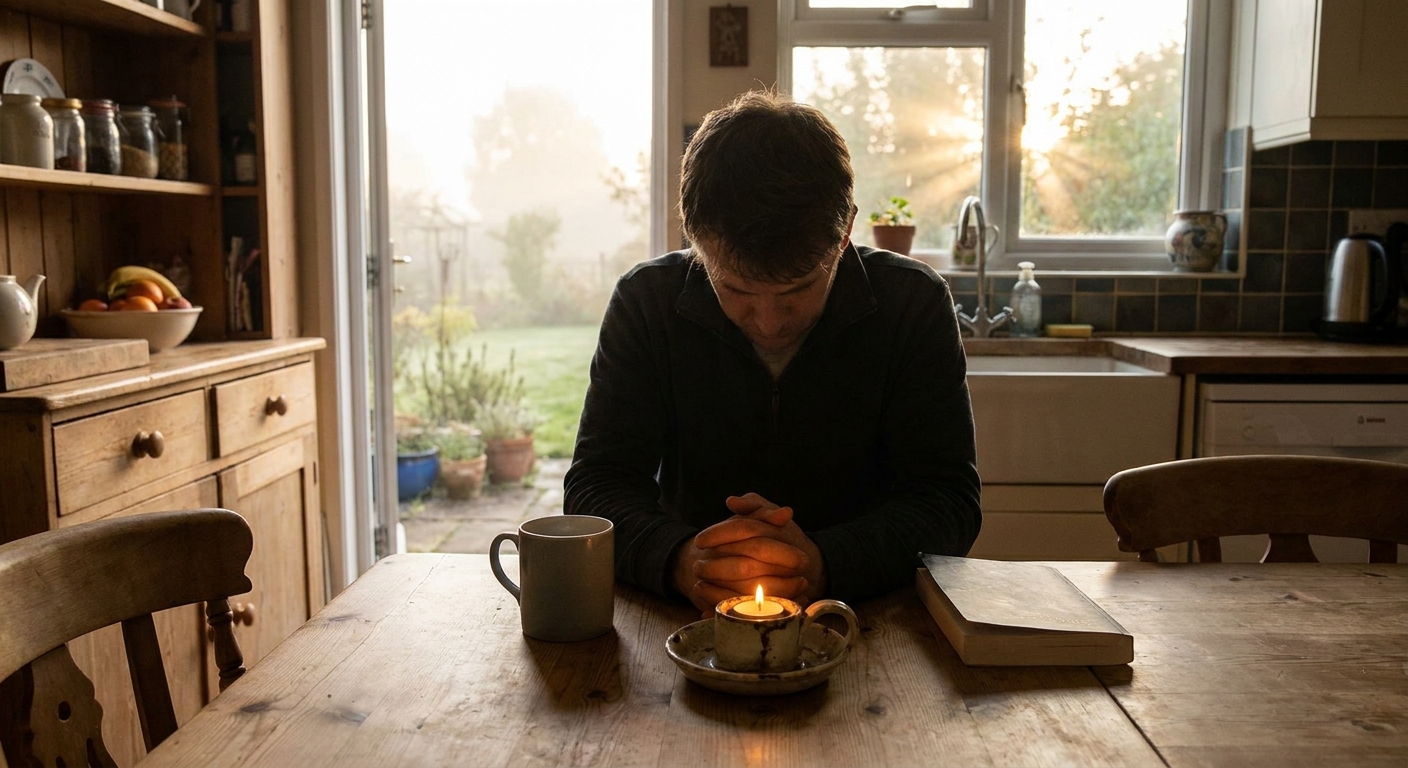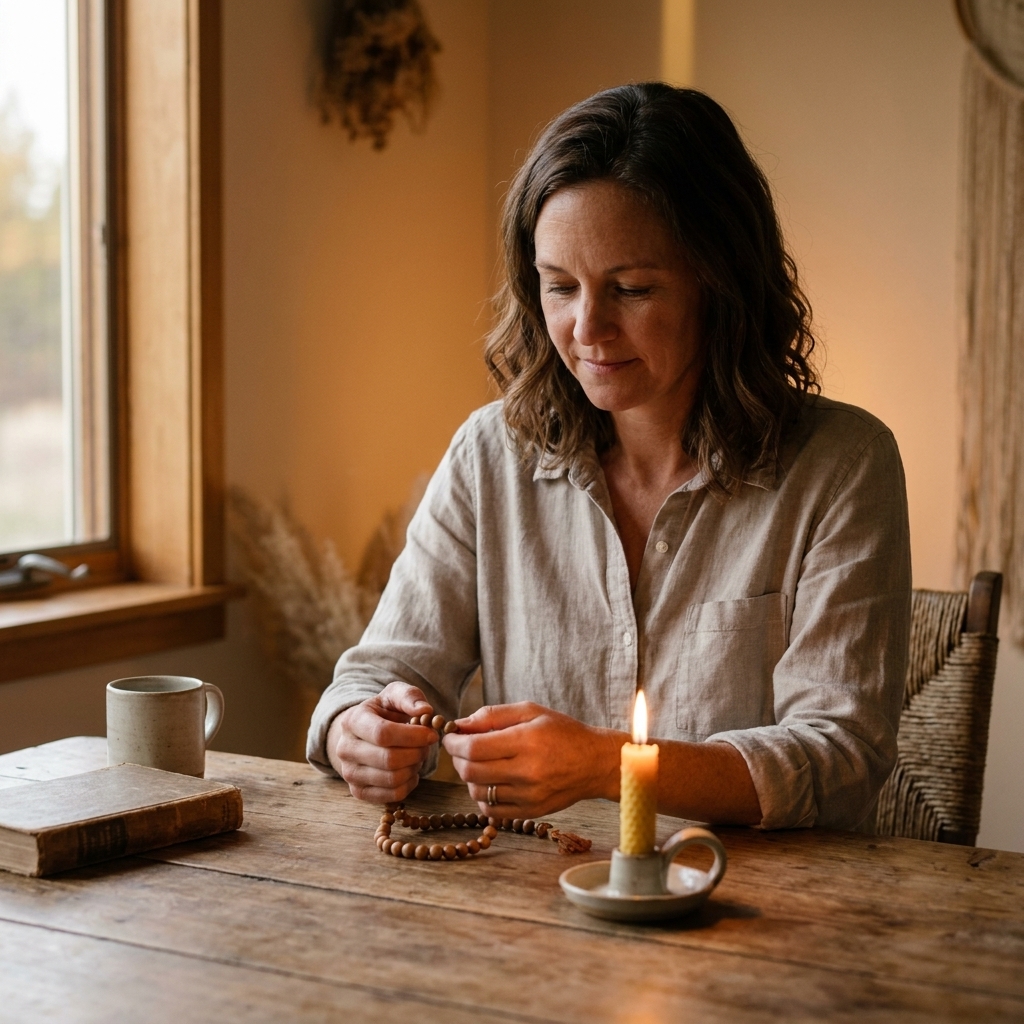
Some seasons of life make prayer feel like one more thing you are failing to keep up with. If you have ever tried to squeeze the sacred into an already overfull day, you are not alone. The good news is that prayer does not require long stretches of quiet or a perfect mood. It requires honesty, a small opening, and a willingness to return.
This guide is for real schedules: a baseline routine you can keep most days, two short anchor options, and a reset practice for the days that disappear on you.

Start with one intention
Before you choose words or times, decide what prayer is for you in this season. Not in a textbook sense, but in a lived sense.
- If you need steadiness: your prayer can be a daily return to center.
- If you need comfort: your prayer can be a place to tell the truth.
- If you need guidance: your prayer can be an open-handed question.
- If you need compassion: your prayer can be a daily practice of blessing.
Write a single sentence that feels true. Something like: “I want to be more present,” or “I want to remember that I am not alone,” or “I want to speak with God the way I speak with a trusted friend.” Keep it simple. This becomes your anchor on rushed days.
Build a routine that fits
Step 1: Choose a time you already touch
Instead of adding prayer to your day, attach it to something that is already happening. In behavior change writing, this is often called habit stacking. In spiritual life, it is simply learning to meet the Holy in the ordinary.
- After you turn off your alarm
- While water boils for tea
- After brushing your teeth
- Before you open email
- When you sit in your parked car
Pick one. One is enough.
Step 2: Choose a minimum version
A sustainable prayer routine needs a floor, not just a ceiling. The floor is the smallest faithful version you can do even when your day is messy.
- 30 seconds is a legitimate minimum.
- One breath with intention counts.
- One honest sentence is prayer.
You can always add more when you have it. But keep the floor low so you keep showing up.
Step 3: Choose a form that fits
Some people love written prayers. Others freeze when asked to improvise. Choose what reduces friction.
- Written prayer: a psalm, a short liturgy, a prayer book, a memorized line.
- Conversational prayer: speaking to God in your own words.
- Contemplative prayer: silence, sacred word, breath prayer.
- Embodied prayer: lighting a candle, bowing, placing a hand on the heart.
- Intercessory prayer: praying for a few people by name.
- Other tradition options: a simple mantra, dhikr, the Shema, a short sutra verse.
If you are unsure, start with a short written prayer and add a sentence in your own words. That blend works for many people across traditions.
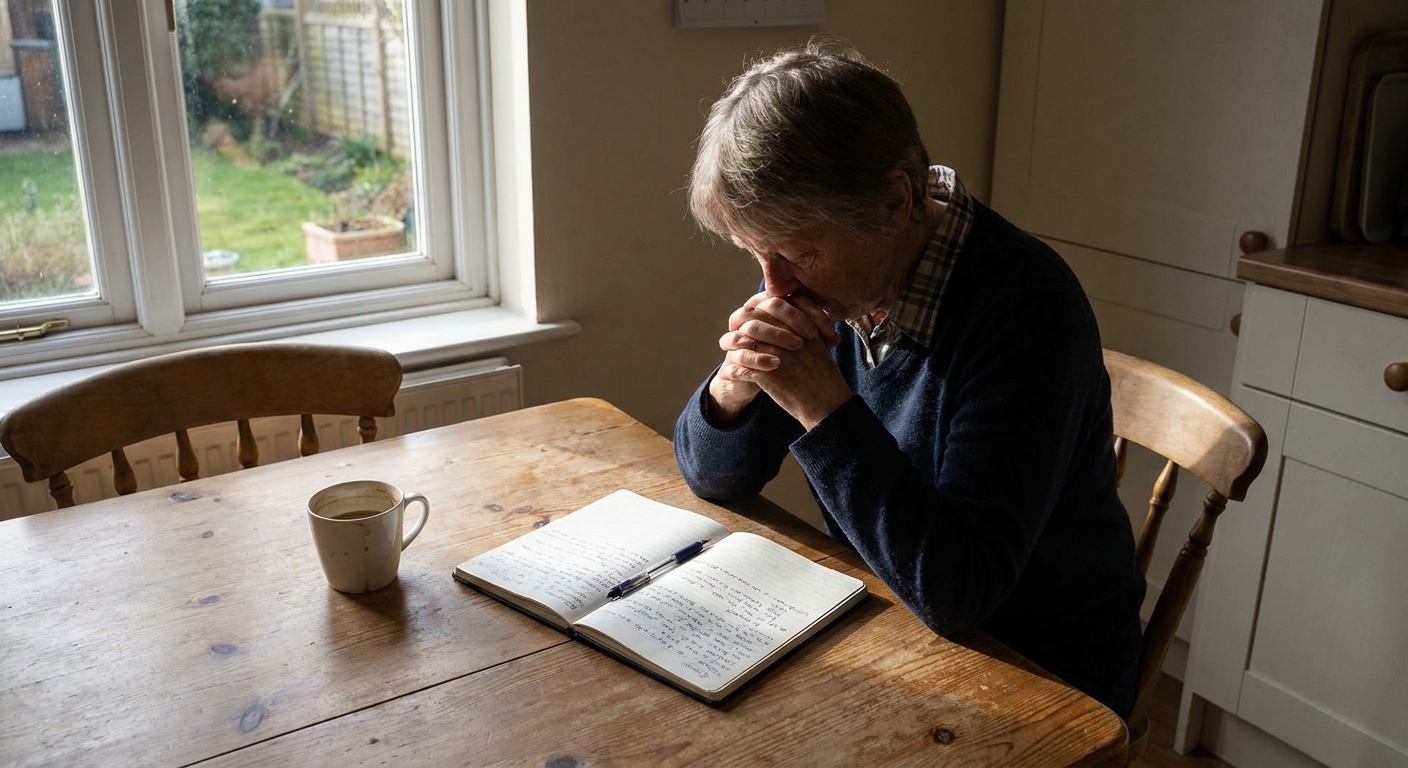
A 3-minute morning routine
This is a simple morning version designed for the days when you are stepping right into noise and responsibility.
1) Arrive (20 seconds)
Sit or stand in one place. Put both feet on the floor. Let your shoulders drop.
If it helps, place one hand on your chest and breathe slowly once.
2) Offer (40 seconds)
Use a single sentence that fits your faith language:
- “God, here I am.”
- “Holy One, meet me today.”
- “Spirit of Life, guide me.”
- “Beloved, help me love well.”
3) Name (50 seconds)
Name what is true. Prayer thrives on honesty.
- “I am anxious about…”
- “I am grateful for…”
- “I feel tired and I need…”
4) Bless (50 seconds)
Choose one person or situation and bless it. If you do not have words, use a simple line:
“May they be protected. May they be helped. May they be at peace.”
5) Release (20 seconds)
Close with one breath and a word like “Amen,” “So be it,” or “Thank you.”
If mornings are chaotic, do the same routine in the bathroom while you wash your hands. Water can become a gentle reminder: cleanse what clings, bless what is ahead.
If your mind wanders, that is not a failure. Gently return to the next breath, or to your one sentence. Returning is the practice.
2-minute midday options
Midday prayer is not about adding spirituality on top of your life. It is about remembering you have a life. Even a short pause can soften the frantic feeling that nothing is ever finished.
Pick one option. One is enough.

Option A: A breath prayer
Pick a short phrase to pair with breathing. Inhale with the first half, exhale with the second half. Repeat for 4 to 6 breaths.
- Inhale: “Peace of God” | Exhale: “settle in me”
- Inhale: “Here and now” | Exhale: “I return”
- Inhale: “Mercy” | Exhale: “for us all”
Option B: A tiny examen
This comes from a classic Christian practice, but the questions translate well across faiths.
- Look back: Where did I feel most alive today?
- Notice: Where did I feel pulled away from love?
- Choose: What is one small repair I can make this afternoon?
End with: “Help me take the next faithful step.”
Option C: Gratitude and ask
If you only have a moment, do this:
- One gratitude: “Thank you for…”
- One request: “Please help me with…”
That is prayer. Clean, honest, complete.
A reset for missed days
Most people do not fail at prayer because they are not spiritual enough. They stop because they miss a day, feel guilty, and then avoid returning. The remedy is a reset that is gentle and specific.

Step 1: Drop the scorekeeping
Say out loud, if you can: “I am returning.” Not “I’m behind.” Not “I messed up.” Returning is the whole practice.
Step 2: Pray one true sentence
Try one of these:
- “God, I did not have time, but I am here now.”
- “Holy One, I forgot, and I am beginning again.”
- “Help me come back to love.”
Step 3: Make a tiny next plan
Choose the smallest next action for tomorrow. Examples:
- “When I start the kettle, I will take one breath prayer.”
- “Before I unlock my phone in the morning, I will say: Here I am.”
- “I will pray for one person while I wash my hands at lunch.”
A reset works best when it ends with a plan that is almost too easy to fail.
Make it sustainable
Keep tools visible
Prayer becomes easier when you remove tiny obstacles.
- Leave a prayer book or sacred text where you drink your coffee.
- Put a small stone, bead, or candle on your desk as a reminder.
- Save one short written prayer in your phone notes.
Use doorway prayers
Doorways are natural transitions. Each transition can become a one-line prayer.
- Before a meeting: “Give me patience and clarity.”
- Before you walk into your home: “Let peace enter with me.”
- Before sleep: “Into your care, I release this day.”
Let your body help
When words are hard, posture can carry the prayer.
- Hand on heart: a sign of tenderness toward yourself.
- Open palms: a sign of willingness.
- One deep bow of the head: a sign of humility and attention.
Make room for movement
If stillness is hard, you are allowed to pray while walking, stretching, or doing a simple task. You can keep your eyes open. You can set a gentle timer. Prayer is allowed to be accessible.
Expect change
Some seasons invite longer prayer. Others ask for small faithful touches. A sustainable practice has room for both. If you are short on time right now, build the kind of prayer life that can travel with you through grocery lines, deadlines, and fatigue.
Three simple scripts
Morning (about 60 seconds)
Holy One, thank you for this day. I offer you my mind, my work, and my relationships. Help me be present to what matters. Bless those I will meet today, especially those who are struggling. Amen.
Midday (about 30 seconds)
Spirit of Peace, settle my thoughts. Help me return to kindness. Guide my next step. So be it.
Reset (about 20 seconds)
God, I am back. Hold what I could not hold. Teach me to begin again. Amen.
Common questions
What if I do not feel anything when I pray?
Feelings come and go. Prayer is relationship, and relationships have quiet days. If you feel nothing, keep it simple and honest. “I feel numb today. Please stay with me.” That alone is deeply human, and deeply prayerful.
Does it count if I pray while driving or walking?
Yes, with a gentle caution. Keep safety first. Short, simple prayers while walking, commuting, or doing chores can be meaningful. Many traditions affirm that remembrance in daily life is a sincere form of devotion.
How long should a daily prayer routine be?
Long enough to help you return to your deepest values and your sense of the Divine, and short enough that you actually do it. If you want a practical target, 1 to 5 minutes can be a workable range for consistency.
What if I am not sure what I believe?
You can pray as an experiment in openness. Address “God” if that feels right, or “Truth,” “Love,” “Holy Mystery,” or simply “Life.” You are allowed to begin with uncertainty. A gentle starting prayer might be: “If you are there, help me be more loving today.”
A closing blessing
May your prayer be small enough to fit into your real life, and strong enough to change it anyway. May you discover that the sacred is not waiting for your schedule to clear. It is waiting in the next breath, the next pause, the next honest sentence.