
When people hear the word Stoic, they often imagine someone unfeeling, jaw clenched against life. But the Stoics I have come to love through years of study are not teaching emotional numbness. They are teaching inner freedom. A way to stay tenderhearted without being tossed around by every wave.
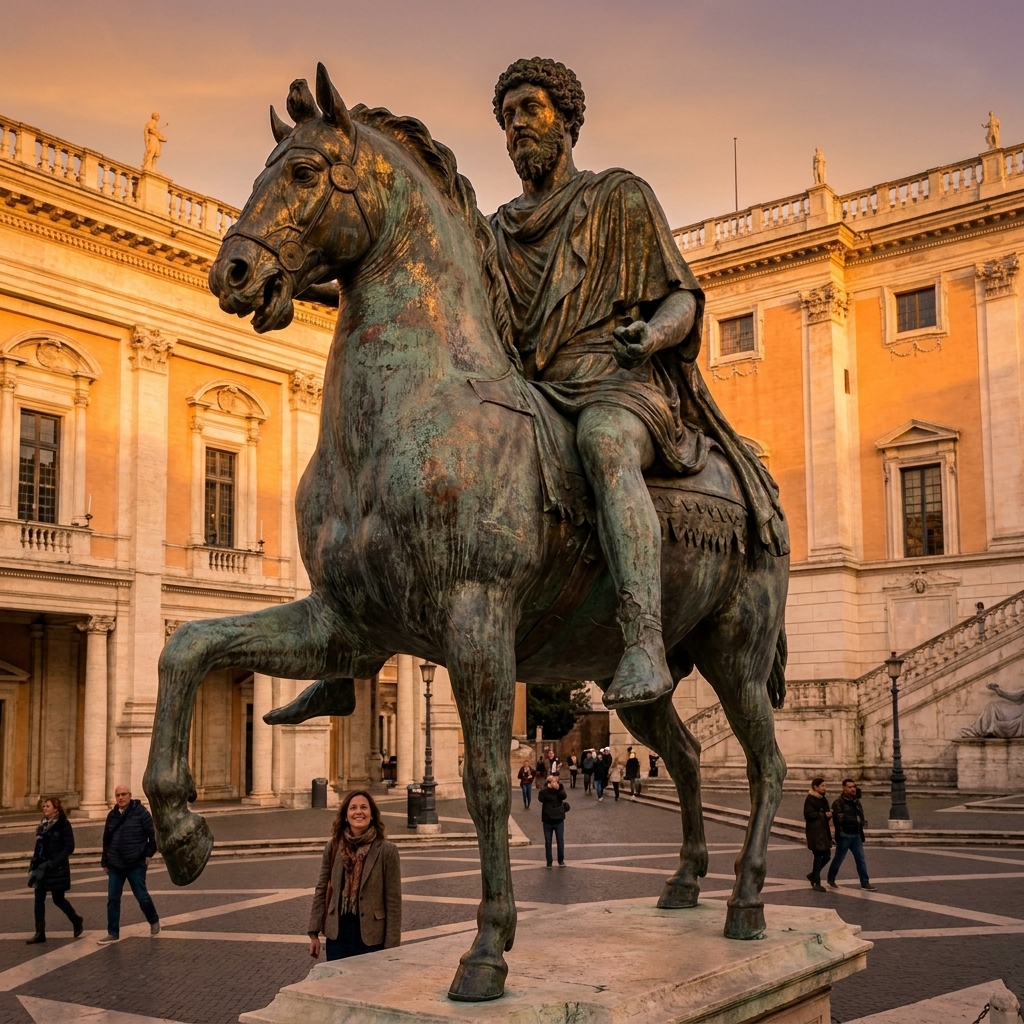
Stoicism is a philosophy from the ancient Mediterranean world, rooted in Greek thought and later developed in Roman life, associated with writers like Epictetus, Seneca, and Marcus Aurelius. It is not a religion, but it fits beautifully alongside many spiritual paths because it asks timeless questions: What is truly in my care? What kind of person am I becoming? How do I meet pain, praise, loss, and change with integrity?
Below is a practical way to integrate Stoic philosophy into a daily spiritual practice. Think of it as a set of small rituals you can adapt. No rigid dogma required. Just a steady invitation to clarity, courage, and compassion.
Stoicism as training
Stoicism is often summarized as a practice of living in harmony with reason and nature. In modern spiritual language, you might call that living in alignment with reality, with what is true, with what is.
For the Stoics, spirituality is not mainly about escaping the world. It is about meeting the world well. It is about training attention, refining character, and learning to respond rather than react.
What you can control
Epictetus opens the Enchiridion with a deceptively simple claim: some things are up to us, and some things are not. The spiritual power here is immediate. Much of our suffering comes from trying to control what cannot be controlled, or neglecting what actually is ours to shape.
- Up to you: your choices, your judgments, your values, your effort, your honesty, your kindness.
- Not up to you: other people’s reactions, the past, the economy, the weather, your reputation, the fact of mortality.
Modern writers often call this the “dichotomy of control.” The older Stoic emphasis is even sharper: what is truly “up to you” is your faculty of choice, the way you assent, refuse, and act from within.
This is not resignation. It is devotion directed toward what is actually yours to practice.
A daily rhythm
You do not need to overhaul your life to practice Stoicism. You need a few reliable touchpoints, like stones across a stream. Here is a rhythm I have used in retreat settings that tends to translate well into everyday life.
Step 1: Morning intention
Before you touch your phone, sit upright in bed or in a chair. Take three slow breaths. Then ask:
- What kind of person do I want to be today?
- What is one virtue I want to practice?
- Where might I be tested?
Stoicism is commonly taught through four classic virtues: wisdom, justice, courage, and temperance (self-restraint, balance). Pick one. Keep it simple.
Optional prayer-like intention: “Today, let me meet what comes with clarity and kindness. Let me focus on what is mine to do.”
Step 2: Sort the moment
When anxiety rises, bring it down to a single sorting question:
Is this within my control, or outside it?
If it is within your control, your practice is action. Take the next right step, even if it is small. If it is outside your control, your practice is release. Exhale. Loosen your grip. Redirect energy toward your response.
To make it less abstract, here are a few modern examples:
- Work feedback: You cannot control whether your manager praises you. You can control whether you ask for clarity, revise thoughtfully, and keep your integrity.
- Health news: You cannot control the diagnosis. You can control whether you seek care, follow the plan, and treat yourself with steadiness.
- Relationship conflict: You cannot control someone else’s mood. You can control whether you speak honestly, set boundaries, and choose timing wisely.
Optional mantra: “Not mine. Not mine. Only my response is mine.”
Step 3: Midday pause
Set a reminder for midday. Two minutes is enough. This is spiritual hygiene, like washing your hands.
- Notice what story your mind is telling.
- Return to your breath.
- Ask: “What would wisdom do in the next hour?”
The Stoics call this kind of attention prosoche, the practice of watchfulness. Many contemplative traditions have their own version of it. The point is not perfection, but return.

Step 4: Evening review
Stoic teachers recommended reviewing the day, not to punish yourself, but to learn. Before bed, take five minutes with a notebook.
- What did I do well today?
- Where did I get pulled off center?
- What will I try differently tomorrow?
If you want a gentle structure, use the virtues:
- Wisdom: Where did I see clearly? Where did I confuse fear for truth?
- Justice: Where did I treat someone with fairness and care?
- Courage: Where did I do the hard thing?
- Temperance: Where did I choose enough?
End with gratitude, not as a performance, but as a grounding: name three ordinary gifts you noticed.
Step 5: Daily service
Stoicism is not only inner work. It is also relational ethics. Marcus Aurelius returns again and again to the idea that human beings are made for cooperation.
Choose one small, concrete act of justice or kindness daily. Send a supportive text. Tip generously if you can. Let someone merge in traffic. Apologize quickly. Offer help without keeping score.
When Stoicism becomes compassion in motion, it stops being a “mindset” and becomes a way of life.
Stoic tools
Negative visualization
The Stoics trained for difficulty by imagining setbacks in advance, a practice often called premeditatio malorum in later Latin tradition. This sounds gloomy until you try it with tenderness. The purpose is not to catastrophize. It is to reduce shock and increase gratitude.
Once a day, gently consider: “What if this plan changes? What if I do not get what I want?” Then follow with: “If that happens, what virtues will I rely on?”
Keep it brief, and close it clearly. If you are prone to anxiety, panic, or trauma loops, adapt this exercise or skip it. You can also treat it as a companion to therapy and professional support, not a replacement for it.
A simple closing line: “And today, in this moment, I am safe enough to breathe.”
Reframing impressions
Stoicism teaches that events arrive, and then we add interpretations. The interpretation is often where suffering multiplies.
Practice naming the raw fact before the story:
- Fact: “They did not respond to my message.”
- Story: “They do not respect me.”
- Stoic reframe: “I do not know why. I can choose a response aligned with my values.”
Love of fate
You may hear the phrase amor fati, “love of fate.” The Latin words themselves were popularized much later, especially by Friedrich Nietzsche, but they capture a stance that fits the Stoic spirit: consenting to reality as the raw material of transformation.
In spiritual language, you might call this surrender, trust, or radical acceptance. The Stoic twist is that you do not only accept what comes. You commit to meet it with virtue.
Try whispering, “Let this become wisdom,” when life does not go your way.
Memento mori
“Remember you will die” can sound harsh. In practice, it can be clarifying and oddly comforting. Mortality makes the moment precious. It also helps shrink petty grievances back to size.
Once a week, take a quiet walk and reflect: “If my life is finite, what is worth my attention?” Let this lead you into gratitude and courage, not fear.

With faith paths
Because Stoicism is a philosophy, it can sit alongside many religious and spiritual frameworks. Here are a few gentle bridges. Use what serves, and leave the rest.
Christianity
Stoic virtue ethics can complement practices like examen, confession, and discipleship. The Stoic focus on intention and integrity often echoes teachings about forming the heart. Where Stoicism emphasizes reason, Christian spirituality may add a relational dimension of grace and love.
Practice pairing: try a Stoic evening review using the virtues, then a brief examen-style prayer of gratitude and honesty.
Buddhism
Many people notice a natural harmony between Stoic watchfulness and Buddhist mindfulness. Stoic reframing resembles working with mental formations and narratives. Both traditions discourage attachment to externals, though they ground their “why” in different metaphysics.
Practice pairing: use prosoche as a bell of mindfulness. Notice the impression, return to breath, then choose a response.
Judaism and Islam
Stoic discipline can pair with devotional rhythms and ethical living. The dichotomy of control can deepen trust in God while strengthening personal responsibility. In practice: do what is yours to do, then release outcomes with humility.
Practice pairing: after prayer, name one action that is yours today, and one outcome you will entrust beyond yourself.
Secular spirituality
If you are not religious, Stoicism can still be profoundly spiritual in the sense of meaning-making. It offers a vocabulary for purpose, character, community, and awe toward the order of nature.
Practice pairing: take a short nature walk, then write one sentence: “What is mine to practice is…”
Pitfalls
Suppressing feelings
Stoicism is not “do not feel.” It is “do not be ruled.” Emotions are information. The practice is to meet them with honesty and skill.
Try: Name the emotion, feel it in the body, then ask, “What response reflects my values?”
Self-punishment
Many tender, conscientious people turn spiritual discipline into a stick. Stoicism can be misused the same way.
Try: Replace harshness with steadiness. Virtue grows through repetition, not humiliation.
Passive acceptance
Accepting reality is not the same as approving injustice. The Stoic question is: “What is the wise, courageous, just action available to me now?” Sometimes that action is protest. Sometimes it is boundary-setting. Sometimes it is rest so you can act tomorrow.
7-day plan
If you like structure, here is a gentle week-long start. Repeat as needed.
- Day 1: Morning intention with one chosen virtue.
- Day 2: Practice “up to me vs not up to me” during one stress moment.
- Day 3: Add a midday pause.
- Day 4: Evening review journaling.
- Day 5: Try a brief negative visualization, then gratitude.
- Day 6: One deliberate act of service.
- Day 7: A quiet walk with memento mori, ending with what you want to live for.
Keep your promises small. Consistency is more transformative than intensity.
FAQ
Is Stoicism a religion?
No. Stoicism is a philosophy and a set of practices aimed at living with virtue and inner steadiness. Many people integrate it into their existing religion. Others use it as a secular spiritual framework.
Does Stoicism tell you not to care?
Not at all. Stoicism teaches you to care deeply about what is worthy of care: your character, your actions, the wellbeing of others. It simply asks you to loosen attachment to outcomes you cannot control.
Can Stoicism help with anxiety?
It can, especially through the “up to me” practice and reframing impressions. But it is not a substitute for professional mental health support. If anxiety is overwhelming, consider Stoic practices as a companion to therapy, community care, and medical guidance.
What should I read first?
If you want something accessible, start with Meditations by Marcus Aurelius for reflective fragments, or Epictetus’ Enchiridion for concise teachings. Read slowly, like devotional reading, and practice one line at a time.
Closing
Stoicism, at its best, is not a hard shell. It is a clear spine. It helps you stand upright in a world that can be beautiful and brutal in the same afternoon.
If you take only one thing from this guide, let it be this: your life is shaped less by what happens, and more by the meaning you make and the virtues you practice. And the next moment is always available for beginning again.