I grew up hearing the Apostles’ Creed in more than one voice. On some Sundays it was spoken in a bright Protestant sanctuary with sunlight on the hymnals. On other days it was prayed in a Catholic parish where incense lingered and the saints looked down from stained glass. The line “I believe in the communion of saints” always caught my ear, partly because it sounded beautiful and partly because I did not know what I was actually agreeing to.
The good news is that this phrase is not meant to be mysterious. It is meant to be comforting. In the Church’s language, “the communion of saints” is a way of saying that in Christ we belong to one another, even across death, and that we share in the holy gifts God gives his people.
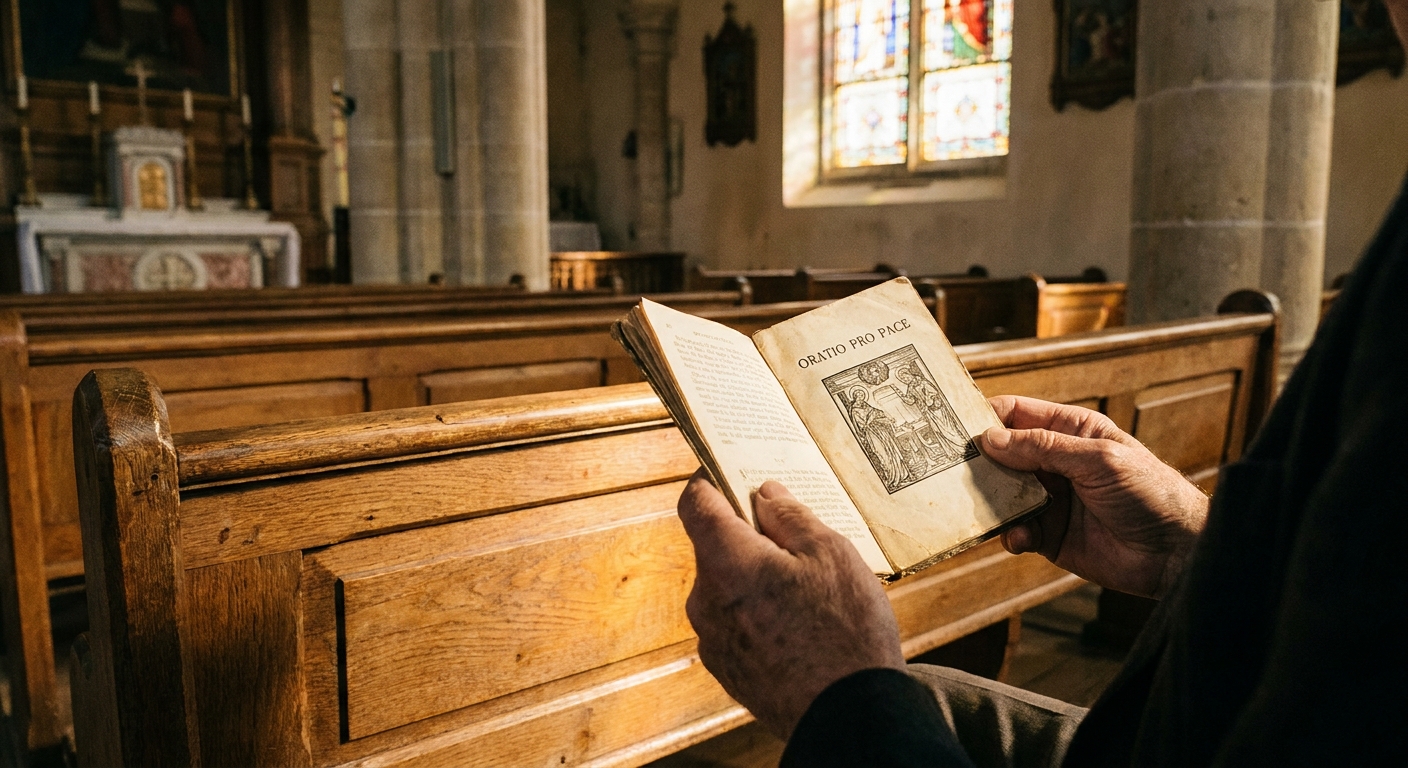
What it means
In Catholic teaching, the communion of saints is the spiritual union of all who belong to Christ. That includes:
- The faithful on earth, sometimes called the Church Militant
- The dead being purified, sometimes called the Church Suffering or the Church Penitent
- The blessed in heaven, often called the Church Triumphant
Different Christian traditions use different language here, but the Catholic claim is specific: the Church is not only a community of the living. It is a living Body in Christ that spans heaven and earth.
The word communion points to shared life and shared goods, not simply shared beliefs. The “goods” are not vague, either. Catholics mean things like our participation in Christ’s grace, the prayers we offer for one another, the sacraments, the works of love we do, and even the quiet strength we receive from the Church’s worship when our own faith feels thin.
We do not stop belonging to one another when someone dies, because in Christ, death does not get the final word.
Why it is in the creed
The Apostles’ Creed moves from “the holy catholic Church” to “the communion of saints” in a way that highlights their connection. The Church is not just an institution. It is a mystical, spiritual communion created by God.
When Christians confess this line, they are confessing that God saves us into a people, not merely as isolated individuals. Faith is personal, yes, but it is never private. The communion of saints is the Church’s way of saying: your life in Christ is connected to other lives in Christ, including those you will never meet in this world.
If you have ever felt alone in grief, alone in temptation, or alone in doubt, this doctrine is meant to gently contradict that feeling.
The Catechism of the Catholic Church takes up this teaching beginning at CCC 946, linking it to the Church as Christ’s Body. Scripture uses the same kind of family and body language, especially in 1 Corinthians 12 and the image of being “surrounded” by faithful witnesses in Hebrews 12:1.
The Church in three states
Catholics often speak about the Church in three “states.” These are traditional labels, not a set of rigid official categories, but they can be helpful for ordinary prayer.
The faithful on earth
Most of us experience the communion of saints first through ordinary, earthy practices: praying for a friend, bringing a meal after a loss, showing up to worship when you would rather hide. Catholics would say those acts are not only kindness. They are participation in Christ’s own love moving through his Body.
The dead being purified
Catholic teaching holds that some who die in God’s friendship still undergo a final healing and purification. This is where the Church speaks about purgatory as a state of purification, not a second chance and not a rival to Christ’s saving work. The Catechism describes this purification and the Church’s practice of praying for the dead (see CCC 1030 to 1032).
Within the communion of saints, those being purified are not cut off from love. They remain part of the family of God, held within the mercy of Christ.
The blessed in heaven
The “saints” in heaven are not spiritual celebrities. They are people fully alive in God, made whole, and united to Christ. Catholic tradition includes both canonized saints and the countless unnamed faithful who now rest in God’s presence.
Because they are alive in Christ, Catholics believe their love for the Church continues. Their prayer does not compete with Jesus. It flows from Jesus.
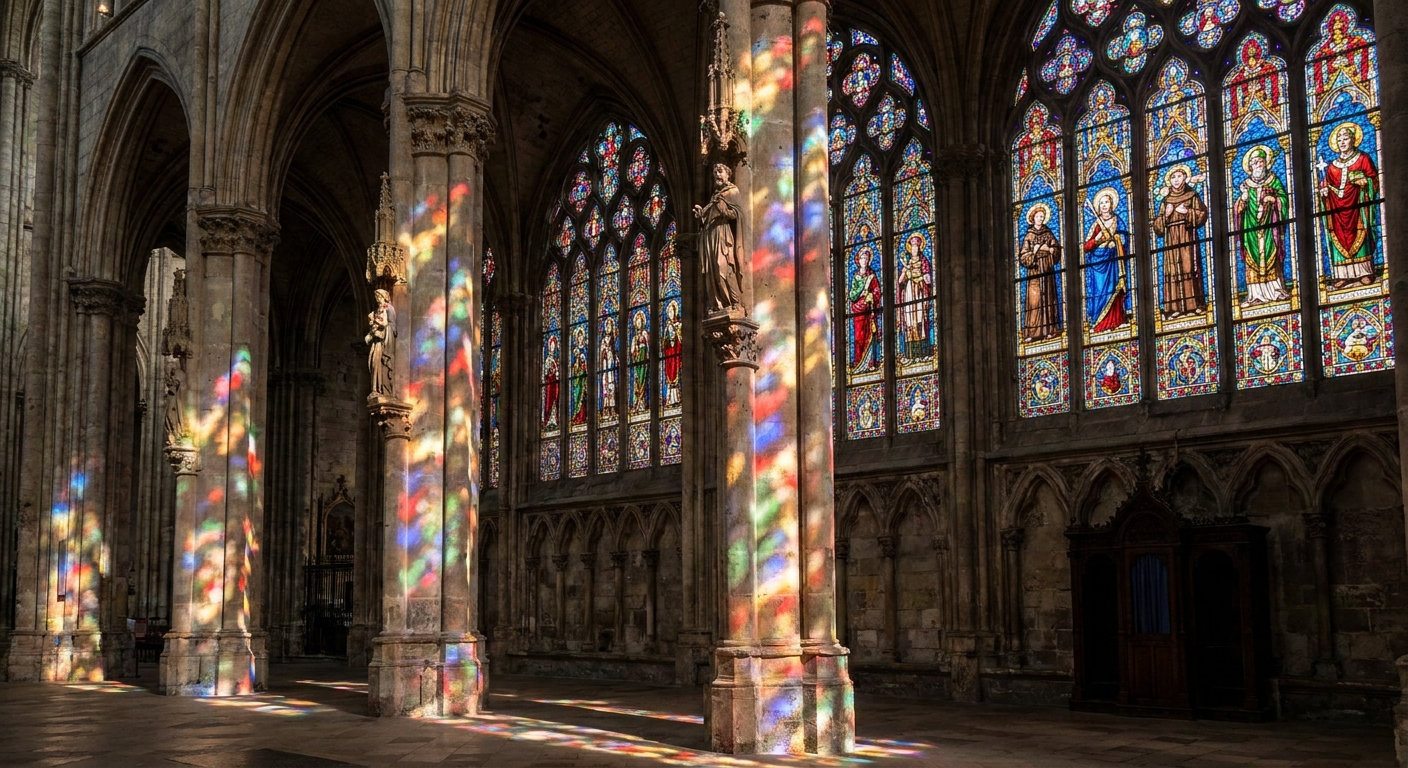
Why Catholics pray for the dead
Once you understand the communion of saints, praying for the dead becomes less like an odd extra practice and more like an act of fidelity. If we are truly one family in Christ, then love does not stop at the graveside.
Catholics pray for the dead because they believe:
- God’s mercy continues to heal, and our prayers can participate in that mercy.
- Those who have died still matter to us, not as memories only, but as members of Christ’s Body.
- Prayer is an expression of communion, the same way we pray for a friend who is suffering.
This is not the idea that we can force God’s hand or purchase salvation. It is closer to the humble insistence that love should be allowed to keep loving. Catholics pray for the dead without presuming to know anyone’s final judgment, entrusting each person to God’s mercy, while understanding that such prayers especially help those undergoing purification. A common biblical touchstone here is 2 Maccabees 12:44 to 46, though not all Christian traditions receive 2 Maccabees as Scripture.
Why Catholics ask saints to pray
The practice of asking saints to pray can raise honest questions, especially for those of us shaped by traditions that emphasize going “straight to God.” Catholics agree that we go straight to God. Prayer is always ultimately directed to God. The difference is that Catholics also believe we can ask others in Christ to join us, including those in heaven.
Here is the simplest way I know to say it: asking saints to pray is like asking a friend at church to pray, except Catholics believe the friendship of the Church extends beyond death.
Catholic teaching holds that:
- Christ is the one mediator between God and humanity, and nothing replaces him.
- Intercession is participation, not competition. When someone prays for you, they are joining their love to Christ’s love.
- The saints are alive in Christ, and love does not become smaller in heaven. It becomes more like God’s.
So when someone says, “Saint Francis, pray for us,” they are not worshiping Francis. They are requesting his intercession, trusting that the Church is still one communion.
Common questions
Do Catholics worship saints?
No. Catholic theology distinguishes between worship owed to God alone and honor given to saints. Saints are honored as witnesses to God’s grace, not treated as gods.
Is this spiritualism or contacting the dead?
No. The communion of saints is not an attempt to summon spirits or obtain secret knowledge. It is prayer within the Church, rooted in Christ. Catholics are not seeking control or hidden information. They are asking for intercession and commending the dead to God’s mercy.
If someone is in heaven, why pray for them?
In Catholic belief, those in heaven do not need prayers for purification. Prayer for the dead is offered for those who may be undergoing purification, and more broadly as an act of trust, because we do not claim the authority to declare the state of any particular soul.
If Christ is enough, why ask anyone else to pray?
Christ is enough, and Christians still ask one another for prayer. Intercession does not imply insufficiency in Christ. It expresses the way Christ draws us into his own love for others.
How it changes daily life
This doctrine can sound abstract until you meet it in the wild places of real life: grief, loneliness, moral struggle, the long ache of missing someone. The communion of saints offers a steady counter-message: you are not isolated.
Here are a few gentle ways it can reshape a day:
- When you pray for someone who died, you are practicing faithful love, not clinging to the past.
- When you ask for a saint’s intercession, you are admitting you need help, and that is a form of humility, not superstition.
- When you feel spiritually dry, you can remember that the Church’s prayer continues, and you can lean on it like a tired person leaning on a railing.
I sometimes picture the communion of saints the way I picture the ocean near my home in Oregon. From the shore, it looks like one surface. But beneath it, currents are moving, life is teeming, and everything is connected in ways we cannot track. The Christian claim is that in Christ, love is like that. Hidden, vast, and real.

Quick answers
Is this only a Catholic belief?
Many Christians affirm a spiritual unity of believers as the Body of Christ. The distinctly Catholic expression includes praying for the dead and asking the saints in heaven to pray for us as part of that communion.
Where does the phrase come from?
It is confessed in the Apostles’ Creed. The phrase entered the creed’s life early in the Church’s worship and teaching as Christians reflected on what it means to belong to Christ together.
Does “saints” mean only canonized saints?
In one sense, all who belong to Christ are called holy. In Catholic practice, “the saints” often refers to those in heaven, including both canonized saints and the countless unknown faithful who now live in God.
How is this connected to purgatory?
Purgatory, understood as a state of purification for some who die in God’s friendship, is part of how Catholics describe the Church’s communion across death. Those being purified remain within the Church, and the living can pray for them.