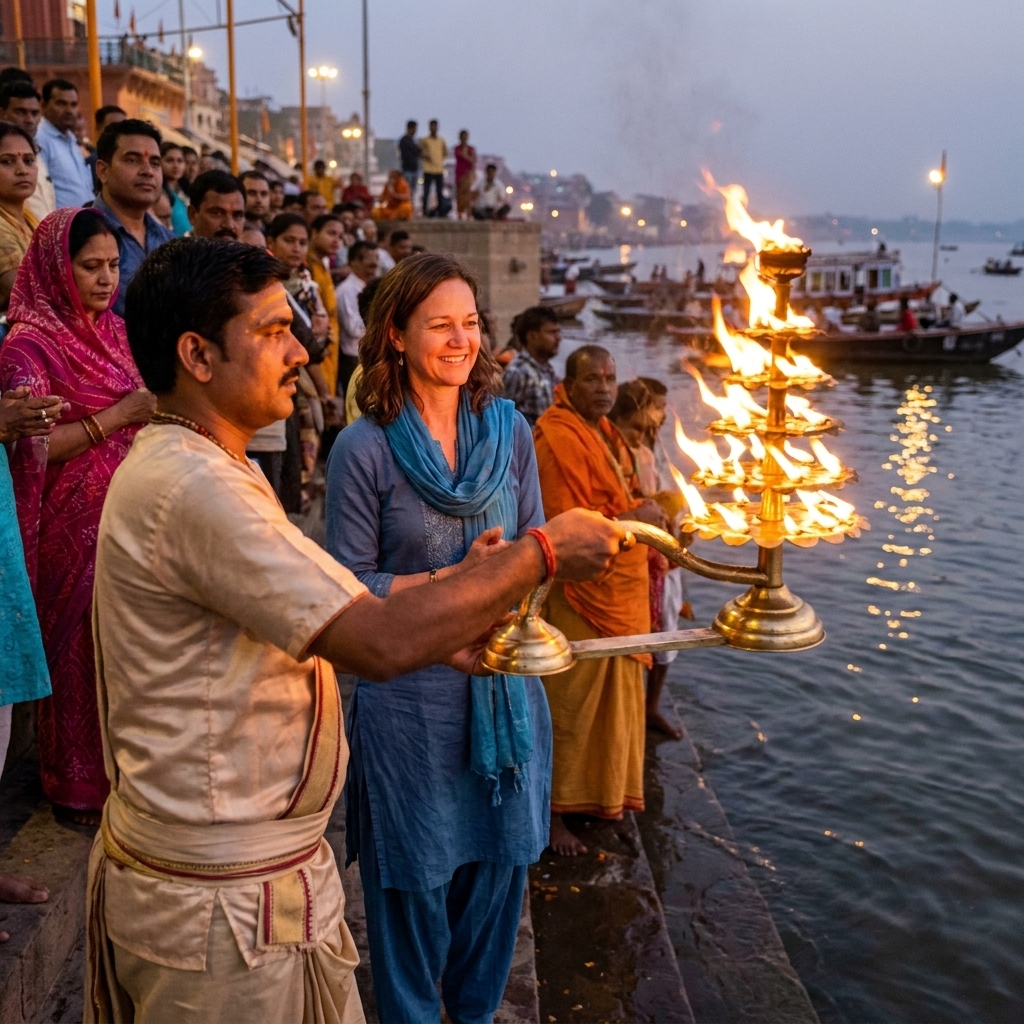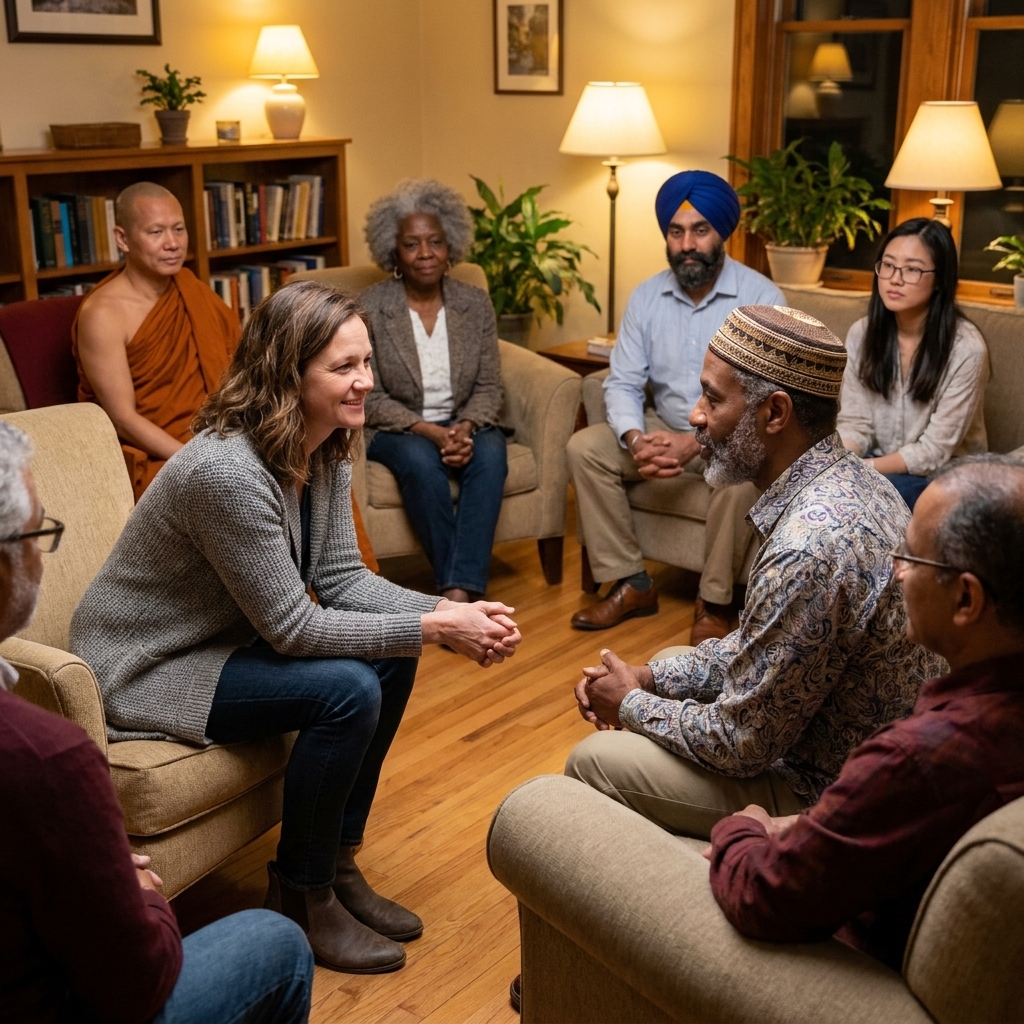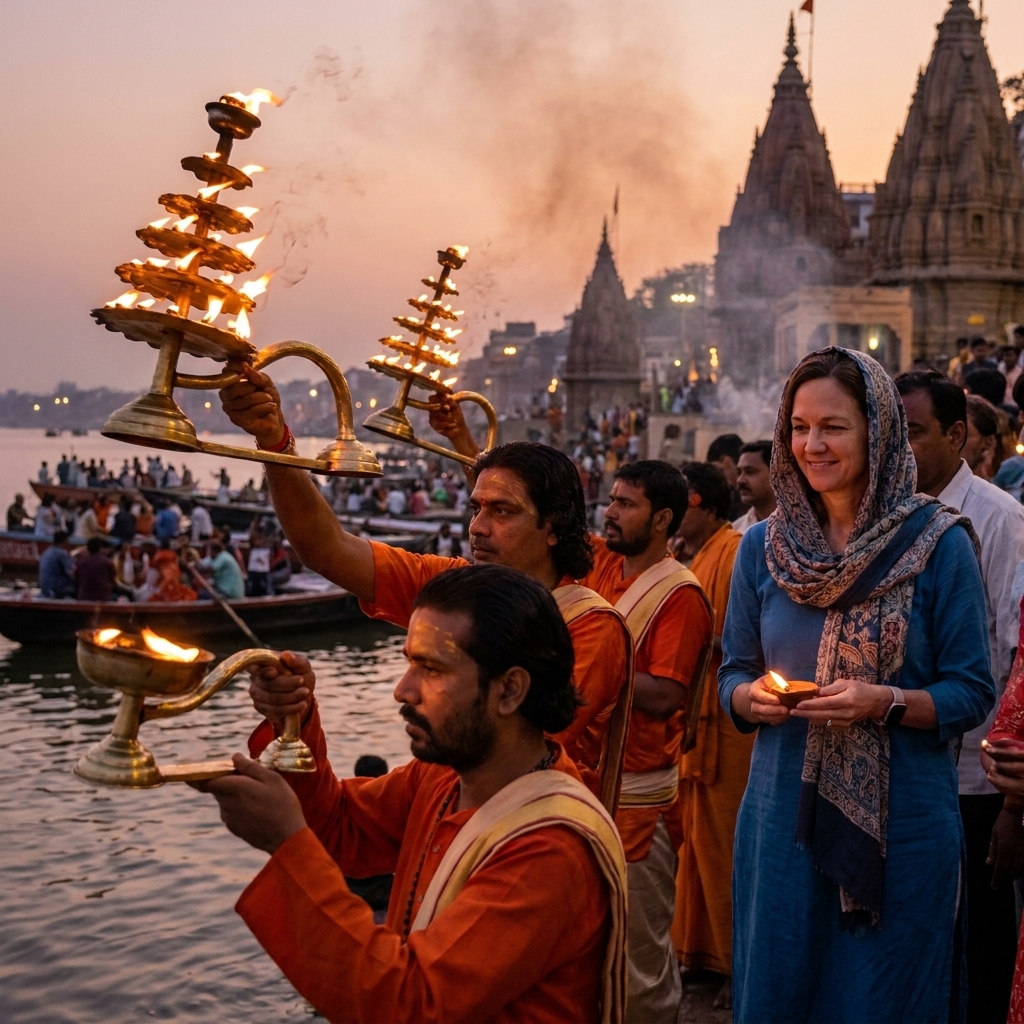
In a multi-faith home, you learn early that people can use the same word and mean completely different things. “Prayer.” “God.” “Liberation.” “Devotion.” Sometimes our misunderstandings are innocent, picked up from headlines, movies, or a single loud voice claiming to speak for millions. Other times, they are inherited stories that flatten entire communities and histories into a stereotype.
This is a gentle reset: seven common misconceptions about Islam, Hinduism, and Buddhism, and what these traditions look like when we meet them on their own terms.
1) Misconception: Islam is inherently violent
Why it sticks: A small number of political movements and extremist groups have used Islamic language to justify violence, and media coverage often amplifies the most alarming expressions of religion.
A clearer picture: Like other major traditions, Islam has a deep moral vocabulary that includes both personal ethics and communal responsibility. The Arabic word Islam is commonly glossed as submission or surrender to God. It comes from the same Semitic root (s-l-m) associated with wholeness, safety, and peace, as in salam (peace).
Many classical jurists articulated strong limits on warfare, including protections for noncombatants, and the broader ethical thrust of the tradition repeatedly emphasizes justice and mercy. The Qur’an calls believers to care for the vulnerable, including orphans, the poor, and travelers. (One verse often cited in discussions of the sanctity of life is Qur’an 5:32.) Violence done “in the name of Islam” is not a shortcut to understanding Islam. It is a reason to learn the difference between a faith’s core teachings and the way power sometimes tries to borrow sacred language.
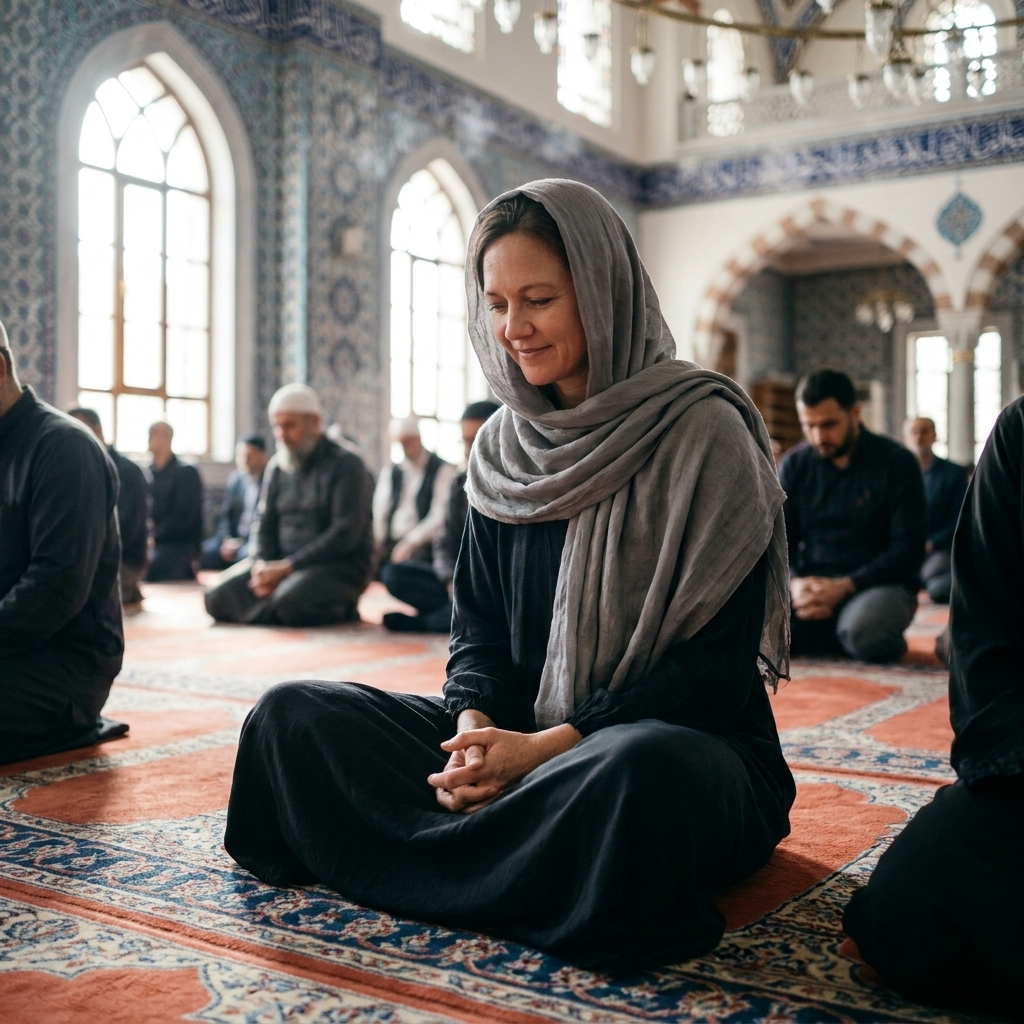
- Daily practice to know: Salah (five daily prayers) is one of the most universal rhythms of Muslim life, and Friday congregational prayer (Jumu‘ah) is a weekly anchor for many communities.
- Ethic to know: Zakat (obligatory charity) is a pillar, not an optional accessory.
2) Misconception: Muslims “worship Muhammad”
Why it sticks: Outsiders sometimes assume that a prophet is treated like a deity, especially when they hear honorifics and devotional language.
A clearer picture: Islam is uncompromisingly monotheistic. Muslims worship God alone, known in Arabic as Allah, a word Arabic-speaking Christians and Jews also use for God. Muhammad is revered as a prophet and messenger, not divine.
Love and respect for the Prophet show up in practices like sending blessings upon him when his name is mentioned, and in the desire to follow his example, especially in honesty, humility, and care for neighbors. Many Muslims also experience this reverence through the month of Ramadan, through night prayers like tarawih, and through everyday efforts to align character with faith. But the line between devotion and worship is very clear in Islamic theology: worship belongs only to God.

3) Misconception: Hinduism is “polytheism” in a simplistic sense
Why it sticks: Many people first encounter Hinduism through images of many deities, which can look like a straightforward “many gods” model.
A clearer picture: Hinduism is wonderfully diverse, and different schools explain the divine in different ways. Some are strongly devotional to one form of God, others emphasize the ultimate reality behind all forms, and many hold both at once in a way that feels natural inside the tradition.
One helpful doorway is the idea of Brahman: the ultimate reality in much of Hindu philosophy. Deities such as Vishnu, Shiva, Devi, Ganesha, and others may be understood by many Hindus as approachable forms through which devotees relate to the infinite. At the same time, some traditions affirm real distinction, describing God as a supreme person (or emphasizing a chosen deity as ultimate) rather than as a manifestation of a single impersonal absolute. The point is not to force one tidy map over everyone, but to recognize that Hindu theologies range from monistic to theistic to pluralistic, often living side by side.
In other words: Hinduism can include polytheistic practice, but it cannot be reduced to it.
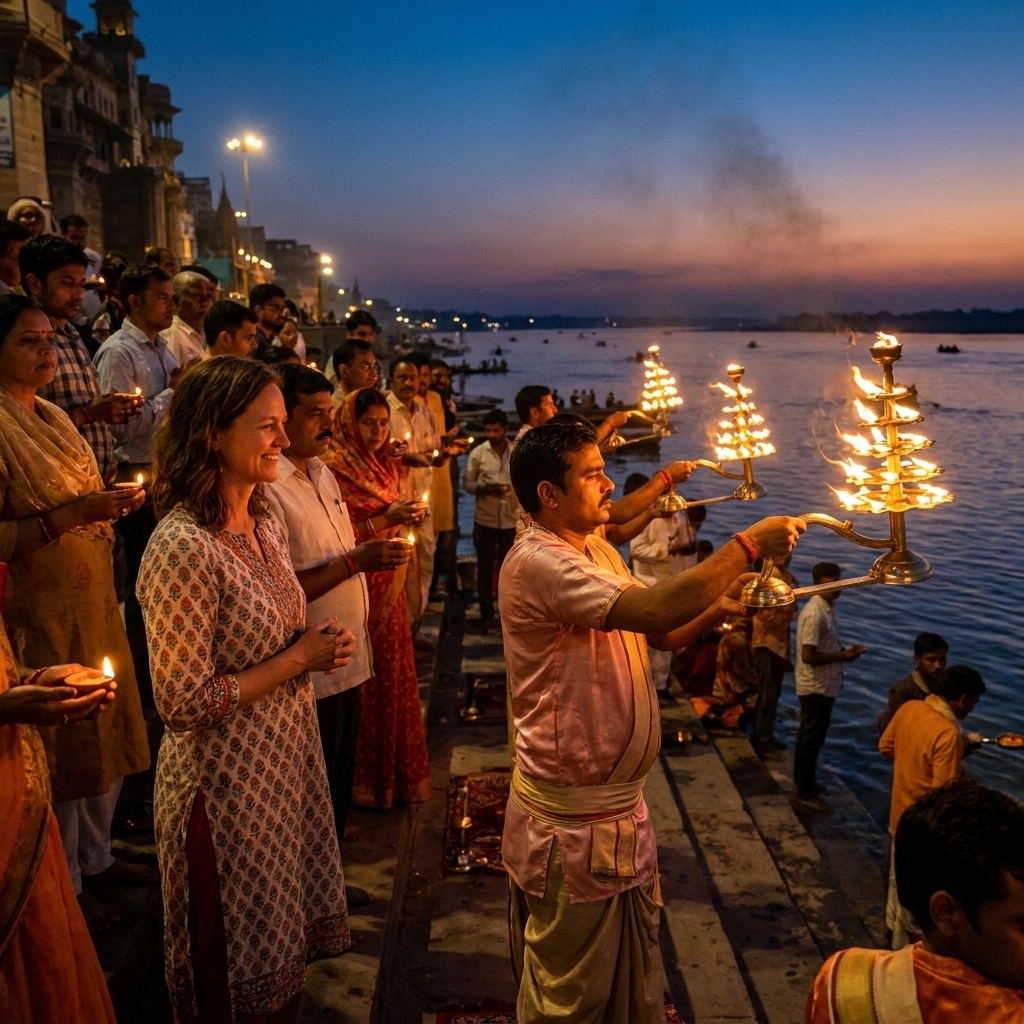
- Daily practice to know: Puja (ritual offering) can be as simple as lighting a lamp at a home shrine.
- Big idea to know: The divine may be approached through many forms, even while different communities explain the relationship between those forms and ultimate reality in distinct ways.
4) Misconception: All Hindus follow the same book, the same rules
Why it sticks: People familiar with religions that center on a single primary scripture sometimes expect a similar structure everywhere.
A clearer picture: Hinduism is better described as a family of traditions than as a single uniform system. It does not have one founder or one central authority. There are major texts such as the Vedas, Upanishads, the Bhagavad Gita, the Ramayana, and the Mahabharata, along with many regional and devotional works. Different communities emphasize different texts, teachers, and practices.
Even the concept of dharma is contextual. It can mean cosmic order, moral duty, social responsibility, and the path that supports life. It is not a one-size-fits-all checklist. Many Hindus live their faith through festivals such as Diwali or Navaratri, through household rituals, pilgrimage, ethical commitments, and devotion shaped by region, language, lineage, and personal calling.
5) Misconception: Buddhism is “not a religion” and has no rituals
Why it sticks: In the West, Buddhism is often introduced through meditation, mindfulness, and psychology-friendly language.
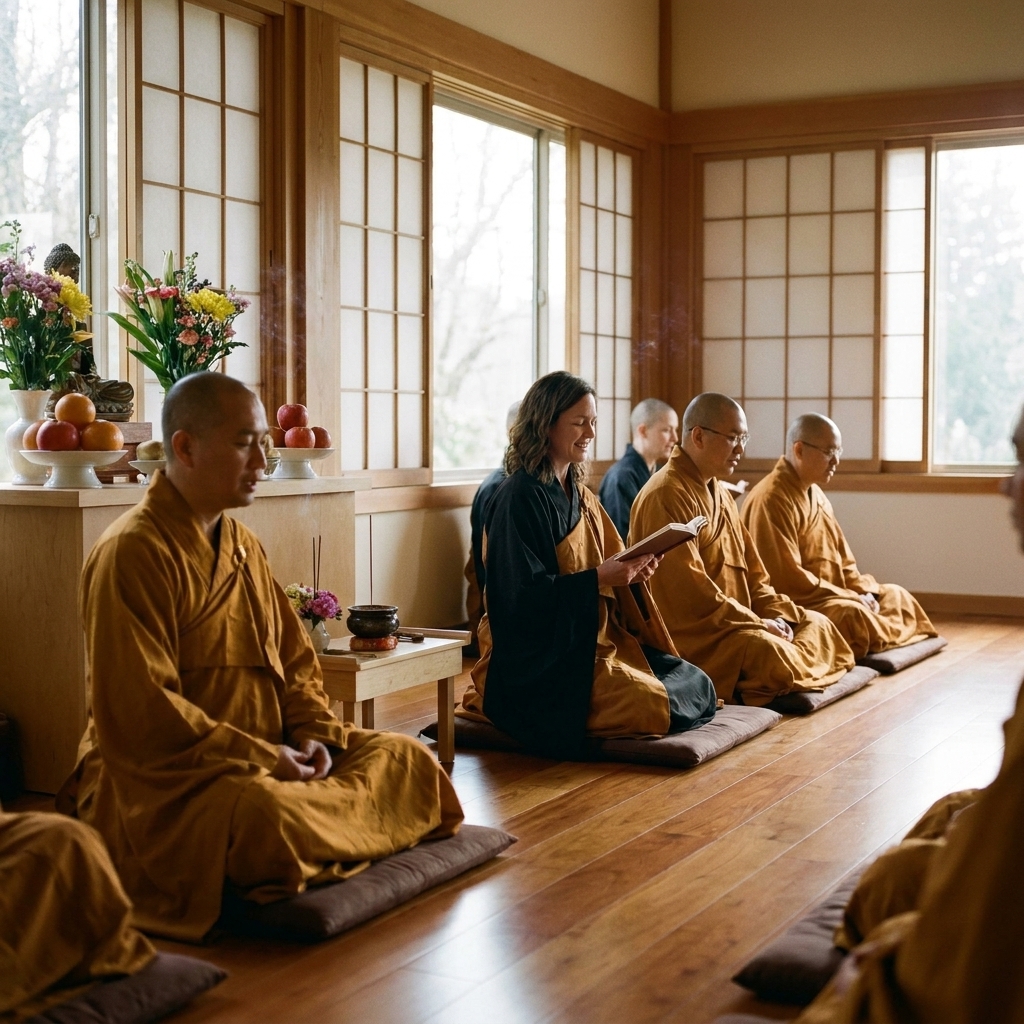
A clearer picture: Buddhism includes philosophy and contemplative practice, yes, but it also includes sacred stories, ethical precepts, ceremonies, chanting, devotional acts, monastic communities, holy days, funerary rites, and pilgrimage. Many Buddhists make offerings at shrines, chant sutras, and take refuge in the Three Jewels: the Buddha, the Dharma (teachings), and the Sangha (community).
Whether Buddhism is “theistic” depends on the tradition and on what someone means by “God.” Many forms of Buddhism do not center a creator deity, but that does not make them merely self-help. They offer a spiritual path aimed at awakening, compassion, and liberation from suffering, held within communities and traditions that have endured for millennia. Even the names you hear, Theravada, Mahayana, Vajrayana, point to real diversity in emphasis and practice across the Buddhist world.
- Daily practice to know: Chanting, bowing, and offering can be as central as meditation.
- Community to know: The Sangha is not a nice add-on. It is one of the foundational refuges.
6) Misconception: Buddhists “worship Buddha as a god”
Why it sticks: Statues, incense, and offerings can look like deity worship from the outside.
A clearer picture: In many Buddhist understandings, the Buddha is an awakened teacher, not a creator god. Acts of reverence at a Buddha image are often about honoring enlightenment, expressing gratitude, cultivating humility, and reminding oneself of the possibility of awakening.
It can help to think of these gestures as heart-training. Bowing may be a practice of letting go of ego. Offering flowers can be a meditation on impermanence. Lighting a lamp can be a wish for clarity. And in some Mahayana and Vajrayana contexts, devotion to Buddhas and bodhisattvas can feel deeply personal, even resembling the warmth of theistic devotion, while still resting within Buddhist teachings about awakening and compassion.
7) Misconception: These religions are all basically the same
Why it sticks: There is a sincere desire for unity, and many spiritual teachings overlap at the level of ethics: compassion matters, greed harms, humility helps.
A clearer picture: Shared values are real, but differences are real too, and they deserve respect. Islam centers radical monotheism, prophecy, revelation, and a life oriented around God, with diverse communities such as Sunni and Shia Muslims and multiple legal and theological schools. Hindu traditions range widely across philosophies and devotional lineages, exploring the relationship between the self and ultimate reality through devotion, knowledge, and disciplined action. Buddhism centers the problem of suffering and a path of liberation through insight, ethical living, and mental training, with major streams like Theravada, Mahayana, and Vajrayana.
When we collapse them into “all paths lead to the same place,” we often stop listening. A more spacious approach is to let each tradition speak in its own accent, and then notice what it awakens in us: humility, wonder, questions, and sometimes a surprising tenderness toward our neighbors.
Understanding does not require agreement. It requires attention.
Simple ways to learn with respect
- Ask better questions: “How do you practice?” often opens more doors than “What do you believe?”
- Distinguish faith from politics, carefully: Religion and politics have been intertwined in many times and places. Still, it helps to learn how communities describe their beliefs and practices before you accept how others label them.
- Notice diversity: There is no single “Muslim experience,” “Hindu experience,” or “Buddhist experience.”
- Visit with humility: If you attend a mosque, temple, or meditation center, follow the hosts’ guidance about shoes, clothing, photography, and silence.
- Read from within: Choose translations and teachers that are respected by practitioners, and balance academic sources with lived voices.
FAQ
Do Muslims all interpret the Qur’an the same way?
No. Muslims share core commitments, but interpretation is shaped by language, scholarly traditions, legal schools, culture, and personal context. As with other religions, diversity exists within a shared framework.
Is karma the same in Hinduism and Buddhism?
They overlap in the sense that actions have consequences, but the underlying philosophies differ, especially around the nature of the self and liberation. In both traditions, karma is more than “fate.” It is tied to intention, ethics, and transformation.
Is mindfulness “basically Buddhism”?
Mindfulness has Buddhist roots, but in Buddhism it is typically practiced within a larger path that includes ethics, wisdom, and compassion. Mindfulness on its own can be helpful, but it is not the whole of Buddhism.
What is one respectful thing to remember when talking about these faiths?
Let a tradition be complex. Most misconceptions begin when we demand that millions of people fit into a single sentence.