When I was a teenager, my family used the word karma in at least three different ways in the same week. One relative meant it like cosmic payback. Another meant it like moral cause and effect. And a family friend, raised Buddhist, smiled and said something like, “It is not punishment. It is pattern.”
That little moment stayed with me because it reveals a common misunderstanding: karma and reincarnation are shared ideas across several South Asian traditions, but they are not interchangeable, and they are not all saying the same thing.
This is a high-level overview, not a final word. Each tradition contains many schools, scriptures, and lived interpretations, and even within a single community, the emphasis can shift from one teacher or region to another.
In this guide, we will walk through how Hinduism, Buddhism, Jainism, and Sikhism uniquely interpret the cycle of birth and death, the logic of moral consequence, and the possibility of freedom. My hope is simple: that these teachings feel less like exotic concepts and more like mirrors, reflecting the kind of life we want to live right now.
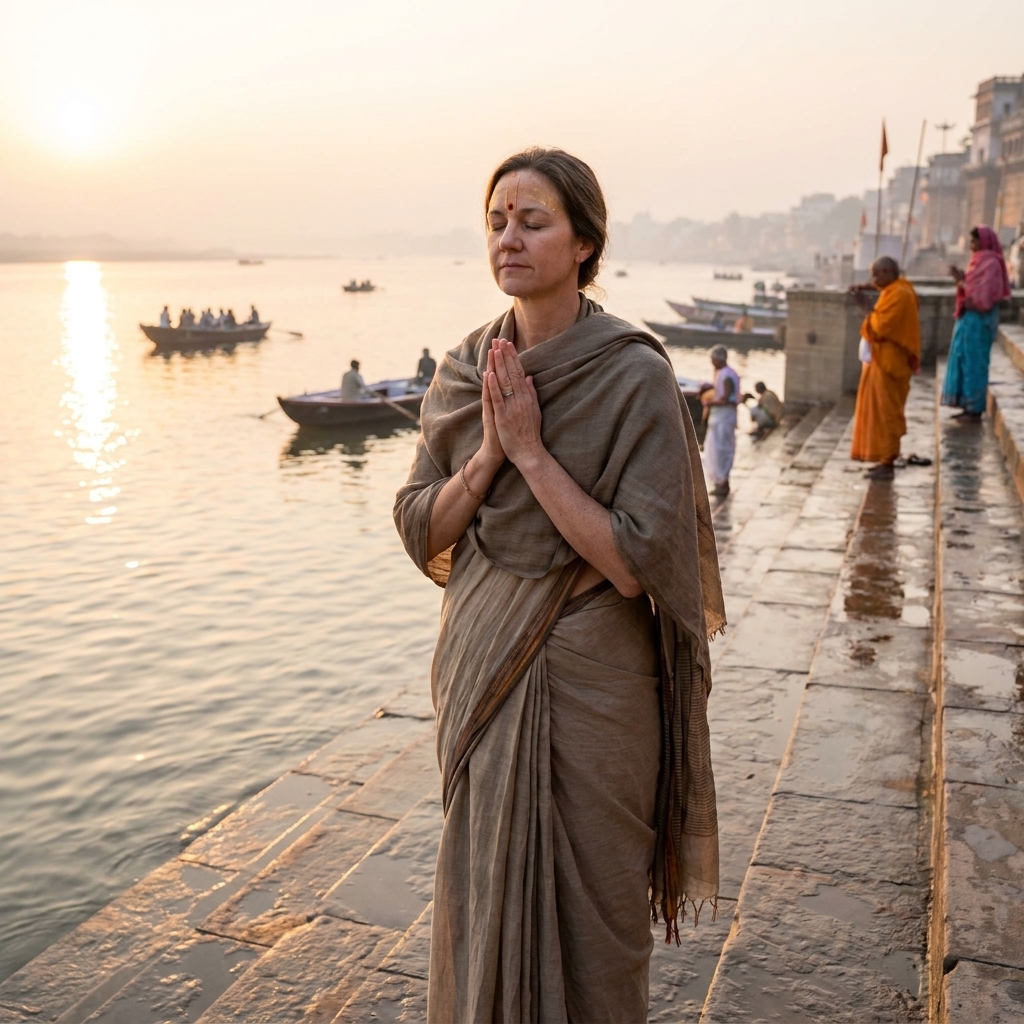
Two words, many meanings
What karma means, at its core
Karma literally means “action.” In most traditions that use the term, it points to a moral principle: actions have consequences. Not just socially, but spiritually. Karma is often explained as a kind of lawfulness woven into reality, where intention and behavior shape future experience.
Still, karma is not always a single mechanism, and it is not always framed as a cosmic judge. Many teachers emphasize that karma is less about being rewarded or punished and more about how we are formed by what we repeatedly choose.
What reincarnation and rebirth mean
People often say “reincarnation” as a shorthand for the idea that we live more than one life. Some traditions prefer the word “rebirth” because it avoids the implication of a permanent soul jumping intact from body to body.
Whether there is an enduring soul, a stream of consciousness, or something else entirely depends on the tradition. That difference shapes everything else.
One helpful way to hold it: karma describes the moral momentum of actions, while rebirth describes the continuity of experience across lifetimes. Each religion answers the question of “what continues” in its own way.
Hinduism: karma, dharma, and the soul
In many, though not all, Hindu philosophies, each being has an ātman, often translated as “self” or “soul.” Life unfolds within saṃsāra, the cycle or condition of wandering, through repeated birth and death. This continues until liberation (moksha), which is freedom from ignorance and from the binding cycle of birth and death.
How karma works in Hindu thought
Hindu traditions are wonderfully diverse, but many share a few key ideas:
- Intention matters. Karma is not only about what you do, but why and how you do it.
- Dharma guides karma. Dharma can mean duty, righteousness, or the path appropriate to one’s life. Acting in alignment with dharma tends to purify and steady the heart.
- Karma can ripen at different times. Some effects show up quickly; others are understood to unfold across lifetimes.
Even within Hinduism, the feel of these teachings changes by school and devotional context. Vedānta, Yoga, and bhakti lineages may describe the self, bondage, and liberation in different language, even when they share the same broad vocabulary.
Liberation: moksha in different flavors
Moksha can be described in several ways depending on the school: realizing the unity of ātman with ultimate reality (often called Brahman), dwelling in loving communion with a personal form of the Divine, or living in profound freedom from attachment and delusion.
In practice, many Hindus speak of multiple paths: bhakti (devotion), jñāna (wisdom), karma yoga (selfless action), and rāja yoga (meditative discipline). Notice how karma here is not just a theory. It becomes a way of living with care.
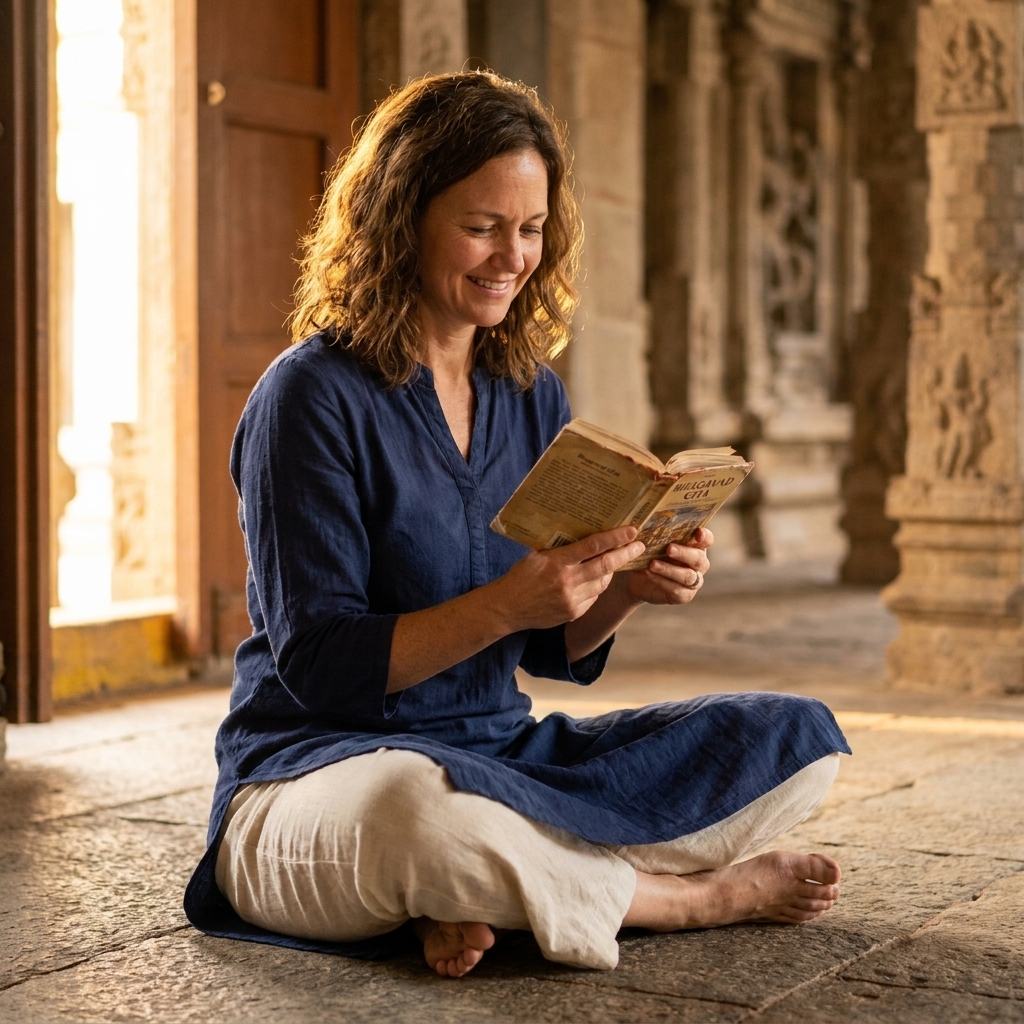
Buddhism: karma without a fixed self
Buddhism inherits the cultural world of karma and rebirth, but it makes a radical move: it does not affirm an eternal, unchanging self. The teaching of anattā (no fixed self) is central. So what continues from life to life?
A common Buddhist answer is continuity without identity: a causal stream of mind and habit patterns, shaped by craving, aversion, and ignorance, giving rise to new experience. Think of one candle flame lighting another. There is connection, but not sameness.
That said, Buddhist traditions explain the rebirth link in more than one way. Some teachings foreground dependent origination and becoming (bhava). Some Mahāyāna schools describe continuity with models like storehouse consciousness (Yogācāra). The shared point is careful: experience continues through causes and conditions, without a permanent soul at the center.
Karma as intention
In many Buddhist teachings, karma is closely linked to volition. The ethical weight of an action is shaped by intention. This is why mindfulness is not a luxury in Buddhism. It is part of moral clarity.
Rebirth and the end of the cycle
The cycle continues because of taṇhā (craving) and misunderstanding of reality. Liberation is nirvāṇa, the extinguishing of the fires of greed, hatred, and delusion. It is not annihilation, but release from the compulsions that keep suffering going.
Buddhist traditions explain these ideas with different emphases. Theravāda often highlights personal liberation through insight and discipline. Mahāyāna traditions may emphasize compassion and the bodhisattva ideal, the vow to awaken for the benefit of all beings. But the thread remains: karma is ethically meaningful, and freedom is possible through waking up.
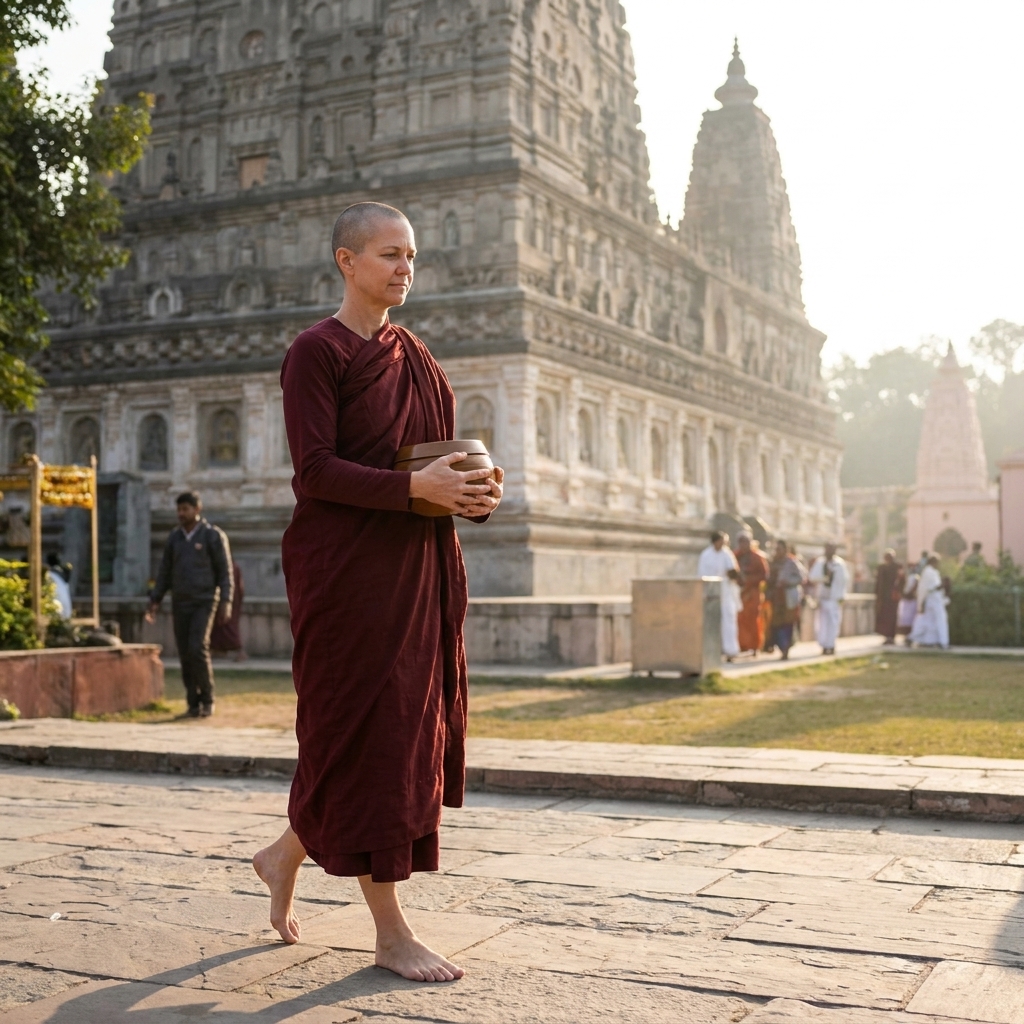
Jainism: karma and nonviolence
Jainism offers one of the most distinctive and ethically demanding accounts of karma. In classical Jain thought, karma is not only moral causality. It is also described as a kind of subtle material substance that clings to the soul (jīva) due to actions, passions, and attachments.
The spiritual goal is to purify the jīva so completely that it rises into liberated freedom, no longer weighed down by karmic accumulation.
As with other traditions, there is internal diversity here too. Digambara and Śvetāmbara communities share core commitments while differing in some practices, texts, and emphases, including the shape of monastic life and certain details of doctrine.
Why nonviolence is everything
Because karma is bound up with harm and attachment, Jain ethics become exquisitely careful. Ahiṃsā (nonviolence) is not merely “do not hurt people.” It extends to all living beings, and it includes speech, thought, and intention.
- Right conduct includes vows and disciplined habits.
- Right knowledge and right faith support that conduct.
- Ascetic practices can play a central role, varying by community and individual calling.
Rebirth and liberation
In Jainism, rebirth continues as long as karma remains attached to the soul. Liberation is not granted by an external deity. It is achieved through purification, restraint, and insight. It is a path of immense personal responsibility, and also, in its best expression, immense reverence for life.
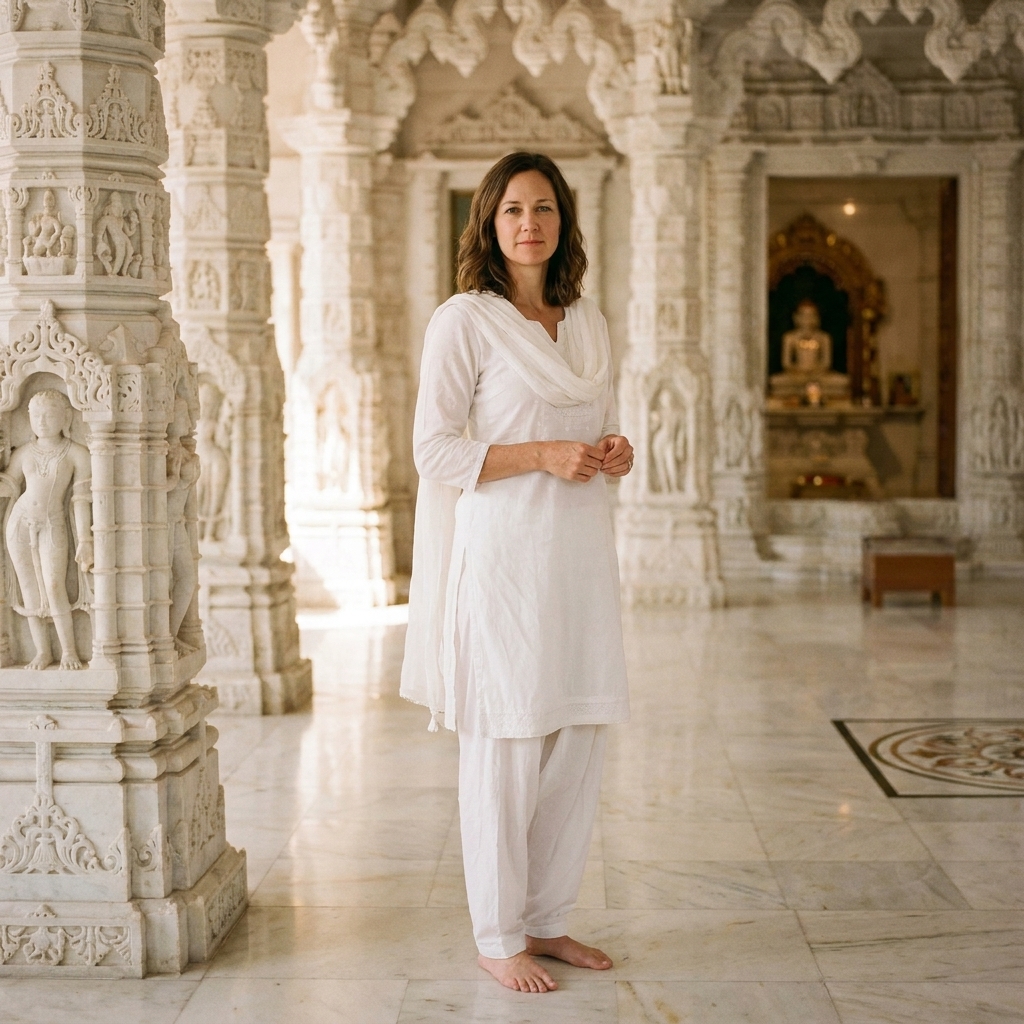
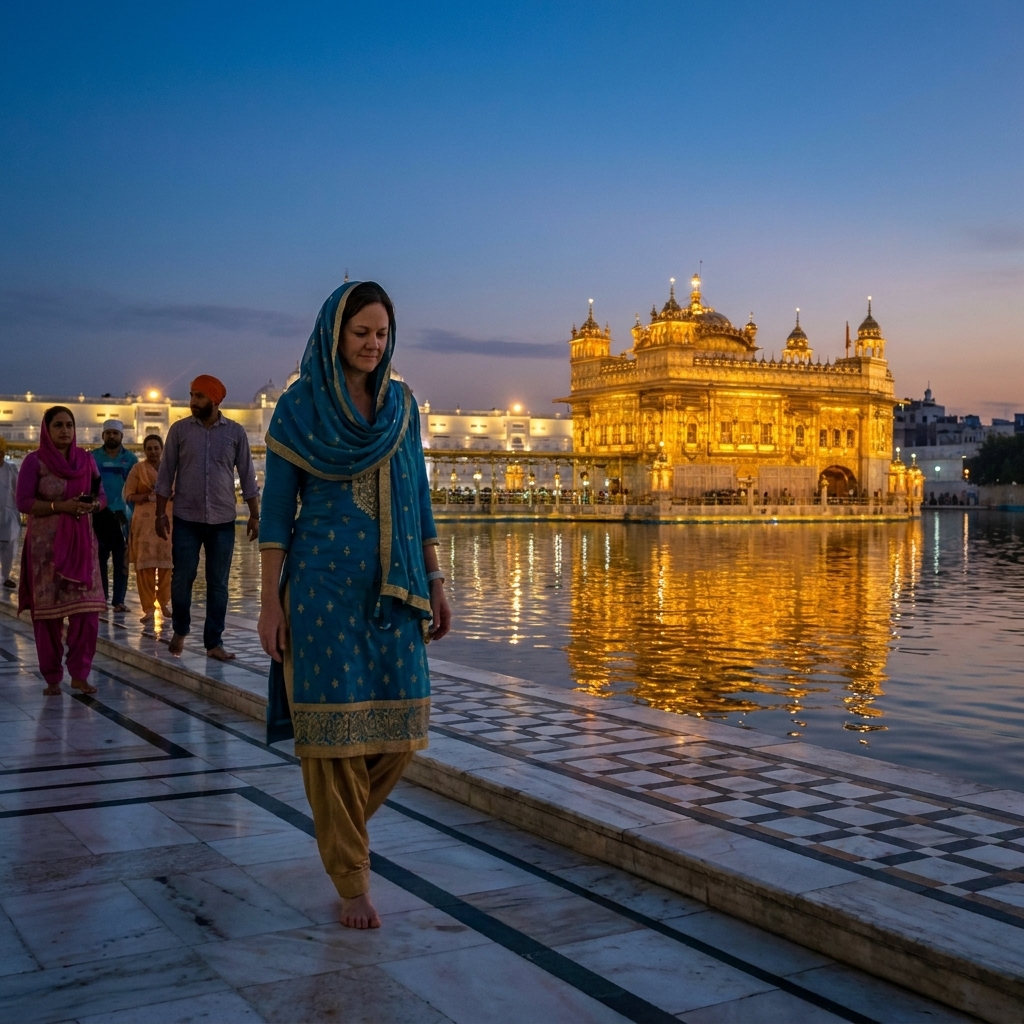
Sikhism: karma, grace, and life
Sikhism engages the language of karma and rebirth, yet places it within a strong emphasis on the oneness of God and the transforming power of divine grace. Human actions matter deeply, but liberation is not framed as something we engineer solely through spiritual technique or ascetic achievement.
Interpretation also has range. Rebirth is widely taught in Sikh tradition, while some modern Sikh thinkers emphasize metaphorical or pedagogical readings. Either way, the lived center of gravity remains devotion, ethical life, and union with the Divine.
Karma is real, but not the last word
In Sikh teaching, the cycle of birth and death is bound up with ego and separation. Ethical action is essential, and intentions shape the soul’s condition. At the same time, Sikhism repeatedly points to Naam, remembrance of God, and to grace as the heart of freedom.
This creates a balance many readers may recognize: do your part wholeheartedly, and also learn to release the illusion that you control everything.
Liberation: union while embodied
Liberation in Sikhism is often described as union with God and freedom from ego. Importantly, spirituality is not a retreat from the world. Sikh practice emphasizes:
- Naam Japna: remembering and meditating on God’s name
- Kirat Karni: earning an honest living
- Vand Chakna: sharing with others, community care, and service
Rebirth is discussed in Sikh texts and tradition, yet the daily focus is clear: live truthfully, serve, and let devotion reshape the self.
Shared threads and key differences
If we step back, a few shared threads emerge, along with important distinctions.
Shared threads
- Ethics are spiritual. How you live shapes who you become.
- Actions have momentum. Habits and intentions echo forward, sometimes beyond a single lifetime.
- Freedom is possible. Whether described as moksha, nirvāṇa, or union with God, these are analogous aims, though they are not the same concept across traditions.
Key differences
- What continues after death. Many Hindu and Jain views affirm a soul or enduring self; Buddhism denies a fixed self; Sikhism emphasizes the soul’s relationship to the One and the role of grace.
- What karma “is.” In Jainism it is described almost like a substance that binds; in Buddhism it is tightly linked to intention; in Hinduism it is action within a broader metaphysical and devotional landscape; in Sikhism it is real but held within the primacy of God’s grace.
- How liberation happens. Disciplined insight, devotion, ascetic purification, compassionate awakening, grace-filled remembrance. Sometimes more than one of these at once.
Misconceptions to hold gently
“Karma means you deserve whatever happens to you.”
This idea can easily become spiritual blame. Many teachers across traditions caution against using karma to explain other people’s suffering in a cold way. Even when karma is taught as moral causality, compassion remains non-negotiable. It is also wise to remember that suffering can arise from many conditions, including systemic and collective forces, not just individual choices.
“Karma is instant payback.”
Karma is not a vending machine. It is often taught as complex, layered, and shaped by countless conditions. Some effects are immediate, others delayed, and many are entwined with family, culture, and shared circumstances.
“Reincarnation makes this life less important.”
Most communities that teach rebirth treat this life as profoundly meaningful. The point is not to dismiss the present, but to deepen responsibility and to widen the lens of what a human life can become.
Living the questions
Even if you are not sure what you believe about past lives, karma teachings can be practiced as a kind of spiritual realism: what I cultivate today becomes the environment I live in tomorrow, internally and externally.
Three quiet practices
- Track intention. Before an email, a hard conversation, or a decision, pause and name your motivation as honestly as you can.
- Choose one nonharm practice. Speak a little more gently for a week, or reduce one habitual harm, even if it is subtle.
- Offer one act of service. In Sikhism and Buddhism especially, service and compassion are not add-ons. They are part of the path.
When I guide retreats, I often invite people to hold one question like a pebble in the pocket: “What kind of future am I building with this choice?” Not in fear. In love.
FAQ
Do all Eastern religions believe in karma and reincarnation?
No. Karma and rebirth are central in Hinduism, Buddhism, Jainism, and Sikhism, but “Eastern religions” is a wide umbrella. Even within these four, details vary by school, scripture, and lived culture.
Is karma fate?
Generally, no. Karma is usually taught as conditioned causality, not fixed destiny. Most traditions make room for change through insight, ethical action, devotion, and grace.
Is reincarnation the same as rebirth?
People use them interchangeably, but Buddhism often prefers “rebirth” to avoid implying an unchanging soul. Hinduism and Jainism more commonly speak in ways that align with reincarnation because they affirm a continuing self or soul.
Is the goal escaping the world?
It depends on the tradition and interpretation. Liberation is not necessarily world-hatred. In many paths, freedom means living with less ego, less harm, and more clarity and compassion, whether one is a monastic, a householder, or both in different seasons of life.
A closing reflection
Karma and rebirth teachings can feel vast, almost cosmic. But they keep returning to the intimate scale of a single moment: a thought, a choice, a restraint, a kindness.
Across Hinduism, Buddhism, Jainism, and Sikhism, you can hear a shared invitation: live as if your actions matter because they do. And live as if freedom is possible because it is, even if it arrives one breath, one honest apology, one compassionate decision at a time.