I first heard “I’ll Fly Away” the way many of us do, not as a historical artifact but as a feeling. Someone started it softly in a circle of tired, hopeful voices, and before I could even find the melody, the room already knew where to go. The song has that rare quality of being both plain and luminous. It meets you right where you are, then lifts your eyes without scolding your grief.
Its origins are surprisingly specific. “I’ll Fly Away” came from one writer, one season of his life, and one remembered field. And from that small beginning, it spread into churches, radio programs, quartets, bluegrass festivals, and living rooms, becoming a song that is often described as one of the most recorded gospel standards in American music.

Who wrote it and when?
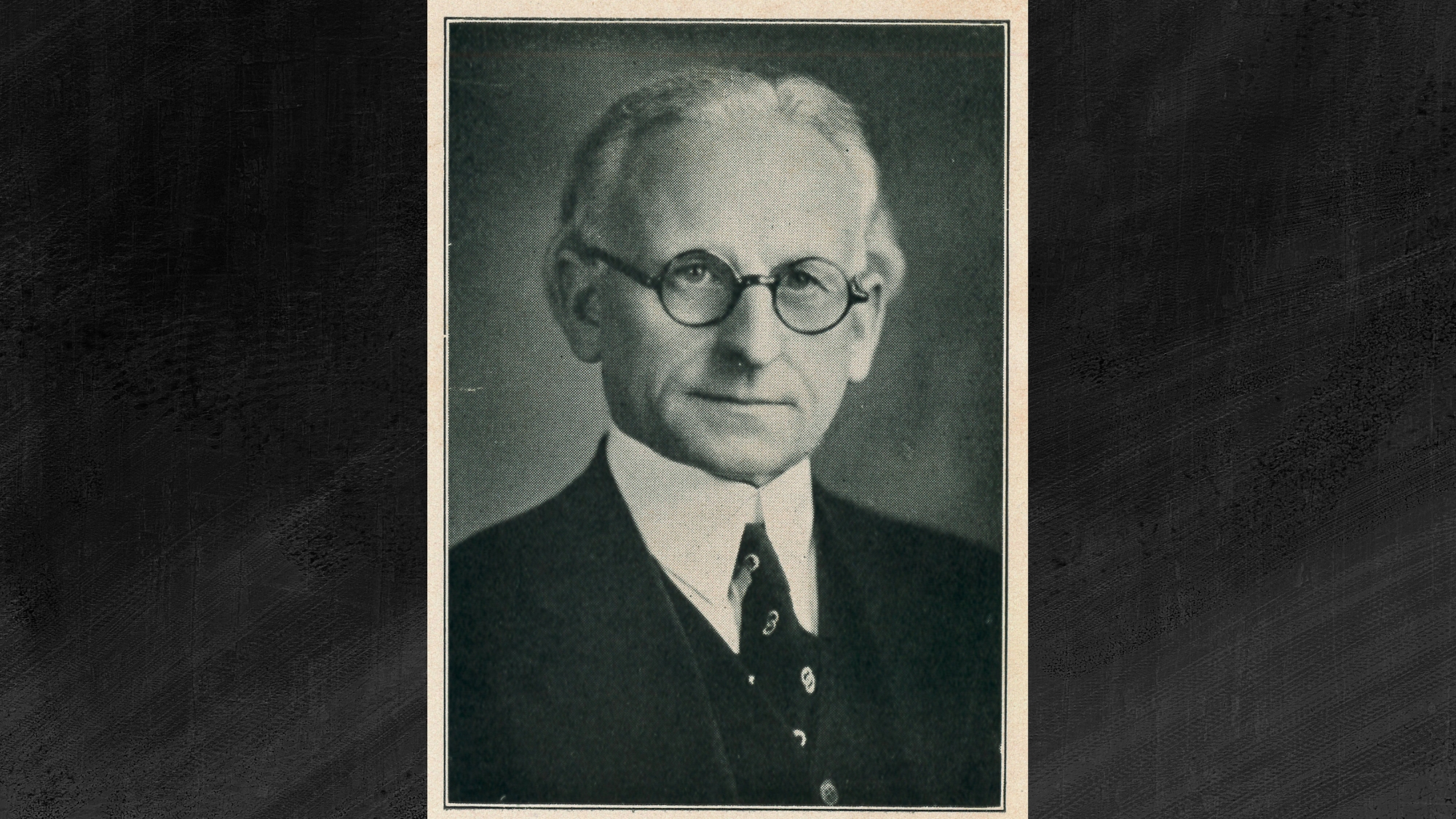
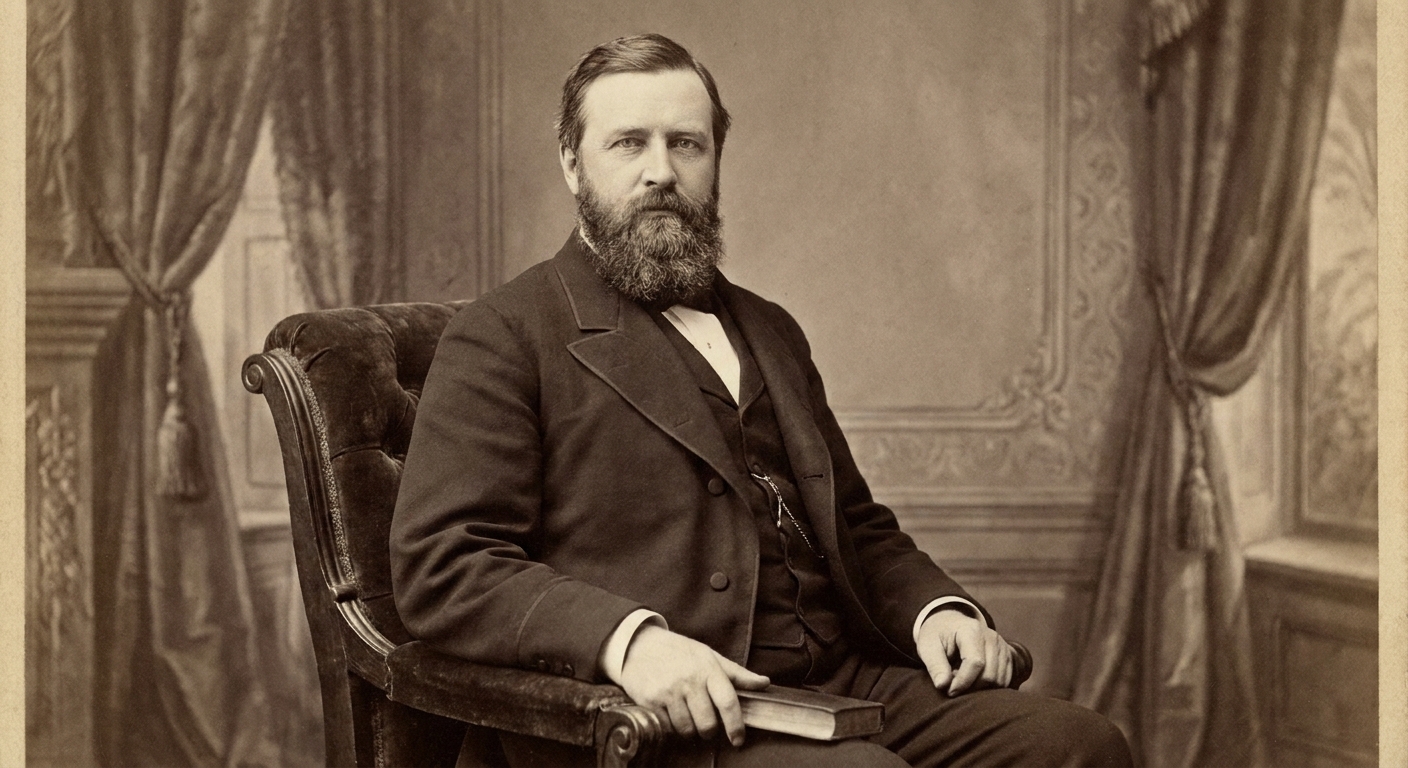
“I’ll Fly Away” was written by Albert E. Brumley, a prolific American gospel songwriter. Brumley is widely reported to have written it in 1929. The song then entered print soon after, and it is often dated to the early 1930s in published form, frequently cited as around 1932 in songbook circulation.
The timing still matters. Late 1929 brought the stock market crash and the first tremors of what would deepen into the Great Depression. Brumley’s song does not argue theology. It offers an image. A weary life becomes a temporary shelter, and beyond it waits a bright morning.
The cotton-field story
Brumley later described the setting that gave birth to the song as a cotton field. In accounts he shared over the years, he remembered working long days under a hot sun, his mind searching for relief from the grind. The image that came to him was simple and powerful. Just as a bird can lift off and leave the earth behind, the human soul longs to rise beyond hardship into freedom.
When I read that, I think about how often spiritual language is born in ordinary labor. Not in rarefied lecture halls, not in perfectly quiet sanctuaries, but in places where the body is tired and the heart is trying to keep going. Brumley’s remembered field is not just a backdrop. It is part of the song’s theology. The longing is embodied. The hope is physical. You can almost feel the heat shimmering over the rows.

What the lyrics mean
On the surface, “I’ll Fly Away” is about heaven. But its emotional engine is the contrast between weight and weightlessness:
- Life is a burden: “this life is o’er,” “shadows,” “prison bars.”
- Heaven is release: “fly away,” “God’s celestial shore.”
- Time is short: “just a few more weary days and then.”
Many hymns and gospel songs speak of heaven, but Brumley’s language is unusually kinetic. Heaven is not only a destination. It is motion, like the first deep breath after a long spell of anxiety. That is why the chorus feels almost involuntary once you learn it. It is made to be sung by groups. It turns private yearning into shared momentum.
“I’ll fly away, O glory, I’ll fly away.”
Even a single line like “Some glad morning when this life is o’er” carries the whole emotional thesis. There is grief in it, clear-eyed and unhidden, and then that turn toward morning.
In interfaith facilitation, I sometimes describe this as “portable hope.” I mean the kind of hope you can carry into a hospital room, a funeral meal, a long drive home, or a week when you cannot hold much else. You do not need to share every doctrinal detail to understand the human ache beneath it. Different traditions name liberation differently, but most recognize the experience of being hemmed in by sorrow, illness, injustice, or simple exhaustion, and the deep desire to be unbound.
How it spread
Brumley’s songs circulated through the networks that carried gospel music across the South and beyond: publishers, traveling quartets, radio shows, revivals, and most importantly, community songbooks. “I’ll Fly Away” was part of that early-20th-century gospel ecosystem where songs were sold, taught, and shared in practical ways, learned by ear and by page, passed from one congregation or convention to the next.
In the early to mid 20th century, gospel music moved person to person through informal networks of gatherings and songbooks. People met at all-day sings, conventions, and singing schools where music was taught and shared. These settings made a song like “I’ll Fly Away” ideal. The melody is memorable. The chorus is immediate. The verses are easy to divide among voices. It is both teachable and hard to forget.
Even when listeners could not name Brumley, they carried the song because it functioned like a communal prayer. It was a way of saying, together, “We are not trapped here forever.”
Shape-note context
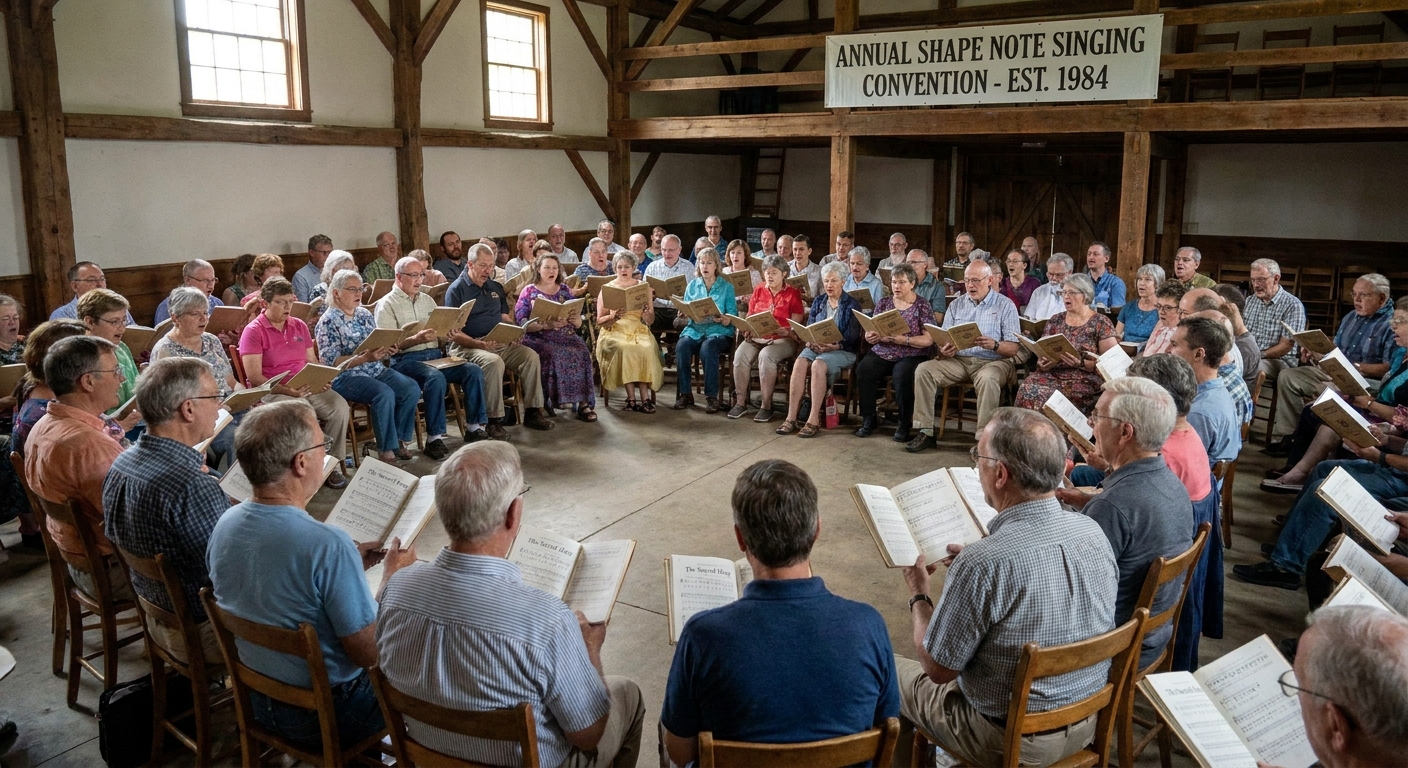
It also helps to know a little about shape-note singing, a tradition that uses shaped noteheads to make sight-singing more accessible. Shape-note communities have long prized strong, participatory singing over performance polish. The goal is not to impress. It is to join.
That said, shape-note singings tend to draw from particular tunebooks, so I try to be careful about overstating any one song’s place there. “I’ll Fly Away” is not a shape-note staple in the same way the most common Sacred Harp standards are. What is true is that it thrives anywhere singing is participatory, communal, and unselfconscious, including gatherings shaped by the same values that animate shape-note culture. In many traditions, a song survives if it gives people something to do together, not just something to listen to. Brumley’s chorus is built for that kind of room, repetitive in the best sense, like a mantra with a porch-swing rhythm.
Country and bluegrass
Over time, “I’ll Fly Away” traveled well beyond church walls. It became a standard in country gospel and later a beloved piece of the bluegrass repertoire. That crossover makes sense. The song is harmonically friendly to close vocal harmony, and its driving chorus matches the forward motion of string-band accompaniment.
It also helps to name the obvious: part of why the song is so frequently called “one of the most recorded” is that it has been taken up again and again by major artists across genres. In bluegrass, the hymn has long been associated with the Stanley Brothers and with later festival-era performances by artists like Alison Krauss. In country and folk-adjacent circles, versions by artists such as Johnny Cash and Gillian Welch have carried it to audiences who might not consider themselves “gospel listeners” at all. In classic gospel, it has lived through quartet traditions and congregational singing, where the most important recording is sometimes the one happening in the room.
Why it still lands
We live in a time when many people are wary of religious certainty but still hungry for spiritual honesty. “I’ll Fly Away” offers a hope that is firm without being complicated. It does not try to explain suffering. It simply keeps pointing beyond it.
When I facilitate retreats, I notice that people often carry private prisons: grief that is years old, caregiving fatigue, debt, addiction in the family, the quiet loneliness of feeling spiritually homeless. Not everyone uses heaven language. But many understand the longing for a morning when the shadows thin.
Brumley wrote from the body, from labor, from heat and fatigue. That is part of why the song still feels trustworthy. It was not composed in denial of hardship. It was composed in the middle of it.
Quick questions
Is it a hymn or a gospel song?
It is best described as a gospel song from the early 20th century. Many people also call it a hymn because it appears in hymnals and is used in worship, but its origin and style place it firmly in the gospel tradition.
What inspired Brumley to write it?
Brumley later said he connected the song to his experience of working in a cotton field and imagining release from hard labor. The central metaphor of “flying away” expresses that yearning for freedom and rest.
Why is it so common at funerals?
The lyrics speak directly to homegoing and release. It frames death not as an ending defined by fear, but as a passage into rest and reunion. For many families, it gives grief a melody that can be carried together.
How did it become so widespread?
It spread through songbooks, community singings, quartets, radio, and later through country and bluegrass performance traditions. Its simple structure and unforgettable chorus helped it travel across regions and denominations.
A final reflection
There is a humility in the phrase “I’ll fly away.” It does not say, “I will conquer,” or “I will control.” It says, “When the time comes, I will be lifted.” For some, that lifting is explicitly Christian and celestial. For others, it is the soul’s image of release, the deep trust that love is stronger than the bars we can see.
Either way, it is hard to sing it and remain clenched. The chorus asks the body to loosen. The voice rises. The shoulders drop. For a moment, you feel what you are singing.