Some hymns feel polished, like a cathedral window. “Just As I Am” feels more like a doorway left ajar at dusk, light spilling out, no questions asked. I have heard it sung with trembling voices at hospital bedsides, with weary relief at Sunday services, and with the kind of quiet courage that does not need to announce itself.
Its words were not born out of a triumphal moment. They came from a woman who knew disappointment, physical limitation, and the ache of wanting to be useful. And, somehow, that very ordinariness became the hymn’s strength.

Who wrote “Just As I Am”?
The text of “Just As I Am” was written by Charlotte Elliott (1789 to 1871), an English poet and hymn writer associated with the evangelical movement of her day. She lived much of her life with significant health struggles, and those limitations shaped not only her daily routine, but also her spiritual voice.
Elliott is sometimes described as sharp-witted, lively, and socially capable in her earlier years, then increasingly constrained by illness. That mix of personality and restriction matters, because “Just As I Am” does not read like the work of someone trying to impress you into belief. It reads like someone telling the truth about the inner life, then placing that truth in God’s hands.
The conversation that stayed
The story most often told begins earlier than many of us realize. According to later biographies and long repeated retellings, in May 1822, at the Elliott family home in Brighton, on England’s southern coast, a Swiss pastor and evangelist, César Malan, visited the family. Elliott, who had been struggling not only physically but spiritually, reportedly bristled at what she heard as religious pressure.
Malan, as the story goes, challenged her in a way that was both simple and piercing. He urged her to come to Christ not after she felt improved, but as she was. The wording varies across sources, but the heart of it remains consistent: stop waiting to become worthy, and come honestly.
For anyone who has ever tried to clean themselves up before prayer, before church, before confession, before reaching out for help, you can feel how radical that invitation is. It is not permission to stay stuck. It is permission to begin.

When it was written
Elliott wrote “Just As I Am” in 1835. That timing matters. If Malan’s visit in 1822 was the spark, the hymn was not the immediate flare. It was the slow burn. Thirteen years is long enough for a sentence to become a practice, long enough for an invitation to work its way down into the bones.
The hymn was not a one-time emotional outburst. It reads more like a distilled spiritual discipline, a return to the same brave sentence again and again: I am coming, and I am not pretending.
The original poem is often said to have included more stanzas than are typically sung today, especially in shorter modern hymn selections. The best known opening lines have held their place because they summarize the entire spiritual arc:
Just as I am, without one plea,
But that Thy blood was shed for me,
And that Thou bidd’st me come to Thee,
O Lamb of God, I come, I come.
Even if you do not share the hymn’s theology, you can recognize its emotional honesty. It is an admission that we arrive with need, not leverage.
Malan’s place in it
César Malan (1787 to 1864) was known in the francophone Protestant world as a preacher, hymn writer, and evangelistic voice. In hymn history, he often appears not as the composer of “Just As I Am,” but as part of its origin story: the person whose invitation crystallized Elliott’s struggle into a spiritual decision.
Whether every detail of that Brighton conversation can be verified in the way modern historians might prefer, the story persists because it matches the hymn’s internal logic. The text is an extended response to a call that does not demand self-improvement as an entry fee.
In my work with retreat groups, I have watched people come undone, gently, when they realize that “as I am” is not a slogan. It is a confrontation with the way shame makes us stall. Malan’s reported counsel and Elliott’s poem meet at that exact crossroads.
The tune “Woodworth”
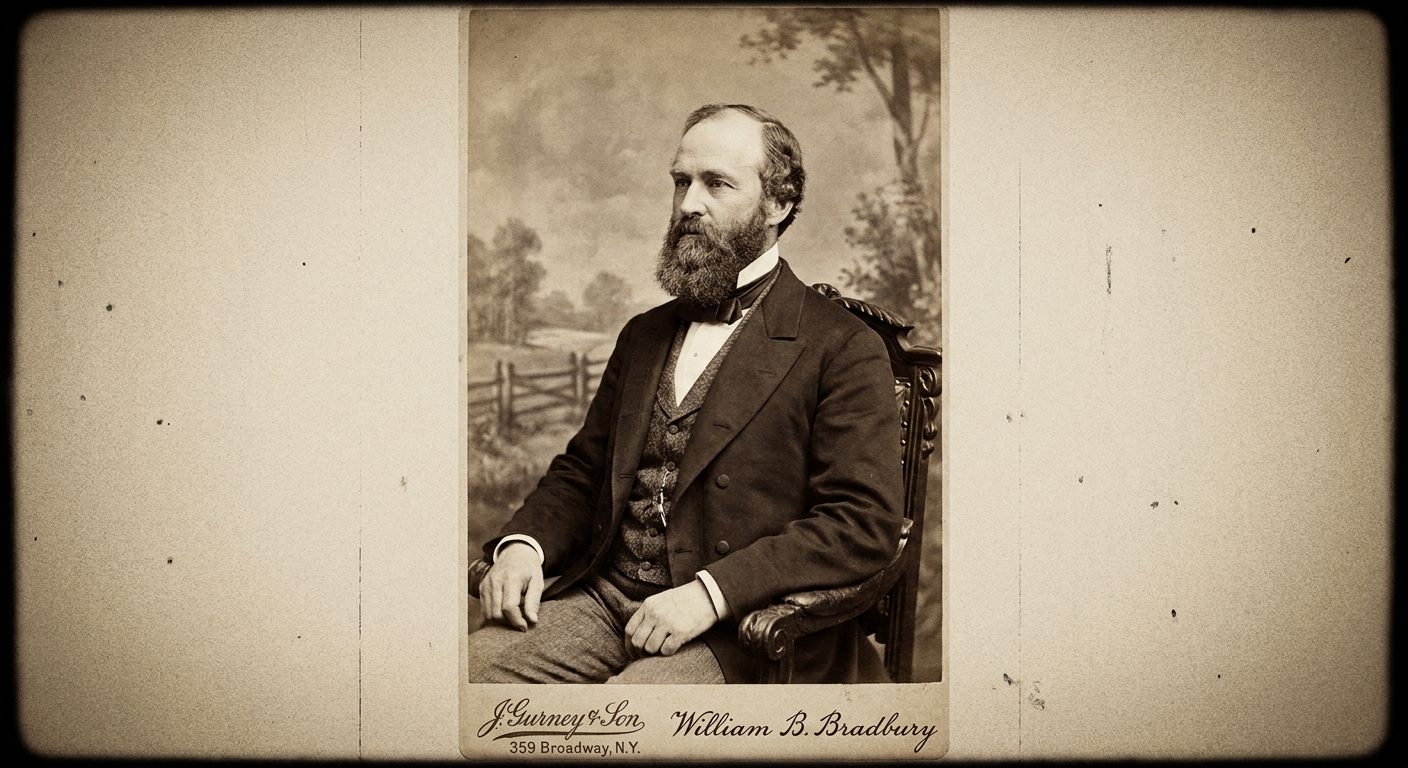
Words travel differently once they are sung. The tune most closely associated with “Just As I Am” is “Woodworth”, composed by American hymn writer and music editor William B. Bradbury (1816 to 1868).
Bradbury published “Woodworth” in 1849, years after Elliott wrote the text, which helps explain something you can feel when you sing it: the marriage of words and melody was a later gift, not the hymn’s starting point. Bradbury was one of the great nineteenth-century shapers of Protestant congregational music in the United States, known for melodies that were straightforward, memorable, and emotionally direct. “Woodworth” carries Elliott’s text with a steady tenderness. It is not flashy. It does not rush you. It gives the words room to be confessed rather than performed.
How it spread
“Just As I Am” moved from printed hymnals into the bloodstream of English speaking Christianity because it fit so many settings: personal devotion, communion services, funerals, and moments of decision. Its language is intimate enough for a private prayer and communal enough for a sanctuary full of people.
Later, it became widely associated with evangelistic meetings and altar call invitations, especially in the United States. One of the most frequently cited examples is its use in Billy Graham crusades, where it was often sung during invitations. That use did not create the hymn’s meaning so much as amplify what was already there: a direct appeal to come without delay, without bargaining, without pretending you can fix yourself first.
And that is why the hymn endures. We keep changing our cultural vocabulary for wellness and self-improvement, but the human heart still recognizes the same exhausting pattern: trying to earn love before receiving it.
What it is saying
On paper, “Just As I Am” is a Christian hymn of approach, a prayer addressed to Christ as the “Lamb of God.” But underneath the theology is a spiritual psychology that reaches beyond one tradition: the movement from self-protection to honesty.
Elliott does not claim she has cleaned up her doubts. She brings them.
- Need instead of self sufficiency
- Truth instead of presentation
- Desire instead of certainty
- Trust instead of control
If you grew up around religious pressure, this hymn can feel complicated. For some, it carries tender memories of being welcomed. For others, it recalls coercion. Both experiences are real. What I appreciate in Elliott’s text is that it does not describe a crowd pushing you forward. It describes a person choosing to come honestly.
Praying it now
Whether you sing it, read it, or simply borrow its posture for a moment, “Just As I Am” can be practiced without drama. Here are three ways I return to it in ordinary life:
1) Use one line as a breath prayer
On an inhale: “Just as I am.” On an exhale: “I come.”
2) Name what you are not hiding
Try finishing this sentence privately: “Today I come with…” and tell the truth. Tiredness. Anger. Relief. Grief. Hope. Numbness. All of it counts as “as I am.”
3) Choose presence over performance
The hymn’s wisdom is not that change never matters. It is that change begins with showing up.

FAQ
Did Charlotte Elliott really write “Just As I Am” after talking with César Malan?
The story is strongly linked to Malan’s visit and invitation, dated to May 1822, and it matches the hymn’s themes closely. As with many nineteenth-century hymn origin stories, the core account has been passed along through biographies and retellings, sometimes with differing details. What is clear is that Elliott wrote the text in 1835 and that her spiritual struggle and sense of limitation shaped its voice.
What is the tune “Woodworth”?
“Woodworth” is the hymn tune most commonly paired with “Just As I Am,” composed by William B. Bradbury and published in 1849. Its simple, singable structure helped carry Elliott’s words into widespread use.
Why is “Just As I Am” used for altar calls?
Because the text is an invitation in first person. It gives language to someone deciding to approach God without delay or pretense. In evangelistic settings, that emotional clarity made it a natural choice, and its use in Billy Graham crusades helped cement the association for many listeners.